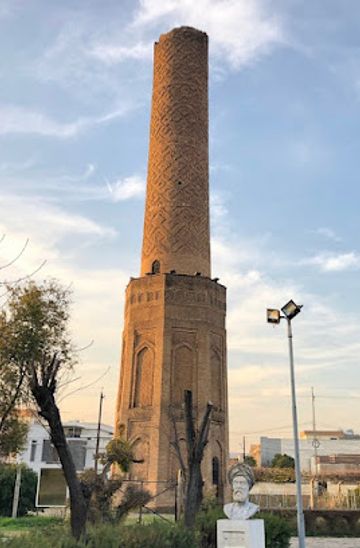
Mudhafaria Minaret: A Timeless Icon of Erbil
Discover the Mudhafaria Minaret in Erbil: A 12th-century architectural marvel showcasing intricate brickwork and rich history in the heart of Iraqi Kurdistan.
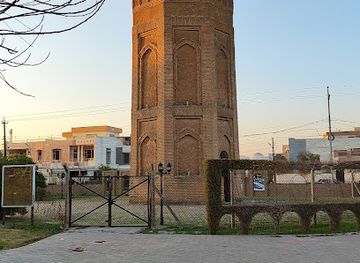
The Mudhafaria Minaret, also known as the Choly Minaret, is a striking 12th-century architectural landmark in Erbil, Iraqi Kurdistan. Built between 1190 and 1232 AD, the 36-meter-tall minaret stands as a testament to the region's rich history and the skilled craftsmanship of the Atabeg period. Its intricate brickwork, Kufic inscriptions, and unique design make it a must-see for history buffs and architecture enthusiasts.
A brief summary to Mudhafaria Minaret
- 5XQX+2RX, Kurdistan, Erbil, Municipality One, Erbil Governorate, IQ

Know before you go
Hi, I'm Eve. Here are a few practical things to know before exploring Mudhafaria Minaret.
- Visit during sunset for stunning photography opportunities as the warm light illuminates the ancient facade.
- Wear comfortable shoes, as exploring the Minaret and the surrounding Minare Park involves some walking.
- Combine your visit with a trip to the nearby Erbil Citadel, a UNESCO World Heritage Site, to gain a deeper understanding of the area's historical significance.
- Check local prayer times, as the Minaret area may be temporarily closed to visitors during these times.
Do you manage this location?
Take control to get all the benefits, like improved information, better appearance, and stronger visibility across AI-powered discovery. Learn more
Activate your presenceOther nearby places you may find interesting

Getting There
-
Walking
If you're already in Erbil's city center, walking to the Mudhafaria Minaret is a great way to explore the city. Start from the Erbil Citadel and head west. Follow the main roads, keeping an eye out for signs leading to Minare Park. The walk is approximately 20 minutes, offering a chance to experience the local atmosphere.
-
Public Transport
To reach the Mudhafaria Minaret by public transport, head to a main minibus stop in Erbil. Look for a minibus heading towards 'Old City' or 'Qasr'. The fare is typically around 500 IQD. Ask the driver to drop you off near the Mudhafaria Minaret; it's a short walk from the drop-off point.
-
Taxi
Taxis are readily available in Erbil. Negotiate the fare before you get in. A short taxi ride from the city center to the Mudhafaria Minaret should cost approximately 3,000-5,000 IQD, depending on the distance and your negotiation skills. Ask the driver to take you to Minare Park.
Discover more about Mudhafaria Minaret
Explore the best of what Mudhafaria Minaret has to offer













More about Northern Iraq
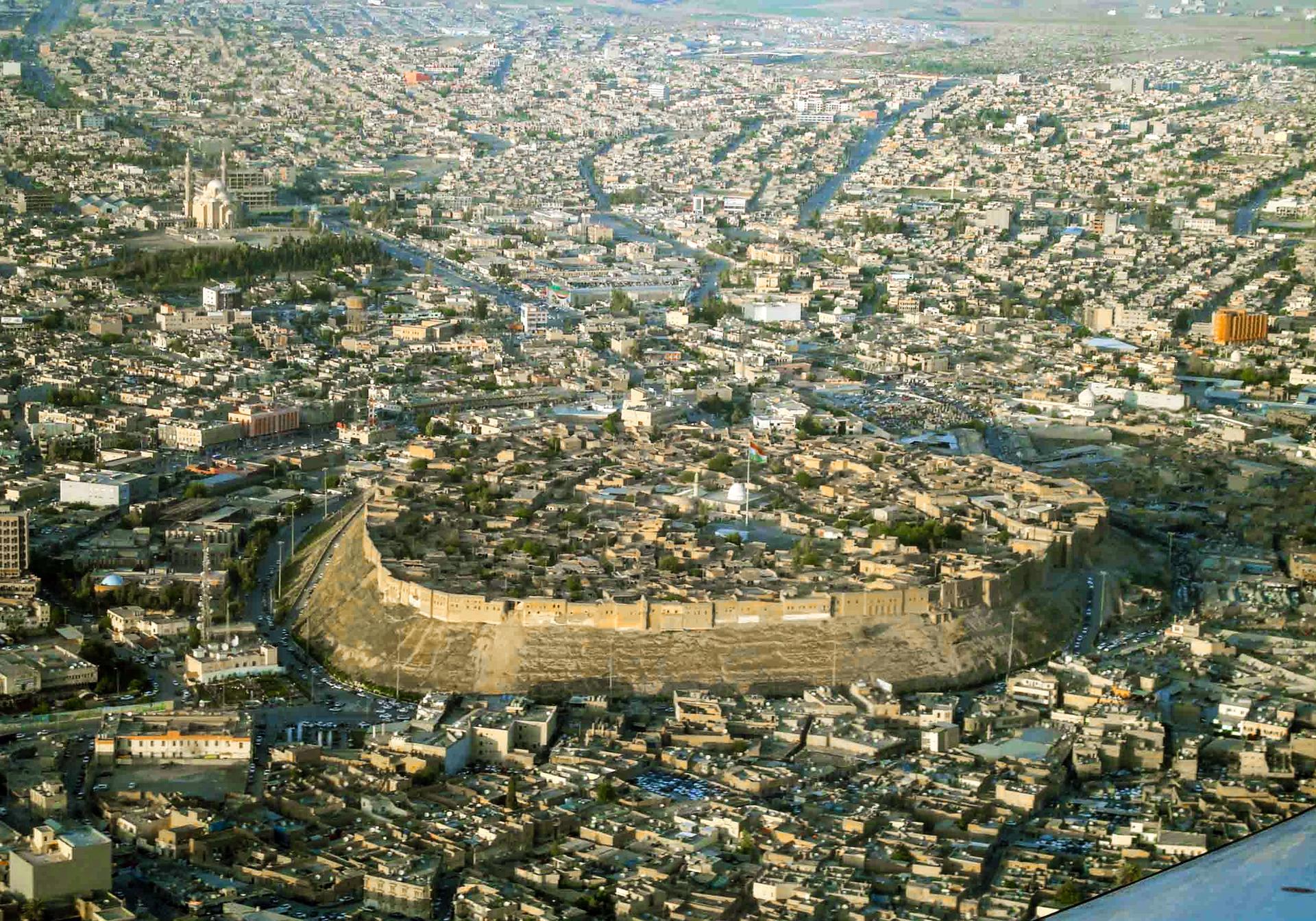
Discover Northern Iraq: A land of ancient history, stunning natural landscapes, and rich cultural heritage, offering unique adventures and warm hospitality.
Tell me more about Northern Iraq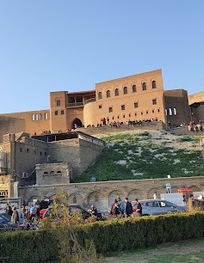
Explore the ancient Citadel of Erbil, a UNESCO World Heritage Site and one of the world's oldest continuously inhabited settlements, offering a captivating journey through time.
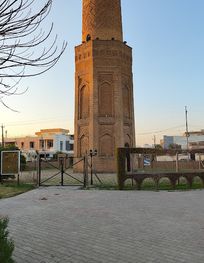
Escape to Erbil's tranquil Minara Park, a green oasis with the iconic Mudhafaria Minaret, offering a blend of nature, culture, and history.