Ballymoon Castle Travel Guide
Free Guide: Explore the mysterious Ballymoon Castle in County Carlow: a striking 13th-century ruin with massive walls and an unfinished story.


A brief summary of Ballymoon Castle
Explore the mysterious Ballymoon Castle in County Carlow: a striking 13th-century ruin with massive walls and an unfinished story.
Ballymoon Castle, located near Bagenalstown in County Carlow, is a striking yet mysterious 13th-century ruin. Its massive granite walls and unfinished interior spark the imagination, offering a glimpse into a turbulent period of Irish history and the ambitions of its Anglo-Norman builders.
- Address
- Ballymoon, Co. Carlow
- Website
Getting there
Driving
Public Transport
Walking
Discover more about Ballymoon Castle
Overview
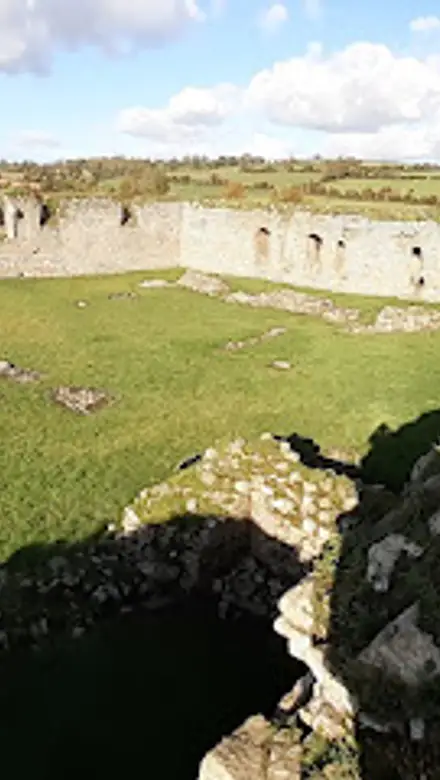
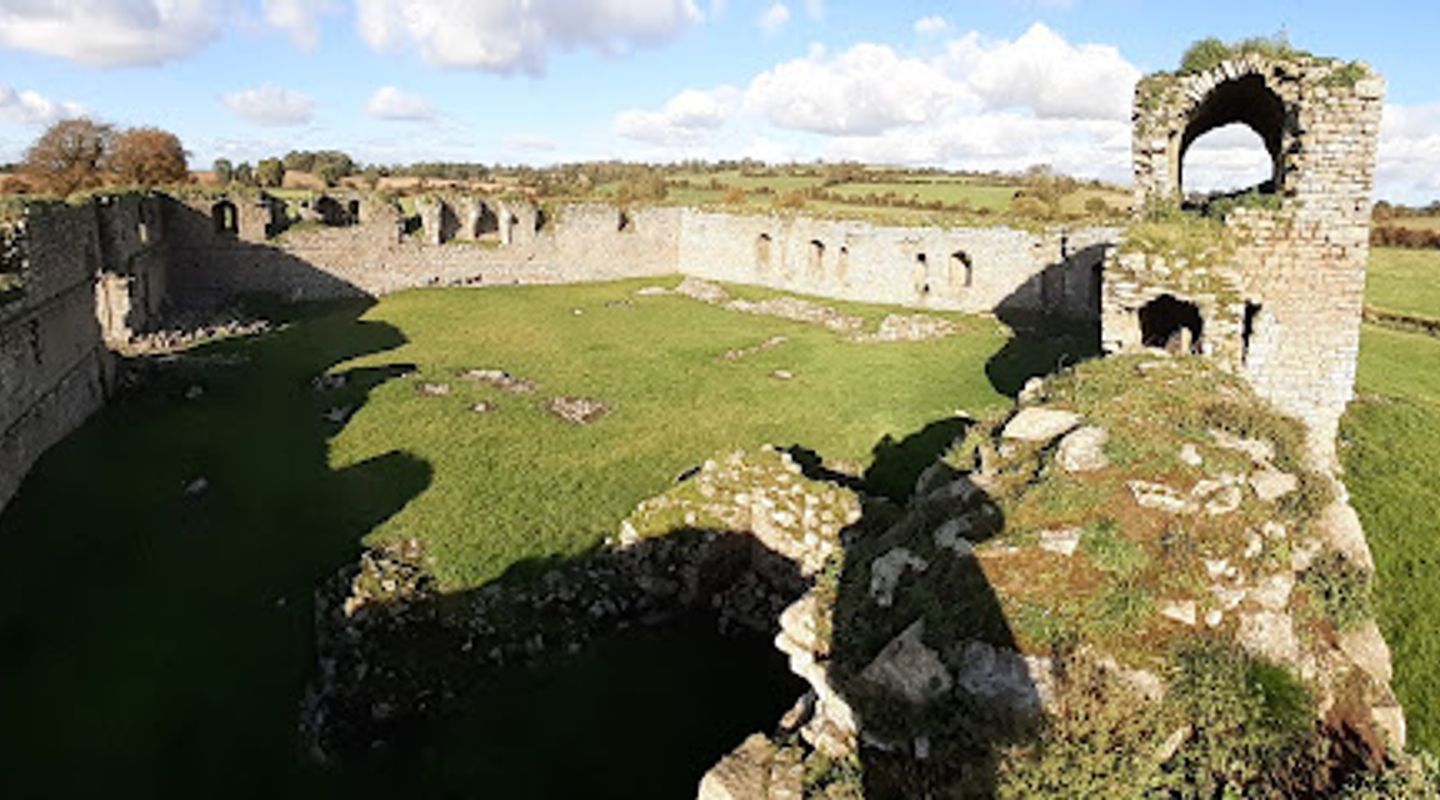
Ballymoon Castle, situated a few kilometers east of Bagenalstown, County Carlow, presents a captivating enigma to visitors. This National Monument, dating back to the 13th or early 14th century, stands as a testament to Anglo-Norman ambition and the unsettled times in which it was built. The castle's most striking feature is its incomplete state, fueling speculation about its intended purpose and the reasons for its abandonment.The castle comprises a square courtyard, each side measuring approximately 24 meters (80 feet), enclosed by imposing granite walls. These walls, about 2.4 meters (8 feet) thick at the base and rising to a height of 6 meters (20 feet), evoke a sense of formidable strength. Square towers project from three of the sides, while the fourth side features a gatehouse, further emphasizing the castle's defensive design. Arrow loops and gun loops are visible in the walls.Inside the courtyard, little remains of the internal structures, save for the foundations. The remnants of fireplaces and what appears to be a great hall on the north side offer hints of the intended layout. The absence of substantial remains has led to the local legend that the castle was never completed or inhabited. Historians suggest that either Roger Bigod, 5th Earl of Norfolk, or the Carew family, who acquired the land after Bigod's death, initiated the construction. The castle's purpose was likely to defend the border between the Normans and the Gaelic Irish in the Wicklow Mountains. The building was intended to be two or three stories high, but construction stopped just above the first floor.Access to the castle is via a small wooden bridge over a ditch from the Fennagh Road (R724). The surrounding meadow offers views of Mount Leinster, adding to the atmospheric setting. Exploring the castle grounds and imagining its intended grandeur provides a unique glimpse into medieval Ireland.
Evendo Review Centre
 Google
Guest reviews
Explore Ballymoon Castle on the map
A handpicked selection of must-see spots near Ballymoon Castle, mapped for you.
Get your free copy of our complete guide to Ballymoon Castle, delivered straight to you.
Everything on this page, from opening hours and how to get there to Eve’s tips and the best time to go, in one PDF you can read offline, print or share.
Already have an account? Sign in
Your Ballymoon Castle guide is ready.
We'll send it to · Not you? Sign out

Getting your guide ready…
We are putting together a fresh copy of the Ballymoon Castle guide. This can take up to a minute.
This can take a few moments. If your browser asks, choose Allow so the download can start. You'll find the guide in your Downloads folder.
Nothing happened? Download it again
Sorry, the guide is taking longer than usual. Please try again in a minute, or get it by email instead.
Other nearby places you may find interesting
The closest places of the same kind, if this one is not quite what you had in mind.
-
-
-
-
-


Swipe for more places
More to explore near Ballymoon Castle

 Best experiences near Ballymoon Castle
 Best hotels near Ballymoon Castle
 Best landmarks near Ballymoon Castle
 Best attractions near Ballymoon Castle
 Best shops near Ballymoon Castle
 Best restaurants near Ballymoon Castle
 Best bars near Ballymoon Castle
Do you manage this location?
Take control to get all the benefits, like improved information, better appearance, and stronger visibility across AI-powered discovery.
Explore more

Explore more of County Carlow
Discover County Carlow, Ireland's hidden gem, where rich history, stunning landscapes, and vibrant local culture come together to create an unforgettable experience.
Explore County Carlow
Explore more of Ireland
Discover Ireland: A land of enchanting landscapes, rich history, and vibrant culture, where every corner tells a story and every visit feels like coming home.
Explore Ireland