

Farnese Theater, Parma Travel Guide
Free Guide: Step back in time at Parma's Teatro Farnese, a stunning Renaissance theater showcasing innovative design and ducal splendor.


A brief summary of Farnese Theater
Step back in time at Parma's Teatro Farnese, a stunning Renaissance theater showcasing innovative design and ducal splendor.
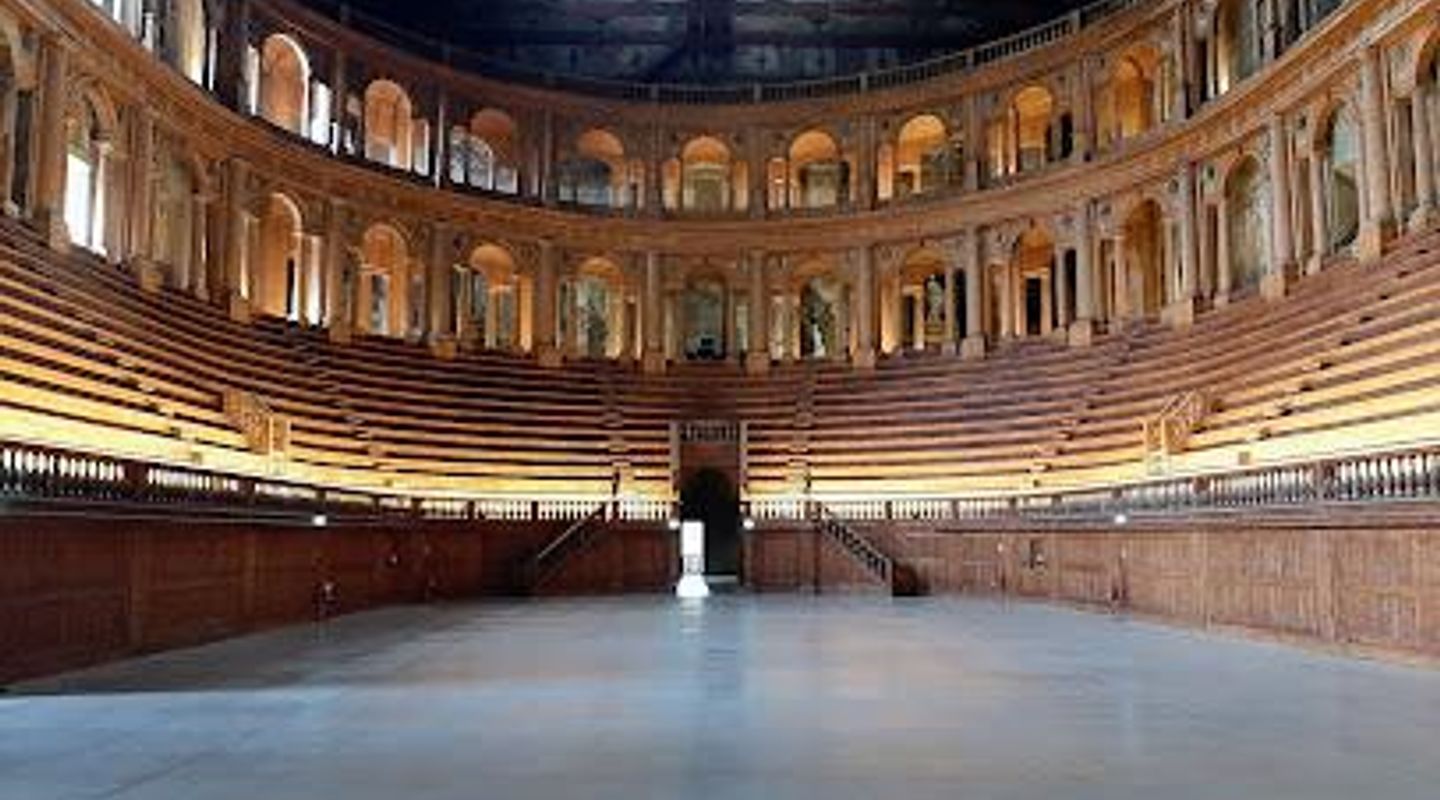
The Teatro Farnese, located within the Palazzo della Pilotta in Parma, is a remarkable Renaissance theater constructed in 1618. Built by Giovanni Battista Aleotti, it stands as one of only three surviving Renaissance theaters. Though largely crafted from wood and plaster, its design evokes the grandeur of marble, offering visitors a glimpse into the opulent world of the Farnese court.
- Address
- Presso Complesso Monumentale della Pilotta, Piazza della Pilotta, 15, 43121 Parma PR
- Phone
- Website
Getting there
Walking
Public Transport
Taxi
Discover more about Farnese Theater
Overview
Nestled within the Palazzo della Pilotta, the Teatro Farnese is a breathtaking example of Renaissance theater design. Commissioned by Duke Ranuccio I Farnese in the early 17th century, the theater was intended to celebrate a visit by Cosimo II de Medici, though the visit never occurred. The theater finally opened in 1628 for the wedding of Odoardo Farnese and Margherita de' Medici.The theater's architect, Giovanni Battista Aleotti, ingeniously used wood and painted plaster to mimic the appearance of marble, creating a visually stunning space. The U-shaped auditorium could accommodate up to 3,000 spectators, with nobles seated in the upper chambers. The stage was designed for elaborate perspective scenery and special effects, and could even be flooded for mock naval battles. Some consider it to be one of the first theaters equipped with a permanent proscenium arch.Despite its initial grandeur, the theater was rarely used and fell into disrepair. It suffered extensive damage during World War II but was meticulously reconstructed in the mid-20th century. Today, the Teatro Farnese is part of the Galleria Nazionale di Parma, offering visitors a unique opportunity to step back in time and experience the splendor of Renaissance court life.Visiting the Teatro Farnese provides not only a glimpse into the world of Renaissance theater but also an understanding of the architectural ingenuity of the period. Its design served as a model for Baroque theaters that followed.
Evendo Review Centre
 Google
Guest reviews
Explore Farnese Theater on the map
A handpicked selection of must-see spots near Farnese Theater, mapped for you.
Get your free copy of our complete guide to Farnese Theater, delivered straight to you.
Everything on this page, from opening hours and how to get there to Eve’s tips and the best time to go, in one PDF you can read offline, print or share.
Already have an account? Sign in
Your Farnese Theater guide is ready.
We'll send it to · Not you? Sign out

Getting your guide ready…
We are putting together a fresh copy of the Farnese Theater guide. This can take up to a minute.
This can take a few moments. If your browser asks, choose Allow so the download can start. You'll find the guide in your Downloads folder.
Nothing happened? Download it again
Sorry, the guide is taking longer than usual. Please try again in a minute, or get it by email instead.
Unlock the best of Farnese Theater
Skip-the-line tickets, guided tours with entry, and walking tours of the area, booked in a few clicks.


Other nearby places you may find interesting
The closest places of the same kind, if this one is not quite what you had in mind.
-
-
-
-
-


Swipe for more places
More to explore near Farnese Theater

 Best experiences near Farnese Theater
 Best hotels near Farnese Theater
 Best landmarks near Farnese Theater
 Best attractions near Farnese Theater
 Best shops near Farnese Theater
 Best restaurants near Farnese Theater
 Best bars near Farnese Theater
Do you manage this location?
Take control to get all the benefits, like improved information, better appearance, and stronger visibility across AI-powered discovery.
Explore more

Explore more of Parma
Discover Parma, Italy's hidden gem where Renaissance art, rich musical heritage, and world-famous cuisine create an unforgettable blend of culture and flavor.
Explore Parma
Explore more of Italy
Discover Italy: A land of ancient history, artistic marvels, and culinary delights; where every corner reveals a new story and every meal is a celebration.
Explore Italy
