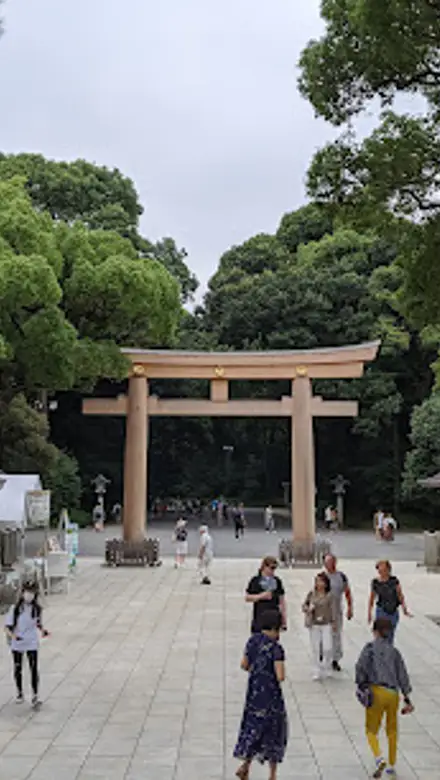
Meiji Jingu Travel Guide
Free Guide: Escape the city bustle at Meiji Jingu, a peaceful Shinto shrine dedicated to Emperor Meiji and Empress Shoken, surrounded by a lush forest in Tokyo.


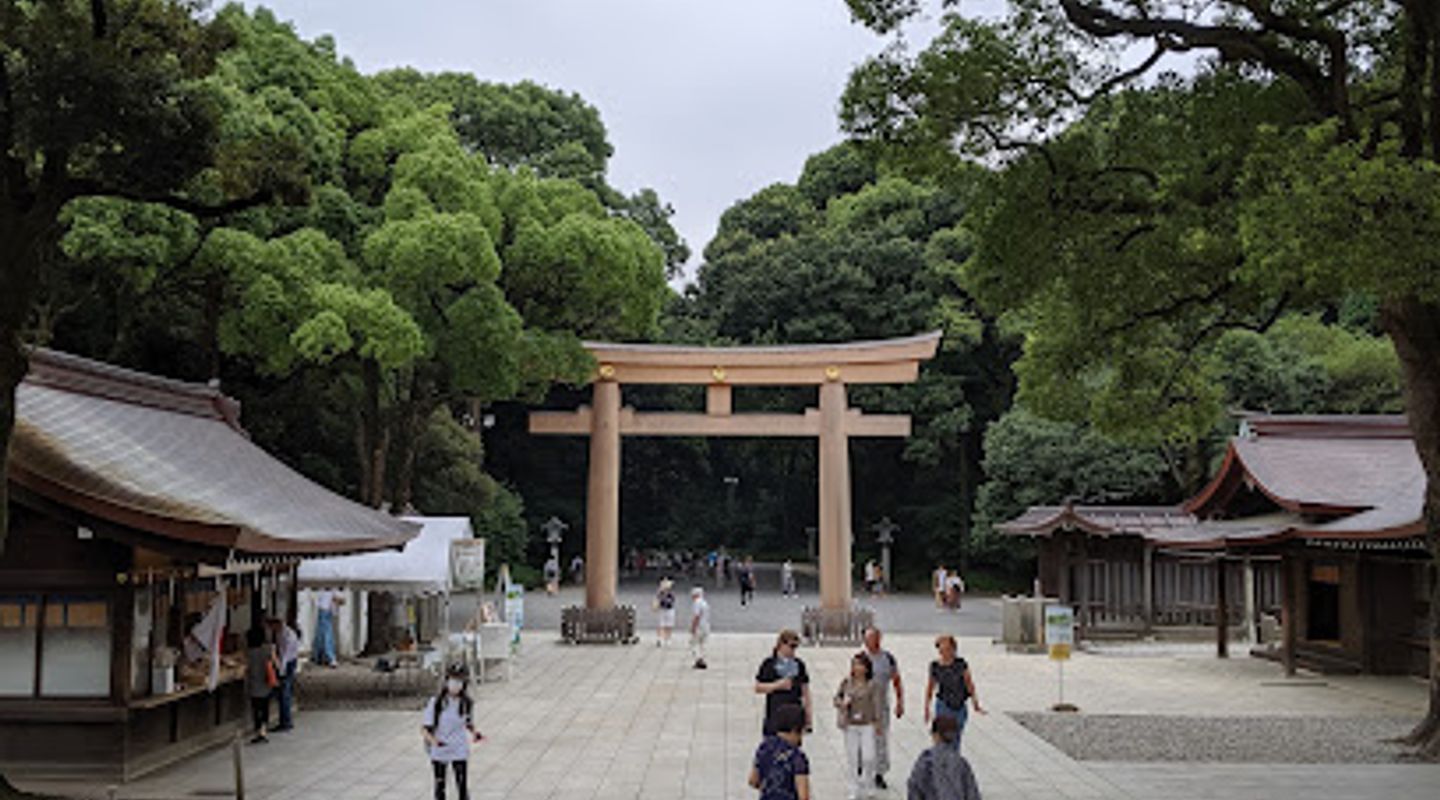
A brief summary of Meiji Jingu
Escape the city bustle at Meiji Jingu, a peaceful Shinto shrine dedicated to Emperor Meiji and Empress Shoken, surrounded by a lush forest in Tokyo.
Meiji Jingu, a Shinto shrine dedicated to Emperor Meiji and Empress Shoken, offers a serene escape from Tokyo's bustling city life. Established in 1920 and rebuilt in 1958 after wartime destruction, the shrine is a peaceful oasis with over 100,000 trees donated from across Japan.
- Address
- 1-1 Yoyogikamizonocho, Shibuya City, Tokyo 151-8557
- Phone
- Website
Getting there
Public Transport
Walking
Taxi
Parking
Discover more about Meiji Jingu
Overview
Meiji Jingu, or Meiji Shrine, is a tranquil escape located in the heart of Tokyo, dedicated to the deified spirits of Emperor Meiji and Empress Shoken. Emperor Meiji, who reigned from 1867 to 1912, led Japan through a period of rapid modernization, and the shrine was established in 1920 to commemorate his and his consort's virtues. Though the original structure was destroyed during World War II, it was rebuilt in 1958.Located in Shibuya, near Harajuku Station, the shrine and adjacent Yoyogi Park create a large forested area within the city. The grounds feature over 100,000 trees, donated from regions across Japan, offering a serene walking path away from the urban environment. The main shrine complex is a 10-minute walk from the southern entrance near Harajuku Station and the northern entrance near Yoyogi Station.Visitors can participate in Shinto activities, such as making offerings, buying charms, and writing wishes on ema tablets. The shrine attracts millions of visitors annually and is a popular location for traditional Shinto weddings. The Meiji Jingu Museum, opened in 2019, showcases treasures from the shrine's collection, including personal belongings of the Emperor and Empress, and the carriage Emperor Meiji rode to the formal declaration of the Meiji Constitution in 1889. The Inner Garden, located in the southern section, features irises that bloom in June and Kiyomasa's Well, a spot believed to provide positive energy.Meiji Jingu is open daily from sunrise to sunset with varying hours depending on the season. The shrine is free to enter, but the Meiji Jingu Museum costs ¥1,000 for adults, and the Inner Garden costs ¥500.
Evendo Review Centre
 Google
Guest reviews
Explore Meiji Jingu on the map
A handpicked selection of must-see spots near Meiji Jingu, mapped for you.
Get your free copy of our complete guide to Meiji Jingu, delivered straight to you.
Everything on this page, from opening hours and how to get there to Eve’s tips and the best time to go, in one PDF you can read offline, print or share.
Already have an account? Sign in
Your Meiji Jingu guide is ready.
We'll send it to · Not you? Sign out

Getting your guide ready…
We are putting together a fresh copy of the Meiji Jingu guide. This can take up to a minute.
This can take a few moments. If your browser asks, choose Allow so the download can start. You'll find the guide in your Downloads folder.
Nothing happened? Download it again
Sorry, the guide is taking longer than usual. Please try again in a minute, or get it by email instead.
Unlock the best of Meiji Jingu
Skip-the-line tickets, guided tours with entry, and walking tours of the area, booked in a few clicks.
 Tour with entry
Tokyo Self-Guided Audio Tour
from $5.70 Tour with entry
Tokyo: Meiji Shrine Walking Tour — Shintoism & Imperial System
from $14.43 Tour with entry
Tokyo: Meiji Jingu Cultural Walking Tour with Japanese Historian
from $18.04 Tour with entry
Harajuku Meiji Shrine Walking Tour in Tokyo
from $19.00


Other nearby places you may find interesting
The closest places of the same kind, if this one is not quite what you had in mind.
-
-
-
-
-


Swipe for more places
More to explore near Meiji Jingu

 Best experiences near Meiji Jingu
 Best hotels near Meiji Jingu
 Best landmarks near Meiji Jingu
 Best attractions near Meiji Jingu
 Best shops near Meiji Jingu
 Best restaurants near Meiji Jingu
 Best bars near Meiji Jingu
Do you manage this location?
Take control to get all the benefits, like improved information, better appearance, and stronger visibility across AI-powered discovery.
Explore more
Explore more of Dewa
Discover Dewa, Japan's spiritual sanctuary, where sacred mountains, ancient shrines, and tranquil forests offer a journey into the heart of Japanese tradition and spirituality.
Explore Dewa
Explore more of Japan
Discover the harmony of tradition and modernity in Japan, where ancient temples and cutting-edge technology coexist in perfect balance.
Explore Japan