

King Anouvong Statue Travel Guide
Free Guide: A towering bronze statue honoring King Anouvong, a symbol of Laotian courage and independence, located on the scenic Mekong River.


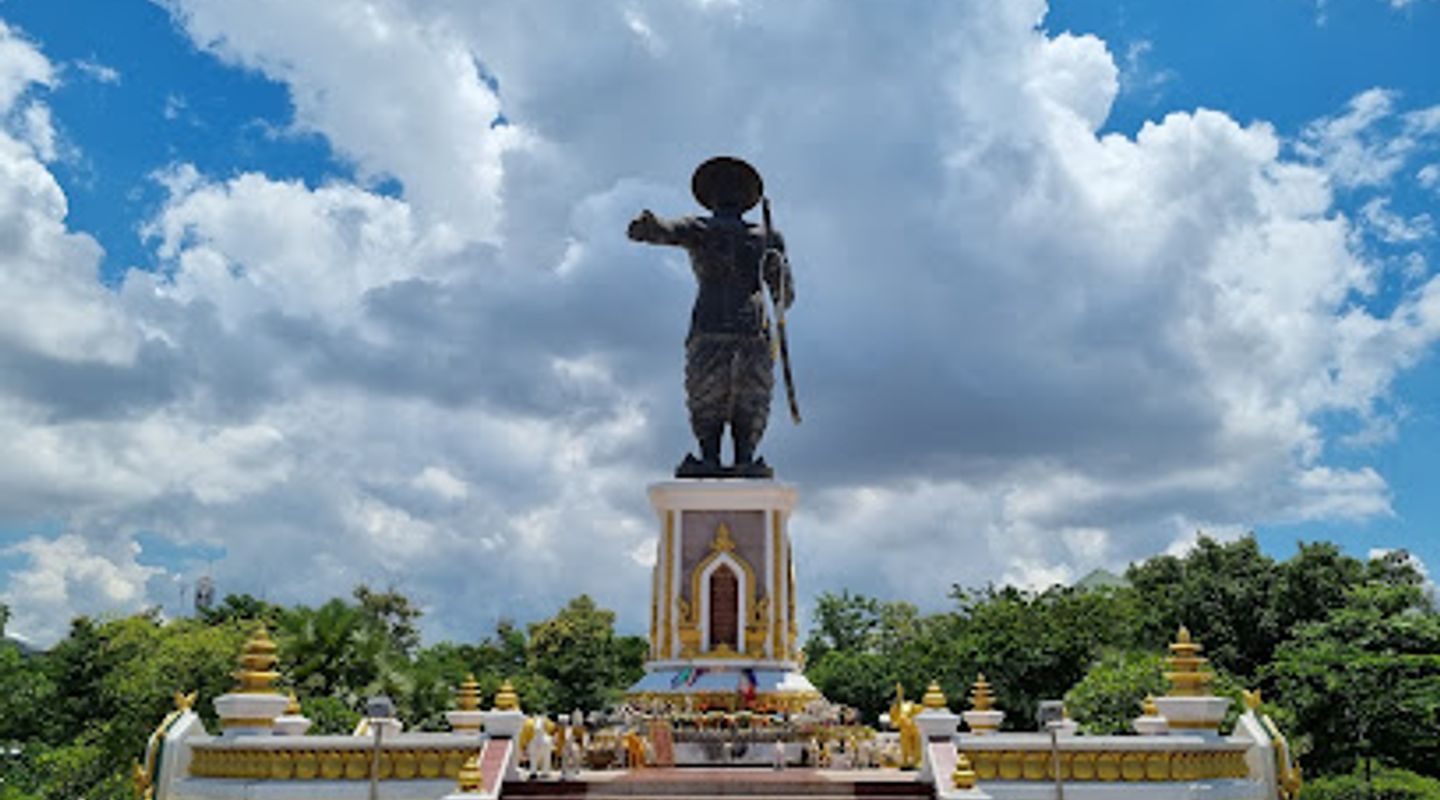
A brief summary of King Anouvong Statue
A towering bronze statue honoring King Anouvong, a symbol of Laotian courage and independence, located on the scenic Mekong River.
The King Anouvong Statue in Vientiane stands as a powerful symbol of Laotian pride and resistance. Erected in 2010, the bronze statue honors King Anouvong, the last monarch of the Kingdom of Vientiane, who fought against Siamese domination in the 19th century. Situated in Chao Anouvong Park along the Mekong River, it's a place for locals and tourists to reflect on Laotian history and culture.
Opening hours
- Every dayOpen 24 hours
Opening hours as listed on the venue’s Google Business Profile. Hours can change for services and special events, so check with the venue before you go.
- Address
- XJ65+49W, Mekong Shore Boardwalk,, Vientiane
Getting there
Walking
Public Transport
Taxi
Discover more about King Anouvong Statue
Overview
The King Anouvong Statue, a prominent landmark in Vientiane, Laos, serves as a stirring reminder of Laotian resilience and the struggle for independence. The statue, created in 2010, commemorates King Anouvong, the last ruler of the Kingdom of Vientiane (reigned 1805-1828), who is celebrated for his courageous, though ultimately unsuccessful, rebellion against Siamese (Thai) control.King Anouvong's reign occurred during a period when Laos was divided into three kingdoms—Champasak, Vientiane, and Luang Prabang—all under Siamese rule. Anouvong, from the beginning, displayed his discontent with Siamese authority. He initiated symbolic acts, such as constructing Wat Si Sa Ket, positioning it so that visitors would turn their backs on Bangkok when pledging allegiance to him, a subtle act of defiance. Tensions escalated when King Rama III ascended the throne of Siam and imposed stricter policies on the Laotian kingdoms. In 1826, King Anouvong, believing that foreign powers would attack Siam, launched a rebellion to reclaim full sovereignty for his kingdom. However, the uprising was crushed, and Siamese forces retaliated by devastating Vientiane in 1828. Anouvong was captured and taken to Bangkok, where he was publicly humiliated before his death.Today, the statue stands approximately 15 meters tall and depicts King Anouvong in traditional royal attire, with a sword by his side, symbolizing his role as a warrior-king. His arm is outstretched towards Thailand, representing his defiance and desire to protect his people. The statue is located in Chao Anouvong Park on the Mekong Shore Boardwalk, a popular spot for locals and tourists. The surrounding park provides a peaceful setting with gardens and walkways, offering a serene escape in the bustling capital city. The statue serves as a focal point of national pride and a reminder of the country's enduring spirit.
Evendo Review Centre
 Google
Guest reviews
Explore King Anouvong Statue on the map
A handpicked selection of must-see spots near King Anouvong Statue, mapped for you.
Get your free copy of our complete guide to King Anouvong Statue, delivered straight to you.
Everything on this page, from opening hours and how to get there to Eve’s tips and the best time to go, in one PDF you can read offline, print or share.
Already have an account? Sign in
Your King Anouvong Statue guide is ready.
We'll send it to · Not you? Sign out

Getting your guide ready…
We are putting together a fresh copy of the King Anouvong Statue guide. This can take up to a minute.
This can take a few moments. If your browser asks, choose Allow so the download can start. You'll find the guide in your Downloads folder.
Nothing happened? Download it again
Sorry, the guide is taking longer than usual. Please try again in a minute, or get it by email instead.
Unlock the best of King Anouvong Statue
Skip-the-line tickets, guided tours with entry, and walking tours of the area, booked in a few clicks.
Other nearby places you may find interesting
The closest places of the same kind, if this one is not quite what you had in mind.
-
-
-
-
-


Swipe for more places
More to explore near King Anouvong Statue

 Best experiences near King Anouvong Statue
 Best hotels near King Anouvong Statue
 Best landmarks near King Anouvong Statue
 Best attractions near King Anouvong Statue
 Best shops near King Anouvong Statue
 Best restaurants near King Anouvong Statue
 Best bars near King Anouvong Statue
Do you manage this location?
Take control to get all the benefits, like improved information, better appearance, and stronger visibility across AI-powered discovery.
Explore more

Explore more of Central Laos
Explore Central Laos: A Journey Through Vientiane's Temples, Vang Vieng's Caves, and Thakhek's Ancient Wonders.
Explore Central Laos
Explore more of Laos
Discover Laos: A tranquil escape with breathtaking landscapes, rich culture, and warm hospitality. Perfect for adventure seekers and those craving serene beauty.
Explore Laos
