

Žvėrynas (Vilnius) Travel Guide - Free
Explore Žvėrynas in Vilnius with Evendo's free guide. Find the best shops, historic streets, restaurants, and gems on web or mobile.


Žvėrynas in Vilnius pairs leafy Neris river walks, wooden villas, a historic kenesa, cafés and calm streets near Lithuania’s capital centre.
A Leafy Peninsula in Vilnius
Žvėrynas occupies a green, gently secluded area on the right bank of the Neris, just west of central Vilnius. Its name, meaning roughly “animal place”, recalls the wooded estate and hunting grounds that once occupied this land. Today, the district is valued for a combination that is increasingly rare close to a capital city centre: quiet residential streets, mature trees, riverside paths and a substantial collection of historic wooden houses. The main routes, including Vytauto, Kęstučio and Birutės streets, reveal a neighbourhood that feels separate from central Vilnius while remaining within easy walking distance of it.Read more about Žvėrynas
Wooden Architecture and Sacred Places
Everyday Life by the Neris
Best attractions in Žvėrynas
Žvėrynas’s principal attraction is its streetscape: a walk along Vytauto, Kęstučio and Birutės streets reveals a substantial group of wooden villas and smaller houses set among mature trees, with occasional twentieth- and twenty-first-century buildings showing the district’s gradual evolution. The Orthodox Church of Our Lady of the Sign provides a strong red-brick landmark, while the Karaite kenesa offers a more intimate architectural encounter with one of Vilnius’s historic religious communities. The Neris riverbank adds open space and a changing view of the city, particularly for walkers and cyclists. Žvėrynas Bridge is both a practical connection and a useful point from which to understand the neighbourhood’s position beside the river and close to the centre. Vingis Park, across the Neris and outside the district, can be incorporated into a longer nearby excursion rather than treated as a Žvėrynas attraction.
-
Tourist attraction
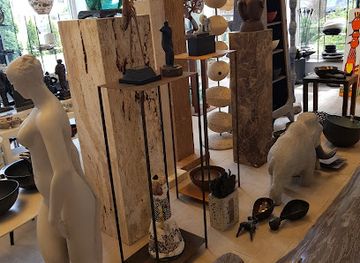
Volandos galerija
Discover the vibrant art scene of Vilnius at Volandos Galerija, a contemporary gallery showcasing local talent and innovative artwork.
2 min walk · 0.2 km from neighbourhood centre
Explore Žvėrynas on the map
A handpicked selection of must-see spots in Žvėrynas, mapped for you.
Best hotels in Žvėrynas
Best restaurants in Žvėrynas
Žvėrynas has a modest, mainly local dining scene concentrated around its principal streets rather than a dense restaurant quarter. Vytauto and Kęstučio streets provide the most useful orientation for cafés, bakeries and casual restaurants, with options ranging from everyday Lithuanian cooking to contemporary European dishes and coffee-focused venues. The neighbourhood’s residential character means that dining is often combined with a walk among the wooden houses or along the Neris, rather than with a dedicated evening of restaurant-hopping. Menus and businesses change, so visitors should check current listings locally and distinguish Žvėrynas venues from the larger selection across the bridge in the central districts. The area is not chiefly known for a single signature dish; its appeal lies in relaxed meals and cafés integrated into a quiet, leafy urban setting close to the city centre.
-
Restaurant
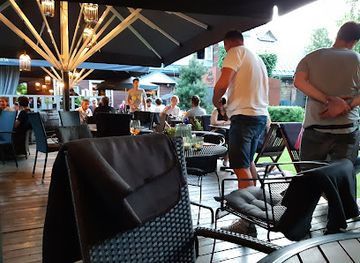
Veranda
Experience the best of local and international flavors at Veranda in Vilnius - where culinary creativity meets cozy ambiance.
2 min walk · 0.2 km from neighbourhood centre
Best bars in Žvėrynas
Žvėrynas is quieter after dark than the Old Town and the central nightlife streets, with evening activity centred on restaurants, cafés and small local meeting places rather than large clubs. The main streets may offer a drink with dinner, but the neighbourhood is not a major destination for late-night entertainment, and its residential lanes become calm. Visitors seeking a broader choice of cocktail bars, live music or clubs will find more venues across Žvėrynas Bridge in central Vilnius, a nearby extension rather than part of the district itself. Riverside walks can be pleasant before dusk, while returning late calls for ordinary urban awareness and consideration for residents. The contrast between low-key local evenings and the busier centre is part of Žvėrynas’s character.
-
Pub
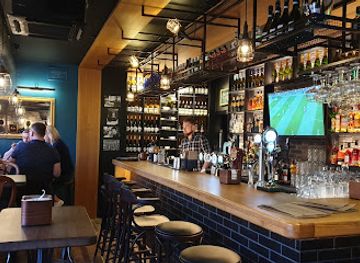
Žvėryno Pub'as
Discover the vibrant atmosphere and local flavors at Žvėryno Pub'as, a top destination for beer lovers and culture enthusiasts in Vilnius.
2 min walk · 0.1 km from neighbourhood centre
Best shops in Žvėrynas
Shopping in Žvėrynas is predominantly practical and small-scale rather than centred on a major market or a continuous retail boulevard. The main streets contain everyday shops and services, alongside cafés and occasional independent businesses, while the quieter residential lanes are not intended for browsing. Visitors interested in the neighbourhood’s identity will find more value in looking at its wooden architecture and local street life than in searching for a specialised souvenir district. Larger retail selections are available in central Vilnius, reached across the bridge or by public transport, and markets elsewhere in the city offer a wider choice of food and crafts. Any independent shop encountered in Žvėrynas is best approached as part of neighbourhood life rather than as a guaranteed attraction with fixed stock or opening times.
-
 Dress store
Ožkos Pashmina
Explore Ožkos Pashmina in Vilnius for exquisite pashmina shawls and elegant dresses, blending luxury with tradition in the heart of Lithuania.
2 min walk · 0.1 km from neighbourhood centre
Žvėrynas essentials
Getting There
Getting Around
Safety
Emergency Situations
Do's and Don'ts
Local Tips

From Eve
Local phrases worth knowing
You don't need to get them perfect. A few words go a long way, and locals appreciate the effort.
Basics
| English | Local | Say it |
|---|---|---|
| Hello | Labas | [la-bas] |
| Goodbye | Viso gero | [vi-so ge-ro] |
| Yes | Taip | [taip] |
| No | Ne | [ne] |
| Please/You're welcome | Prašom/Miela | [pra-shom/mie-la] |
| Thank you | Ačiū | [a-chiū] |
| Excuse me/Sorry | Atsiprašau | [at-si-pra-shau] |
| How are you? | Kaip tau sekasi? | [kaip tau se-ka-si?] |
| Fine. And you? | Gerai. O tu? | [ge-rai. o tu?] |
| Do you speak English? | Ar kalbate angliškai? | [ar kal-ba-te ang-li-shkai?] |
| I don't understand | Aš nesuprantu | [aš ne-su-pran-tu] |
Eating & Drinking
| English | Local | Say it |
|---|---|---|
| I'd like to see the menu, please | Norėčiau pamatyti meniu, prašau | [no-re-chiau pa-ma-ti-ti me-niu, pra-shau] |
| I don't eat meat | Aš nevalgau mėsos | [aš ne-val-gau me-so-s] |
| Cheers! | Į sveikatą! | [i svei-ka-ta] |
| I would like to pay, please | Norėčiau sumokėti, prašau | [no-re-chiau su-mo-ke-ti, pra-shau] |
Emergencies
| English | Local | Say it |
|---|---|---|
| Help! | Pagalba! | [pa-gal-ba!] |
| Go away! | Išeik! | [i-šeik!] |
| Call the Police! | Skambinkite policiją! | [skam-bin-ki-te po-li-ci-ją!] |
| Call a doctor! | Skambinkite gydytoją! | [skam-bin-ki-te gi-dy-to-ją!] |
| I'm lost | Aš pasiklydau | [aš pa-sik-lu-dau] |
| I'm ill | Aš sergu | [aš ser-gu] |
Shopping
| English | Local | Say it |
|---|---|---|
| I'd like to buy... | Norėčiau nusipirkti... | [no-re-chiau nu-si-pir-kti...] |
| I'm just looking | Aš tik žiūriu | [aš tik žiū-riu] |
| How much is it? | Kiek tai kainuoja? | [kiek tai kai-nuo-ia?] |
| That's too expensive | Tai per brangu | [tai per brang-u] |
| Can you lower the price? | Ar galite sumažinti kainą? | [ar ga-li-te su-ma-žin-ti ka-i-ną?] |
Time & Numbers
| English | Local | Say it |
|---|---|---|
| What time is it? | Kiek valandų? | [kiek va-lan-dų?] |
| It's one o'clock | Viena valanda | [vie-na va-lan-da] |
| Half past (10) | Pusė (dešimt) | [pu-sė (de-šimt)] |
| Morning | Rytas | [ry-tas] |
| Afternoon | Popietė | [po-pie-tė] |
| Evening | Vakaras | [va-ka-ras] |
| Yesterday | Vakar | [va-kar] |
| Today | Šiandien | [šian-dien] |
| Tomorrow | Rytoj | [ry-toi] |
| 1 | Vienas | [vie-nas] |
| 2 | Du | [du] |
| 3 | Trys | [trys] |
| 4 | Keturi | [ke-tu-ri] |
| 5 | Penki | [pen-ki] |
| 6 | Šeši | [še-ši] |
| 7 | Septyni | [sep-ty-ni] |
| 8 | Aštuoni | [aš-tuo-ni] |
| 9 | Devyni | [de-vy-ni] |
| 10 | Dešimt | [de-šimt] |
Transport & Directions
| English | Local | Say it |
|---|---|---|
| Where's a/the...? | Kur yra...? | [kur yra...?] |
| What's the address? | Kokia adresas? | [ko-kia a-dre-sas?] |
| Can you show me (on the map)? | Ar galite man parodyti (žemėlapyje)? | [ar ga-li-te man pa-ro-dy-ti (že-mė-la-pi-je)?] |
| When's the next (bus)? | Kada vyksta kitas (autobusas)? | [ka-da vyk-sta ki-tas (au-to-bu-sas)?] |
| A ticket (to ....) | Bilietą (į ....) | [bi-lietą (i ....)] |
History of Žvėrynas
From Wooded Estate to Žvėrynas
The area now called Žvėrynas was historically a wooded tract outside the denser core of Vilnius. Its Lithuanian name is associated with animals and game, reflecting the character of land used as a private hunting ground or menagerie by the powerful Radziwiłł family. For centuries it remained more rural than the central city, shaped by woodland, the Neris and scattered estate activity rather than by a continuous urban street plan. This setting explains why Žvėrynas later developed a spacious, garden-like character even after it was absorbed into the expanding city.
Urban Expansion and the Bridge
Žvėrynas became increasingly urbanised in the late nineteenth and early twentieth centuries as Vilnius expanded beyond its historic centre. A permanent bridge connecting the district with the city helped turn the former estate landscape into an accessible residential area, while new roads and public transport encouraged construction. Villas and smaller wooden houses appeared among gardens, serving members of the growing urban professional and administrative population. The neighbourhood’s loose street pattern and relatively low density retained much of its earlier landscape, even as it became part of Vilnius in practical and civic terms.
Religious Architecture in a Growing District
The early twentieth century gave Žvėrynas several buildings that still define its identity. The Orthodox Church of Our Lady of the Sign was constructed in the first years of the century, reflecting the presence of an Orthodox community in the expanding district. The Karaite kenesa, built in the interwar period, belongs to the history of Vilnius’s Karaite community, whose roots in the city reach back much further. Together, these buildings show how Žvėrynas’s development was connected to the multi-confessional character of Vilnius rather than to a single architectural or religious tradition.
War, Soviet Rule and Residential Continuity
The twentieth century brought war, occupation and major political change to Vilnius, but Žvėrynas remained principally a residential district rather than an industrial one. Its wooden houses survived alongside later Soviet-era apartment construction, creating a visible mixture of scales and building types. After Lithuania restored independence, the area’s proximity to the centre and its mature greenery made it increasingly attractive to residents, businesses and visitors. Renovation has improved some historic houses, while others illustrate the continuing tension between preserving Žvėrynas’s low-rise character and accommodating contemporary urban development.
Žvėrynas in Photos
Browse through our photo collection highlighting the charm and character of the destination.
Neighbourhoods near Žvėrynas
The closest neighbourhoods to Žvėrynas, if you have time for more than one stop.
-

-

-


Swipe for more neighbourhoods
Explore more

Explore more of Vilnius
Vilnius highlights include a UNESCO-listed Old Town, Baroque churches, hilltop views, creative Užupis, museums, cafés and Lithuanian cultural experiences.
Explore Vilnius