

Grund (Luxembourg City) Travel Guide - Free
Explore Grund in Luxembourg City with Evendo's free guide. Find the best shops, historic streets, restaurants, and gems on web or mobile.


Grund in Luxembourg City pairs riverside walks, Neumünster Abbey, historic fortifications, cosy cafés, museums and easy access to the capital’s Old Town.
A Lower-Town Setting
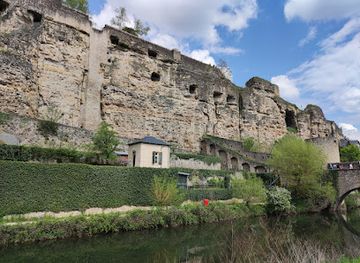
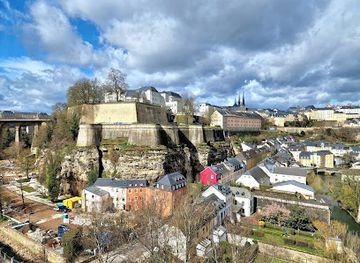
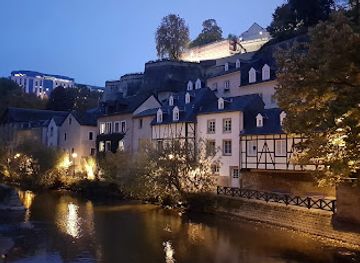
Grund occupies the narrow valley of the Alzette below Luxembourg City’s upper centre, where steep wooded slopes, fortified rock faces and historic houses create one of the capital’s most distinctive urban landscapes. Its lanes descend from the plateau into a compact quarter shaped by the river, with bridges, stone walls and waterside paths replacing the broad boulevards found above. The neighbourhood is part of Luxembourg’s historic core, inscribed on the UNESCO World Heritage List for its old quarters and fortifications.Read more about Grund
History in Stone and Water
Atmosphere and Local Life
Best attractions in Grund
Grund’s principal attractions are concentrated along the Alzette and rue Münster. Neumünster Abbey provides a substantial cultural complex of courtyards, historic buildings and public programming, while the nearby National Museum of Natural History offers accessible displays about the natural world in a building embedded in the old quarter. Saint John’s Church adds a quieter ecclesiastical stop, and the riverside paths bring the neighbourhood’s geography into focus through views of stone façades, bridges and wooded slopes. A short walk uphill leads towards the city’s historic fortification landscape, although the Bock and other major upper-city viewpoints should be described as bordering or above Grund rather than part of its valley floor. The pleasure of sightseeing here lies in linking these named places through narrow lanes, changing levels and waterside promenades rather than following a large, separate museum circuit.
-
Tourist attraction
Place de la Constitution
Explore the historical and scenic beauty of Place de la Constitution, a central square in Luxembourg City, perfect for relaxation and cultural immersion.
8 min walk · 0.6 km from neighbourhood centre
-
Tourist attraction
National Art and History Museum
Discover Luxembourg's cultural heritage at the National Art and History Museum, where art meets history in a stunning architectural setting.
7 min walk · 0.6 km from neighbourhood centre
-
Tourist attraction
Luxembourg National Museum of Natural History
Explore the Luxembourg National Museum of Natural History: A captivating journey through Earth's ecosystems and natural wonders in the heart of Luxembourg.
4 min walk · 0.3 km from neighbourhood centre
-
Tourist attraction
Spanish (Grund) Gate
Explore the rich history and stunning views at the Spanish Gate in the heart of Luxembourg City, a must-see tourist attraction.
5 min walk · 0.4 km from neighbourhood centre


Best landmarks in Grund
Neumünster Abbey is Grund’s defining landmark, a former religious complex whose later use as a prison and present role as a cultural venue give its buildings an unusually layered history. Saint John’s Church, associated with the abbey, contributes a prominent ecclesiastical presence beside the lower-town streets. The Alzette itself is another essential landmark in practical terms: its bridges, embankments and enclosed valley explain the quarter’s shape and its separation from the plateau above. Around Grund, surviving walls, rocky escarpments and views towards the historic fortifications connect the neighbourhood to Luxembourg’s former fortress. The National Museum of Natural History is significant as a civic cultural institution within the old quarter, while the historic houses along rue Münster and the riverfront preserve the architectural scale that distinguishes Grund from the modern parts of the capital.
-
Historical landmark
Bock Casemates
Discover the Bock Casemates: A UNESCO World Heritage Site in Luxembourg City, showcasing rich history, stunning views, and fascinating architecture.
7 min walk · 0.5 km from neighbourhood centre
-
Monument
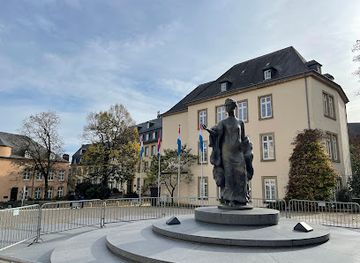
Statue of the Grand Duchess Charlotte
Discover the Statue of the Grand Duchess Charlotte, a historical monument in Luxembourg City celebrating royal heritage and national pride.
6 min walk · 0.5 km from neighbourhood centre
-
Tourist attraction
Citadelle du Saint-Esprit
Discover the Citadelle du Saint-Esprit, a historic fortress in Luxembourg City with breathtaking views and rich cultural significance.
1 min walk · 0.1 km from neighbourhood centre
-
Historical landmark
Goethe plaque
Explore the Goethe Plaque in Pafendall, Luxembourg - a historical landmark celebrating the legacy of Johann Wolfgang von Goethe amidst scenic beauty.
7 min walk · 0.5 km from neighbourhood centre

Explore Grund on the map
A handpicked selection of must-see spots in Grund, mapped for you.
Best hotels in Grund
Best restaurants in Grund
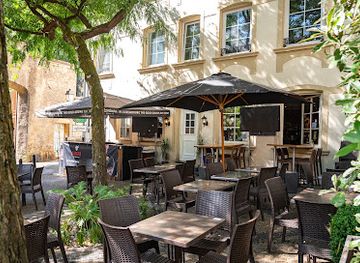
Grund’s dining scene is compact and closely tied to its historic setting, with restaurants, cafés and bars gathered around rue Münster and the river approaches. Visitors will find a mixture of Luxembourgish and European cooking, informal waterside meals and more specialised dining rather than a concentrated restaurant quarter on the scale of the city centre. Mosconi, on rue Münster, is one of the neighbourhood’s established fine-dining addresses, while smaller cafés and casual venues make the lower streets suitable for a pause between cultural visits. Menus and businesses change, so the character of the area is better understood through its scale and setting than through fixed claims about availability. The surrounding city centre offers a much broader choice, but eating in Grund places the meal within the valley’s historic architecture and close to the Alzette paths.
-
Gastropub
Scott's Pub
Experience the best of Luxembourg’s gastropub culture at Scott’s Pub—where local flavors meet a vibrant atmosphere.
2 min walk · 0.2 km from neighbourhood centre
-
Restaurant
Oscar's Bar
Discover Oscar's Bar in Luxembourg: where gourmet burgers meet karaoke fun in an inviting atmosphere perfect for tourists.
3 min walk · 0.2 km from neighbourhood centre
-
Italian
Notaro Ristorante
Experience authentic Italian flavors at Notaro Ristorante in Luxembourg's charming Grund district - where every dish tells a story.
7 min walk · 0.5 km from neighbourhood centre
-
Italian
Restaurant Il Fragolino
Experience authentic Italian cuisine at Restaurant Il Fragolino in Luxembourg's charming Grund district, where every dish tells a story.
1 min walk · 0.1 km from neighbourhood centre


Best bars in Grund
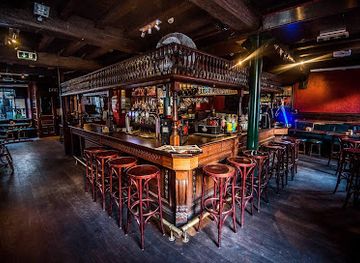
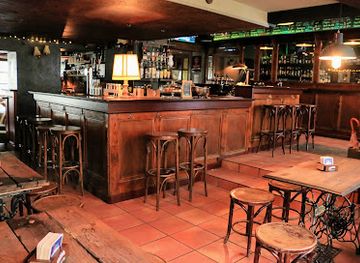
Grund has a modest evening scene built around small bars, restaurants and informal meeting places rather than a large nightclub concentration. Scott’s Pub is a recognisable waterside venue, and the streets near rue Münster become more sociable as restaurants and bars open into the evening. The atmosphere is generally more intimate than that of a purpose-built entertainment district, with historic façades and the river shaping the experience. Visitors seeking larger late-night venues can continue towards the nearby Rives de Clausen, an adjacent entertainment area rather than part of Grund proper. Because the lower quarter is also residential, keeping voices down when leaving venues is important, and late-night routes should account for steep steps, narrow lanes and changing access between the valley and upper city.
-
Gastropub
Scott's Pub
Discover the lively ambiance, delicious cuisine, and extensive drink selection at Scott's Pub, a must-visit gastropub in Luxembourg's Grund district.
2 min walk · 0.2 km from neighbourhood centre
-
Restaurant
Oscar's Bar
Explore Oscar's Bar, a vibrant restaurant in Luxembourg's Grund district, offering gourmet burgers and lively karaoke for an unforgettable dining experience.
3 min walk · 0.2 km from neighbourhood centre
-
Bar
Updown Bar
Discover Updown Bar in Luxembourg: A lively Irish pub experience with great food, drinks, and a vibrant atmosphere.
3 min walk · 0.2 km from neighbourhood centre
-
Bar
Liquid Bar
Experience the vibrant nightlife at Liquid Bar in Luxembourg's Grund district, where exquisite drinks and stunning views await.
3 min walk · 0.2 km from neighbourhood centre
Best nightclubs in Grund
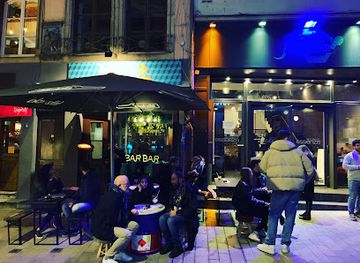
Grund has a modest evening scene built around small bars, restaurants and informal meeting places rather than a large nightclub concentration. Scott’s Pub is a recognisable waterside venue, and the streets near rue Münster become more sociable as restaurants and bars open into the evening. The atmosphere is generally more intimate than that of a purpose-built entertainment district, with historic façades and the river shaping the experience. Visitors seeking larger late-night venues can continue towards the nearby Rives de Clausen, an adjacent entertainment area rather than part of Grund proper. Because the lower quarter is also residential, keeping voices down when leaving venues is important, and late-night routes should account for steep steps, narrow lanes and changing access between the valley and upper city.
-
Disco club
Apoteca
Discover Apoteca: The Heart of Luxembourg's Nightlife with Italian Flavors and Unforgettable Beats!
7 min walk · 0.6 km from neighbourhood centre
-
Night club
Saumur Crystal Club
Discover the vibrant nightlife of Luxembourg at Saumur Crystal Club, where dining meets entertainment in a stylish setting for unforgettable evenings.
8 min walk · 0.6 km from neighbourhood centre
-
Night club
Melusina
Discover the heart of Luxembourg's nightlife at Melusina, where unforgettable moments and vibrant energy come together in a stunning setting.
7 min walk · 0.6 km from neighbourhood centre
-
Night club
Milady Palace
Milady Palace: Dive into Luxembourg's nightlife with electrifying music, vibrant ambiance, and a welcoming atmosphere every night.
6 min walk · 0.5 km from neighbourhood centre


Best shops in Grund
Shopping in Grund is limited and local in scale, with the emphasis on cafés, restaurants, cultural visits and the atmosphere of the historic streets rather than dedicated retail. Rue Münster and the lanes around Neumünster Abbey contain hospitality and service businesses, but visitors should not expect a long independent-shopping boulevard or a permanent market comparable with larger commercial areas elsewhere in Luxembourg City. The quarter is more useful for browsing its architecture, finding a small café or combining a visit with shops in the upper centre than for planning a full retail afternoon. Art and cultural programming at Neumünster Abbey may provide opportunities to encounter locally relevant creative work, although exhibitions and sales change. For broader fashion, department-store and specialist shopping, the upper city is nearby and more appropriate.
-
Store
Luxembourg House
Discover Luxembourg House: Your gateway to unique Luxembourgish gifts and gourmet baskets in the heart of Ville-Haute.
6 min walk · 0.5 km from neighbourhood centre
-
Clothing store
Urban Diamond
Explore Urban Diamond in Luxembourg for unique fashion finds, from chic clothing to exquisite accessories, all within a vibrant shopping experience.
5 min walk · 0.4 km from neighbourhood centre
-
Souvenir store
Butteck um Fëschmaart Souverniers (Sylvie Thoma)
Discover unique Luxembourgish souvenirs at Butteck um Fëschmaart Souverniers, your go-to shop for authentic keepsakes in Ville Haute.
7 min walk · 0.5 km from neighbourhood centre
-
Dress store
AWKA
Discover AWKA in Luxembourg's Grund district, where fashion meets elegance in a charming dress store offering unique styles and personalized service.
2 min walk · 0.1 km from neighbourhood centre


Grund essentials
Getting There
Getting Around
Safety
Emergency Situations
Do's and Don'ts
Local Tips
History of Grund
A Valley Below the Fortress
Grund developed in the Alzette valley beneath the fortified upper town, in terrain that was useful for settlement but difficult to defend without the walls and cliffs above it. Its name refers simply to the lower ground, distinguishing the quarter from Luxembourg’s elevated centre. The river shaped movement, work and the arrangement of buildings, while the slopes confined the neighbourhood to a narrow strip. Defensive structures on the surrounding heights influenced its history even when the lower streets were occupied by ordinary homes, workshops and small-scale commercial activity rather than by the political institutions of the upper city.
Abbeys and Lower-Town Communities
Religious foundations became central to Grund’s identity. Neumünster Abbey was established in the early seventeenth century after the Benedictine community of Altmünster was displaced, and its buildings were expanded over subsequent decades. The complex stood alongside a lower-town population whose livelihoods were connected to craft, trade and the river valley. Saint John’s Church, associated with the abbey, added another ecclesiastical landmark. Together these institutions gave Grund a cultural and architectural presence that extended beyond its role as a residential quarter below the fortress.
From Stronghold to Historic Quarter
Luxembourg’s fortifications were developed and remodelled over centuries as European military technology changed, and the cliffs above Grund formed part of this defensive landscape. After the fortress was dismantled in the nineteenth century under the terms of the Treaty of London, the city’s military landscape gradually acquired a civic and historical meaning. The lower quarter retained its close relationship with the walls, rocky escarpments and river crossings, while improved urban connections made it less isolated from the upper city. Its surviving landscape now helps visitors understand how Luxembourg’s topography shaped both defence and daily life.
A Prison Becomes a Cultural Centre
Neumünster Abbey later served as a prison, a chapter of its history that reflected the changing practical use of religious and fortified buildings after the French Revolution and the decline of monastic institutions. In the twentieth century, the complex was restored and adapted for cultural purposes. Today, the former abbey operates as a major public cultural venue, hosting exhibitions, performances, discussions and other activities. This transition from monastic foundation to prison and then cultural centre mirrors the wider transformation of Grund from a utilitarian lower-town setting into a valued historic and civic part of Luxembourg City.
Heritage and Contemporary Grund
The inclusion of Luxembourg’s old quarters and fortifications on the UNESCO World Heritage List in 1994 formalised the international importance of the landscape surrounding Grund. Heritage protection has preserved the relationship between the river, historic buildings, public paths and defensive heights, while the quarter has continued to accommodate homes, hospitality businesses and cultural institutions. Contemporary Grund is therefore not a reconstructed museum district: its narrow streets remain part of everyday city life. Visitors encounter a carefully preserved setting whose appeal depends on the continuing meeting of residential activity, public culture and dramatic topography.
Grund in Photos
Browse through our photo collection highlighting the charm and character of the destination.
Neighbourhoods near Grund
The closest neighbourhoods to Grund, if you have time for more than one stop.
-
-


Swipe for more neighbourhoods
Explore more

Explore more of Luxembourg City
Luxembourg City explores fortress heritage, old-town streets, museums, valleys and European culture for memorable sightseeing and local experiences year-round.
Explore Luxembourg City