Conacul lui Uvaliu Travel Guide
Free Guide: Discover the remnants of a grand 19th-century estate at Conacul lui Uvaliu in Moldova, where history whispers through the lone water tower.



A brief summary of Conacul lui Uvaliu
Discover the remnants of a grand 19th-century estate at Conacul lui Uvaliu in Moldova, where history whispers through the lone water tower.
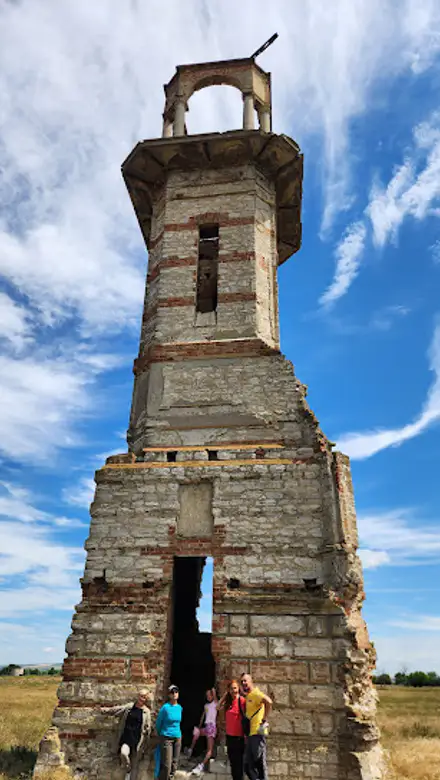
Conacul lui Uvaliu, located in Căzănești, Moldova, is the remnant of a grand estate from the late 19th century. Today, only a water tower remains, offering a glimpse into the region's history and the vast palace that once stood there.
- Address
- Moldova
Getting there
Driving
Public Transport
Discover more about Conacul lui Uvaliu
Overview
Conacul lui Uvaliu, situated in the village of Căzănești in the Telenești District of Moldova, whispers tales of a bygone era. What remains today is a solitary water tower, a fragment of what was once one of the largest estates in the Russian Empire during the late 19th and early 20th centuries. The estate belonged to Ștefan Uvaliu, a local nobleman and member of the State Duma of the Russian Empire. Little is known about Uvaliu himself, though it's believed he may have been of Bulgarian origin, with the name Stepan Uvalov. The palace, referred to by locals as 'Moșia boierului' or 'Palatul boierului,' reportedly boasted 99 rooms. Today, the grounds of the former palace resemble an uneven green field, with remnants of the foundation – unusual, semicircular, red bricks – hinting at the immense structure that once stood.The estate's destruction is shrouded in several legends. One account claims that in 1936, Uvaliu's heir sold the palace to two Romanian engineers who dismantled it brick by brick. Another version suggests the palace was blown up after the war due to a shortage of bricks for post-war reconstruction, with a boarding school later built on the site. A third version posits that the palace was bombed during the war, as a Soviet airfield was located nearby and attacked by German aircraft in 1941. Regardless of the truth, only the water tower and an observation platform survive, serving as a poignant reminder of the grand estate that once dominated the landscape.Căzănești itself is located on the Răut River and is known for being the site of Moldova's first hydroelectric power plant. A visit to Conacul lui Uvaliu offers a chance to reflect on Moldova's rich history and imagine the splendor of the Uvaliu estate in its prime.
Evendo Review Centre
 Google
Guest reviews
Explore Conacul lui Uvaliu on the map
A handpicked selection of must-see spots near Conacul lui Uvaliu, mapped for you.
Get your free copy of our complete guide to Conacul lui Uvaliu, delivered straight to you.
Everything on this page, from opening hours and how to get there to Eve’s tips and the best time to go, in one PDF you can read offline, print or share.
Already have an account? Sign in
Your Conacul lui Uvaliu guide is ready.
We'll send it to · Not you? Sign out

Getting your guide ready…
We are putting together a fresh copy of the Conacul lui Uvaliu guide. This can take up to a minute.
This can take a few moments. If your browser asks, choose Allow so the download can start. You'll find the guide in your Downloads folder.
Nothing happened? Download it again
Sorry, the guide is taking longer than usual. Please try again in a minute, or get it by email instead.
Other nearby places you may find interesting
The closest places of the same kind, if this one is not quite what you had in mind.
-
-

-
-
-


Swipe for more places
More to explore near Conacul lui Uvaliu

 Best experiences near Conacul lui Uvaliu
 Best hotels near Conacul lui Uvaliu
 Best landmarks near Conacul lui Uvaliu
 Best attractions near Conacul lui Uvaliu
 Best shops near Conacul lui Uvaliu
 Best restaurants near Conacul lui Uvaliu
 Best bars near Conacul lui Uvaliu
Do you manage this location?
Take control to get all the benefits, like improved information, better appearance, and stronger visibility across AI-powered discovery.
Explore more

Explore more of Lăpușna County
Discover the scenic landscapes, rich cultural heritage, and renowned vineyards of Lăpușna County, a hidden gem in the heart of Moldova.
Explore Lăpușna County
Explore more of Moldova
Discover Moldova: A tranquil haven of rich history, stunning vineyards, and captivating natural landscapes, perfect for an off-the-beaten-path European adventure.
Explore Moldova