

Marshan (Tangier) Travel Guide - Free
Explore Marshan in Tangier with Evendo's free guide. Find the best shops, historic streets, restaurants, and gems on web or mobile.


Marshan in Tangier offers sea views, Café Hafa, Phoenician Tombs, Saint Andrew’s Church and peaceful streets above Morocco’s historic medina.
A Residential Quarter Above the Strait
Marshan occupies an elevated stretch west of Tangier’s old medina, where quiet residential streets, gardens and sea-facing terraces replace the dense lanes of the historic centre. Its position gives the neighbourhood a different rhythm from the souks below: traffic is lighter, houses are often set back behind walls, and views open towards the Strait of Gibraltar and the northern coast. The area is closely associated with Tangier’s diplomatic and cosmopolitan past, yet it remains primarily a lived-in quarter rather than a concentrated sightseeing district.Read more about Marshan
Clifftops, Cafés and Historic Buildings
A Quieter Side of Tangier
Best attractions in Marshan
Marshan’s attractions are defined by outlook, atmosphere and historical layering rather than by a large collection of ticketed institutions. Café Hafa, established in 1921, occupies terraces cut into the hillside and is the neighbourhood’s best-known meeting place, with views across the Strait of Gibraltar. The nearby Phoenician Tombs form an open-air archaeological site on a rocky plateau; their ancient origins and dramatic setting make them a distinctive stop, although the terrain is uneven and the site is not a conventional museum. Saint Andrew’s Church adds a quieter cultural dimension through its architecture, churchyard and memorial inscriptions. Walking the roads around upper Marshan reveals old villas, garden walls, sea-facing corners and glimpses of the Palais Marshan, the royal residence. The medina’s museums and souks are close by, but they lie downhill and belong to Tangier’s old city rather than Marshan itself.
-
Park
Marshan Park
Experience tranquility in Marshan Park, a beautiful urban oasis in Tangier, perfect for relaxation and cultural immersion.
5 min walk · 0.4 km from neighbourhood centre
-
Art museum
Donkey Museum
Explore the Donkey Museum in Tangier, a unique art museum celebrating the cultural significance of donkeys in Moroccan life and artistry.
5 min walk · 0.4 km from neighbourhood centre
-
Tourist attraction
Petit Socco
Explore the cultural heart of Tangier at Petit Socco, a vibrant square filled with history, shops, and delightful Moroccan cuisine.
10 min walk · 0.8 km from neighbourhood centre


Best landmarks in Marshan
The Phoenician Tombs are among Marshan’s most distinctive physical landmarks: rock-cut cavities on an exposed plateau that connect Tangier’s modern landscape with its ancient past, even though their precise interpretation and condition require visitors to treat the site with care. Saint Andrew’s Church is another important landmark, combining an Anglican foundation with Moroccan-influenced decorative elements and a churchyard whose gravestones reflect Tangier’s international history. Café Hafa is less monumental but equally symbolic, its hillside terraces embedded in the neighbourhood’s twentieth-century cultural memory. The Palais Marshan, a royal residence, gives the quarter further political and architectural significance, though it is not open as a visitor attraction. Together these places give Marshan an identity shaped by archaeology, worship, royal presence and the sea-facing geography of Tangier.
-
Historical landmark
Bab Al Bahr
Explore Bab Al Bahr, the majestic gateway in Tangier where the Atlantic meets the Mediterranean, rich in history and stunning views.
8 min walk · 0.7 km from neighbourhood centre
-
Museum
Tangier American Legation Museum
Explore the Tangier American Legation Museum, a historical gem showcasing the rich tapestry of American-Moroccan relations through art and artifacts.
10 min walk · 0.8 km from neighbourhood centre
-
Historical landmark
Tombeaux Phéniciens
Explore the Tombeaux Phéniciens in Tangier, a captivating historical landmark that reveals the rich history of the Phoenician civilization amidst stunning scenery.
5 min walk · 0.4 km from neighbourhood centre
-
Park
Marshan Park
Explore the lush landscapes and vibrant culture of Marshan Park, a serene retreat in the heart of Tangier, perfect for relaxation and scenic views.
5 min walk · 0.4 km from neighbourhood centre


Explore Marshan on the map
A handpicked selection of must-see spots in Marshan, mapped for you.
Best hotels in Marshan
Best restaurants in Marshan
Marshan has a more limited dining scene than Tangier’s medina and central avenues, with its food identity centred on cafés, simple local refreshments and the pleasure of eating above the sea. Café Hafa is the defining stop, known for mint tea and light fare served on its stepped terraces rather than for a formal restaurant experience. Around the residential streets, visitors may find modest cafés and places serving Moroccan staples, but the choice is less concentrated and less varied than in the old city. The neighbourhood is therefore well suited to combining a drink or snack with a viewpoint, followed by a descent to the medina for broader options including traditional Moroccan cooking, bakeries and market food. Because Marshan remains primarily residential, visitors should avoid assuming that every quiet street contains restaurants or late dining.
-
Moroccan
Restaurant Ahlen
Experience authentic Moroccan cuisine at Restaurant Ahlen in Tangier's Ancien Medina - where every dish tells a story.
11 min walk · 0.8 km from neighbourhood centre
-
Restaurant
Kebdani Restaurant
Discover the authentic flavors of Morocco at Kebdani Restaurant in Tangier's historic Ancien Medina.
11 min walk · 0.8 km from neighbourhood centre
-
Moroccan
Restaurant Al Maimouni
Discover authentic Moroccan cuisine at Restaurant Al Maimouni in Tangier’s historic Ancien Medina – where every dish tells a story.
12 min walk · 0.9 km from neighbourhood centre
-
Syrian
Abou Tayssir
Discover authentic Syrian flavors at Abou Tayssir in Tangier - where every meal tells a story.
6 min walk · 0.5 km from neighbourhood centre


Best bars in Marshan
Marshan is not one of Tangier’s principal nightlife districts. Evenings here are generally subdued, with cafés providing the most characteristic places to pause rather than a dense circuit of bars and nightclubs. Café Hafa can remain a social focus after sunset, although its appeal is the setting and long cultural association rather than club-style entertainment. The residential streets become quiet, and the cliff viewpoints are not suitable for aimless late-night wandering, especially where lighting or barriers are limited. Visitors looking for a wider choice of hotel bars, live music or late venues will usually need to continue towards Tangier’s central areas or the newer city districts. In Marshan, the evening experience is better understood as a calm drink, conversation and view than as a conventional night out.
-
Pub
London's Pub
Discover London's Pub in Tangier: A perfect fusion of British charm and Moroccan hospitality with delicious food and drinks.
17 min walk · 1.4 km from neighbourhood centre
-
Bar
Pub Carrousel
Discover the vibrant nightlife of Tangier at Pub Carrousel, a lively bar offering a unique blend of local flavors and an inviting atmosphere.
13 min walk · 1.1 km from neighbourhood centre
-
Restaurant
Chico’s
Experience the vibrant flavors of Moroccan tapas at Chico’s, a culinary hotspot in Tangier known for its lively atmosphere and exquisite dining.
16 min walk · 1.3 km from neighbourhood centre
-
Bar
Tangerinn
Experience the vibrant nightlife at Tangerinn, a lively bar in Tangier offering delightful drinks and a taste of local culture.
15 min walk · 1.2 km from neighbourhood centre


Best nightclubs in Marshan
Marshan is not one of Tangier’s principal nightlife districts. Evenings here are generally subdued, with cafés providing the most characteristic places to pause rather than a dense circuit of bars and nightclubs. Café Hafa can remain a social focus after sunset, although its appeal is the setting and long cultural association rather than club-style entertainment. The residential streets become quiet, and the cliff viewpoints are not suitable for aimless late-night wandering, especially where lighting or barriers are limited. Visitors looking for a wider choice of hotel bars, live music or late venues will usually need to continue towards Tangier’s central areas or the newer city districts. In Marshan, the evening experience is better understood as a calm drink, conversation and view than as a conventional night out.
-
Social club
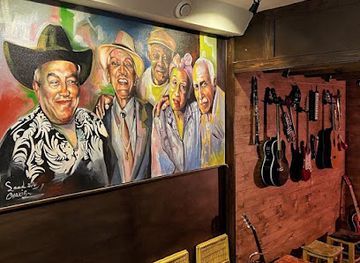
Buena Vista Tanger Club
Experience the vibrant fusion of music, culture, and relaxation at Buena Vista Tanger Club, Tangier's premier social hub.
10 min walk · 0.8 km from neighbourhood centre
-
Night club
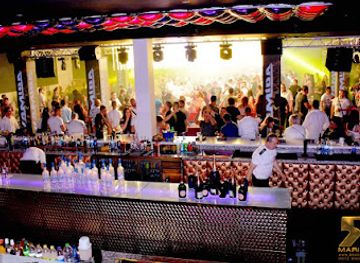
555 Famous Club
Immerse yourself in the vibrant nightlife of Tangier at 555 Famous Club, where music, dance, and excitement come alive in a stunning atmosphere.
6 min drive · 2.0 km from neighbourhood centre
-
Night club
Nana Club
Experience the pulsating nightlife of Tangier at Nana Club, where music, dance, and vibrant energy come together in one unforgettable venue.
7 min drive · 2.5 km from neighbourhood centre
-
Night club
Borsalino club
Discover the vibrant nightlife at Borsalino Club in Tangier, where music, hookah, and live entertainment create unforgettable experiences.
16 min walk · 1.3 km from neighbourhood centre
Best shops in Marshan
Shopping is not Marshan’s principal activity. The neighbourhood’s small-scale commercial life is oriented towards residents and visitors seeking drinks, snacks and everyday necessities rather than a specialised retail experience. Café Hafa provides a place to pause, but it is not a market or craft quarter, while the streets around the villas contain limited visible retail compared with Tangier’s old city. For Moroccan textiles, leather goods, spices, jewellery and traditional household items, visitors should descend to the medina and its souks, which are nearby but geographically distinct from Marshan. The central shopping streets offer further modern retail beyond the neighbourhood. Marshan’s contribution to Tangier’s visitor economy is therefore its cafés, viewpoints and atmosphere, not a concentration of independent boutiques or specialist shops.
-
Store
Las Chicas
Discover the charm of Moroccan craftsmanship at Las Chicas, a boutique store in Tangier offering unique, quality products and a vibrant shopping experience.
4 min walk · 0.3 km from neighbourhood centre
-
Store
Medina Shop
Explore the vibrant Medina Shop in Tangier's Old Medina for authentic Moroccan crafts, textiles, and an unforgettable cultural experience.
8 min walk · 0.6 km from neighbourhood centre
-
Antique store
Boutique Majid
Explore the historic treasures of Morocco at Boutique Majid, an enchanting antique store in Tangier's vibrant Ancien Medina.
9 min walk · 0.7 km from neighbourhood centre
-
Shopping mall
Traditional Art Gallery
Explore the Traditional Art Gallery in Tangier for a rich experience of Moroccan culture and exquisite craftsmanship.
8 min walk · 0.6 km from neighbourhood centre


Marshan essentials
Getting There
Getting Around
Safety
Emergency Situations
Do's and Don'ts
Local Tips

From Eve
Local phrases worth knowing
You don't need to get them perfect. A few words go a long way, and locals appreciate the effort.
Basics
| English | Local | Say it |
|---|---|---|
| Hello | سلام | [salaam] |
| Goodbye | وداعا | [wada'an] |
| Yes | نعم | [naam] |
| No | لا | [laa] |
| Please/You're welcome | من فضلك | [min fadlik] |
| Thank you | شكرا | [shukran] |
| Excuse me/Sorry | عذرا | [aathir] |
| How are you? | كيف حالك؟ | [kayfa halak?] |
| Fine. And you? | بخير. وأنت؟ | [bikhayr. wa ant?] |
| Do you speak English? | هل تتحدث الإنجليزية؟ | [hal tatahadath al'injlizia?] |
| I don't understand | لا أفهم | [laa afham] |
Eating & Drinking
| English | Local | Say it |
|---|---|---|
| I'd like to see the menu, please | أود أن أرى القائمة، من فضلك | [awad an ara alqa'imah, min fadlik] |
| I don't eat meat | أنا لا آكل اللحم | [ana la aakul allahm] |
| Cheers! | في صحتك! | [fi sahtak!] |
| I would like to pay, please | أود أن أدفع، من فضلك | [awad an adfa', min fadlik] |
Emergencies
| English | Local | Say it |
|---|---|---|
| Help! | النجدة! | [annajdah!] |
| Go away! | ارحل! | [irhal!] |
| Call the Police! | اتصل بالشرطة! | [iatisil bialshurta!] |
| Call a doctor! | اتصل بطبيب! | [iatisil bitabib!] |
| I'm lost | لقد ضللت | [laqad dalalt] |
| I'm ill | أنا مريض | [ana mareed] |
Shopping
| English | Local | Say it |
|---|---|---|
| I'd like to buy... | أود أن أشتري... | [awad an ashtari...] |
| I'm just looking | أنا فقط أتطلع | [ana faqat atatallu'] |
| How much is it? | بكم هذا؟ | [bi kam hadha?] |
| That's too expensive | هذا غالي جدا | [hadha ghali jiddan] |
| Can you lower the price? | هل يمكنك تخفيض السعر؟ | [hal yumkinuk takhfid als'ar?] |
Time & Numbers
| English | Local | Say it |
|---|---|---|
| What time is it? | كم الساعة؟ | [kam alssa'ah?] |
| It's one o'clock | الساعة الواحدة | [alssa'ah alwahidah] |
| Half past (10) | النصف بعد العاشرة | [alnusf ba'd al'aashirah] |
| Morning | الصباح | [assaabah] |
| Afternoon | العصر | [al'asr] |
| Evening | المساء | [almasa'] |
| Yesterday | أمس | [ams] |
| Today | اليوم | [alyawm] |
| Tomorrow | غدا | [ghadan] |
| 1 | واحد | [wahid] |
| 2 | اثنان | [ithnaan] |
| 3 | ثلاثة | [thalatha] |
| 4 | أربعة | [arba'ah] |
| 5 | خمسة | [khamsah] |
| 6 | ستة | [sittah] |
| 7 | سبعة | [saba'ah] |
| 8 | ثمانية | [thamania] |
| 9 | تسعة | [tasia] |
| 10 | عشرة | [ashara] |
Transport & Directions
| English | Local | Say it |
|---|---|---|
| Where's a/the...? | أين... | [ayn...] |
| What's the address? | ما هو العنوان؟ | [ma hu al'anaan?] |
| Can you show me (on the map)? | هل يمكنك أن تريني (على الخريطة)؟ | [hal yumkinuk 'an taraani (ala alkharitat)?] |
| When's the next (bus)? | متى الحافلة التالية؟ | [mata alhafilah altaliyah?] |
| A ticket (to ....) | تذكرة (إلى ...) | [tazkirah (ila ...)] |
History of Marshan
From Outlying Heights to Urban Quarter
Marshan developed on the uplands west of Tangier’s historic core, an area whose elevated position and open outlook distinguished it from the compact medina. Its modern identity took shape as Tangier expanded beyond the old walls during the nineteenth and early twentieth centuries. Villas, gardens and diplomatic residences appeared on the higher ground, benefiting from sea air and views towards the Strait. The name is also associated with the palace complex known as Palais Marshan, which became an important royal presence in the city. Rather than emerging as a commercial centre, the quarter acquired a predominantly residential and institutional character.
Tangier’s International Era
During Tangier’s period as an international city from 1923 to 1956, Marshan formed part of the landscape favoured by foreign residents, consular communities and affluent local families. Its villas and gardens reflected the city’s mixture of Moroccan, Mediterranean and European influences, while roads and public services connected the upper quarter with the medina and newer districts. The period also strengthened Tangier’s reputation as a meeting place for writers, artists, diplomats and travellers. Café Hafa, opened in 1921, became one of the neighbourhood’s enduring social landmarks, valued less for elaborate architecture than for its terraces and extraordinary position above the sea.
Saint Andrew’s and the Cosmopolitan Landscape
The Church of Saint Andrew became another important expression of Tangier’s international character. The Anglican church was built in the early twentieth century on land provided during the city’s late pre-independence period, and its garden cemetery contains inscriptions and memorials connected with the diverse communities that lived in Tangier. Its architecture and interior combine Christian forms with local artistic references, including Moroccan-inspired decorative details. In Marshan, the church is significant not only as a place of worship but also as a physical record of the foreign institutions that once operated alongside Moroccan neighbourhood life.
Post-Independence Residential Continuity
After Morocco gained independence in 1956, Tangier’s international institutions declined or changed function, but Marshan retained its residential importance and its association with the royal palace. The quarter’s gardens, villas and cliffside viewpoints continued to distinguish it from the commercial centre, even as the city expanded westwards and southwards. Café Hafa remained a cultural reference point, while the Phoenician Tombs and Saint Andrew’s preserved older layers of the city’s history. Contemporary Marshan is therefore less a preserved historic enclave than a layered urban neighbourhood, where royal, colonial-era, religious and everyday residential landscapes coexist.
Marshan in Photos
Browse through our photo collection highlighting the charm and character of the destination.
Neighbourhoods near Marshan
The closest neighbourhoods to Marshan, if you have time for more than one stop.
-

-

-

-


Swipe for more neighbourhoods
Explore more

Explore more of Tangier
Tangier, Morocco blends medina streets, Atlantic views, Phoenician and Moroccan history, cafés, markets and gateway excursions between Africa and Spain.
Explore Tangier