

Free Gorham's Cave Complex Travel Guide & Mobile App
Plan your Gorham's Cave Complex trip with Evendo. Get free guides to top attractions, restaurants, hotels, and bars. Web access or download the mobile app.


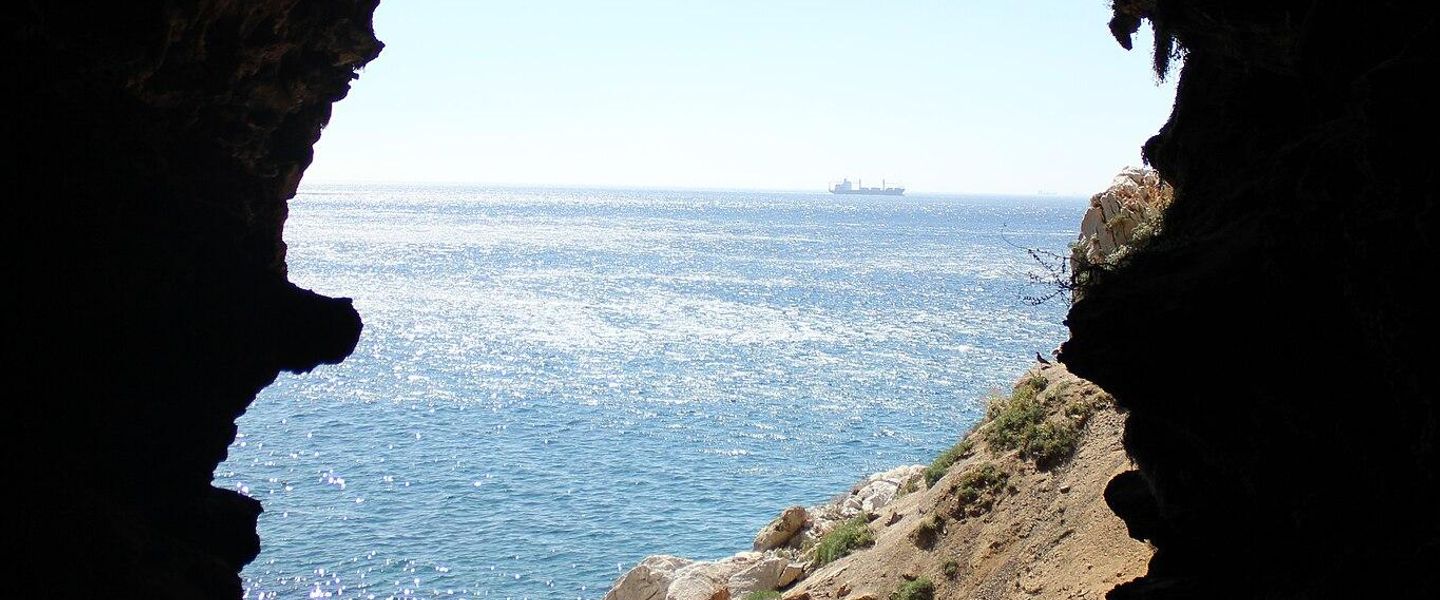


Gorham's Cave Complex in Gibraltar reveals Neanderthal archaeology, dramatic sea cliffs, Rock landscapes and guided heritage experiences beside the Mediterranean.
Cliffs, Caves and Deep Time
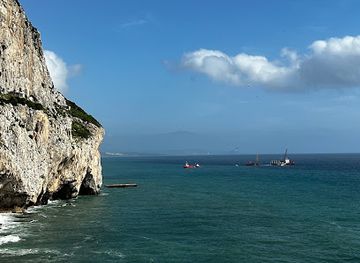
Gorham's Cave Complex occupies the eastern face of the Rock of Gibraltar, where limestone cliffs descend towards the Mediterranean and the Strait of Gibraltar. It is not a conventional urban destination but an archaeological landscape of exceptional importance: the linked caves preserve evidence of Neanderthal occupation and offer a rare glimpse into human life during the Pleistocene. The complex comprises Gorham's Cave, Vanguard Cave, Hyaena Cave and Bennett's Cave, although access to the archaeological areas is controlled and may depend on authorised arrangements.Read more about Gorham's Cave Complex
A Landscape Shaped by the Rock
Gibraltar Beyond the Archaeology
When is the best time to visit Gorham's Cave Complex?
Best: May–June, October · 24–26°C| Month | High (°C) | Rainfall (mm) |
|---|---|---|
| January | 18 | 60 |
| February | 19 | 50 |
| March | 20 | 40 |
| April | 22 | 30 |
| May (best) | 24 | 20 |
| June (best) | 26 | 10 |
| July | 29 | 10 |
| August | 30 | 15 |
| September | 29 | 30 |
| October (best) | 26 | 40 |
| November | 22 | 50 |
| December | 19 | 60 |
Getting to and around Gorham's Cave Complex
How to get there
Transportation
Best attractions in Gorham's Cave Complex
Gorham's Cave Complex is Gibraltar's defining prehistoric attraction, a protected group of caves on the eastern face of the Rock where archaeological deposits record Neanderthal occupation over many thousands of years. Because the site is sensitive and access is controlled, it should be approached as a heritage landscape rather than an ordinary walk-in cave. The nearby Gibraltar Nature Reserve provides a wider experience of limestone cliffs, Mediterranean vegetation, birdlife and the Rock's famous Barbary macaques, while St Michael's Cave presents a very different spectacle of illuminated chambers and natural formations. At the southern end of the territory, Europa Point offers views across the Strait towards Morocco and along the coast, and Catalan Bay adds a small seaside settlement with a distinctive sheltered setting. The Gibraltar National Museum, in town, supplies valuable archaeological and cultural context, linking prehistoric evidence with the territory's later Phoenician, Roman, Moorish, Spanish and British histories.
-
Hiking area
Mediterranean Steps
Discover the breathtaking views and rich history of Gibraltar as you hike the scenic Mediterranean Steps, a top tourist attraction for nature lovers.
4 min walk · 0.3 km from city centre
-
Historical landmark
O'Hara's Battery
Discover the historical significance and stunning views of O'Hara's Battery, a captivating landmark in Gibraltar, perfect for history lovers and nature enthusiasts.
2 min walk · 0.2 km from city centre
-
Tourist attraction
Spyglass Battery
Explore the historic Spyglass Battery in Gibraltar, a scenic spot with breathtaking views and rich military history waiting to be discovered.
7 min walk · 0.6 km from city centre
-
Tourist attraction
Levant Battery
Explore the historic Levant Battery in Gibraltar, a stunning military landmark offering rich history and breathtaking coastal views.
4 min walk · 0.4 km from city centre
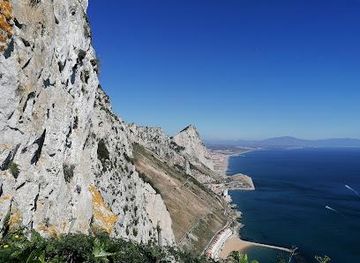

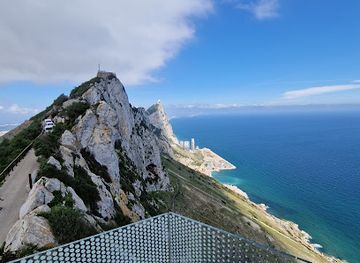
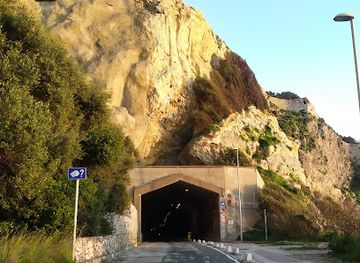
Best landmarks in Gorham's Cave Complex
The caves themselves are the principal symbolic landmarks of the complex, with Gorham's Cave lending its name to the UNESCO-protected archaeological site and Vanguard, Hyaena and Bennett's caves completing the group. Their significance lies less in visible architecture than in the preserved relationship between shelter, cliff and evidence of Neanderthal life. Elsewhere on the Rock, the Rock of Gibraltar is the overwhelming natural landmark, its limestone mass shaping the territory's history and views across the Strait. The Moorish Castle and its Tower of Homage represent Gibraltar's Islamic and medieval defensive history, while the Great Siege Tunnels show the later military transformation of the Rock. St Michael's Cave, a naturally formed limestone cavern adapted for public interpretation and performances, adds a geological counterpoint. Europa Point Lighthouse marks the southern extremity and the meeting of major maritime routes.
-
Historical landmark
Gorham's Cave
Explore Gorham's Cave in Gibraltar, a UNESCO site revealing Neanderthal history and stunning Mediterranean vistas.
3 min walk · 0.3 km from city centre
Explore Gorham's Cave Complex on the map
Plan your Gorham's Cave Complex trip on one map. See where the top attractions, landmarks, restaurants, bars and hotels are, find what's near where you're staying, and book hotels and experiences in a few clicks.
Best hotels in Gorham's Cave Complex
Get your free copy of our complete guide to Gorham's Cave Complex, delivered straight to you.
Everything on this page, from attractions and restaurants to essentials and local phrases, in one PDF you can read offline, print or share.
Already have an account? Sign in
Your Gorham's Cave Complex guide is ready.
We'll send it to · Not you? Sign out

Getting your guide ready…
We are putting together a fresh copy of the Gorham's Cave Complex guide. This can take up to a minute.
This can take a few moments. If your browser asks, choose Allow so the download can start. You'll find the guide in your Downloads folder.
Nothing happened? Download it again
Sorry, the guide is taking longer than usual. Please try again in a minute, or get it by email instead.
Gorham's Cave Complex essentials
Currency and Payment
Safety
Emergency Situations
Do's and Don'ts
Local Tips
From Eve
Local phrases worth knowing
You don't need to get them perfect. A few words go a long way, and locals appreciate the effort.
Basics
| English | Local | Say it |
|---|---|---|
| Hello | Hola | [oh-la] |
| Goodbye | Adiós | [ah-dee-ohs] |
| Yes | Sí | [see] |
| No | No | [noh] |
| Please/You're welcome | Por favor/De nada | [por fah-vor/de nah-dah] |
| Thank you | Gracias | [grah-see-ahs] |
| Excuse me/Sorry | Perdón | [pehr-dohn] |
| How are you? | ¿Cómo estás? | [koh-moh ehs-tahs] |
| Fine. And you? | Bien. ¿Y tú? | [byen. ee too] |
| Do you speak English? | ¿Hablas inglés? | [ah-blahs een-glehs] |
| I don't understand | No entiendo | [noh ehn-tee-ehn-doh] |
Eating & Drinking
| English | Local | Say it |
|---|---|---|
| I'd like to see the menu, please | Me gustaría ver el menú, por favor | [meh goos-tah-ree-ah behr ehl meh-noo, poor fah-vor] |
| I don't eat meat | No como carne | [noh koh-moh kahr-neh] |
| Cheers! | ¡Salud! | [sah-lood] |
| I would like to pay, please | Me gustaría pagar, por favor | [meh goos-tah-ree-ah pah-gahr, poor fah-vor] |
Emergencies
| English | Local | Say it |
|---|---|---|
| Help! | ¡Ayuda! | [ah-yoo-dah] |
| Go away! | ¡Vete! | [veh-teh] |
| Call the Police! | ¡Llama a la policía! | [yah-mah ah lah poh-lee-see-ah] |
| Call a doctor! | ¡Llama a un médico! | [yah-mah ah oon meh-dee-koh] |
| I'm lost | Estoy perdido/a | [ehs-toy pehr-dee-doh/ah] |
| I'm ill | Estoy enfermo/a | [ehs-toy ehn-fehr-moh/ah] |
Shopping
| English | Local | Say it |
|---|---|---|
| I'd like to buy... | Me gustaría comprar... | [meh goos-tah-ree-ah kohm-prahr...] |
| I'm just looking | Solo estoy mirando | [soh-loh ehs-toy meer-ahn-doh] |
| How much is it? | ¿Cuánto cuesta? | [kwan-toh kwehs-tah] |
| That's too expensive | Eso es demasiado caro | [eh-soh ehs deh-mah-see-ah-doh kah-roh] |
| Can you lower the price? | ¿Puedes rebajar el precio? | [pweh-dehs reh-bah-hahr ehl pree-syoh] |
Time & Numbers
| English | Local | Say it |
|---|---|---|
| What time is it? | ¿Qué hora es? | [keh oh-rah ehs] |
| It's one o'clock | Es la una en punto | [ehs lah oo-nah ehn poon-toh] |
| Half past (10) | Las diez y media | [lahs dee-ehs ee meh-dee-ah] |
| Morning | Mañana | [mah-nyah-nah] |
| Afternoon | Tarde | [tahr-deh] |
| Evening | Noche | [noh-cheh] |
| Yesterday | Ayer | [ah-yehr] |
| Today | Hoy | [oy] |
| Tomorrow | Mañana | [mah-nyah-nah] |
| 1 | Uno | [oo-noh] |
| 2 | Dos | [dohs] |
| 3 | Tres | [trehs] |
| 4 | Cuatro | [kwa-troh] |
| 5 | Cinco | [seen-koh] |
| 6 | Seis | [says] |
| 7 | Siete | [syeh-teh] |
| 8 | Ocho | [oh-choh] |
| 9 | Nueve | [nweh-veh] |
| 10 | Diez | [dee-ehs] |
Transport & Directions
| English | Local | Say it |
|---|---|---|
| Where's a/the...? | ¿Dónde está...? | [dohn-deh ehs-tah] |
| What's the address? | ¿Cuál es la dirección? | [kwal ehs lah dee-rehk-syon] |
| Can you show me (on the map)? | ¿Puedes mostrarme (en el mapa)? | [pweh-dehs mohs-trar-meh (ehn ehl mah-pah)] |
| When's the next (bus)? | ¿Cuándo es el próximo (autobús)? | [kwan-doh ehs ehl proh-ksee-moh (ow-toh-boos)] |
| A ticket (to ....) | Un billete (para ....) | [oon bee-yeh-teh (pah-rah)] |
History of Gorham's Cave Complex
Neanderthals on the Mediterranean Frontier
Gorham's Cave Complex preserves evidence of Neanderthal activity between approximately 127,000 and 24,000 years ago, making the caves an important record of late Neanderthal life in Europe. The Rock's position at the entrance to the Mediterranean created a meeting point between coastal and inland environments, while the caves offered shelter above the shore. Archaeological deposits include stone tools, animal remains and traces of fire use. Evidence associated with the complex has also contributed to discussions about Neanderthal diet, mobility and symbolic behaviour. Rather than representing a single settlement, the deposits record repeated use over a very long period as climate, vegetation and shorelines changed.
Caves, Shorelines and Changing Climates
The archaeology of the complex reflects dramatic environmental change during the Pleistocene. Sea levels rose and fell, altering the distance between the caves and the coast, while colder and warmer phases changed the animals and plants available to human groups. Neanderthals used the wider Gibraltar landscape for hunting, gathering and perhaps coastal foraging, leaving material that helps archaeologists reconstruct their relationship with the southern Iberian Peninsula. The caves' position and relatively protected deposits allowed layers of occupation to survive, turning the site into a long chronological archive rather than an isolated prehistoric camp.
From Captain Gorham to Modern Excavation
Gorham's Cave takes its name from Captain A. Gorham, a British officer who encountered the cave in 1907. Systematic archaeological work began much later, particularly after investigations led by John d'Arcy Waechter in the mid-twentieth century. Subsequent research greatly expanded understanding of the complex and demonstrated the depth and importance of its deposits. The name therefore belongs to the history of the site's modern discovery, while the principal story remains far older: repeated occupation by Neanderthals and later human communities in a cave system overlooking the Strait.
Later Human Use of the Rock
Gibraltar continued to attract people because of its commanding position and natural shelter. Modern research at the caves has identified evidence of later human activity above and alongside the Neanderthal layers, illustrating how the same coastal promontory remained useful across different periods. The wider Rock contains traces of Phoenician, Roman, Moorish, Spanish and British history, although these belong to the broader territory rather than to a single continuous occupation of Gorham's Cave itself. This layered historical setting gives the complex significance beyond prehistory: it forms one chapter in Gibraltar's long relationship with movement through the Strait.
Recognition as a World Heritage Site
Gorham's Cave Complex was inscribed on the UNESCO World Heritage List in 2016 for its exceptional evidence of Neanderthal occupation and its contribution to understanding human evolution. The designation covers the caves and their archaeological setting on the eastern side of Gibraltar. It also emphasises the importance of conserving fragile deposits, rock surfaces and environmental context. Today, interpretation of the complex connects excavation, palaeoenvironmental research and heritage protection, while access is managed so that public interest does not compromise the evidence that makes the site internationally significant.
Gorham's Cave Complex in Photos
Browse through our photo collection highlighting the charm and character of the destination.
Cities near Gorham's Cave Complex
The closest cities to Gorham's Cave Complex, if you have time for more than one stop.
-

-

-

-

-


Swipe for more cities
Explore more

Explore more of Gibraltar
Discover Gibraltar, a unique blend of British and Spanish cultures, stunning natural beauty, and rich history at the gateway to the Mediterranean.
Explore Gibraltar