

Free Jamestown Travel Guide & Mobile App
Plan your Jamestown trip with Evendo. Get free guides to top attractions, restaurants, hotels, and bars. Web access or download the mobile app.


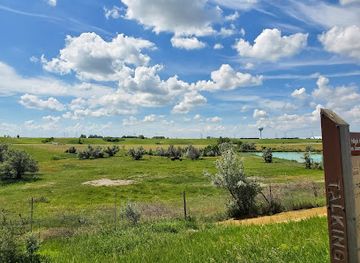
Jamestown, North Dakota, pairs prairie history, railroad heritage, buffalo country and family-friendly attractions with relaxed small-city hospitality.
Railroad Origins and Prairie Character
Jamestown stands in east-central North Dakota where the James River crosses open prairie, a setting that has shaped the city’s history, economy and identity. Established in 1872 as the Northern Pacific Railway pushed westwards, it developed as a regional service centre for farms and ranches spread across the surrounding landscape. The compact centre retains a practical small-city character, while Interstate 94 makes Jamestown a convenient stop between Fargo and Bismarck.Read more about Jamestown
Buffalo Country and Local History
Rivers, Reservoirs and Quiet Discoveries
When is the best time to visit Jamestown?
Best: June–August · 24–26°C| Month | High (°C) | Rainfall (mm) |
|---|---|---|
| January | -8 | 18 |
| February | -6 | 16 |
| March | 3 | 25 |
| April | 12 | 37 |
| May | 21 | 58 |
| June (best) | 24 | 80 |
| July (best) | 26 | 82 |
| August (best) | 26 | 65 |
| September | 20 | 45 |
| October | 13 | 33 |
| November | 3 | 23 |
| December | -4 | 18 |
Getting to and around Jamestown
How to get there
Transportation
Best attractions in Jamestown
Jamestown’s principal attractions bring together prairie wildlife, local history and open-air recreation. The National Buffalo Museum introduces the biology, conservation and cultural significance of the American bison, while the World’s Largest Buffalo stands on a hill above the city as Jamestown’s most recognisable roadside landmark. Frontier Village presents a collection of historic buildings and artefacts associated with pioneer-era North Dakota, offering a more tangible picture of early settlement than a conventional gallery alone. In town, the Stutsman County Courthouse provides an important link to territorial and county history, and the Basilica of St James adds architectural and religious interest. Jamestown Reservoir extends sightseeing into the landscape, with fishing, boating, birdwatching and quiet shoreline views. The nearby James River and surrounding grasslands reinforce the sense of a city shaped by water, railway, agriculture and the broad horizons of the northern Great Plains.
-
Tourist attraction
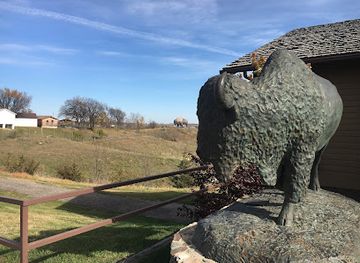
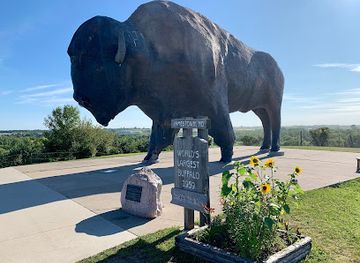
World's Largest Buffalo Monument
Experience the grandeur of the World's Largest Buffalo Monument in Jamestown, ND - a historical landmark celebrating the region's rich heritage.
7 min drive · 2.5 km from city centre
-
Tourist attraction
North American Bison Discovery Center
Discover the heart of North Dakota at the North American Bison Discovery Center, where the majestic bison come to life in an engaging educational experience.
8 min drive · 2.5 km from city centre
-
Tourist attraction
McElroy Park
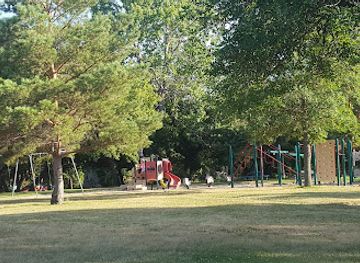
Discover the charm of McElroy Park in Jamestown, ND – a perfect blend of relaxation, recreation, and natural beauty for all visitors.
6 min drive · 1.8 km from city centre
-
Tourist attraction
St. James Basilica
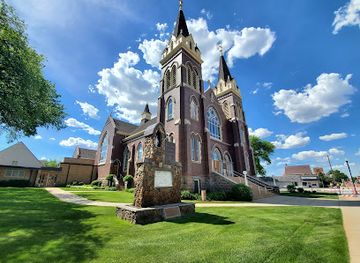
Discover the architectural beauty and serene spirit of St. James Basilica, a must-visit Catholic church in Jamestown, North Dakota, rich in history and community.
11 min walk · 0.9 km from city centre
Best landmarks in Jamestown
Jamestown’s landmarks express its railway-town origins, civic development and enduring association with the Great Plains. The World’s Largest Buffalo, a large concrete sculpture overlooking Frontier Village, has represented the city’s connection with bison country since the mid-twentieth century. The Stutsman County Courthouse, completed in 1883, is a notable survivor of the period when county institutions anchored Dakota communities and remains an important example of Jamestown’s territorial-era civic heritage. The Basilica of St James reflects the growth of Roman Catholic life in the region and is one of the city’s most distinctive religious buildings. Frontier Village, although an assembled historic collection rather than a single original district, preserves buildings and objects associated with pioneer settlement. Together these landmarks show how transport, government, faith, memory and prairie symbolism shaped Jamestown’s public identity.
-
Historical landmark
World's Largest Buffalo Monument
Experience the grandeur of the World's Largest Buffalo Monument in Jamestown, ND, a must-visit historical landmark celebrating American heritage.
7 min drive · 2.5 km from city centre
-
Pizza
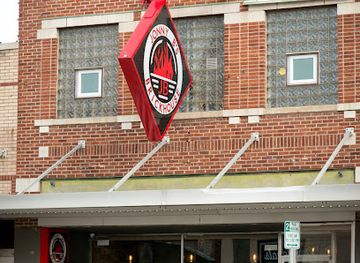
Jonny B's Brickhouse
Explore the delicious offerings of Jonny B's Brickhouse in Jamestown, ND, where pizza and bar & grill favorites come to life in a welcoming atmosphere.
5 min walk · 0.4 km from city centre
-
Truck stop
S & R Truck Plaza & Cafe
Discover comfort and community at S & R Truck Plaza & Cafe, the ideal stop for travelers in Jamestown, North Dakota, offering delicious food and essential services.
8 min drive · 2.8 km from city centre
-
Mexican
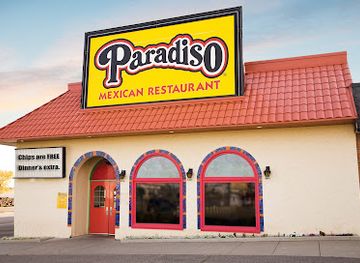
Paradiso Mexican Restaurant | Jamestown
Explore the vibrant flavors of Mexico at Paradiso Mexican Restaurant in Jamestown, where authentic cuisine meets a warm and inviting atmosphere.
9 min drive · 3.1 km from city centre
Explore Jamestown on the map
Plan your Jamestown trip on one map. See where the top attractions, landmarks, restaurants, bars and hotels are, find what's near where you're staying, and book hotels and experiences in a few clicks.
Best hotels in Jamestown
Best restaurants in Jamestown
Jamestown’s dining scene reflects its role as a practical regional centre rather than a destination built around haute cuisine. Visitors will find familiar American meals, breakfast cafés, grills, pizza, sandwiches and locally oriented family restaurants, alongside the everyday options expected in a small North Dakota city. Dining tends to be concentrated around the central area, main commercial roads and routes serving motorists, with supermarkets and bakeries useful for provisions before heading to the reservoir or travelling across the prairie. Regional tastes are evident in hearty portions, beef and other plains-influenced ingredients, while menus also draw on the wider American Midwest. Seasonal community events and local gatherings may provide opportunities to encounter homemade baking, preserves or church and civic cooking traditions, although offerings vary. The most characteristic food experience is informal: a relaxed meal or coffee stop that fits the city’s agricultural and road-travel rhythm.
-
Fast Food
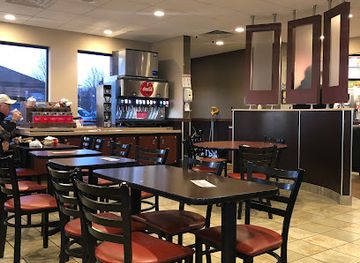
McDonald's
Discover Jamestown's McDonald's - where fast food meets local flavor in North Dakota's charming town.
8 min drive · 2.7 km from city centre
-
Pizza
Jonny B's Brickhouse
Discover delicious pizzas and vibrant nightlife at Jonny B's Brickhouse in Jamestown – where every meal feels like home.
5 min walk · 0.4 km from city centre
-
Fast Food
Arby's
Experience delicious fast food with signature roast beef sandwiches at Arby's in Jamestown, ND – perfect for travelers craving quick bites.
7 min drive · 2.4 km from city centre
-
Restaurant
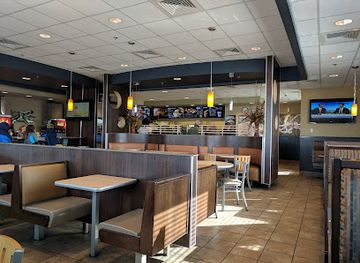
Applebee's Grill + Bar
Discover the taste of America at Applebee's Grill + Bar in Jamestown - where flavor meets family-friendly dining.
10 min drive · 3.3 km from city centre

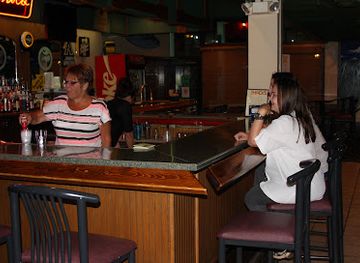
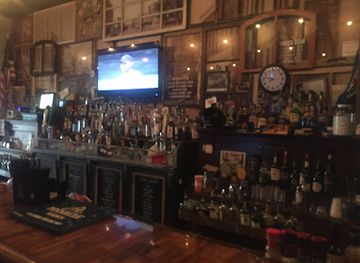
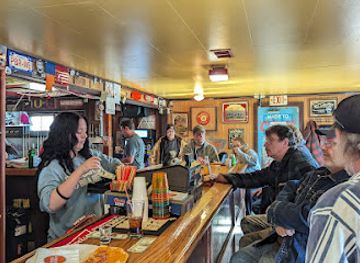
Best bars in Jamestown
Jamestown’s evening scene is modest and locally focused, with social life centred on neighbourhood bars, casual restaurants, hotel lounges and community events rather than a concentrated nightclub district. Visitors can expect relaxed settings for a drink, conversation or televised sport, while occasional live music, seasonal celebrations and performances provide additional evening entertainment when scheduled. The city’s scale means that nightlife is generally quieter and earlier than in larger North American destinations, and venues may be dispersed rather than grouped along one pedestrian street. Breweries, cocktail-focused bars and late-night clubs should not be assumed to have the breadth found in Fargo or Minneapolis. Cultural evenings may include local events, talks or performances arranged by community organisations, although programmes change. Checking current local listings is sensible because entertainment can be seasonal and schedules may be limited.
-
Pizza
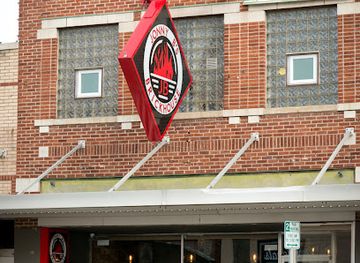
Jonny B's Brickhouse
Experience the best pizza and bar atmosphere in Jamestown at Jonny B's Brickhouse, where flavor meets fun in every bite.
5 min walk · 0.4 km from city centre
-
Restaurant
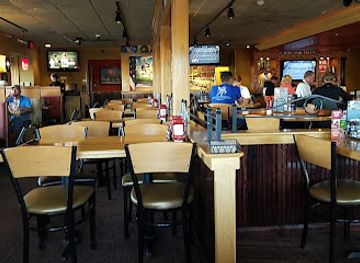
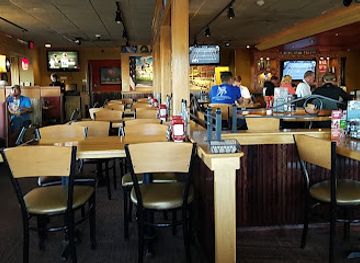
Applebee's Grill + Bar
Experience the heart of American dining at Applebee's Grill + Bar in Jamestown, ND, with a menu featuring burgers, steaks, and family favorites.
10 min drive · 3.3 km from city centre
-
Mexican
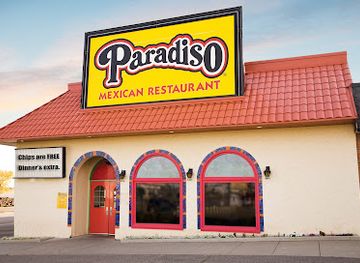
Paradiso Mexican Restaurant | Jamestown
Experience authentic Mexican cuisine at Paradiso Mexican Restaurant in Jamestown, where vibrant flavors meet a welcoming atmosphere.
9 min drive · 3.1 km from city centre
-
Cafe
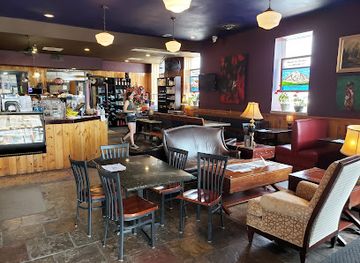
Babb's Coffee House
Discover the cozy charm of Babb's Coffee House in Jamestown, where delicious coffee and American comfort food await your visit.
3 min walk · 0.2 km from city centre
Best nightclubs in Jamestown
Jamestown’s evening scene is modest and locally focused, with social life centred on neighbourhood bars, casual restaurants, hotel lounges and community events rather than a concentrated nightclub district. Visitors can expect relaxed settings for a drink, conversation or televised sport, while occasional live music, seasonal celebrations and performances provide additional evening entertainment when scheduled. The city’s scale means that nightlife is generally quieter and earlier than in larger North American destinations, and venues may be dispersed rather than grouped along one pedestrian street. Breweries, cocktail-focused bars and late-night clubs should not be assumed to have the breadth found in Fargo or Minneapolis. Cultural evenings may include local events, talks or performances arranged by community organisations, although programmes change. Checking current local listings is sensible because entertainment can be seasonal and schedules may be limited.
-
Bar
Corner Bar
Discover the vibrant spirit of Jamestown at Corner Bar, where great food, drinks, and local camaraderie await.
4 min walk · 0.3 km from city centre
-
Grill
Shady's Restaurant & Lounge
Discover the vibrant flavors of Jamestown's Shady's Restaurant & Lounge, where great food meets a lively atmosphere in North Dakota.
1 min walk · 0.1 km from city centre
-
Bar
Freds Den
Experience the vibrant nightlife of Jamestown at Freds Den, where great drinks and a lively atmosphere await your arrival.
3 min walk · 0.3 km from city centre
-
Bar
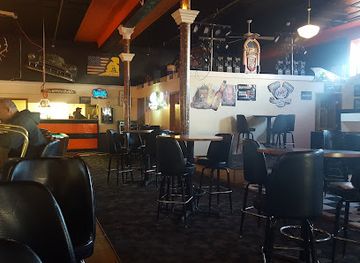
Hitching Post
Experience the charm of Hitching Post in Jamestown, ND - where great drinks meet a warm, inviting atmosphere.
9 min drive · 3.1 km from city centre
Best shops in Jamestown
Shopping in Jamestown is practical and locally rooted, with retail activity concentrated around the central business area, major commercial roads and services used by residents of the surrounding farming communities. Visitors can browse independent shops, general retailers, outdoor and sporting suppliers, supermarkets and small businesses offering clothing, gifts and everyday provisions. Frontier Village and the National Buffalo Museum are useful places to look for buffalo-themed souvenirs, regional history items and educational gifts, while local events may feature crafts, baking and handmade goods from area producers. The city is not a major luxury or fashion-shopping destination, but its shops reflect the needs of a dispersed prairie population and travellers crossing North Dakota by road. Regional food products, practical outdoor equipment and locally themed keepsakes are more characteristic purchases than designer goods or a large artisan quarter.
-
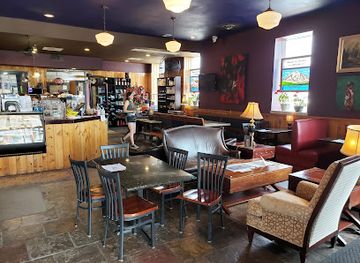
Cafe
Babb's Coffee House
Discover Babb's Coffee House, a cozy cafe in Jamestown, ND, offering delicious coffee, breakfast, and lunch in a welcoming atmosphere.
3 min walk · 0.2 km from city centre
-
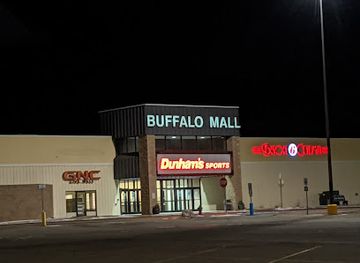
Shopping mall
Buffalo Mall
Discover Buffalo Mall in Jamestown, ND, a vibrant shopping center offering diverse retail options, dining, and local culture for every visitor.
9 min drive · 3.1 km from city centre
-
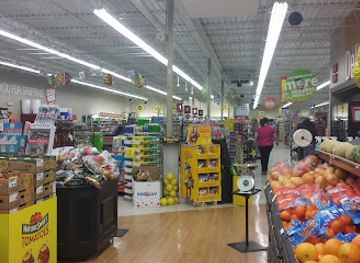
Grocery store
Cash Wise Foods Grocery Store Jamestown
Experience the local flavor at Cash Wise Foods Grocery Store in Jamestown, North Dakota, where quality meets community.
18 min walk · 1.5 km from city centre
-
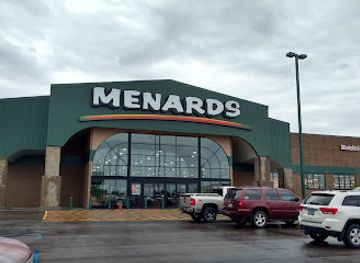
Home improvement store
Menards
Explore Menards in Jamestown, ND - your ultimate destination for home improvement, tools, and pet supplies amid a diverse selection.
9 min drive · 3.1 km from city centre
Get your free copy of our complete guide to Jamestown, delivered straight to you.
Everything on this page, from attractions and restaurants to essentials and local phrases, in one PDF you can read offline, print or share.
Already have an account? Sign in
Your Jamestown guide is ready.
We'll send it to · Not you? Sign out

Getting your guide ready…
We are putting together a fresh copy of the Jamestown guide. This can take up to a minute.
This can take a few moments. If your browser asks, choose Allow so the download can start. You'll find the guide in your Downloads folder.
Nothing happened? Download it again
Sorry, the guide is taking longer than usual. Please try again in a minute, or get it by email instead.
Jamestown essentials
Currency and Payment
Safety
Emergency Situations
Do's and Don'ts
Local Tips
From Eve
Local phrases worth knowing
You don't need to get them perfect. A few words go a long way, and locals appreciate the effort.
Basics
| English | Local | Say it |
|---|---|---|
| Hello | Hey there | [Hey thair] |
| Goodbye | See ya later | [See ya lay-ter] |
| Yes | Yep | [Yep] |
| No | Nope | [Nope] |
| Please/You're welcome | Please/You're welcome | [Please/You're welcome] |
| Thank you | Thanks | [Thanks] |
| Excuse me/Sorry | Pardon me | [Par-dun me] |
| How are you? | How's it going? | [Hows it go-in?] |
| Fine. And you? | Good. You? | [Good. You?] |
| Do you speak English? | Ya speak English? | [Ya speak English?] |
| I don't understand | I don't get it | [I don't get it] |
Eating & Drinking
| English | Local | Say it |
|---|---|---|
| I'd like to see the menu, please | Can I see the menu, please | [Can I see the menu, please] |
| I don't eat meat | I don't eat meat | [I don't eat meat] |
| Cheers! | Cheers! | [Cheers!] |
| I would like to pay, please | I'll pay now, please | [I'll pay now, please] |
Emergencies
| English | Local | Say it |
|---|---|---|
| Help! | Help! | [Help!] |
| Go away! | Get lost! | [Get lost!] |
| Call the Police! | Call the cops! | [Call the cops!] |
| Call a doctor! | Call a doc! | [Call a doc!] |
| I'm lost | I'm lost | [I'm lost] |
| I'm ill | I'm sick | [I'm sick] |
Shopping
| English | Local | Say it |
|---|---|---|
| I'd like to buy... | I wanna buy... | [I wanna buy...] |
| I'm just looking | Just browsing | [Just brows-ing] |
| How much is it? | How much does it cost? | [How much does it cost?] |
| That's too expensive | That's pricey | [That's pricey] |
| Can you lower the price? | Can you drop the price? | [Can you drop the price?] |
Time & Numbers
| English | Local | Say it |
|---|---|---|
| What time is it? | What's the time? | [What's the time?] |
| It's one o'clock | It's one | [It's one] |
| Half past (10) | Half past (10) | [Half past (10)] |
| Morning | Morning | [Morning] |
| Afternoon | Afternoon | [Afternoon] |
| Evening | Evening | [Evening] |
| Yesterday | Yesterday | [Yesterday] |
| Today | Today | [Today] |
| Tomorrow | Tomorrow | [Tomorrow] |
| 1 | One | [One] |
| 2 | Two | [Two] |
| 3 | Three | [Three] |
| 4 | Four | [Four] |
| 5 | Five | [Five] |
| 6 | Six | [Six] |
| 7 | Seven | [Seven] |
| 8 | Eight | [Eight] |
| 9 | Nine | [Nine] |
| 10 | Ten | [Ten] |
Transport & Directions
| English | Local | Say it |
|---|---|---|
| Where's a/the...? | Where's the...? | [Where's the...?] |
| What's the address? | What's the address? | [What's the address?] |
| Can you show me (on the map)? | Can you show me (on the map)? | [Can you show me (on the map)?] |
| When's the next (bus)? | When's the next (bus)? | [When's the next (bus)?] |
| A ticket (to ....) | A ticket (to ....) | [A ticket (to ....)] |
History of Jamestown
The James River Valley Before Jamestown
The James River valley was part of the wider homeland and travel landscape of Indigenous peoples of the northern Great Plains, including communities connected with the Dakota and Lakota world. The river, prairie and bison herds provided routes, water and resources long before the arrival of the railway town. During the nineteenth century, the region was transformed by United States expansion, military activity, treaty-making and the accelerating settlement of agricultural land. The decline of free-ranging bison and the displacement of Indigenous communities formed part of this wider historical change. Jamestown’s later development therefore belongs to a much older landscape whose ecological and cultural history remains central to understanding central North Dakota.
A Railway Town Takes Shape
Jamestown was established in 1872 as the Northern Pacific Railway advanced across Dakota Territory. Its location beside the James River and along the railway corridor encouraged the growth of a trading and administrative centre serving settlers, farmers and ranchers. The railway connected the community to wider markets and brought people, manufactured goods and new institutions to the prairie. Jamestown was named after Jamestown, Virginia, linking the new settlement to an established American historical reference. Streets, commercial buildings and civic services developed around the railway, while agriculture became the economic foundation of the surrounding area.
County Government and Community Institutions
As settlement increased, Jamestown became the seat of Stutsman County and a focal point for law, commerce, education and religious life. The Stutsman County Courthouse, completed in 1883, reflects the importance of county government in the territorial and early statehood period and remains one of the city’s most significant historic buildings. Churches and community organisations followed the growth of the population, including the Roman Catholic congregation associated with the Basilica of St James. These institutions gave the railway settlement a more permanent civic identity, moving it beyond its original role as a transport and supply point.
Agriculture, Trade and the Modern City
During the late nineteenth and twentieth centuries, Jamestown served the farms and ranches of the James River valley. Grain production, livestock, local trade and transport shaped employment and the urban landscape, while improvements in roads and motor vehicles gradually changed the importance of the railway. The city continued to function as a regional centre for retail, services, education and government. The surrounding prairie also became increasingly valued for recreation and wildlife, with Jamestown Reservoir adding water-based activities to a landscape historically associated with farming and ranching.
Preserving Prairie Memory
Modern Jamestown presents its past through museums, historic buildings and public attractions rather than through a single preserved historic district. Frontier Village collects and interprets buildings associated with pioneer-era North Dakota, while the National Buffalo Museum places the history of the plains bison within a broader ecological and cultural context. The World’s Largest Buffalo, installed in 1959, became a highly recognisable roadside symbol of the city. Together these sites reflect a continuing effort to interpret settlement, agriculture, transport and the changing relationship between communities and the Great Plains.
Jamestown in Photos
Browse through our photo collection highlighting the charm and character of the destination.
Cities near Jamestown
The closest cities to Jamestown, if you have time for more than one stop.
-

-

-
 Devils Lake
, North Dakota, combines walleye fishing, prairie scenery, Dakota heritage, Fort Totten history and relaxed small-town sightseeing.
2 h 34 min drive · 134 km from city centre
Devils Lake
Devils Lake, North Dakota, combines walleye fishing, prairie scenery, Dakota heritage, Fort Totten history and relaxed small-town sightseeing.
2 h 34 min drive · 134 km from city centre
-

-
 Mandan
, North Dakota, pairs Missouri River history with Fort Abraham Lincoln, Native heritage, railroad stories, rodeo tradition and wide-open prairie landscapes.
3 h 6 min drive · 166 km from city centre
Mandan
Mandan, North Dakota, pairs Missouri River history with Fort Abraham Lincoln, Native heritage, railroad stories, rodeo tradition and wide-open prairie landscapes.
3 h 6 min drive · 166 km from city centre


Swipe for more cities
Explore more
Explore more of North Dakota
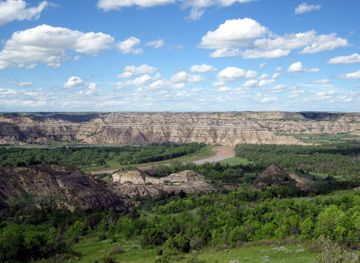
Discover the rugged beauty, rich history, and warm hospitality of North Dakota, the untamed frontier of the United States.
Explore North Dakota