
Bryggen, Bergen, Norway Travel Guide
Explore Bryggen in Bergen, Norway: A UNESCO World Heritage site rich in history, culture, and picturesque wooden buildings that date back to the 14th century.
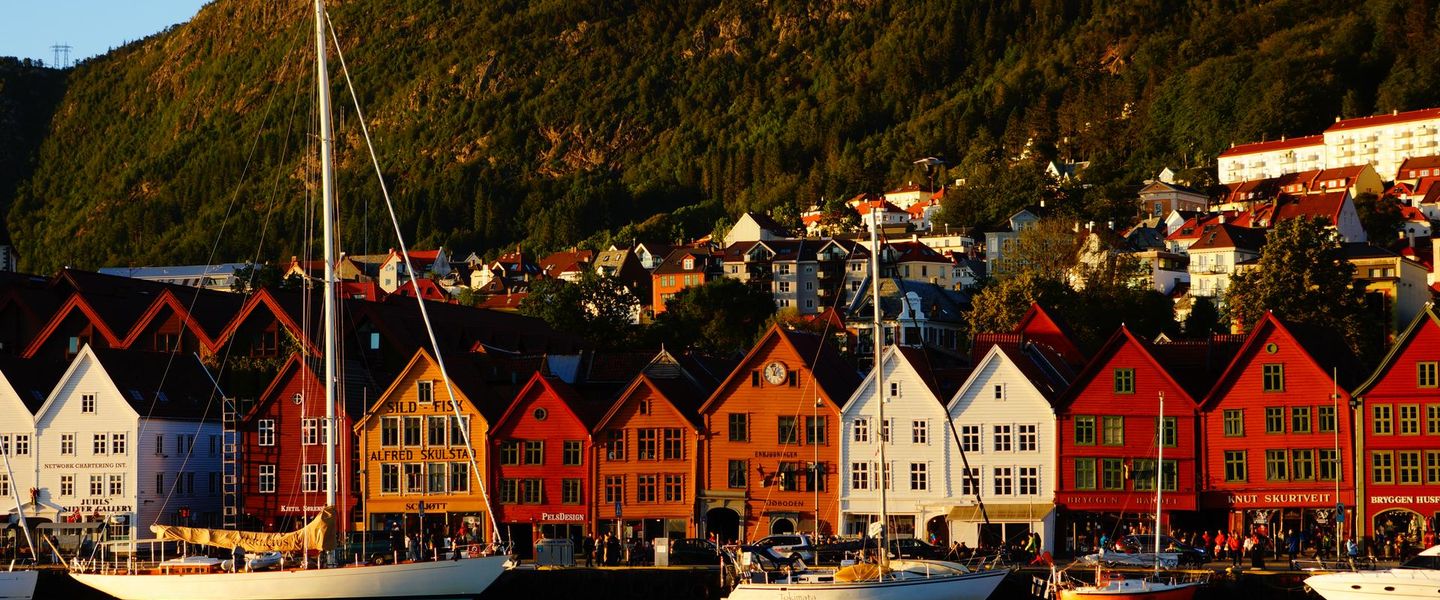
Bryggen, also known as the Hanseatic Wharf, is a UNESCO World Heritage site located in the heart of Bergen, Norway. This historic area dates back to the 14th century and is renowned for its colorful wooden buildings that line the waterfront. As you stroll through the narrow alleyways, you'll feel as though you've stepped back in time. The buildings, once home to merchants and traders, now house museums, shops, and restaurants, offering a unique blend of history and modern attractions. Bryggen is not just a beautiful sight; it is a living museum. The area is steeped in history, with remnants of the Hanseatic League's trading empire still visible. You can visit the Bryggen Museum to learn more about this fascinating period or simply wander through the streets to soak in the atmosphere. The wooden structures, often tilted and leaning, add to the charm and character of this iconic destination. In addition to its historical significance, Bryggen is a hub of cultural activity. Throughout the year, the area hosts various events, including markets, festivals, and concerts. Whether you're interested in history, culture, or simply enjoying a picturesque setting, Bryggen offers something for every traveler.

Know before you go
Hi, I'm Eve. Here are a few practical things to know before exploring Bryggen, Bergen.
- Visit early in the morning or late in the afternoon to avoid the crowds.
- Wear comfortable shoes as the cobblestone streets can be uneven.
- Take a guided tour for a deeper understanding of Bryggen's history.
- Check the local event calendar for festivals or markets during your visit.
- Try local seafood at one of the restaurants along the wharf.
Explore Bryggen, Bergen: Things to Do, Places to Eat, Hotels & More
Handpicked recommendations for top attractions, local dining, accommodations, and more

Best attractions in Bryggen, Bergen
Top-rated picks
Best Attractions

Bryggen
Discover the historic charm of Bryggen, a UNESCO World Heritage site with colorful architecture and rich maritime heritage in Bergen, Norway.

Bryggen Hansa Quarter
Experience the historic Bryggen Hansa Quarter in Bergen, a UNESCO World Heritage site filled with colorful wooden buildings, shops, and cultural treasures.

Nordnesparken
Discover the serene beauty of Nordnesparken, a peaceful park in Bergen offering stunning sea views and vibrant gardens for a perfect escape.

Musikkpaviljongen
Discover the musical charm of Musikkpaviljongen in Bergen, a cultural gem surrounded by nature and vibrant performances.

Best landmarks in Bryggen, Bergen
Top-rated picks
Best Landmarks

Bryggen Hansa Quarter
Explore the picturesque Bryggen Hansa Quarter, a UNESCO site in Bergen, showcasing colorful wooden buildings, rich history, and charming local shops.

Sailor's Monument
Discover the Sailor's Monument in Bergen, a stunning tribute to Norway's maritime history, set amidst the lively Torgallmenningen square.

Famous Wharf Skuteviksbrygge
Explore Skuteviksbrygge in Bergen – a picturesque wharf blending history, culture, and stunning coastal views, perfect for all travelers and food enthusiasts.

Dramshusen
Discover Dramshusen, a historic treasure in Bergen's Bryggen Wharf, blending maritime heritage with breathtaking views.

Best restaurants in Bryggen, Bergen
Top-rated picks
Best Restaurants

AS Bryggestuen - Bryggeloftet
Experience exquisite seafood dining at AS Bryggestuen - Bryggeloftet, where tradition meets innovation in the heart of Bergen's historic waterfront.

The Unicorn Fish Restaurant
Experience exquisite seafood dining in Bergen at The Unicorn Fish Restaurant - where tradition meets modern culinary excellence.

Soya Restaurant AS
Discover the flavors of Asia at Soya Restaurant AS in Bergen - where authentic dishes meet modern dining.

Bryggen Tracteursted
Discover authentic Norwegian cuisine at Bryggen Tracteursted in Bergen—where tradition meets taste in a historic setting.

Best bars in Bryggen, Bergen
Top-rated picks
Best Bars

No Stress Bergen
Experience the vibrant nightlife of Bergen at No Stress Bergen, where relaxation meets socializing in a cozy bar atmosphere.

Bar3
Experience Bergen's nightlife at Bar3, where great drinks and vibrant atmosphere unite for an unforgettable evening out.

Scruffy Murphys
Experience the best of Irish hospitality at Scruffy Murphys, Bergen's favorite bar and pub for local brews, hearty food, and live music.

Vinyl - Plater & øl
Experience the unique blend of local beers and vinyl music at Vinyl - Plater & øl, a vibrant bar in the heart of Bergen.

Best nightclubs in Bryggen, Bergen
Top-rated picks
Best Nightclubs

Ricks AS
Discover the pulse of Bergen's nightlife at Ricks AS - a vibrant night club and pub offering an unforgettable experience for every visitor.

The Library Bar
Experience Bergen's vibrant nightlife at The Library Bar, a stylish cocktail bar offering innovative drinks and lively events in a chic lounge atmosphere.

Vaskeriet
Experience Bergen's nightlife at Vaskeriet, a vibrant nightclub and cocktail bar offering a unique blend of excitement and elegance.

Duggfrisk Bar & Spiseri
Discover the vibrant nightlife at Duggfrisk Bar & Spiseri, Bergen's premier night club offering delicious drinks and an energetic atmosphere.

Best shops in Bryggen, Bergen
Top-rated picks
Best Shops

Galleriet
Discover Galleriet - Bergen's ultimate shopping mall with a variety of stores, delicious dining options, and a vibrant atmosphere for every visitor.

Illums Bolighus
Discover the essence of Scandinavian design at Illums Bolighus, a premier shopping destination in Bergen offering quality home decor and fashion.

Julehuset
Explore Julehuset, Bergen's enchanting Christmas store, offering a delightful selection of decorations and souvenirs that capture the holiday spirit.

Nilssen Bryggen - Gifts, Souvenirs, Jackets
Explore Nilssen Bryggen for authentic Norwegian souvenirs and quality sportswear, capturing the essence of Bergen in every unique find.

Explore Bryggen, Bergen on the Map
A handpicked selection of must-see spots in Bryggen, Bergen, mapped for you.
Bryggen, Bergen Essentials
-
Bryggen is located in Bergen, Norway. The nearest airport is Bergen Airport, Flesland (BGO), which is about 20 kilometers from the city center. From the airport, you can take the Airport Express Bus (Flybussen) which takes approximately 30 minutes to reach the city center. Alternatively, you can take a taxi or use the Bergen Light Rail (Bybanen), which also connects the airport to the city center in about 45 minutes.
-
Bergen has an efficient public transport system that includes buses, light rail, and ferries. The Bergen Light Rail (Bybanen) is a convenient way to get around the city, particularly from the airport to the city center. Buses are frequent and cover most areas of the city. Taxis are also available but can be expensive. For those who prefer to explore on foot, Bryggen itself is pedestrian-friendly.
-
The official currency in Norway is the Norwegian Krone (NOK). Credit and debit cards are widely accepted, even for small purchases. ATMs are plentiful and can be found throughout Bergen. It's advisable to carry some cash for smaller establishments or in case of system outages.
-
Bergen is generally a very safe city for tourists. However, as with any travel destination, it is important to stay vigilant. Pickpocketing can occur in crowded areas, so keep an eye on your belongings. Avoid poorly lit areas at night and always stay aware of your surroundings. There are no specific high-crime areas targeting tourists, but general caution is advised.
-
In case of emergency, dial 112 for police, fire, or medical emergencies. Bergen has several hospitals and medical facilities, including Haukeland University Hospital, which is the largest in the region. Pharmacies are plentiful and usually open during standard business hours. For non-urgent medical needs, you can visit a local pharmacy or a medical clinic.
-
Fashion: Do dress in layers and be prepared for changing weather. Avoid overly casual attire in nicer restaurants. Religion: Do respect local customs and traditions, although Norway is quite secular. Public Transport: Do validate your ticket before boarding and offer your seat to elderly passengers. Don't eat or drink on public transport. Greetings: Do greet people with a firm handshake and maintain eye contact. Eating & Drinking: Do try local delicacies and be open to new flavors. Don't refuse food or drink offerings as it can be considered impolite.
-
To experience Bryggen like a local, visit the local fish market (Fisketorget) where you can sample fresh seafood. Spend time walking through the narrow alleyways of Bryggen to discover hidden shops and cafes. Engage with locals who are known for their friendliness and willingness to share stories about the area's rich history. Don't miss the opportunity to take a fjord tour, which offers stunning views of the surrounding landscapes.
When is the best time to visit Bryggen, Bergen?
Useful Local Phrases for Bryggen, Bergen
You don't need to speak the language perfectly. Even learning a few simple words can make conversations warmer—and locals usually appreciate the effort.
— Eve

Here are the phrases I use most often in Bryggen, Bergen. Try a few—you'll be surprised how far they go! 😊
❤️
-
- HelloHallo
[ha-lo] - GoodbyeHa det bra
[ha de bra] - YesJa
[ya] - NoNei
[nay] - Please/You're welcomeVær så god
[ver so good] - Thank youTakk
[tak] - Excuse me/SorryUnnskyld
[oons-kuld] - How are you?Hvordan har du det?
[vorr-dan har du deh] - Fine. And you?Bra. Og du?
[bra oh du] - Do you speak English?Snakker du engelsk?
[snak-ker du engelsk] - I don't understandJeg forstår ikke
[yay for-stor ee-neh]
- HelloHallo
-
- I'd like to see the menu, pleaseJeg vil gjerne se menyen, takk
[yay vill yern-eh se meh-nyen, tak] - I don't eat meatJeg spiser ikke kjøtt
[yay spee-ser ee-neh chyut] - Cheers!Skål!
[skohl] - I would like to pay, pleaseJeg vil gjerne betale, takk
[yay vill yern-eh beh-tah-le, tak]
- I'd like to see the menu, pleaseJeg vil gjerne se menyen, takk
-
- Help!Hjelp!
[yelp] - Go away!Gå bort!
[goh bort] - Call the Police!Ring politiet!
[ring poh-lee-tee-eh] - Call a doctor!Ring en lege!
[ring en leh-geh] - I'm lostJeg har gått meg vill
[yay har goht may vill] - I'm illJeg er syk
[yay air sook]
- Help!Hjelp!
-
- I'd like to buy...Jeg vil kjøpe...
[yay vill kyo-peh] - I'm just lookingJeg bare ser
[yay bah-reh ser] - How much is it?Hvor mye koster det?
[vorr me-eh kost-er deh] - That's too expensiveDet er for dyrt
[deh er for deert] - Can you lower the price?Kan du senke prisen?
[kan du sen-keh pre-sen]
- I'd like to buy...Jeg vil kjøpe...
-
- What time is it?Hva er klokka?
[vah er klok-ka] - It's one o'clockKlokken er ett
[klok-ken er ett] - Half past (10)Halv ti
[halv tee] - MorningMorgen
[mor-gen] - AfternoonEttermiddag
[et-ter-mee-dag] - EveningKveld
[kveld] - YesterdayI går
[ee gor] - TodayI dag
[ee dawg] - TomorrowI morgen
[ee mor-gen] - 1En
[en] - 2To
[too] - 3Tre
[treh] - 4Fire
[fee-reh] - 5Fem
[fem] - 6Seks
[seks] - 7Sju
[shoo] - 8Åtte
[ot-teh] - 9Ni
[nee] - 10Ti
[tee]
- What time is it?Hva er klokka?
-
- Where's a/the...?Hvor er en/et...?
[vorr air en/et] - What's the address?Hva er adressen?
[vah er ad-dress-en] - Can you show me (on the map)?Kan du vise meg (på kartet)?
[kan du vee-se meh (poh kar-teh)] - When's the next (bus)?Når går neste (buss)?
[norr gor nes-teh (boos)] - A ticket (to ....)En billett (til ....)
[en bee-let (teel)]
- Where's a/the...?Hvor er en/et...?
History of Bryggen, Bergen
-
Bryggen, also known as the Hanseatic Wharf, was established in the 14th century. It became a major trading hub for the Hanseatic League, a powerful economic and defensive alliance of merchant guilds and market towns in Northwestern and Central Europe. The German merchants who settled here built the iconic wooden buildings that line the waterfront, many of which still stand today, reflecting the architectural style and cultural influences of the time.
-
One of the most significant events in Bryggen's history was the Great Fire of 1702, which devastated much of the area. The fire consumed nearly 90% of the wooden buildings, leaving the wharf in ruins. Despite this disaster, the residents of Bergen showed remarkable resilience, and the area was swiftly rebuilt following the original medieval urban plan, preserving its historic charm.
-
Throughout the centuries, Bryggen remained a vital center for maritime trade. It served as a bustling hub for the exchange of fish, particularly stockfish, which was traded for grain and other goods from Europe. This trade was pivotal in establishing Bergen as one of Norway's most important cities and maintained Bryggen's economic significance well into the modern era.
-
In 1979, Bryggen was designated a UNESCO World Heritage Site, recognizing its unique historical and cultural significance. This designation has helped to preserve and protect the area, ensuring that the wooden buildings and narrow alleyways continue to tell the story of Bergen's rich trading past. Today, Bryggen stands as a living museum, attracting visitors from around the world.
-
Excavations in Bryggen have unearthed a wealth of archaeological finds, including medieval artifacts such as tools, ceramics, and everyday items. These discoveries have provided valuable insights into the daily lives of the people who lived and worked in Bryggen over the centuries. The Bryggens Museum, located in the area, showcases many of these artifacts, offering a fascinating glimpse into the past.
-
Beyond its historical significance, Bryggen has evolved into a vibrant cultural and artistic hub. The area is home to numerous galleries, artisan shops, and traditional crafts. This blend of history and modern creativity makes Bryggen a dynamic destination, where visitors can experience both the legacy of the Hanseatic merchants and the contemporary cultural scene.
Neighbouring destination travel guides
Browse our curated selection of top destinations, scenic points, and must-visit spots in the area.


Your all‑in‑one travel companion app
Explore expert travel guides, compare and book tours, experiences, hotels, and more—all from the palm of your hand. Download now for seamless trip planning wherever your wanderlust takes you.


Explore More of Hordaland

Looking beyond Bryggen, Bergen? Discover Hordaland for broader travel guides, local hot-spots, and regional highlights.
Explore HordalandExplore More of Norway

Looking beyond Bryggen, Bergen? Discover Norway for broader travel guides, local hot-spots, and regional highlights.
Explore NorwayBryggen, Bergen in Photos
Browse through our photo collection highlighting the charm and character of the destination.


Bryggen: The Historic Heart of Bergen
Bryggen, also known as the Hanseatic Wharf, is a UNESCO World Heritage site located in the heart of Bergen, Norway. This historic area dates back to the 14th century and is renowned for its colorful wooden buildings that line the waterfront. As you stroll through the narrow alleyways, you'll feel as though you've stepped back in time. The buildings, once home to merchants and traders, now house museums, shops, and restaurants, offering a unique blend of history and modern attractions. Bryggen is not just a beautiful sight; it is a living museum. The area is steeped in history, with remnants of the Hanseatic League's trading empire still visible. You can visit the Bryggen Museum to learn more about this fascinating period or simply wander through the streets to soak in the atmosphere. The wooden structures, often tilted and leaning, add to the charm and character of this iconic destination. In addition to its historical significance, Bryggen is a hub of cultural activity. Throughout the year, the area hosts various events, including markets, festivals, and concerts. Whether you're interested in history, culture, or simply enjoying a picturesque setting, Bryggen offers something for every traveler.