

Gamlebyen (Fredrikstad) Travel Guide - Free
Explore Gamlebyen in Fredrikstad with Evendo's free guide. Find the best shops, historic streets, restaurants, and gems on web or mobile.


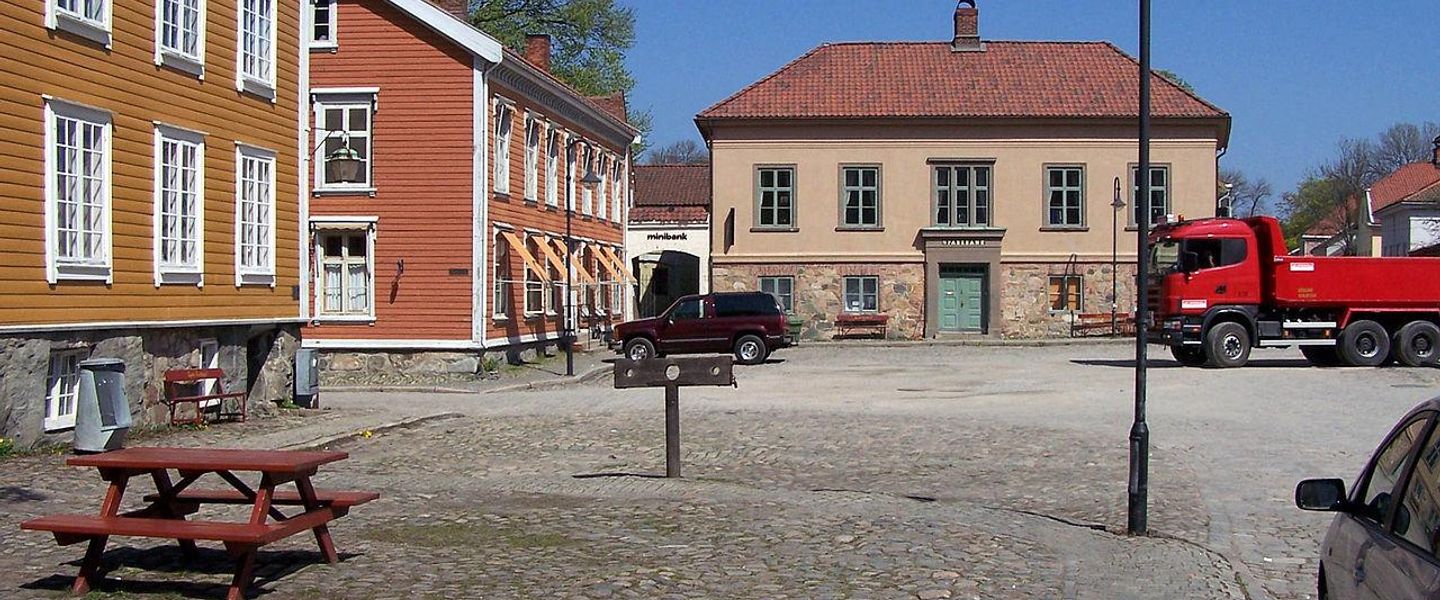


Gamlebyen in Fredrikstad, Norway, pairs star-shaped fortifications, cobbled lanes, museums, galleries, cafés and riverside walks with living history.
A Fortified Town on the Glomma
Gamlebyen is the historic core of Fredrikstad, enclosed by broad earth ramparts and the waterways of the Glomma estuary. Founded in 1567 after the destruction of Sarpsborg, the town was designed as a defensive settlement on the eastern bank of the river, and its distinctive star-shaped fortifications remain central to its identity. Stone gateways, grassy embankments, moats and carefully aligned streets create an urban landscape that feels both monumental and lived-in.Read more about Gamlebyen
Cobbled Streets and Everyday History
Culture, Markets and Riverside Wandering
Explore Gamlebyen on the map
A handpicked selection of must-see spots in Gamlebyen, mapped for you.
Best hotels in Gamlebyen
Gamlebyen essentials
Getting There
Getting Around
Safety
Emergency Situations
Do's and Don'ts
Local Tips

From Eve
Local phrases worth knowing
You don't need to get them perfect. A few words go a long way, and locals appreciate the effort.
Basics
| English | Local | Say it |
|---|---|---|
| Hello | Hei | [hay] |
| Goodbye | Ha det | [ha deh] |
| Yes | Ja | [ya] |
| No | Nei | [nay] |
| Please/You're welcome | Vær så god | [ver so good] |
| Thank you | Takk | [tahk] |
| Excuse me/Sorry | Unnskyld | [oon-shuld] |
| How are you? | Hvordan har du det? | [vohr-dan har du deh] |
| Fine. And you? | Bra. Og du? | [bra oh doo] |
| Do you speak English? | Snakker du engelsk? | [snah-ker doo eng-elsk] |
| I don't understand | Jeg forstår ikke | [yeg for-stor eek-keh] |
Eating & Drinking
| English | Local | Say it |
|---|---|---|
| I'd like to see the menu, please | Jeg vil gjerne se menyen, takk | [yeg veell geer-ne se meh-nyen tahk] |
| I don't eat meat | Jeg spiser ikke kjøtt | [yeg spee-ser eek-keh shøt] |
| Cheers! | Skål! | [skohl] |
| I would like to pay, please | Jeg vil gjerne betale, takk | [yeg veell geer-ne beh-tah-leh tahk] |
Emergencies
| English | Local | Say it |
|---|---|---|
| Help! | Hjelp! | [yelpeh] |
| Go away! | Gå bort! | [goh bohrt] |
| Call the Police! | Ring politiet! | [ring poo-lee-teet] |
| Call a doctor! | Ring en lege! | [ring ehn leh-geh] |
| I'm lost | Jeg har gått meg vill | [yeg har goh meh veell] |
| I'm ill | Jeg er syk | [yeg air sook] |
Shopping
| English | Local | Say it |
|---|---|---|
| I'd like to buy... | Jeg vil kjøpe... | [yeg veell shø-peh] |
| I'm just looking | Jeg ser bare | [yeg sair bah-reh] |
| How much is it? | Hvor mye koster det? | [vor mee-eh kohs-ter deh] |
| That's too expensive | Det er for dyrt | [deh air for deert] |
| Can you lower the price? | Kan du senke prisen? | [kahn doo sen-keh pree-sehn] |
Time & Numbers
| English | Local | Say it |
|---|---|---|
| What time is it? | Hva er klokka? | [vah air klok-ka] |
| It's one o'clock | Klokka er ett | [klok-ka air eht] |
| Half past (10) | Halv ti | [hahlv tee] |
| Morning | Morgen | [mohr-gehn] |
| Afternoon | Ettermiddag | [et-ter-meed-dahg] |
| Evening | Kveld | [kvehld] |
| Yesterday | I går | [ee gohr] |
| Today | I dag | [ee dahg] |
| Tomorrow | I morgen | [ee mohr-gehn] |
| 1 | En | [ehn] |
| 2 | To | [too] |
| 3 | Tre | [treh] |
| 4 | Fire | [feer-eh] |
| 5 | Fem | [fem] |
| 6 | Seks | [sehks] |
| 7 | Syv | [seev] |
| 8 | Åtte | [aw-teh] |
| 9 | Ni | [nee] |
| 10 | Ti | [tee] |
Transport & Directions
| English | Local | Say it |
|---|---|---|
| Where's a/the...? | Hvor er...? | [vor air] |
| What's the address? | Hva er adressen? | [vah air ah-dress-en] |
| Can you show me (on the map)? | Kan du vise meg (på kartet)? | [kahn doo vee-seh meh (poh kahr-teh)] |
| When's the next (bus)? | Når går neste (buss)? | [norr gohr neh-steh (booss)] |
| A ticket (to ....) | En billett (til ...) | [ehn bee-leht (teel ...)] |
History of Gamlebyen
Founded After Sarpsborg’s Destruction
Fredrikstad was established in 1567 after Sarpsborg, farther upstream on the Glomma, was burned during the Northern Seven Years’ War. King Frederik II ordered a new town on a more defensible site near the river mouth, and it was named Fredrikstad in his honour. The position offered control of movement along the waterway and access to the timber resources of the surrounding region. The settlement that became Gamlebyen developed as both a defensive town and a centre for administration, trade and river transport, its location reflecting the strategic importance of the lower Glomma rather than the needs of a purely residential community.
The Star Fortress Takes Shape
During the seventeenth century, Fredrikstad’s defences were strengthened according to the principles of European bastion fortification. Earth ramparts, moats, covered approaches and projecting bastions were gradually developed around the town, producing the angular plan still visible today. The fortifications were repeatedly improved as military technology changed, while the enclosed streets accommodated merchants, officials, soldiers and craftsmen. The result was an unusual combination of civic settlement and military installation: houses and institutions stood within a carefully engineered defensive system whose scale can best be appreciated from the surrounding ramparts.
Kongsten and the Wider Defence System
The defensive landscape extended beyond the main town walls. Kongsten Fort, built on higher ground outside the central enclosure in the late seventeenth century, helped protect the eastern approaches and strengthened the position’s artillery defences. Together with the ramparts, water barriers and riverfront, it formed part of a larger system rather than an isolated landmark. Military use shaped local movement and land use for generations, while the town’s commercial life continued within the constraints and opportunities created by its fortified setting.
From Garrison Town to Heritage Quarter
As warfare and transport changed, the strategic importance of the fortress declined, and Fredrikstad expanded beyond the old walls. Gamlebyen retained its historic street plan and a substantial body of older buildings, while parts of the defensive terrain remained open as public space. In the modern era, museums, galleries, cafés, workshops and cultural events have joined the residential fabric, giving the quarter a new economic role without erasing its military origins. Conservation and everyday use now exist side by side: visitors encounter preserved fortifications, but also an active neighbourhood rather than a purely reconstructed historical display.
Gamlebyen in Photos
Browse through our photo collection highlighting the charm and character of the destination.
Neighbourhoods near Gamlebyen
The closest neighbourhoods to Gamlebyen, if you have time for more than one stop.

Swipe for more neighbourhoods
Explore more

Explore more of Fredrikstad
Fredrikstad, Norway, pairs a 16th-century fortified Old Town with Glomma river walks, galleries, seafood, green islands and easy coastal excursions.
Explore Fredrikstad