

Oregon District (Dayton) Travel Guide - Free
Explore Oregon District in Dayton with Evendo's free guide. Find the best shops, historic streets, restaurants, and gems on web or mobile.


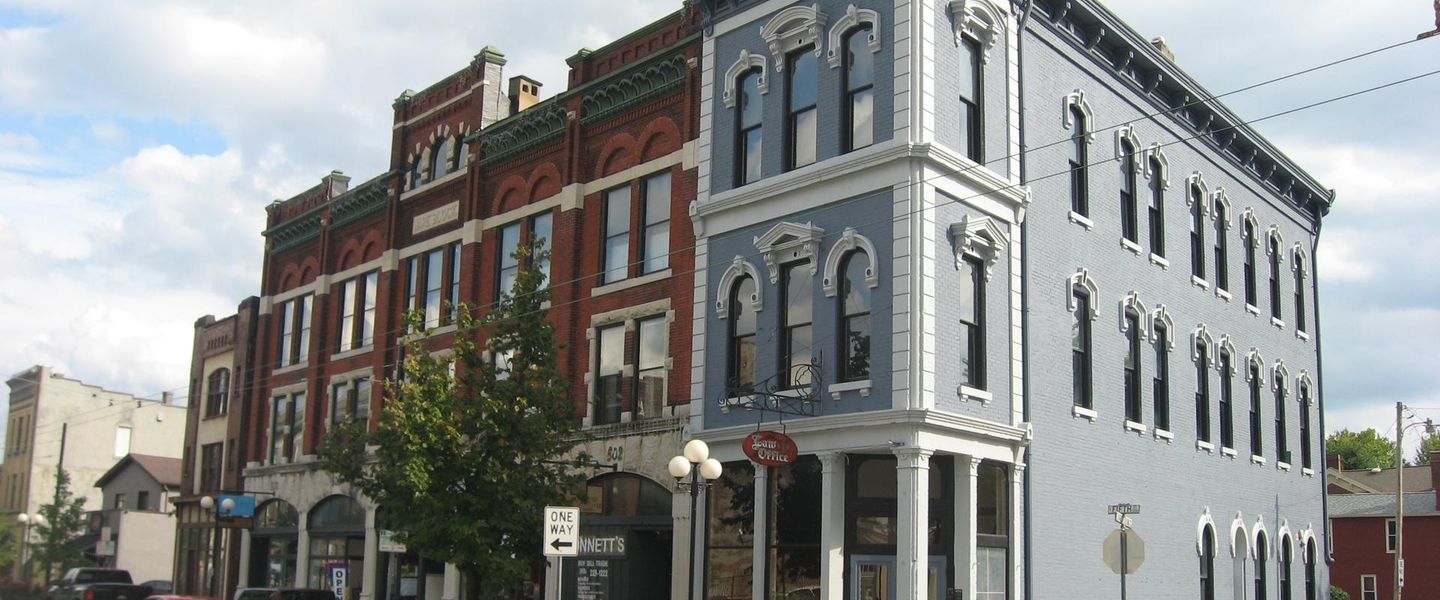


Oregon District in Dayton, Ohio, pairs Victorian architecture with local restaurants, live music, independent shops and walkable history beside downtown’s cultural venues.
Historic Streets and Urban Character
Oregon District occupies a compact area immediately east of downtown Dayton, where Oregon Street and adjoining residential blocks combine nineteenth-century buildings with a lively contemporary business scene. Its commonly recognised historic area is shaped by streets including East Fifth, East Fourth, East Third, Wayne Avenue and Patterson Road, although local boundaries are informal. Brick commercial buildings, narrow pavements, decorated façades and restored houses give the district a more intimate scale than Dayton’s central business streets. Much of its built character reflects the growth of Dayton during the late nineteenth century, when residential development and small-scale commerce expanded beyond the original city centre.Read more about Oregon District
Dayton’s Evening and Cultural Life
Architecture, Memory and Local Life
Best landmarks in Oregon District
The Oregon District’s most important landmark is its collective historic streetscape rather than one dominant monument. Oregon Street and the adjoining blocks preserve a recognisable pattern of late-nineteenth- and early-twentieth-century commercial façades, narrow lots and nearby houses that illustrate Dayton’s expansion beyond its original centre. The Oregon Historic District’s National Register recognition reflects this concentration of architectural character and its connection to the city’s urban development. Historic storefronts now occupied by restaurants, bars and independent businesses are significant because their continued use makes preservation visible in everyday life. The district’s older residential buildings, porches and street trees provide a contrasting layer, showing that the area was never solely commercial. Individual buildings vary in design and condition, so the most meaningful landmark experience comes from reading the relationship between the streets, façades and changing uses rather than searching for a single grand structure.
-
Historical society
Oregon Historic District
Discover the historic charm and vibrant culture of the Oregon Historic District in Dayton, Ohio, where history meets modern-day allure.
2 min walk · 0.1 km from neighbourhood centre
-
Historical place
Dayton Terra-Cotta Historic District
Discover the stunning architectural beauty and rich history of the Dayton Terra-Cotta Historic District, a treasure trove for culture and art enthusiasts.
9 min walk · 0.7 km from neighbourhood centre


Explore Oregon District on the map
A handpicked selection of must-see spots in Oregon District, mapped for you.
Best hotels in Oregon District
Best restaurants in Oregon District
Dining in the Oregon District is concentrated around Oregon Street and its adjoining blocks, where historic storefronts accommodate a broad mix of independent restaurants, cafés, bakeries, pubs and casual late-evening venues. The scene is more useful for variety and atmosphere than for one defining local cuisine: visitors may find familiar American dishes, bar food, vegetarian and internationally influenced cooking, coffee and baked goods within a short walk. Long-established neighbourhood businesses sit alongside newer restaurants that use the district’s older buildings as informal dining rooms, helping connect Dayton’s preservation story with its present-day social life. Evening dining is particularly prominent, often overlapping with the district’s music and bar culture, while daytime options offer a quieter opportunity to observe the streetscape. Menus, ownership and opening arrangements change, so current venue information is worth checking before making a specific plan.
-
Thai
Thai 9
Experience authentic Thai flavors at Thai 9 in Dayton's Oregon district - where every dish tells a story.
2 min walk · 0.1 km from neighbourhood centre
-
Restaurant
Wheat Penny Oven and Bar
Experience the best of Dayton's culinary scene at Wheat Penny Oven and Bar with artisanal pizzas and craft cocktails in a vibrant setting.
5 min walk · 0.4 km from neighbourhood centre
-
Grill
Lucky's Taproom & Eatery
Discover the flavors of Dayton at Lucky's Taproom & Eatery - where grilled delights meet a vibrant atmosphere.
2 min walk · 0.2 km from neighbourhood centre
-
New American
Lily's Dayton
Discover culinary excellence at Lily's Dayton - where New American flavors meet vibrant brunches and innovative cocktails in a lively atmosphere.
2 min walk · 0.2 km from neighbourhood centre


Best bars in Oregon District
After dark, the Oregon District becomes one of Dayton’s best-known areas for bars, live music and informal evening gatherings. Oregon Street contains a mixture of neighbourhood pubs, casual bars, music-oriented venues and restaurants that remain active into the evening, rather than a single concentrated nightclub strip. Places such as Blind Bob’s, The Oregon Express and The Trolley Stop have been associated with the district’s entertainment identity, while other venues and schedules change over time. The atmosphere can shift considerably between a relaxed drink, a live performance and a busy weekend night. Visitors should check age policies, event details and current opening arrangements directly with venues, and should remember that homes sit close to the commercial streets. Noise, responsible drinking and a planned journey back to accommodation matter particularly when leaving late.
-
Irish pub
Dublin Pub
Discover the authentic taste of Ireland at Dublin Pub, a lively gastropub offering classic dishes, craft beverages, and unforgettable live music.
4 min walk · 0.3 km from neighbourhood centre
-
Gastropub
Troll Pub at the Wheelhouse
Discover Troll Pub at the Wheelhouse, Dayton's premier gastropub offering a lively atmosphere, delicious cuisine, and an extensive selection of craft beers.
4 min walk · 0.3 km from neighbourhood centre
-
Gastropub
Mudlick Tap House
Experience delightful gastropub cuisine and a vast selection of craft beers at Mudlick Tap House in downtown Dayton, Ohio.
9 min walk · 0.7 km from neighbourhood centre
-
Bar
Blind Bob's
Discover Blind Bob's in Dayton, where American cuisine meets live music in a vibrant atmosphere perfect for all ages.
2 min walk · 0.1 km from neighbourhood centre


Best nightclubs in Oregon District
After dark, the Oregon District becomes one of Dayton’s best-known areas for bars, live music and informal evening gatherings. Oregon Street contains a mixture of neighbourhood pubs, casual bars, music-oriented venues and restaurants that remain active into the evening, rather than a single concentrated nightclub strip. Places such as Blind Bob’s, The Oregon Express and The Trolley Stop have been associated with the district’s entertainment identity, while other venues and schedules change over time. The atmosphere can shift considerably between a relaxed drink, a live performance and a busy weekend night. Visitors should check age policies, event details and current opening arrangements directly with venues, and should remember that homes sit close to the commercial streets. Noise, responsible drinking and a planned journey back to accommodation matter particularly when leaving late.
-
Bar
Yellow Cab Tavern
Experience the vibrant nightlife at Yellow Cab Tavern, Dayton's premier live music bar known for its inviting atmosphere and affordable prices.
6 min walk · 0.4 km from neighbourhood centre
-
Comedy club
Wiley's Comedy Club
Experience the best comedy at Wiley's Comedy Club in Dayton, Ohio, featuring top-notch performers and an inviting nightlife atmosphere.
3 min walk · 0.2 km from neighbourhood centre
-
Bar
Hole in the Wall
Discover the ultimate fusion of bar culture and arcade excitement at Hole in the Wall, Dayton's favorite destination for fun and relaxation.
2 min walk · 0.2 km from neighbourhood centre
-
Dance club
Club Evolution
Experience the best of Dayton's nightlife at Club Evolution, a vibrant dance club and event venue that welcomes all to enjoy the rhythm of the night.
10 min walk · 0.8 km from neighbourhood centre


Best shops in Oregon District
Shopping in the Oregon District is small-scale and independent rather than department-store oriented. Oregon Street and nearby blocks offer opportunities to browse specialist shops, vintage and second-hand goods, books, records, gifts, clothing, art and locally made products, although the exact mix of businesses changes. The pleasure lies in combining retail browsing with the district’s historic buildings, cafés and restaurants, rather than following one enclosed shopping centre or continuous retail boulevard. Some businesses appeal to Dayton’s music and creative communities, while others occupy older storefronts with a more general neighbourhood focus. Visitors should distinguish the district’s independent retail from the larger commercial areas elsewhere in Dayton and check current listings for particular shops, stock and opening arrangements. Seasonal events and special promotions may alter the streetscape, but should not be assumed to operate on every visit.
-
Gift shop
Heart Mercantile
Discover unique gifts and local artisan treasures at Heart Mercantile in Dayton's charming Oregon District, perfect for memorable souvenirs.
3 min walk · 0.2 km from neighbourhood centre
-
Gift shop
Luna Gifts & Botanicals
Explore unique gifts and botanicals at Luna Gifts & Botanicals in Dayton, where every visit is a delightful adventure in shopping.
3 min walk · 0.3 km from neighbourhood centre
-
Toy store
Mike's Vintage Toys
Explore a nostalgic wonderland of vintage toys and collectibles at Mike's Vintage Toys in Dayton, Ohio, where childhood memories come alive.
2 min walk · 0.2 km from neighbourhood centre
-
Boutique
Clash Gallery & Boutique
Explore the vibrant blend of vintage fashion and local art at Clash Gallery & Boutique in Dayton, Ohio, a shopping hotspot for unique finds.
3 min walk · 0.2 km from neighbourhood centre


Oregon District essentials
Getting There
Getting Around
Safety
Emergency Situations
Do's and Don'ts
Local Tips

From Eve
Local phrases worth knowing
You don't need to get them perfect. A few words go a long way, and locals appreciate the effort.
Basics
| English | Local | Say it |
|---|---|---|
| Hello | Hey | [hey] |
| Goodbye | See ya | [see yah] |
| Yes | Yep | [yep] |
| No | Nah | [na] |
| Please/You're welcome | Please/No prob | [please/no prob] |
| Thank you | Thanks | [thanks] |
| Excuse me/Sorry | Sorry | [sorry] |
| How are you? | How ya doin'? | [how ya doin'] |
| Fine. And you? | Good. You? | [good. you?] |
| Do you speak English? | Ya speak English? | [ya speak english?] |
| I don't understand | I'm lost | [I'm lost] |
Eating & Drinking
| English | Local | Say it |
|---|---|---|
| I'd like to see the menu, please | Menu, please | [menu, please] |
| I don't eat meat | No meat, thanks | [no meat, thanks] |
| Cheers! | Cheers! | [cheers!] |
| I would like to pay, please | Check, please | [check, please] |
Emergencies
| English | Local | Say it |
|---|---|---|
| Help! | Help! | [help!] |
| Go away! | Go away! | [go away!] |
| Call the Police! | Call the cops! | [call the cops!] |
| Call a doctor! | Call the doc! | [call the doc!] |
| I'm lost | Lost | [lost] |
| I'm ill | Sick | [sick] |
Shopping
| English | Local | Say it |
|---|---|---|
| I'd like to buy... | I wanna buy... | [I wanna buy...] |
| I'm just looking | Just looking | [just looking] |
| How much is it? | Price? | [price?] |
| That's too expensive | Too much | [too much] |
| Can you lower the price? | Lower price? | [lower price?] |
Time & Numbers
| English | Local | Say it |
|---|---|---|
| What time is it? | What time is it? | [what time is it?] |
| It's one o'clock | It's one | [it's one] |
| Half past (10) | Half ten | [half ten] |
| Morning | Morning | [morning] |
| Afternoon | Afternoon | [afternoon] |
| Evening | Evening | [evening] |
| Yesterday | Yesterday | [yesterday] |
| Today | Today | [today] |
| Tomorrow | Tomorrow | [tomorrow] |
| 1 | One | [one] |
| 2 | Two | [two] |
| 3 | Three | [three] |
| 4 | Four | [four] |
| 5 | Five | [five] |
| 6 | Six | [six] |
| 7 | Seven | [seven] |
| 8 | Eight | [eight] |
| 9 | Nine | [nine] |
| 10 | Ten | [ten] |
Transport & Directions
| English | Local | Say it |
|---|---|---|
| Where's a/the...? | Where's the...? | [where's the...?] |
| What's the address? | Address? | [address?] |
| Can you show me (on the map)? | Show me (on the map)? | [show me (on the map)?] |
| When's the next (bus)? | Next (bus)? | [next (bus)?] |
| A ticket (to ....) | Ticket (to ....) | [ticket (to ....)] |
History of Oregon District
Expansion Beyond Early Dayton
The area now known as the Oregon District developed as Dayton expanded east of its original commercial core during the nineteenth century. Oregon Street and the surrounding blocks took shape as a mixed residential and commercial quarter, with houses, small businesses and institutions serving a growing urban population. The neighbourhood’s name is associated with Oregon Street, whose route became the central reference point for the district. Rather than emerging as a planned civic centre, the area acquired its character incrementally through adjoining property development and everyday commerce. Its surviving buildings document the period when Dayton’s prosperity, population growth and industrial economy were extending the city beyond the blocks around the Great Miami River.
Nineteenth-Century Urban Fabric
By the late nineteenth century, the district contained a close mixture of residential streets and commercial premises typical of a growing Midwestern city. Brick storefronts stood alongside houses with porches and decorative details, allowing residents to live near shops, services and places of worship. The architecture reflects several periods of construction rather than one uniform style, but the scale of the buildings and the relationship between façades, pavements and street corners create a coherent streetscape. This blend helped the neighbourhood retain a recognisable identity even as Dayton’s commercial centre and industrial priorities changed during the twentieth century.
Preservation and Historic Recognition
As Dayton’s older housing and commercial buildings faced alteration or removal in the twentieth century, residents and preservation advocates increasingly valued the concentration of historic fabric around Oregon Street. The Oregon Historic District was listed on the National Register of Historic Places in 1982, recognising its architectural character and role in the city’s development. Designation did not freeze the area in the past, but it provided a framework for understanding and conserving its buildings while allowing shops, restaurants and other contemporary uses to occupy older premises.
From Decline to District Renewal
Like many older urban neighbourhoods in the United States, the Oregon area experienced periods when changing retail patterns, suburban growth and deferred maintenance weakened its traditional commercial role. Later investment in historic buildings and the arrival or return of independent restaurants, bars, music venues and specialist businesses altered the public life of Oregon Street. The result has been a renewed entertainment and dining district alongside established homes and community institutions. That change has brought new visitors and investment while also making the balance between evening activity, preservation and residential life an important part of the neighbourhood’s contemporary identity.
Oregon District in Photos
Browse through our photo collection highlighting the charm and character of the destination.
Neighbourhoods near Oregon District
The closest neighbourhoods to Oregon District, if you have time for more than one stop.
-

-


Swipe for more neighbourhoods
Explore more

Explore more of Dayton
Dayton, Ohio blends aviation history, inventive museums, riverfront trails, lively arts districts and distinctive Midwestern food culture for curious visitors.
Explore Dayton