

Free Ngerulmud Travel Guide & Mobile App
Plan your Ngerulmud trip with Evendo. Get free guides to top attractions, restaurants, hotels, and bars. Web access or download the mobile app.


Ngerulmud, Palau’s purpose-built capital, pairs a monumental Capitol complex with Babeldaob’s green hills, island history and quiet cultural landscapes.
A Capital Among Green Hills
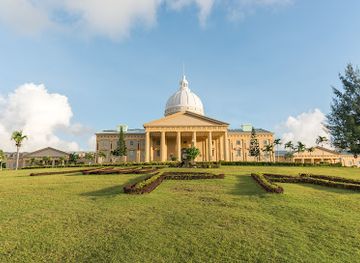
Ngerulmud is one of the world’s least populous national capitals, set among the forested hills of Babeldaob, Palau’s largest island. It belongs to Melekeok State rather than forming a conventional urban centre: there is no dense commercial district, extensive public transport network or continuous streetscape of shops and cafés. Instead, the capital is defined by the Palau National Capitol complex, a monumental group of government buildings rising above a landscape of vegetation, red earth and distant Pacific horizons.Read more about Ngerulmud
Government, Landscape and Island Identity
A Brief Visit with Wider Horizons
When is the best time to visit Ngerulmud?
Best: April–June · 29°C| Month | High (°C) | Rainfall (mm) |
|---|---|---|
| January | 29 | 209 |
| February | 29 | 186 |
| March | 29 | 177 |
| April (best) | 29 | 141 |
| May (best) | 29 | 137 |
| June (best) | 29 | 165 |
| July | 29 | 186 |
| August | 29 | 229 |
| September | 29 | 247 |
| October | 29 | 286 |
| November | 29 | 278 |
| December | 29 | 236 |
Getting to and around Ngerulmud
How to get there
Transportation
Best landmarks in Ngerulmud
The Palau National Capitol is Ngerulmud’s defining landmark and the architectural expression of the country’s republican government. Its executive, legislative and judicial buildings form a planned civic ensemble associated with the national institutions rather than with an older colonial town. The Olbiil Era Kelulau, Palau’s bicameral national legislature, occupies the legislative part of this complex, while the executive and judicial branches have their own buildings within the governmental precinct. Their monumental scale and formal composition contrast with the surrounding hills and recall Palauan cultural motifs without reproducing a traditional bai as a historic village building. In the wider Melekeok and Babeldaob landscape, traditional bai meeting houses are important cultural landmarks, representing customary systems of discussion, chiefly authority and community memory. These places should be treated as living heritage, not simply as photographic objects.
-
Federal government office
Palau National Capital
Discover Palau's national capital, Ngerulmud, where modern governance meets stunning natural beauty in a peaceful setting.
1 min walk · 0.1 km from city centre
Explore Ngerulmud on the map
Plan your Ngerulmud trip on one map. See where the top attractions, landmarks, restaurants, bars and hotels are, find what's near where you're staying, and book hotels and experiences in a few clicks.
Best hotels in Ngerulmud
Best nightclubs in Ngerulmud
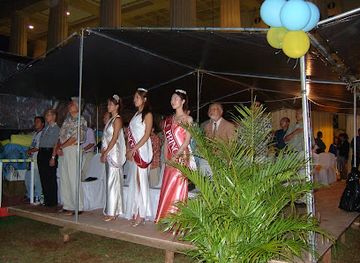
Ngerulmud has virtually no established nightlife district, and evenings are quiet once government offices and daytime travel have ended. The capital is not a destination for clubs, bar-hopping or late-night entertainment; visitors usually return to Koror, where the country’s main concentration of hotel bars, casual drinking venues and evening restaurants can be found. In Ngerulmud and rural Babeldaob, the more characteristic evening experience is listening to the landscape, sharing food with a host community or attending a pre-arranged cultural programme rather than seeking a dedicated venue. Alcohol should be consumed responsibly, especially when driving on island roads, and visitors should remember that remote areas have limited transport after dark. Any music, community gathering or cultural performance should be approached with respect and only through appropriate local arrangements.
-
Federal government office
Palau National Capital
Explore Palau National Capital: A blend of culture, nature, and governance in the heart of Palau.
1 min walk · 0.1 km from city centre
Get your free copy of our complete guide to Ngerulmud, delivered straight to you.
Everything on this page, from attractions and restaurants to essentials and local phrases, in one PDF you can read offline, print or share.
Already have an account? Sign in
Your Ngerulmud guide is ready.
We'll send it to · Not you? Sign out

Getting your guide ready…
We are putting together a fresh copy of the Ngerulmud guide. This can take up to a minute.
This can take a few moments. If your browser asks, choose Allow so the download can start. You'll find the guide in your Downloads folder.
Nothing happened? Download it again
Sorry, the guide is taking longer than usual. Please try again in a minute, or get it by email instead.
Ngerulmud essentials
Currency and Payment
Safety
Emergency Situations
Do's and Don'ts
Local Tips
From Eve
Local phrases worth knowing
You don't need to get them perfect. A few words go a long way, and locals appreciate the effort.
Basics
| English | Local | Say it |
|---|---|---|
| Hello | Alii | [ah-lee] |
| Goodbye | Klairechar | [kly-re-chahr] |
| Yes | Ongalek | [ong-ah-lek] |
| No | Chad | [chad] |
| Please/You're welcome | Kede mla mocha ongalek | [keh-deh mlah moh-chah ong-ah-lek] |
| Thank you | Kom kmal mesaul | [kohm k'mahl meh-sow-ool] |
| Excuse me/Sorry | Chedam | [cheh-dam] |
| How are you? | Ng diak? | [ng dee-ahk] |
| Fine. And you? | Ng di meral se el kmo ngak? | [ng dee mehr-ahl seh el k'moh ngahk] |
| Do you speak English? | Ng di meral se el kmo ngalek? | [ng dee mehr-ahl seh el k'moh ong-ah-lek] |
| I don't understand | Ng diak el kmo meruul | [ng dee-ahk el k'moh meh-rool] |
Eating & Drinking
| English | Local | Say it |
|---|---|---|
| I'd like to see the menu, please | Ng meral di mocha ke meduch er a rengalek | [ng mehr-ahl dee moh-chah keh meh-dooch er ah reng-ah-lek] |
| I don't eat meat | Ng diak el meral di chutem | [ng dee-ahk el mehr-ahl dee choo-tem] |
| Cheers! | Kaliid | [kah-leeed] |
| I would like to pay, please | Ng meral di mocha medak el kmo ngar er a keris | [ng mehr-ahl dee moh-chah meh-dahk el k'moh ngahr er ah keh-rees] |
Emergencies
| English | Local | Say it |
|---|---|---|
| Help! | Chad ra rengalek | [chad rah reng-ah-lek] |
| Go away! | Chad ra beluu | [chad rah beh-loo] |
| Call the Police! | Chad ra rengalek er a beches el chad | [chad rah reng-ah-lek er ah beh-ches el chad] |
| Call a doctor! | Chad ra rengalek er a meduch er a doktor | [chad rah reng-ah-lek er ah meh-dooch er ah dohk-tohr] |
| I'm lost | Ng diak el kmo meruul | [ng dee-ahk el k'moh meh-rool] |
| I'm ill | Ng diak el kmo ngar er a meral | [ng dee-ahk el k'moh ngahr er ah mehr-ahl] |
Shopping
| English | Local | Say it |
|---|---|---|
| I'd like to buy... | Ng meral di mocha beluu... | [ng mehr-ahl dee moh-chah beh-loo] |
| I'm just looking | Ng di mocha beluu | [ng dee moh-chah beh-loo] |
| How much is it? | Ke mlo diak? | [keh m'loh dee-ahk] |
| That's too expensive | A mekngit a diak | [ah meh-kngit ah dee-ahk] |
| Can you lower the price? | Ng diak el mlo medengei a rechad er tiang | [ng dee-ahk el m'loh meh-deng-gay ah reh-chad er tee-ahng] |
Time & Numbers
| English | Local | Say it |
|---|---|---|
| What time is it? | Ke diak el kmo? | [keh dee-ahk el k'moh] |
| It's one o'clock | Ak di milil el mla mo melim a klukuk | [ahk dee mee-leel el mlah moh meh-leem ah kloo-kook] |
| Half past (10) | Eng di mla klokobeluu (10) | [ehng dee mlah kloh-koh-beh-loo (10)] |
| Morning | Meral di mloker ra rengalek | [mehr-ahl dee m'loh-kehr rah reng-ah-lek] |
| Afternoon | Meral di mloker ra remelech | [mehr-ahl dee m'loh-kehr rah rem-eh-lech] |
| Evening | Meral di mloker ra rengalek | [mehr-ahl dee m'loh-kehr rah reng-ah-lek] |
| Yesterday | Kmang | [kmahng] |
| Today | Kmal mesulang | [k'mahl meh-soo-lahng] |
| Tomorrow | Kmal meral | [k'mahl mehr-ahl] |
| 1 | Rengal | [reng-ahl] |
| 2 | Dua | [doo-ah] |
| 3 | Telu | [teh-loo] |
| 4 | Erpat | [ehr-paht] |
| 5 | Lima | [lee-mah] |
| 6 | Enem | [eh-nem] |
| 7 | Pitu | [pee-too] |
| 8 | Valu | [vah-loo] |
| 9 | Siva | [see-vah] |
| 10 | Selau | [seh-lah-oo] |
Transport & Directions
| English | Local | Say it |
|---|---|---|
| Where's a/the...? | Ungil ra... | [oong-eel rah] |
| What's the address? | Ke diak el kmo ra telungalek? | [keh dee-ahk el k'moh rah teh-loong-ah-lek] |
| Can you show me (on the map)? | Ng diak el mlo mengedei er a chad er a beches? | [ng dee-ahk el m'loh mehng-ged-ay er ah chad er ah beh-ches] |
| When's the next (bus)? | Ke diak el kmo ra belau er a cheruul? | [keh dee-ahk el k'moh rah beh-lah-ooh er ah cheh-rool] |
| A ticket (to ....) | Kede chad ra beluu (er ....) | [keh-deh chad rah beh-loo (er)] |
History of Ngerulmud
Ancient Palauan Settlement
The landscape around present-day Ngerulmud forms part of Babeldaob, an island inhabited by Palauan communities for centuries. Palauan society developed through networks of clans, villages and chiefly states, with social authority expressed through land, kinship, ceremony and exchange. Traditional meeting houses, or bai, served as important settings for discussion, diplomacy and cultural transmission. Although Ngerulmud is a modern administrative capital, its location in Melekeok State connects it to this older settlement pattern rather than to an imported urban tradition. The surrounding hills, waterways and coastal areas remain part of a living cultural landscape shaped by customary relationships with land and sea.
Spanish and German Colonial Rule
Palau entered the orbit of European colonial powers in the late nineteenth century. Spain asserted sovereignty over the islands in 1885, before selling its remaining rights in Micronesia to Germany in 1899 following the Spanish-American War. German administration was comparatively brief but formed part of a wider colonial reorganisation of the western Pacific. During these decades, Palauan communities encountered new political and commercial structures while retaining their own social institutions and chiefly authority. The later national capital at Ngerulmud emerged in a region whose history had already been shaped by indigenous governance and successive external administrations.
Japanese Administration and War
Japan took control of Palau in 1914 during the First World War and subsequently administered the islands under a League of Nations mandate. Japanese influence brought new infrastructure, commercial activity and demographic change, particularly in the wider Palauan economy. The Second World War transformed the islands again, bringing military installations, disruption and hardship. Palau was bypassed by some of the Pacific War’s best-known battles, but the conflict still left physical and social consequences across the archipelago. After Japan’s defeat in 1945, Palau came under United States administration as part of the Trust Territory of the Pacific Islands.
From Trust Territory to Republic
Under the United States-administered Trust Territory, Palau experienced new political institutions, education systems and infrastructure while debates over sovereignty and the islanders’ future continued. Palau adopted its constitution in 1981 and became a sovereign republic in 1994 after the Compact of Free Association with the United States came into effect. Koror remained the commercial and population centre, but the new republic sought a capital that would represent national government beyond the crowded urban island. The choice of Ngerulmud in Melekeok State reflected both constitutional planning and a desire to place the seat of government on Babeldaob.
The Capital at Ngerulmud
Ngerulmud became Palau’s national capital in 2006, when the seat of government moved from Koror. The capital complex was planned as a symbolic centre for the republic, bringing together the executive, legislative and judicial branches in monumental buildings influenced by Palauan cultural imagery and the scale of Pacific civic architecture. Its isolated setting means that Ngerulmud has not developed into a conventional city, and most commercial activity remains concentrated in Koror. Today, the capital represents Palau’s modern statehood while standing within the customary, rural and environmentally rich setting of Melekeok and Babeldaob.
Ngerulmud in Photos
Browse through our photo collection highlighting the charm and character of the destination.
Cities near Ngerulmud
The closest cities to Ngerulmud, if you have time for more than one stop.
-

-

-

-

-


Swipe for more cities
Explore more

Explore more of Palau
Discover Palau's pristine beaches, vibrant marine life, and rich cultural heritage—an untouched paradise in the Pacific Ocean.
Explore Palau