

Free Angeles City Travel Guide & Mobile App
Plan your Angeles City trip with Evendo. Get free guides to top attractions, restaurants, hotels, and bars. Web access or download the mobile app.


Angeles City, Philippines blends Kapampangan cuisine, wartime history, lively nightlife and easy access to Clark, Mount Pinatubo and Central Luzon culture.
Kapampangan Culture and Urban Character
Angeles City sits in Pampanga, in the broad agricultural plain of Central Luzon, where Kapampangan traditions have shaped language, food, faith and civic life for centuries. The city is best understood through its contrasts: historic Santo Rosario contains churches and colonial-era houses, while Balibago is known for restaurants, hotels, entertainment venues and the lively stretch commonly called Fields Avenue. Between them are markets, shopping centres, neighbourhood eateries and streets where everyday life carries on beyond the visitor districts.Read more about Angeles City
History in the Streets
Food, Festivals and Surrounding Landscapes
When is the best time to visit Angeles City?
Best: December–February · 29–30°C| Month | High (°C) | Rainfall (mm) |
|---|---|---|
| January (best) | 29 | 7 |
| February (best) | 30 | 7 |
| March | 30 | 7 |
| April | 31 | 11 |
| May | 32 | 21 |
| June | 33 | 21 |
| July | 33 | 21 |
| August | 33 | 21 |
| September | 32 | 21 |
| October | 32 | 21 |
| November | 31 | 11 |
| December (best) | 30 | 7 |
Getting to and around Angeles City
How to get there
Transportation
Best attractions in Angeles City
Angeles City's principal sightseeing area lies around the old Santo Rosario district, where the Holy Rosary Parish Church, Museo ning Angeles and Pamintuan Mansion introduce visitors to local religious, civic and revolutionary history. The heritage quarter is compact enough to explore in stages, with older streets and buildings providing texture between formal attractions. Balibago offers a very different experience, centred on restaurants, hotels, shopping and the nightlife associated with Fields Avenue. The Museo ning Angeles presents local history and culture, while nearby galleries and civic spaces provide additional context for Pampanga's artistic traditions. Visitors interested in the region's military past can explore Clark-related sites and museums, although these are in the adjacent Clark Freeport area rather than the city proper. Excursions towards Mount Pinatubo, the agricultural landscapes of Pampanga and heritage towns elsewhere in Central Luzon extend the range of possible visits beyond urban Angeles.
-
Tourist attraction
Clark Parade Grounds
Explore Clark Parade Grounds: A lush park in Pampanga, perfect for outdoor activities and community events, blending nature with local culture.
22 min drive · 7.2 km from city centre
-
Tourist attraction
Aqua Planet
Experience the ultimate water adventure at Aqua Planet, Pampanga's premier water park featuring thrilling slides, wave pools, and fun for all ages.
30 min drive · 10.0 km from city centre
-
Tourist attraction
Dinosaurs Island
Experience a prehistoric adventure at Dinosaurs Island, a captivating theme park in Pampanga filled with life-sized dinosaur replicas and immersive exhibits.
23 min drive · 7.7 km from city centre
-
Catholic church
Holy Rosary Parish Church
Discover the spiritual and architectural beauty of Holy Rosary Parish Church in Angeles City, a must-see tourist attraction in Pampanga.
6 min drive · 1.9 km from city centre


Best landmarks in Angeles City
The Holy Rosary Parish Church is the visual and spiritual anchor of Angeles's old town, its Spanish-era origins reflecting the parish structures around which the settlement developed. Pamintuan Mansion, a grand nineteenth-century house, is associated with the revolutionary period and the 1899 independence celebration held there, giving it significance beyond its architectural presence. Museo ning Angeles occupies the former city hall and interprets local history, culture and civic development within a heritage setting. The Salakot Arch, shaped like a traditional Filipino hat, functions as a recognisable gateway and public symbol of Angeles. In the wider urban landscape, the former Clark military area represents the city's twentieth-century transformation through American military presence, wartime history and post-base redevelopment, although Clark's major sites lie in neighbouring Mabalacat rather than within Angeles's legal boundaries.
-
Catholic church
Holy Rosary Parish Church (Pisamban Maragul)
Explore the Holy Rosary Parish Church, a historic gem in Angeles, Pampanga, renowned for its stunning architecture and cultural significance.
6 min drive · 1.9 km from city centre
-
Resort hotel
Puning Hot Spring and Restaurant
Discover the perfect blend of relaxation and adventure at Puning Hot Spring and Restaurant in Pampanga, where natural hot springs meet culinary delights.
30 min drive · 10 km from city centre
-
Park
Astro Park
Discover tranquility and vibrant community life at Astro Park in Angeles City, Pampanga, where nature and recreation meet.
6 min drive · 2.1 km from city centre
-
Park
Air Force City Park
Experience nature's embrace at Air Force City Park in Clark Freeport, Pampanga, where beauty, tranquility, and history converge for an unforgettable visit.
16 min drive · 5.3 km from city centre


Explore Angeles City on the map
Plan your Angeles City trip on one map. See where the top attractions, landmarks, restaurants, bars and hotels are, find what's near where you're staying, and book hotels and experiences in a few clicks.
Neighbourhoods in Angeles City
-

-


Swipe for more neighbourhoods
Best hotels in Angeles City
Best restaurants in Angeles City
Angeles is one of the Philippines' strongest destinations for Kapampangan cooking, a tradition often associated with careful preparation, festive generosity and the inventive use of pork, poultry, fish and fermented ingredients. Sisig is the city's best-known speciality, traditionally made from chopped pig's head and seasoned with calamansi, chilli and onion, while other local dishes include bringhe, tocino, buro and various stews and grilled preparations. The legacy of Aling Lucing's sisig helped make the dish internationally recognised, though the wider culinary tradition is older and broader than any single establishment. Restaurants and family-run eateries around Balibago, the public-market areas and central Angeles serve regional food alongside Filipino comfort dishes, bakeries and international fare. Kapampangan cooking classes, food tours and market visits can reveal techniques and ingredients that a restaurant meal alone may not explain.
-
Restaurant
Aling Lucing's Sisig
Discover authentic Filipino flavors at Aling Lucing's Sisig in Angeles—home to the iconic sisig and more!
9 min walk · 0.7 km from city centre
-
Filipino
Mila's Tokwa't Baboy
Discover authentic Filipino cuisine at Mila's Tokwa't Baboy in Angeles—where tradition meets taste in every dish.
9 min drive · 3.0 km from city centre
-
Mexican
Tequila Reef Angeles City
Experience the vibrant flavors at Tequila Reef Angeles City with its eclectic mix of Mexican, American, Cajun, and Filipino cuisines.
6 min drive · 1.9 km from city centre
-
Restaurant
Margarita Station
Discover the vibrant flavors of Pampanga at Margarita Station - where culinary excellence meets affordability in Angeles City.
6 min drive · 1.9 km from city centre


Best bars in Angeles City
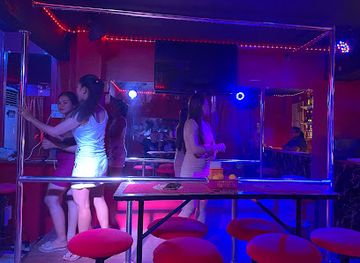
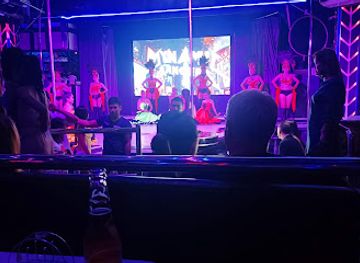
Angeles has one of Central Luzon's most developed evening scenes, concentrated particularly in Balibago along Fields Avenue and adjoining streets. The area contains bars, live-entertainment venues, karaoke establishments, pubs and clubs, with activity ranging from casual drinks to late-night performance-oriented venues. Its atmosphere is distinctly commercial and nightlife-focused rather than a continuation of the historic centre, and venue standards, pricing and entertainment formats vary considerably. Elsewhere in the city, hotel lounges, restaurants and smaller bars offer quieter evenings, while cultural events and religious celebrations provide alternative night-time experiences at appropriate times of year. Visitors should confirm bills before settling, use recognised transport and be mindful that some venues operate with specific house rules. The Clark area also has restaurants and leisure venues, but it is administratively separate from Angeles City.
-
Sports bar
Phillies Sports Grill & Bar
Phillies Sports Grill & Bar: Your ultimate sports bar experience in Angeles City with great food, drinks, and live sports action.
6 min drive · 1.9 km from city centre
-
Grill
The Parking Lot Pub
Experience the vibrant atmosphere and delicious grilled dishes at The Parking Lot Pub in Angeles City, Pampanga, a must-visit for food lovers.
5 min drive · 1.8 km from city centre
-
Bar
MidNight Rodeo Live Bar
Discover the vibrant nightlife of Angeles at MidNight Rodeo Live Bar, where live music and great drinks create unforgettable memories.
5 min drive · 1.8 km from city centre
-
Bar
Envy Sports Bar
Experience the thrill of live sports at Envy Sports Bar in Angeles, Pampanga, where great food and an energetic atmosphere await.
6 min drive · 1.9 km from city centre


Best nightclubs in Angeles City
Angeles has one of Central Luzon's most developed evening scenes, concentrated particularly in Balibago along Fields Avenue and adjoining streets. The area contains bars, live-entertainment venues, karaoke establishments, pubs and clubs, with activity ranging from casual drinks to late-night performance-oriented venues. Its atmosphere is distinctly commercial and nightlife-focused rather than a continuation of the historic centre, and venue standards, pricing and entertainment formats vary considerably. Elsewhere in the city, hotel lounges, restaurants and smaller bars offer quieter evenings, while cultural events and religious celebrations provide alternative night-time experiences at appropriate times of year. Visitors should confirm bills before settling, use recognised transport and be mindful that some venues operate with specific house rules. The Clark area also has restaurants and leisure venues, but it is administratively separate from Angeles City.
-
Bar
Club Atlantis
Experience the vibrant nightlife of Angeles City at Club Atlantis, where great drinks and lively entertainment await every night.
6 min drive · 1.9 km from city centre
-
Bar
Hammer Disco Night Club
Dive into the vibrant nightlife at Hammer Disco Night Club in Angeles, Pampanga - where unforgettable dance experiences await every night!
6 min drive · 1.9 km from city centre
-
Bar
Club XS
Discover the electrifying nightlife of Angeles at Club XS, where live shows and vibrant energy create unforgettable memories.
6 min drive · 2.0 km from city centre
-
DJ service
Eureka Super Club
Experience the vibrant nightlife at Eureka Super Club in Angeles, Pampanga, where energetic DJ sets and a lively atmosphere create unforgettable moments.
5 min drive · 1.7 km from city centre


Best shops in Angeles City
Shopping in Angeles combines practical local commerce with the retail and entertainment economy of Balibago and the Clark area. Nepo Mall and Jenra Grand Mall provide air-conditioned shops, food outlets and everyday services, while smaller commercial streets and markets offer clothing, household goods, mobile accessories and Filipino snacks. The central public-market areas are more useful for observing local trade and buying produce or prepared food than for polished souvenir shopping. Visitors looking for regional gifts can consider packaged Kapampangan delicacies, Philippine coffee, sweets, woven items and locally made crafts, checking labelling and transport restrictions for food products. Balibago's retail streets are convenient for casual purchases, while Clark has larger commercial developments outside the city. Bargaining may be appropriate in some informal stalls but not in fixed-price shops and shopping centres.
-
Shopping mall
SM City Clark
Explore SM City Clark: Your premier shopping destination in Pampanga with an array of shops, dining, and entertainment options for all.
6 min drive · 2.0 km from city centre
-
Shopping mall
MarQuee Mall by Ayala Malls
Discover the ultimate shopping experience at MarQuee Mall in Angeles City, Pampanga – a blend of retail, dining, and entertainment awaits.
10 min drive · 3.2 km from city centre
-
Shopping mall
Nepo Mall Angeles
Explore the lively Nepo Mall Angeles, a premier shopping destination in Pampanga with diverse shops, delightful dining, and family-friendly fun.
5 min drive · 1.8 km from city centre
-
Shopping mall
Robinsons Place Angeles
Discover the vibrant shopping and dining experience at Robinsons Place Angeles, your ultimate destination in Pampanga for retail therapy and culinary delights.
15 min walk · 1.2 km from city centre


Get your free copy of our complete guide to Angeles City, delivered straight to you.
Everything on this page, from attractions and restaurants to essentials and local phrases, in one PDF you can read offline, print or share.
Already have an account? Sign in
Your Angeles City guide is ready.
We'll send it to · Not you? Sign out

Getting your guide ready…
We are putting together a fresh copy of the Angeles City guide. This can take up to a minute.
This can take a few moments. If your browser asks, choose Allow so the download can start. You'll find the guide in your Downloads folder.
Nothing happened? Download it again
Sorry, the guide is taking longer than usual. Please try again in a minute, or get it by email instead.
Angeles City essentials
Currency and Payment
Safety
Emergency Situations
Do's and Don'ts
Local Tips
From Eve
Local phrases worth knowing
You don't need to get them perfect. A few words go a long way, and locals appreciate the effort.
Basics
| English | Local | Say it |
|---|---|---|
| Hello | Kumusta | [koo-mus-tah] |
| Goodbye | Paalam | [pah-ah-lam] |
| Yes | Oo | [oh-oh] |
| No | Hindi | [hin-dee] |
| Please/You're welcome | Paki | [pah-kee] |
| Thank you | Salamat | [sa-la-mat] |
| Excuse me/Sorry | Pasensya | [pah-sen-syah] |
| How are you? | Kamusta ka? | [ka-mus-tah kah] |
| Fine. And you? | Mabuti. Ikaw? | [ma-boo-tee. ee-kahw] |
| Do you speak English? | Nagsasalita ka ba ng Ingles? | [nag-sa-sa-li-tah kah bah ng in-gles] |
| I don't understand | Hindi ko maintindihan | [hin-dee koh main-tin-di-han] |
Eating & Drinking
| English | Local | Say it |
|---|---|---|
| I'd like to see the menu, please | Gusto ko sanang makita ang menu, paki | [gus-toh koh sa-nang ma-ki-tah ahng me-nu, pah-kee] |
| I don't eat meat | Hindi ako kumakain ng karne | [hin-dee ah-koh koo-ma-kain ng kar-neh] |
| Cheers! | Mabuhay! | [ma-boo-hai] |
| I would like to pay, please | Gusto ko sanang magbayad, paki | [gus-toh koh sa-nang mag-ba-yad, pah-kee] |
Emergencies
| English | Local | Say it |
|---|---|---|
| Help! | Tulong! | [too-long] |
| Go away! | Umalis ka! | [oo-ma-lees kah] |
| Call the Police! | Tawag sa Pulis! | [tah-wag sa poo-lees] |
| Call a doctor! | Tawag sa doktor! | [tah-wag sa dok-tor] |
| I'm lost | Nawawala ako | [na-wa-wa-la ah-koh] |
| I'm ill | May sakit ako | [mai sa-kit ah-koh] |
Shopping
| English | Local | Say it |
|---|---|---|
| I'd like to buy... | Gusto ko sanang bumili ng... | [gus-toh koh sa-nang boo-mi-li ng] |
| I'm just looking | Nagmamasid lang ako | [nag-ma-ma-sid lahng ah-koh] |
| How much is it? | Magkano ito? | [mag-kah-noh ee-toh] |
| That's too expensive | Masyadong mahal | [ma-sya-dong ma-hal] |
| Can you lower the price? | Pwede bang babaan ang presyo? | [pwe-de bahng ba-baan ahng pre-syo] |
Time & Numbers
| English | Local | Say it |
|---|---|---|
| What time is it? | Anong oras na? | [a-nong o-ras nah] |
| It's one o'clock | Alas uno na | [a-las oo-no nah] |
| Half past (10) | Alas dose y medya | [a-las do-se ee med-ya] |
| Morning | Umaga | [oo-ma-gah] |
| Afternoon | Hapon | [ha-pon] |
| Evening | Gabi | [ga-bee] |
| Yesterday | Kahapon | [ka-ha-pon] |
| Today | Ngayon | [n-ga-yon] |
| Tomorrow | Bukas | [boo-kas] |
| 1 | Isa | [ee-sa] |
| 2 | Dalawa | [da-la-wa] |
| 3 | Tatlo | [tat-loh] |
| 4 | Apat | [ah-pat] |
| 5 | Lima | [lee-mah] |
| 6 | Anim | [a-neem] |
| 7 | Pito | [pee-toh] |
| 8 | Walo | [wa-loh] |
| 9 | Siyam | [see-yam] |
| 10 | Sampu | [sam-poo] |
Transport & Directions
| English | Local | Say it |
|---|---|---|
| Where's a/the...? | Nasaan ang...? | [na-sa-an ahng] |
| What's the address? | Ano ang address? | [a-no ahng ad-dress] |
| Can you show me (on the map)? | Pwede mo ba akong ipakita (sa mapa)? | [pwe-de moh bah ah-kohng ee-pa-ki-tah sa mah-pah] |
| When's the next (bus)? | Kailan ang susunod na (bus)? | [ki-lan ahng su-su-nod nah bus] |
| A ticket (to ....) | Isang tiket (papuntang ....) | [ee-sahng ti-ket pah-pun-tahng] |
History of Angeles City
Kapampangan Settlement and Culiat
The area now occupied by Angeles City formed part of the Kapampangan cultural region, whose communities developed along the fertile plains and waterways of Central Luzon. The settlement that became the city began as Culiat, established in 1796 by Don Ángel Pantaleón de Miranda, a local leader associated with the nearby town of San Fernando. Its name referred to a native vine, while the settlement's later identity honoured its founder. Agriculture, parish organisation and connections with surrounding Pampanga communities shaped early growth. The town developed under Spanish colonial administration, but local Kapampangan language, foodways and social networks remained central to its character.
Formation of the Municipality
Culiat became a separate municipality in 1829 and was renamed Angeles in honour of the founder and his family. The town grew around the parish and civic core that is now associated with Santo Rosario, with roads, religious institutions and public buildings giving the settlement a more defined urban structure. Spanish colonial influence was expressed most visibly through Catholic institutions and administrative arrangements, while agriculture continued to support the local economy. The historic church, old residences and civic buildings that survive in the centre reflect this period of gradual consolidation rather than the monumental scale of older Philippine colonial cities.
Revolution and the Pamintuan Mansion
The town became involved in the political upheavals that accompanied the Philippine Revolution against Spain and the subsequent conflict with the United States. The Pamintuan Mansion, an imposing late-nineteenth-century residence in central Angeles, is associated with the revolutionary period and with the proclamation of Philippine independence celebrated there on 12 June 1899 under the revolutionary government. The building later served other civic purposes and is now interpreted as an important heritage site. Its history reflects the changing political uses of prominent homes as the Philippines moved from Spanish rule through revolution and into American administration.
American Rule and Clark Field
During the American colonial period, the development of nearby Clark Field altered Angeles's economic and geographical importance. Established as a military installation in the early twentieth century, Clark became a major American air base and brought new infrastructure, employment and international connections to the surrounding area. Angeles grew alongside this presence, while its own town centre retained its parish, market and local commercial functions. The base also left a complicated legacy, linking local prosperity and modernisation with the unequal structures of colonial and military power. Its former grounds are now administered as part of the Clark Freeport and Special Economic Zone in Mabalacat.
War, Occupation and Reconstruction
The Second World War brought Japanese occupation, military conflict and severe disruption to Angeles and the wider Pampanga region. Clark Field was a strategically important target, and the surrounding communities experienced displacement, destruction and the pressures of wartime rule. After the war, reconstruction and the renewed operation of the air base encouraged urban expansion and strengthened links with international commerce. The city gradually developed a more diverse service economy, with hotels, restaurants and entertainment businesses joining older agricultural and market-based activities. Wartime and post-war experiences remain part of the wider historical context of the city and Clark.
Eruption, Cityhood and Renewal
Angeles became a chartered city in 1964, formalising its role as one of Central Luzon's principal urban centres. A major later turning point came with the eruption of Mount Pinatubo in 1991, when ashfall affected Angeles, Clark and much of the surrounding region. The eruption damaged infrastructure, altered landscapes and contributed to the eventual closure of the American base in 1991. The former base was subsequently redeveloped as the Clark Freeport and Special Economic Zone, while Angeles expanded its own commercial, educational, culinary and tourism roles. Today, historic districts, Kapampangan culture and the post-Clark economy coexist within the city's changing identity.
Angeles City in Photos
Browse through our photo collection highlighting the charm and character of the destination.
Cities near Angeles City
The closest cities to Angeles City, if you have time for more than one stop.
-

-

-

-

-


Swipe for more cities
Explore more
Explore more of Philippines
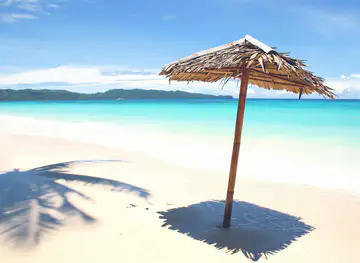
Discover the Philippines: A tropical paradise of islands, rich history, and warm hospitality, perfect for adventurers and relaxation seekers alike.
Explore Philippines