

Słupsk Travel Guide - Free Web & App
Your ultimate guide to Słupsk. Discover top landmarks, proposed trips, and local tips. Free on the web or via the Evendo companion app.


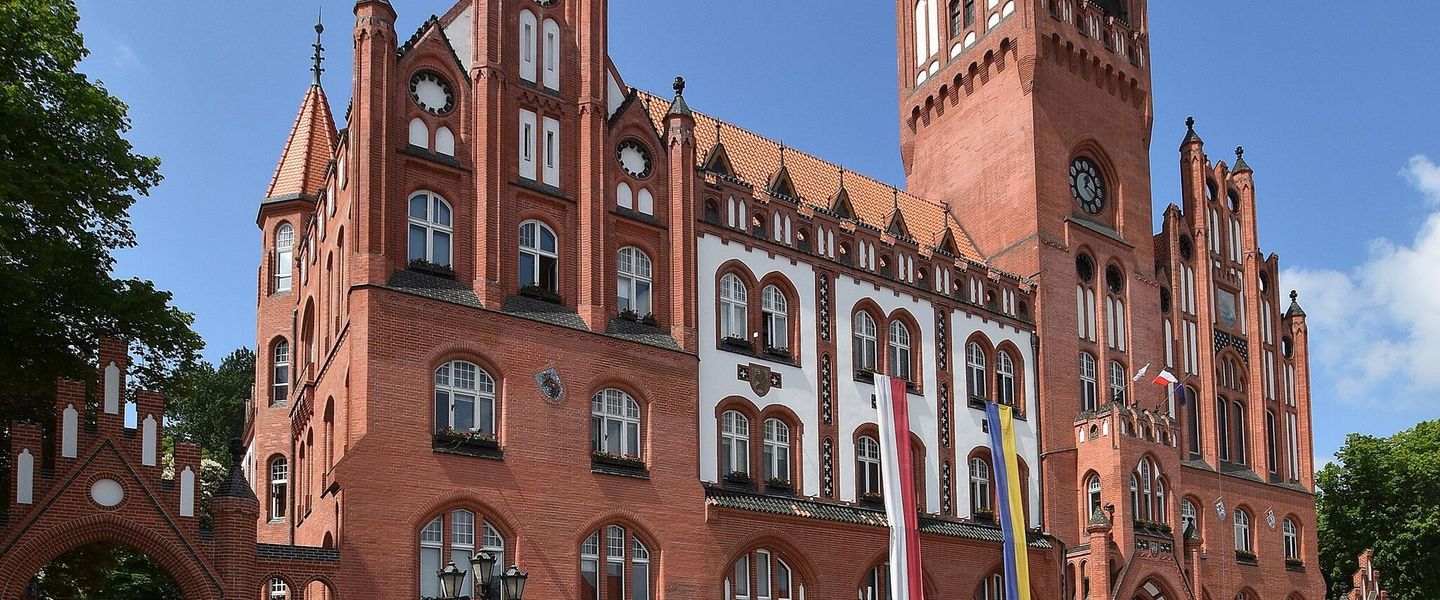


Słupsk, Poland, pairs Pomeranian history, the Słupia River, castle museums, Witkacy art and easy access to Baltic beaches near Ustka and forested countryside.
River City and Pomeranian Gateway
Słupsk stands in northern Poland on the Słupia River, between the forested landscapes of Pomerania and the Baltic coast. Although it is not itself a seaside resort, the city provides a practical cultural base for exploring the beaches and resort town of Ustka, roughly 18 kilometres away, as well as the wider countryside of the Słupia valley. Its compact historic centre is shaped by the river, remnants of medieval fortifications and the former residence of the Griffin, or Gryfit, dukes of Pomerania.Read more about Słupsk
Castle, Art and Historic Streets
A Cultural Base for Northern Pomerania
When is the best time to visit Słupsk?
Best: June–August · 24–25°C| Month | High (°C) | Rainfall (mm) |
|---|---|---|
| January | 2 | 25 |
| February | 2 | 25 |
| March | 6 | 25 |
| April | 13 | 25 |
| May | 20 | 35 |
| June (best) | 24 | 55 |
| July (best) | 25 | 65 |
| August (best) | 25 | 65 |
| September | 21 | 50 |
| October | 15 | 40 |
| November | 8 | 30 |
| December | 3 | 25 |
Getting to and around Słupsk
How to get there
Transportation
Best attractions in Słupsk
Słupsk's principal attractions cluster around the Słupia River and the historic centre. The Castle of the Pomeranian Dukes houses the Museum of Central Pomerania, with regional history, historic interiors and an important collection of works by Stanisław Ignacy Witkiewicz, known as Witkacy. Nearby, the Mill Gate forms one of the city's most recognisable medieval survivals, while the Witch Tower and fragments of the old walls suggest the scale of the former fortifications. The Gothic Church of St Mary and the Church of St Jack add architectural depth, and the red-brick Town Hall represents the city's later civic growth. River walks and the restored areas around the castle provide a gentler counterpoint to the museums. Beyond Słupsk, visitors commonly use the city as a base for Ustka's Baltic coast, while the Słupia valley, Pomeranian woodlands and nearby rural settlements offer opportunities for cycling, walking and landscape-focused excursions.
-
Tourist attraction
Park of Culture and Recreation
Explore the Park of Culture and Recreation in Słupsk for a perfect blend of nature, culture, and relaxation in a serene setting.
-
Tourist attraction
Museum of Central Pomerania in Slupsk
Explore the captivating history of Central Pomerania at the Museum of Central Pomerania in Slupsk, featuring rich collections and engaging exhibits.
-
Tourist attraction
Baszta Czarownic
Discover the magic of Baszta Czarownic, a historic tower in Słupsk that unveils the city's fascinating medieval past amidst breathtaking views.
-
Tourist attraction
Biały Spichlerz
Discover Słupsk's cultural heritage at Biały Spichlerz, an inspiring museum showcasing the region's history and art in a stunning historical setting.


Best landmarks in Słupsk
The Castle of the Pomeranian Dukes is Słupsk's defining historic landmark, linking the city with the Griffin dynasty and the political history of Pomerania. Its position beside the Słupia emphasises the river's importance to settlement and commerce. The Mill Gate, one of the surviving medieval gates, and the Witch Tower, a remnant of the defensive system, provide tangible evidence of the walled town. Historic churches, including St Mary and St Jack, preserve layers of religious and architectural history, while the red-brick Town Hall reflects the confidence of the expanding nineteenth-century city. The Słupia itself is a natural landmark within the urban landscape, and the nearby Baltic shoreline around Ustka forms a contrasting regional feature rather than a landmark inside Słupsk.
-
Park
Park of Culture and Recreation
Discover the beauty of nature and vibrant culture at the Park of Culture and Recreation, a must-visit destination in Słupsk for relaxation and enjoyment.
-
Restaurant
The William Wallace
Experience the best of Słupsk's culinary delights at The William Wallace, where juicy burgers and succulent steaks await every hungry traveler.
-
Museum
Museum of Central Pomerania in Slupsk
Explore the Museum of Central Pomerania in Słupsk, where history, art, and culture come together to tell the story of a vibrant region.
-
Tourist attraction
Baszta Czarownic
Explore the Baszta Czarownic in Słupsk, Poland - a historical tower rich in legend, offering stunning views and a glimpse into the past.


Explore Słupsk on the map
Plan your trip on one map. See where the top attractions, landmarks, restaurants and hotels are, and book hotels and experiences in a few clicks.
Best hotels in Słupsk
Best restaurants in Słupsk
Słupsk's dining scene is concentrated in the centre and draws on the broader food culture of Pomerania rather than on a narrowly defined city cuisine. Visitors can encounter Polish home-style cooking, soups, pierogi, breads, cakes and seasonal dishes, alongside the fish and smoked products associated with the nearby Baltic coast. Kashubian and Pomeranian influences are more apparent across the surrounding region, where local dairy, potatoes, berries, mushrooms and preserved foods remain important ingredients. The city has cafés, bakeries, casual restaurants and traditional-style establishments, while larger supermarkets and food shops are useful for self-catering excursions. Ustka offers additional coastal dining, particularly for visitors seeking fish, but restaurant choice and opening patterns vary by season. In villages and countryside areas beyond Słupsk, options are more limited, so travellers should plan meals around the towns on their route.
-
Restaurant
McDonald's
Experience familiar flavors at McDonald's Słupsk – your go-to stop for comfort food while exploring Poland's charming city.
-
New England
Milkshake Bar
Experience the ultimate American diner vibe at Milkshake Bar in Słupsk - where every sip is a delightful adventure!
-
Pizza
Pod Kasztanem Słupsk
Discover the flavors of Słupsk at Pod Kasztanem – where delicious pizza meets cozy lounge vibes.
-
Restaurant
The William Wallace
Discover delicious hamburgers and steaks at The William Wallace – Słupsk's hidden gem offering a cozy dining experience.


Best bars in Słupsk
Słupsk has a modest evening scene rather than the concentrated nightlife of a major Polish city. The historic centre provides cafés, pubs and restaurants where evenings are generally social and relaxed, with activity shaped by the student population, local residents and seasonal cultural programming. Traditional-style pubs and hotel bars are more characteristic than large club districts, and the choice becomes quieter outside the central streets. Theatre, music and arts events may add variety when scheduled, while nearby Ustka becomes more animated during the summer holiday season, although it remains a separate coastal town rather than part of Słupsk. Visitors should check current local listings for performances and events instead of assuming that a particular venue or programme operates year-round.
-
Beer hall
Piwiarnia Warka
Discover the lively atmosphere of Piwiarnia Warka, a unique beer hall and Irish pub in Słupsk, perfect for enjoying local brews and vibrant nightlife.
-
Brewpub
Pub AGA
Discover the lively brewpub experience at Pub AGA in Słupsk, where local craft beers and live music create unforgettable memories.
-
Bar
BAR ,,PIOTRUŚ,,
Discover the cozy ambiance and delicious soups at BAR ,,PIOTRUŚ,, in Słupsk, where every meal is a delightful experience.
-
Lounge
Browaria
Experience the vibrant atmosphere of Browaria, a chic lounge in Słupsk, perfect for cocktails, conversation, and relaxation.


Best nightclubs in Słupsk
Słupsk has a modest evening scene rather than the concentrated nightlife of a major Polish city. The historic centre provides cafés, pubs and restaurants where evenings are generally social and relaxed, with activity shaped by the student population, local residents and seasonal cultural programming. Traditional-style pubs and hotel bars are more characteristic than large club districts, and the choice becomes quieter outside the central streets. Theatre, music and arts events may add variety when scheduled, while nearby Ustka becomes more animated during the summer holiday season, although it remains a separate coastal town rather than part of Słupsk. Visitors should check current local listings for performances and events instead of assuming that a particular venue or programme operates year-round.
-
Brewpub
Pub AGA
Discover a lively brewpub in Słupsk offering local beers, live music, and a vibrant nightlife experience perfect for tourists.
-
Jazz
Antrakt Kawiarnia Artystyczna
Immerse yourself in the soothing sounds of jazz at Antrakt Kawiarnia Artystyczna, a cultural gem in Słupsk offering live music, great coffee, and a cozy atmosphere.
-
Lounge
Browaria
Discover Browaria, a cozy lounge in Słupsk offering a vibrant atmosphere and a diverse drink menu for an unforgettable night out.
-
Night club
Crystal Club
Experience the vibrant nightlife of Słupsk at Crystal Club, a premier destination for dancing and handcrafted cocktails.


Best shops in Słupsk
Shopping in Słupsk is practical and locally focused, with the greatest choice in the modern city centre and around larger commercial areas rather than in a specialised historic shopping quarter. Visitors can look for Polish food products, regional preserves, bakery goods, smoked fish from the wider coastal area, ceramics, jewellery, books and small gifts connected with Pomeranian heritage or Witkacy. Market trading and independent shops may be useful for everyday supplies, while supermarkets serve visitors staying in self-catering accommodation. The city is also a sensible place to buy provisions before travelling into rural areas, where retail options are sparser. Ustka has seasonal seaside retail and additional food shops, but its commercial character is oriented towards the coast and summer visitors rather than traditional Słupsk crafts.
-
Shopping mall
Shopping and Entertainment Centre Jantar
Explore Jantar Shopping and Entertainment Centre in Słupsk, a lively destination for shopping, dining, and fun activities for all ages.
-
Shopping mall
Galeria Słupsk
Explore Galeria Słupsk: A vibrant shopping mall in Słupsk, Poland, featuring diverse shops, delightful eateries, and a lively atmosphere for all ages.
-
Gift shop
Empik
Explore Empik in Słupsk for a delightful selection of gifts, books, and stationery, perfect for every visitor seeking unique treasures.
-
Shopping mall
Galeria Podkowa
Discover Galeria Podkowa - Słupsk's premier shopping mall with diverse shops, delightful dining, and engaging entertainment for every tourist.


Get your free copy of our complete guide to Słupsk, delivered straight to you.
Everything on this page, from attractions and restaurants to essentials and local phrases, in one PDF you can read offline, print or share.
Already have an account? Sign in
Your Słupsk guide is ready.
We'll send it to · Not you? Sign out

Getting your guide ready…
We are putting together a fresh copy of the Słupsk guide. This can take up to a minute.
This can take a few moments. If your browser asks, choose Allow so the download can start. You'll find the guide in your Downloads folder.
Nothing happened? Download it again
Sorry, the guide is taking longer than usual. Please try again in a minute, or get it by email instead.
Słupsk essentials
Currency and Payment
Safety
Emergency Situations
Do's and Don'ts
Local Tips
From Eve
Local phrases worth knowing
You don't need to get them perfect. A few words go a long way, and locals appreciate the effort.
Basics
| English | Local | Say it |
|---|---|---|
| Hello | Cześć | [che-shch] |
| Goodbye | Do widzenia | [do veed-zen-ya] |
| Yes | Tak | [tak] |
| No | Nie | [nye] |
| Please/You're welcome | Proszę | [pro-she] |
| Thank you | Dziękuję | [jen-koo-yeh] |
| Excuse me/Sorry | Przepraszam | [pshe-pra-sham] |
| How are you? | Jak się masz? | [yak shcheh mah-sh] |
| Fine. And you? | Dobrze. A ty? | [dob-zheh. ah tee] |
| Do you speak English? | Czy mówisz po angielsku? | [chi moo-vish po an-gyel-skoo] |
| I don't understand | Nie rozumiem | [nye ro-zoo-myem] |
Eating & Drinking
| English | Local | Say it |
|---|---|---|
| I'd like to see the menu, please | Chciałbym zobaczyć menu, proszę | [h-chia-wim zo-ba-cheech meh-noo, pro-sheh] |
| I don't eat meat | Nie jem mięsa | [nye yem myen-sa] |
| Cheers! | Na zdrowie! | [nah zd-roh-vee-eh] |
| I would like to pay, please | Chciałbym zapłacić, proszę | [h-chia-wim zap-wa-cheech, pro-sheh] |
Emergencies
| English | Local | Say it |
|---|---|---|
| Help! | Pomocy! | [po-mo-tsi] |
| Go away! | Odejdź! | [o-dey-j] |
| Call the Police! | Zadzwoń po policję! | [zadz-von po po-li-tsyeh] |
| Call a doctor! | Zadzwoń po lekarza! | [zadz-von po leh-kar-zah] |
| I'm lost | Zgubiłem się | [z-goo-bee-wem sheh] |
| I'm ill | Jestem chory | [yeh-stem ho-ri] |
Shopping
| English | Local | Say it |
|---|---|---|
| I'd like to buy... | Chciałbym kupić... | [h-chia-wim koo-pich...] |
| I'm just looking | Tylko się rozglądam | [tsoo-koh shcheh rozh-gwon-dam] |
| How much is it? | Ile to kosztuje? | [ee-leh to kosh-too-yeh] |
| That's too expensive | To za drogie | [toh zah drog-yeh] |
| Can you lower the price? | Czy możesz obniżyć cenę? | [chi moo-zhesh ob-nee-zhich chen-eh] |
Time & Numbers
| English | Local | Say it |
|---|---|---|
| What time is it? | Która godzina? | [ktoo-rah god-zee-nah] |
| It's one o'clock | Jest pierwsza | [yest pyeh-vee-ers-zah] |
| Half past (10) | Pół do jedenastej | [poow do yeh-nyan-stay] |
| Morning | Rano | [rah-no] |
| Afternoon | Popołudnie | [po-po-woo-dnyeh] |
| Evening | Wieczór | [vyeh-choor] |
| Yesterday | Wczoraj | [v-cho-rye] |
| Today | Dzisiaj | [dzee-shey] |
| Tomorrow | Jutro | [yoo-tro] |
| 1 | Jeden | [yeh-den] |
| 2 | Dwa | [d-vah] |
| 3 | Trzy | [tshih] |
| 4 | Cztery | [ch-teh-ry] |
| 5 | Pięć | [pyench] |
| 6 | Sześć | [shcheh-shch] |
| 7 | Siedem | [shyeh-dem] |
| 8 | Osiem | [oh-shem] |
| 9 | Dziewięć | [dzyev-nye-ch] |
| 10 | Dziesięć | [dzye-shyench] |
Transport & Directions
| English | Local | Say it |
|---|---|---|
| Where's a/the...? | Gdzie jest... | [g-dzhe yest] |
| What's the address? | Jaki jest adres? | [yah-ki yest a-dres] |
| Can you show me (on the map)? | Czy możesz mi pokazać (na mapie)? | [chi moo-zhesh mee po-ka-zach (na ma-pyeh)] |
| When's the next (bus)? | Kiedy jest następny (autobus)? | [kyeh-dy yest nas-tep-ny (ow-to-boos)] |
| A ticket (to ....) | Bilet (do ....) | [bee-let (do)] |
History of Słupsk
River Settlement and Medieval Town
Słupsk developed beside a crossing on the Słupia, a river that linked inland Pomeranian settlements with routes towards the Baltic. Early habitation grew around the river and a fortified stronghold, while the medieval town expanded under the rule of local Pomeranian dukes. In the thirteenth century, Słupsk received town rights based on Lübeck law, encouraging trade, craft production and more formal urban development. Its position made it part of the network of towns that connected the duchy with neighbouring Baltic territories.
The Griffin Dukes and Ducal Castle
For centuries Słupsk belonged to the Duchy of Pomerania and was connected with the Griffin dynasty, the ruling house of the region. The castle on the Słupia became an important ducal residence, and its surviving Renaissance form is associated with the early sixteenth-century rebuilding undertaken during the reign of Bogislaw X. The complex, together with the Mill Gate and defensive remains, preserves the relationship between princely authority, river commerce and the town's fortified medieval core.
Reformation, Trade and Changing Rule
The sixteenth and seventeenth centuries brought religious and political change to Słupsk. As in much of Pomerania, the Reformation altered ecclesiastical life, while trade, crafts and agriculture continued to shape the local economy. War and shifting dynastic fortunes affected the duchy, and after the extinction of the Griffin line in the seventeenth century Pomerania was divided between larger powers. Słupsk subsequently came under Brandenburg-Prussian rule, beginning a long period in which its administration and economic connections were oriented towards the Prussian state.
Prussian and German Urban Development
During the nineteenth century, Słupsk, then known as Stolp, expanded beyond its medieval walls. Improved roads and rail connections strengthened links with other Pomeranian towns, while manufacturing, trade and civic institutions supported urban growth. New public buildings and residential districts appeared beside the older centre, and the town became an administrative and commercial focus for its rural hinterland. The surviving Town Hall and parts of the historic street pattern belong to this broader phase of modern civic development.
War, Border Change and Reconstruction
The Second World War and its aftermath transformed Słupsk's population and political identity. In 1945 the city became part of Poland, and the German population was replaced largely by Polish settlers displaced or resettled after the change of borders. War damage and post-war redevelopment altered parts of the historic centre, while surviving buildings were gradually conserved and adapted for new uses. Museums and heritage projects now interpret the city's layered Pomeranian, German and Polish past rather than presenting it as a single-period town.
Modern Cultural Heritage
Post-war Słupsk developed as a regional Polish centre while retaining a strong interest in the history of Central Pomerania. The Museum of Central Pomerania established an important collection of works by Stanisław Ignacy Witkiewicz, or Witkacy, whose experimental art provides a distinctive cultural link between the city and twentieth-century Polish modernism. Conservation of the castle, fortifications and historic churches has helped maintain the old centre's character, while cultural events and museums have become central to Słupsk's contemporary visitor identity.
Słupsk in Photos
Browse through our photo collection highlighting the charm and character of the destination.
Neighbouring destination travel guides
The closest destinations to Słupsk, if you have time for more than one.
-

-

-

-

-


Swipe for more destinations
Explore more

Explore more of Kashubia
Discover Kashubia, Poland's enchanting region of lakes, forests, and rich cultural traditions – a true haven for nature lovers and cultural explorers alike.
Explore Kashubia
Explore more of Poland
Discover Poland's rich history, vibrant cities, and scenic landscapes, from the medieval streets of Kraków to the serene beauty of the Tatra Mountains and Masurian Lakes.
Explore Poland