

Al Wakra Beach Travel Guide - Free Web & App
Your ultimate guide to Al Wakra Beach. Discover top landmarks, proposed trips, and local tips. Free on the web or via the Evendo companion app.


Al Wakra Beach in Qatar offers Gulf views, swimming and sunset walks beside Al Wakrah Souq, with seafood, heritage and easy access from Doha for visitors.
Gulf Shoreline and Open Horizons
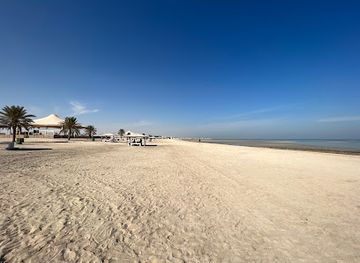
Al Wakra Beach lies on Qatar’s eastern coast, beside the historic maritime town of Al Wakrah and within easy reach of Doha. Its setting is defined by a broad Gulf shoreline, pale sand, shallow coastal waters and an open horizon that changes character with the light. The beach is closely associated with Al Wakrah’s seafront and the restored Souq Al Wakrah, making it more than an isolated stretch of sand: visitors can combine time beside the water with local food, traditional architecture and an evening walk along the coast.Read more about Al Wakra Beach
Maritime Heritage
Exploring the Waterfront
When is the best time to visit Al Wakra Beach?
Best: December–February · 24–25°C| Month | High (°C) | Rainfall (mm) |
|---|---|---|
| January (best) | 24 | 0 |
| February (best) | 25 | 0 |
| March | 28 | 0 |
| April | 33 | 0 |
| May | 37 | 0 |
| June | 40 | 0 |
| July | 41 | 0 |
| August | 40 | 0 |
| September | 38 | 0 |
| October | 33 | 0 |
| November | 29 | 0 |
| December (best) | 25 | 0 |
Getting to and around Al Wakra Beach
How to get there
Transportation
Best attractions in Al Wakra Beach
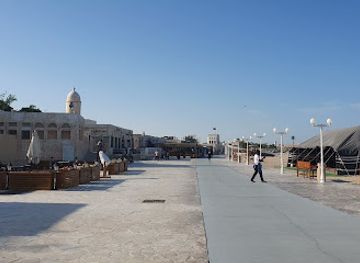
The main attraction is the open Gulf shoreline of Al Wakra Beach, where visitors can enjoy sand, sea views and a broad coastal setting close to the town. Its strongest companion attraction is Souq Al Wakrah, a waterfront complex built in a traditional style with courtyards, low-rise buildings, restaurants and pedestrian areas that evoke the commercial character of an old Qatari coastal settlement. The adjoining seafront is particularly appealing around sunset, when the beach, promenade and souq create a continuous public waterfront. Within Al Wakrah, visitors can also look for surviving elements of the town’s older maritime character, although the area is now surrounded by modern urban development. The beach is not a remote nature reserve or a wilderness landscape; its appeal lies in the combination of accessible coast, local recreation, seafood dining and cultural atmosphere. Doha’s attractions are separate from Al Wakra Beach and should be treated as extensions to a visit rather than features of the beach itself.
-
Resort hotel
Wakra Family Beach
Discover the serene beauty of Wakra Family Beach, a perfect getaway for families and beach lovers in Al Wakrah, Qatar.
Best landmarks in Al Wakra Beach
Al Wakra Beach is itself the defining natural landmark: a low, open Gulf coastline whose significance comes from its relationship with Al Wakrah’s historic seafaring identity. The most prominent nearby cultural landmark is Souq Al Wakrah, whose traditional-style architecture, market passages and waterfront position refer to the town’s former role as a fishing and pearling settlement. The coast, souq and surrounding old-town atmosphere are best understood together rather than as isolated monuments. Al Wakrah’s historic mosque and older urban fabric are part of the wider town’s heritage, but visitors should distinguish these local features from the beach proper and observe any access or photography guidance. Modern roads and residential districts form much of the surrounding landscape, creating a visible contrast between Qatar’s rapidly developed present and the maritime traditions preserved in the waterfront setting.
-
Beach
Al Wakra Municipality Family Beach
Discover the beauty of Al Wakra Municipality Family Beach, a family-friendly destination with stunning sands and crystal-clear waters perfect for relaxation and fun.
Explore Al Wakra Beach on the map
Plan your trip on one map. See where the top attractions, landmarks, restaurants and hotels are, and book hotels and experiences in a few clicks.
Best hotels in Al Wakra Beach
Get your free copy of our complete guide to Al Wakra Beach, delivered straight to you.
Everything on this page, from attractions and restaurants to essentials and local phrases, in one PDF you can read offline, print or share.
Already have an account? Sign in
Your Al Wakra Beach guide is ready.
We'll send it to · Not you? Sign out

Getting your guide ready…
We are putting together a fresh copy of the Al Wakra Beach guide. This can take up to a minute.
This can take a few moments. If your browser asks, choose Allow so the download can start. You'll find the guide in your Downloads folder.
Nothing happened? Download it again
Sorry, the guide is taking longer than usual. Please try again in a minute, or get it by email instead.
Al Wakra Beach essentials
Currency and Payment
Safety
Emergency Situations
Do's and Don'ts
Local Tips
From Eve
Local phrases worth knowing
You don't need to get them perfect. A few words go a long way, and locals appreciate the effort.
Basics
| English | Local | Say it |
|---|---|---|
| Hello | مرحبا | [marhaba] |
| Goodbye | وداعا | [wadaan] |
| Yes | نعم | [naam] |
| No | لا | [laa] |
| Please/You're welcome | من فضلك | [min fadlik] |
| Thank you | شكرا لك | [shukran lak] |
| Excuse me/Sorry | عذرا | [udhran] |
| How are you? | كيف حالك؟ | [kayf halak?] |
| Fine. And you? | بخير. وأنت؟ | [bikhayr. wa ant?] |
| Do you speak English? | هل تتكلم الإنجليزية؟ | [hal tatakallam al-inglizia?] |
| I don't understand | أنا لا أفهم | [ana la afham] |
Eating & Drinking
| English | Local | Say it |
|---|---|---|
| I'd like to see the menu, please | أريد أن أرى القائمة، من فضلك | [uridu an ara al-qaimah, min fadlik] |
| I don't eat meat | أنا لا آكل اللحم | [ana la akl al-lahm] |
| Cheers! | في صحتك! | [fi sahtak!] |
| I would like to pay, please | أريد أن أدفع، من فضلك | [uridu an adfaa, min fadlik] |
Emergencies
| English | Local | Say it |
|---|---|---|
| Help! | النجدة! | [al-najdah!] |
| Go away! | انصرف! | [ansarf!] |
| Call the Police! | اتصل بالشرطة! | [atasil bialshurta!] |
| Call a doctor! | اتصل بالطبيب! | [atasil bialtabib!] |
| I'm lost | لقد ضللت الطريق | [laqad dalalt al-tariq] |
| I'm ill | أنا مريض | [ana mareed] |
Shopping
| English | Local | Say it |
|---|---|---|
| I'd like to buy... | أريد أن أشتري... | [uridu an ashtari...] |
| I'm just looking | أنا فقط أتطلع | [ana faqat atatala] |
| How much is it? | كم سعره؟ | [kam si'ruhu?] |
| That's too expensive | هذا غالي جدا | [hatha ghali jiddan] |
| Can you lower the price? | هل يمكنك خفض السعر؟ | [hal yumkinuk khafd al-si'ar?] |
Time & Numbers
| English | Local | Say it |
|---|---|---|
| What time is it? | كم الساعة؟ | [kam al-saa'ah?] |
| It's one o'clock | الساعة الواحدة | [al-saa'ah al-wahidah] |
| Half past (10) | الساعة العاشرة والنصف | [al-saa'ah al-ashirah wa al-nisf] |
| Morning | الصباح | [al-subah] |
| Afternoon | بعد الظهر | [ba'd al-dhuhr] |
| Evening | المساء | [al-masaa] |
| Yesterday | أمس | [ams] |
| Today | اليوم | [al-yawm] |
| Tomorrow | غدا | [ghadan] |
| 1 | واحد | [wahid] |
| 2 | اثنان | [ithnan] |
| 3 | ثلاثة | [thalatha] |
| 4 | أربعة | [arba'a] |
| 5 | خمسة | [khamsa] |
| 6 | ستة | [sitta] |
| 7 | سبعة | [sab'a] |
| 8 | ثمانية | [thamania] |
| 9 | تسعة | [tasia] |
| 10 | عشرة | [asharah] |
Transport & Directions
| English | Local | Say it |
|---|---|---|
| Where's a/the...? | أين...؟ | [ayn...?] |
| What's the address? | ما هو العنوان؟ | [ma hu al-ainan?] |
| Can you show me (on the map)? | هل يمكنك أن تريني (على الخريطة)؟ | [hal yumkinuk an tarini (ala al-kharitah)?] |
| When's the next (bus)? | متى القادم (الحافلة)؟ | [mata al-qadim (al-hafilah)?] |
| A ticket (to ....) | تذكرة (إلى...) | [tazkirah (ila...)] |
History of Al Wakra Beach
A Coast Shaped by the Gulf
Al Wakrah’s history is inseparable from Qatar’s eastern shoreline. Before modern urban development, the coast supported small communities whose livelihoods depended on fishing, seafaring and access to the shallow Gulf waters. The natural harbour and coastal position helped Al Wakrah grow as a settlement south of Doha, while the surrounding land remained largely arid and sparsely settled. The beach is therefore part of a long maritime landscape rather than a recently created recreational setting, even though much of the present waterfront has been adapted for contemporary visitors.
Fishing and the Pearling Economy
For generations, Al Wakrah was associated with fishing and pearling, the principal coastal industries that shaped many Qatari settlements before the rise of oil and gas. Families relied on the sea for food, trade and seasonal work, and boats connected the town to other communities around the peninsula. Pearling declined sharply in the twentieth century as cultured pearls and changing economic conditions altered the market. The surviving traditional character of Al Wakrah, including its maritime setting and historic commercial quarter, helps explain the town’s importance within Qatar’s pre-oil heritage.
From Coastal Village to Modern Town
The discovery and development of oil transformed Qatar during the twentieth century, bringing new infrastructure, population growth and economic opportunities to places such as Al Wakrah. The former fishing settlement became part of a rapidly expanding urban network linked to Doha and other parts of the country by modern roads. Residential districts and public services extended well beyond the old waterfront, while the traditional coastal core retained a distinct identity. This contrast between a historic maritime centre and a modern municipality remains central to the visitor experience around Al Wakra Beach.
Waterfront Renewal and Heritage Protection
In the contemporary period, Al Wakrah’s waterfront has been renewed for recreation, dining and heritage-led tourism. Souq Al Wakrah was developed as a traditional-style coastal market and has become a focal point beside the beach, giving visitors a setting in which to encounter the town’s maritime associations without relying solely on surviving historic fabric. The beach and seafront now form part of a public leisure landscape used by local residents and visitors. Development has increased access to the coast while also making responsible use of public spaces and respect for local customs important.
Al Wakra Beach in Photos
Browse through our photo collection highlighting the charm and character of the destination.
Neighbouring destination travel guides
The closest destinations to Al Wakra Beach, if you have time for more than one.
-

-

-

-

-


Swipe for more destinations
Explore more

Explore more of Qatar
Discover Qatar, where modern marvels meet ancient traditions in a land of luxury, culture, and natural beauty.
Explore Qatar