

Yuseong-gu (Daejeon) Travel Guide - Free
Explore Yuseong-gu in Daejeon with Evendo's free guide. Find the best shops, historic streets, restaurants, and gems on web or mobile.


Yuseong-gu in Daejeon combines soothing hot springs, science museums, Expo-era landmarks, university life and green walks near Gyeryongsan National Park.
Hot Springs and Contemporary Daejeon
Yuseong-gu occupies much of western and northern Daejeon, combining the city's best-known spa district with university campuses, research institutes, exhibition grounds and expanding residential neighbourhoods. Its most recognisable centre is around Yuseong Hot Springs, where foot baths and spa hotels reflect a tradition that has drawn visitors for centuries. Nearby Bongmyeong-dong adds restaurants, cafés and evening activity, while Gung-dong has a youthful character shaped by Chungnam National University and the surrounding student population.Read more about Yuseong-gu
Science, Innovation and Expo Landscapes
Outdoor Edges and Everyday Neighbourhoods
Best attractions in Yuseong-gu
Yuseong-gu's principal attractions reflect its unusual combination of spa culture, scientific ambition and access to nature. Yuseong Hot Springs is the district's most distinctive experience, with public foot-bath facilities and a surrounding spa quarter that can be explored without committing to a full bathing session. The National Science Museum offers exhibitions explaining science and technology in an accessible setting, while the adjoining Expo area preserves the memory of the 1993 exposition through large-scale civic spaces and science-related landmarks. KAIST and the Daedeok Innopolis research belt are important parts of the district's identity, though many facilities are not conventional tourist attractions and may have restricted access. University surroundings, streams and local parks provide quieter walks, and the southern and western approaches connect with excursions towards Gyeryongsan National Park, whose wider trails and temples lie across neighbouring areas as well as Yuseong-gu.
-
Tourist attraction
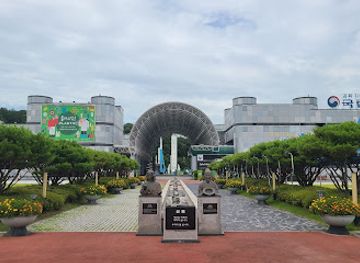
National Science Museum
Discover the universe of science at the National Science Museum in Daejeon, where interactive exhibits inspire curiosity and learning.
7 min drive · 2.4 km from neighbourhood centre
-
Tourist attraction
Yuseong Hot Springs
Discover the therapeutic embrace of Yuseong Hot Springs, a tranquil escape in Daejeon with healing mineral waters and a touch of Korean culture.
16 min walk · 1.3 km from neighbourhood centre
-
Tourist attraction
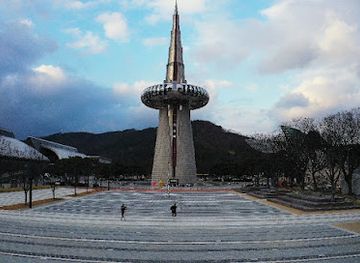
EXPO Hanbit Tower
Discover the stunning views of Daejeon from EXPO Hanbit Tower, an iconic observation deck perfect for memorable experiences and breathtaking photographs.
10 min drive · 3.3 km from neighbourhood centre
-
Bridge
Expo Bridge
Discover the breathtaking views and architectural beauty of Expo Bridge, a must-visit tourist attraction in Daejeon, South Korea.
9 min drive · 3.1 km from neighbourhood centre



Best landmarks in Yuseong-gu
Yuseong Hot Springs is both a physical and cultural landmark, marking the place where the district's spa economy and visitor identity developed. Public foot-bath facilities and the surrounding spa streets make the thermal resource visible in everyday urban life rather than confining it to hotel interiors. The National Science Museum and the remaining Expo-related landscape in Doryong-dong represent a different chapter of Yuseong's history: the presentation of science and national technological development during and after the 1993 Taejeon Expo. KAIST and the broader Daedeok research complex are significant institutional landmarks, even where their buildings are not open for casual touring. The district also contains university campuses, planned research roads, older village settlements and wooded approaches towards Gyeryongsan, creating a built landscape that shows the transition from spa town and countryside to research-oriented metropolitan district.
-
Science museum
National Science Museum
Discover the National Science Museum in Daejeon, a family-friendly destination filled with engaging exhibits and hands-on learning experiences about science and technology.
7 min drive · 2.4 km from neighbourhood centre
-
Observation deck
EXPO Hanbit Tower
Discover panoramic views and cultural richness at EXPO Hanbit Tower, Daejeon's iconic observation deck and tourist attraction.
10 min drive · 3.3 km from neighbourhood centre
-
Bridge
Expo Bridge
Discover the architectural beauty of Expo Bridge in Daejeon, a stunning landmark offering breathtaking views and a glimpse into the city's vibrant culture.
9 min drive · 3.1 km from neighbourhood centre
-
Park
Uam Historical Park
Explore the natural beauty and historical significance of Uam Historical Park in Daejeon, a serene escape perfect for nature lovers and history enthusiasts alike.
27 min drive · 9.2 km from neighbourhood centre


Explore Yuseong-gu on the map
A handpicked selection of must-see spots in Yuseong-gu, mapped for you.
Best hotels in Yuseong-gu
Best restaurants in Yuseong-gu
Dining in Yuseong-gu ranges from spa-district restaurants and Korean comfort food to cafés, student-priced meals and more contemporary venues around Bongmyeong-dong and Gung-dong. The areas near Yuseong Spa Station and the hot-spring streets are convenient for visitors seeking a broad choice of casual Korean dishes, grilled specialities, noodles and late meals, while Gung-dong's connection with Chungnam National University gives its commercial streets a youthful, informal character. Around KAIST and the research districts, cafés and restaurants serve students, researchers and office workers, although the spread-out layout means that choices are often concentrated in local commercial clusters rather than along one continuous dining street. Traditional markets are less central to Yuseong's visitor identity than the spa and university areas, and the district's food culture is best understood through its everyday restaurants, cafés and neighbourhood gathering places.
-
Italian
Nuovo Napoli
Experience the authentic taste of Italy at Nuovo Napoli in Daejeon's Yuseong-gu district—where every meal is a journey through Italian culinary tradition.
3 min walk · 0.3 km from neighbourhood centre
-
Italian
PIZZERIA D614
Experience authentic Italian flavors at Pizzeria D614 in Yuseong-gu, where every dish is crafted with passion and fresh ingredients.
10 min drive · 3.4 km from neighbourhood centre
-
Mediterranean
Ali-Baba’s Treasure
Experience the essence of Mediterranean cuisine at Ali-Baba’s Treasure in Daejeon - where every dish tells a story.
6 min walk · 0.4 km from neighbourhood centre
-
Restaurant
The Ranch Pub
Experience the vibrant atmosphere at The Ranch Pub in Daejeon—your go-to spot for craft beer and hearty meals.
4 min walk · 0.4 km from neighbourhood centre


Best bars in Yuseong-gu
Yuseong-gu's evening scene is concentrated around Bongmyeong-dong, the Yuseong Spa area and student-oriented Gung-dong rather than being a single city-wide club district. Visitors will find Korean drinking restaurants, casual bars, cafés open into the evening and small venues serving local university and office communities. Bongmyeong-dong is the liveliest choice for a meal followed by drinks, while Gung-dong tends towards a younger, more informal atmosphere shaped by Chungnam National University. The spa area combines hotel lounges and restaurant streets with a quieter bathing culture, so its evenings feel different from student nightlife. Outside these pockets, Daedeok Innopolis, KAIST's surrounding areas and residential neighbourhoods are comparatively subdued after working hours. Late-night transport and venue availability vary, making it sensible to check current local information rather than assume every street remains active.
-
Pub
The Ranch Pub
Experience the vibrant nightlife at The Ranch Pub in Daejeon, where delicious food meets an extensive beer selection in a lively atmosphere.
4 min walk · 0.4 km from neighbourhood centre
-
Wine bar
White flowers in the desert
Discover the charm of Daejeon's nightlife at White Flowers in the Desert, where exquisite wines and cocktails await in a lively atmosphere.
7 min walk · 0.5 km from neighbourhood centre
-
Bar
Santa Claus
Experience the enchanting nightlife of Daejeon at Santa Claus, a lively bar with delightful drinks and a vibrant atmosphere.
4 min walk · 0.3 km from neighbourhood centre
-
Bar
럭키스트라이크 전국본점
Experience the vibrant nightlife at Lucky Strike, Daejeon's premier bar with an extensive drink menu and lively atmosphere.
6 min walk · 0.5 km from neighbourhood centre


Best nightclubs in Yuseong-gu
Yuseong-gu's evening scene is concentrated around Bongmyeong-dong, the Yuseong Spa area and student-oriented Gung-dong rather than being a single city-wide club district. Visitors will find Korean drinking restaurants, casual bars, cafés open into the evening and small venues serving local university and office communities. Bongmyeong-dong is the liveliest choice for a meal followed by drinks, while Gung-dong tends towards a younger, more informal atmosphere shaped by Chungnam National University. The spa area combines hotel lounges and restaurant streets with a quieter bathing culture, so its evenings feel different from student nightlife. Outside these pockets, Daedeok Innopolis, KAIST's surrounding areas and residential neighbourhoods are comparatively subdued after working hours. Late-night transport and venue availability vary, making it sensible to check current local information rather than assume every street remains active.
-
Night club
Ibija
Discover the exhilarating nightlife of Daejeon at Ibija, the ultimate night club for music and dance enthusiasts.
7 min drive · 2.3 km from neighbourhood centre
-
Night club
대전헤븐클럽
Discover the vibrant nightlife at Daejeon Heaven Club, where music and dance come alive in the heart of Daejeon, South Korea.
7 min drive · 2.2 km from neighbourhood centre
-
 Night club
자유로단란주점
Uncover the excitement of Daejeon's nightlife at 자유로단란주점, where music, drinks, and unforgettable memories await.
5 min drive · 1.8 km from neighbourhood centre
-
Night club
라이브클럽거짓말
Experience the vibrant nightlife of Daejeon at 라이브클럽거짓말, where music and dance create unforgettable memories in a lively atmosphere.
11 min drive · 3.8 km from neighbourhood centre


Best shops in Yuseong-gu
Shopping in Yuseong-gu is primarily local and practical, with commercial clusters serving residents, students, researchers and spa visitors rather than a single major retail boulevard. Around Yuseong Spa and Bongmyeong-dong, visitors can browse convenience shops, beauty and wellness businesses, cafés and small retailers associated with the hotel and restaurant economy. Gung-dong offers the most student-oriented mix, including casual fashion, stationery, food and everyday services around Chungnam National University. Larger residential developments bring their own supermarkets and neighbourhood retail, while the research districts are more functional than designed for browsing. The district is therefore better suited to buying snacks, daily necessities, Korean cosmetics or small gifts from ordinary local businesses than to searching for a specialised craft or antique market. Visitors looking for department-store shopping or a broad luxury selection will generally need to travel beyond Yuseong's neighbourhood commercial areas.
-
Department store
Galleria Department Store Timeworld
Explore a world of shopping, dining, and entertainment at Galleria Department Store Timeworld in Daejeon, South Korea.
7 min drive · 2.3 km from neighbourhood centre
-
Department store
Daejeon Shinsegae Art & Science
Discover Daejeon Shinsegae Art & Science, where shopping meets art and technology in an unforgettable retail experience.
8 min drive · 2.7 km from neighbourhood centre
-
Department store
NC Daejeon Yuseong Store
Discover the vibrant shopping experience at NC Daejeon Yuseong Store, where fashion, food, and fun come together in the heart of Daejeon.
18 min walk · 1.4 km from neighbourhood centre
-
Clothing store
4XR
Discover fashion at 4XR, a premier clothing store in Daejeon offering unique styles and quality apparel for every taste.
7 min drive · 2.2 km from neighbourhood centre


Yuseong-gu essentials
Getting There
Getting Around
Safety
Emergency Situations
Do's and Don'ts
Local Tips

From Eve
Local phrases worth knowing
You don't need to get them perfect. A few words go a long way, and locals appreciate the effort.
Basics
| English | Local | Say it |
|---|---|---|
| Hello | 안녕하세요 | [annyeonghaseyo] |
| Goodbye | 안녕히 가세요 | [annyeonghi gaseyo] |
| Yes | 네 | [ne] |
| No | 아니요 | [aniyo] |
| Please/You're welcome | 부탁합니다/천만에요 | [butakhamnida/cheonmaneyo] |
| Thank you | 감사합니다 | [gamsahamnida] |
| Excuse me/Sorry | 죄송합니다 | [joesonghamnida] |
| How are you? | 어떻게 지내세요? | [eotteoke jinaeseyo?] |
| Fine. And you? | 잘 지내고요. 당신은요? | [jal jinaegoyo. dangsineunyo?] |
| Do you speak English? | 영어 할 수 있어요? | [yeongeo hal su isseoyo?] |
| I don't understand | 이해하지 못해요 | [ihaehaji mothaeyo] |
Eating & Drinking
| English | Local | Say it |
|---|---|---|
| I'd like to see the menu, please | 메뉴를 보여주세요 | [menyureul boyeojuseyo] |
| I don't eat meat | 고기를 먹지 않아요 | [gogireul meokji anayo] |
| Cheers! | 건배! | [geonbae] |
| I would like to pay, please | 계산 해주세요 | [gyesan haejuseyo] |
Emergencies
| English | Local | Say it |
|---|---|---|
| Help! | 도와주세요! | [dowajuseyo!] |
| Go away! | 가세요! | [gaseyo!] |
| Call the Police! | 경찰을 불러주세요! | [gyeongchareul bulleojuseyo!] |
| Call a doctor! | 의사를 불러주세요! | [uisareul bulleojuseyo!] |
| I'm lost | 길을 잃었어요 | [gireul ilheosseoyo] |
| I'm ill | 아파요 | [apayo] |
Shopping
| English | Local | Say it |
|---|---|---|
| I'd like to buy... | 사고 싶어요... | [sago sipeoyo...] |
| I'm just looking | 그냥 둘러보고 있어요 | [geunyang dulleobogo isseoyo] |
| How much is it? | 얼마에요? | [eolmaeyo?] |
| That's too expensive | 너무 비싸요 | [neomu bissayo] |
| Can you lower the price? | 가격을 내리실 수 있나요? | [gageogeul naerisil su innayo?] |
Time & Numbers
| English | Local | Say it |
|---|---|---|
| What time is it? | 지금 몇 시에요? | [jigeum myeot siyeyo?] |
| It's one o'clock | 한 시에요 | [han siyeyo] |
| Half past (10) | 열 시 반 | [yeol si ban] |
| Morning | 아침 | [achim] |
| Afternoon | 오후 | [ohu] |
| Evening | 저녁 | [jeonyeok] |
| Yesterday | 어제 | [eoje] |
| Today | 오늘 | [oneul] |
| Tomorrow | 내일 | [naeil] |
| 1 | 일 | [il] |
| 2 | 이 | [i] |
| 3 | 삼 | [sam] |
| 4 | 사 | [sa] |
| 5 | 오 | [o] |
| 6 | 육 | [yuk] |
| 7 | 칠 | [chil] |
| 8 | 팔 | [pal] |
| 9 | 구 | [gu] |
| 10 | 십 | [sip] |
Transport & Directions
| English | Local | Say it |
|---|---|---|
| Where's a/the...? | ...어디에 있어요? | [...eodie isseoyo?] |
| What's the address? | 주소가 뭐에요? | [jusoga mwoeyo?] |
| Can you show me (on the map)? | 지도로 보여주실 수 있나요? | [jidoro boyeojusil su innayo?] |
| When's the next (bus)? | 다음 버스는 언제 와요? | [daeum beoseuneun eonje wayo?] |
| A ticket (to ....) | 표 한 장 주세요 | [pyo han jang juseyo] |
History of Yuseong-gu
Hot Springs Before Modern Daejeon
Yuseong developed around naturally occurring hot springs whose mineral waters made the area a recognised place of bathing and recuperation before the modern expansion of Daejeon. The name Yuseong is associated with the historic local settlement and spa area rather than with a single monumental foundation date. For much of its earlier history, the landscape consisted of villages, cultivated land and routes linking Daejeon with the surrounding valleys and mountain country. The springs later became the district's defining commercial resource, supporting bathhouses, accommodation and restaurants while giving Yuseong an identity distinct from Daejeon's railway-centred urban core.
From Rural Township to Urban District
The rapid growth of Daejeon during the twentieth century transformed Yuseong's rural setting. Roads, housing and public institutions expanded west and north of the old spa area, while the city incorporated surrounding settlements as its administrative territory grew. Yuseong-gu was established in 1989 during a major reorganisation of Daejeon's districts. This change reflected the area's transition from a largely suburban and agricultural zone into one of the city's principal areas for education, research, housing and new urban development.
Expo 1993 and the Research City
The 1993 Taejeon Expo, held in the Doryong-dong area of present-day Yuseong-gu, marked a major shift in the district's public image. The exposition presented technology, telecommunications and national development to international visitors, and its grounds helped establish a lasting visitor landscape of science facilities and large civic spaces. At the same time, the Daedeok research complex matured as a concentration of government-funded institutes and laboratories. Although much of this world is specialised and not always open for casual sightseeing, it shaped Yuseong's contemporary reputation as Daejeon's centre of research and innovation.
Universities, Innovation and Redevelopment
Since the late twentieth century, universities, laboratories and technology companies have continued to influence Yuseong's streets and economy. KAIST, Chungnam National University and institutions across Daedeok Innopolis have brought students, researchers and international staff into a district that also retains established residential communities and the spa economy. New apartment developments and commercial areas have expanded alongside older villages and research campuses, producing a mixed urban character rather than a single historic centre. Today, Yuseong's significance lies in the combination of long-standing hot-spring culture, higher education, scientific research and access to Daejeon's wooded western edge.
Yuseong-gu in Photos
Browse through our photo collection highlighting the charm and character of the destination.
Neighbourhoods near Yuseong-gu
The closest neighbourhoods to Yuseong-gu, if you have time for more than one stop.

Swipe for more neighbourhoods
Explore more

Explore more of Daejeon
Daejeon blends South Korea’s science museums, riverside parks, hot springs, historic markets and central location into rewarding urban sightseeing and local experiences.
Explore Daejeon