Cervantes Birthplace Museum, Madrid Travel Guide
Free Guide: The Renaissance home where Don Quixote's creator was born, preserved as a window into 16th-century Spanish literary genius.


A brief summary of Cervantes Birthplace Museum
The Renaissance home where Don Quixote's creator was born, preserved as a window into 16th-century Spanish literary genius.
Step into the childhood home of Miguel de Cervantes, author of Don Quixote, in this meticulously restored 16th-century house. Explore period rooms filled with original furnishings, manuscripts, and artifacts that illuminate the life and times of Spain's greatest literary figure in the charming medieval town of Alcalá de Henares.
On-site amenities
 Restrooms
 Drink options
 Food options
 Seating areas
 Information boards
 Visitor centre
Opening hours
- MonClosed
- Tue10 am–5:30 pm
- Wed10 am–5:30 pm
- Thu10 am–5:30 pm
- Fri10 am–5:30 pm
- Sat10 am–6:30 pm
- Sun10 am–6:30 pm
Opening hours as listed on the venue’s Google Business Profile. Hours can change for services and special events, so check with the venue before you go.
- Address
- C. Mayor, 48, 28801 Alcalá de Henares, Madrid
- Phone
- Website
Getting there
Train from Madrid
Bus from Madrid
Rental Car or Taxi
Organized Tour from Madrid
Discover more about Cervantes Birthplace Museum
A Literary Pilgrimage
The Cervantes Birthplace Museum occupies the exact house where Miguel de Cervantes was born on September 29, 1547. Located in the heart of Alcalá de Henares, a UNESCO World Heritage town just 35 kilometers east of Madrid, this museum represents one of Spain's most important literary landmarks. The building itself is a masterpiece of restoration, carefully reconstructed to reflect the domestic life of a prosperous 16th-century merchant family during the Spanish Golden Age.
Period Authenticity and Design
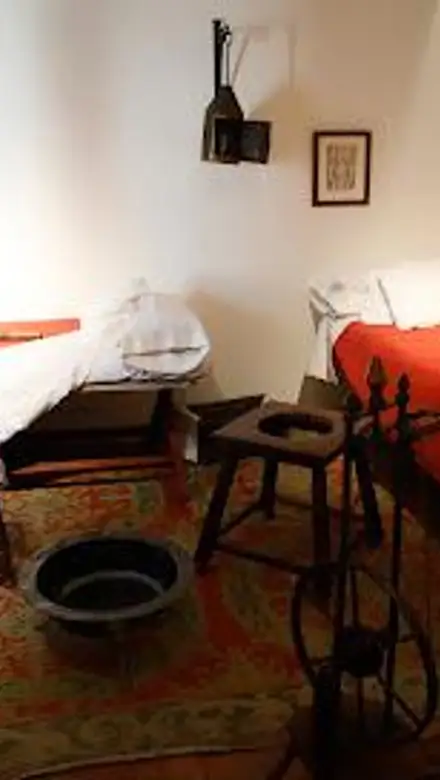
The museum's interior transports visitors back four centuries through meticulous attention to historical detail. Each room is furnished with period-appropriate pieces, from heavy wooden furniture to ceramic vessels and textiles typical of the era. The layout follows the traditional structure of Renaissance homes, with rooms arranged around a central courtyard. Whitewashed walls, wooden beams, and terracotta floors create an authentic atmosphere that helps visitors imagine daily life during Cervantes' childhood. The museum avoids modern intrusions, maintaining the intimate scale and character of a family residence rather than adopting the sterile presentation of many institutional museums.
Cervantes' Life and Legacy
The exhibits chronicle Cervantes' remarkable journey from this modest Alcalá home to becoming Spain's literary giant. Interpretive panels and displays explore his military service, his capture by Barbary pirates, his years in Algiers, and his eventual literary triumphs. The museum contextualizes his masterpiece, Don Quixote, within the social and political landscape of 16th and 17th-century Spain. Personal documents, early editions of his works, and contemporary illustrations provide insight into his creative process and the reception of his writings. The museum emphasizes how his experiences—both tragic and triumphant—directly influenced his literary output.
Interactive and Educational Experience
Beyond static displays, the museum employs multimedia elements and interactive features to engage visitors of varying ages and backgrounds. Audio guides available in multiple languages provide deeper context for each room. The museum regularly hosts literary discussions, theatrical performances, and educational programs that bring Cervantes' world to life. These events often feature actors performing scenes from Don Quixote or other works, creating a dynamic cultural experience that extends beyond traditional museum viewing.
Alcalá de Henares Context
The museum's significance is amplified by its location in Alcalá de Henares, a town that played a crucial role in Spanish intellectual history. The town was home to the prestigious University of Alcalá, founded in 1499, which became a center of Renaissance learning and theological study. Walking the cobblestone streets surrounding the museum, visitors encounter other historic buildings, churches, and plazas that collectively preserve the character of a Renaissance university town. This broader context enriches the museum experience, allowing visitors to understand Cervantes not as an isolated figure but as a product of a vibrant intellectual community.
Visitor Experience and Atmosphere
The museum maintains an intimate, contemplative atmosphere that encourages slow exploration and reflection. The absence of crowds—even during peak seasons—allows for genuine engagement with the spaces and artifacts. Natural light filters through period windows, illuminating dust motes and creating a sense of timelessness. The modest scale of the house means visitors can complete their tour in 60 to 90 minutes, though literary enthusiasts often linger longer. The experience feels personal and reverent, appropriate for a space dedicated to one of literature's immortal figures.
Evendo Review Centre
 Google
Guest reviews
Best time to go
Quietest: Jan, Feb & Nov · before 12pm or at 2pm
Busy times are Evendo estimates for a typical year, to help you plan. Actual crowds vary with events, school holidays and the weather.
Explore Cervantes Birthplace Museum on the map
A handpicked selection of must-see spots near Cervantes Birthplace Museum, mapped for you.
Get your free copy of our complete guide to Cervantes Birthplace Museum, delivered straight to you.
Everything on this page, from opening hours and how to get there to Eve’s tips and the best time to go, in one PDF you can read offline, print or share.
Already have an account? Sign in
Your Cervantes Birthplace Museum guide is ready.
We'll send it to · Not you? Sign out

Getting your guide ready…
We are putting together a fresh copy of the Cervantes Birthplace Museum guide. This can take up to a minute.
This can take a few moments. If your browser asks, choose Allow so the download can start. You'll find the guide in your Downloads folder.
Nothing happened? Download it again
Sorry, the guide is taking longer than usual. Please try again in a minute, or get it by email instead.
Unlock the best of Cervantes Birthplace Museum
Skip-the-line tickets, guided tours with entry, and walking tours of the area, booked in a few clicks.



Other nearby places you may find interesting
The closest places of the same kind, if this one is not quite what you had in mind.
-
-
-
-
-


Swipe for more places
More to explore near Cervantes Birthplace Museum
-
 Best experiences near Cervantes Birthplace Museum
-
 Best hotels near Cervantes Birthplace Museum
-
 Best landmarks near Cervantes Birthplace Museum
-
 Best attractions near Cervantes Birthplace Museum
-
 Best shops near Cervantes Birthplace Museum
-
 Best restaurants near Cervantes Birthplace Museum
-
 Best bars near Cervantes Birthplace Museum


Do you manage this location?
Take control to get all the benefits, like improved information, better appearance, and stronger visibility across AI-powered discovery.
Explore more

Explore more of Madrid
Discover Madrid: A city of art, culture, and culinary delights, where history and modern vibrancy meet in the heart of Spain.
Explore Madrid
Explore more of Spain
Discover Spain: A vibrant tapestry of culture, history, and breathtaking landscapes, where every city offers a unique adventure and unforgettable experiences.
Explore Spain