Discover more about El Templete de Baco
Historical Origins
El Templete de Baco emerged in the late 19th century as part of Madrid's initiative to embellish its neighborhoods with artistic public works. Crafted by local sculptors, this small pavilion draws inspiration from classical antiquity, depicting Bacchus—known as Dionysus in Greek lore—in a moment of revelry. Positioned along a quiet street in Barajas, it reflects the era's fascination with Greco-Roman mythology blended into Spanish urban landscapes. The structure's creation coincided with broader park enhancements in Madrid's peripheral districts, aiming to elevate everyday spaces with cultural touches.Architectural Features
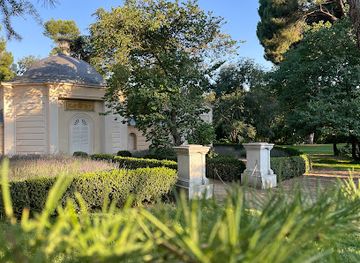
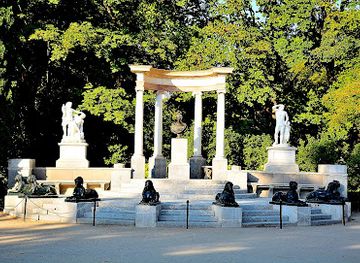
The templete features a delicate neoclassical design, with slender Ionic columns supporting a pediment adorned with sculptural reliefs. At its center, a finely carved statue of Bacchus holds a thyrsus staff and grapes, symbolizing abundance and festivity. Surrounding foliage and manicured plantings enhance its temple-like appearance, creating a harmonious blend of stone and nature. Measuring just a few meters across, its compact scale invites close inspection of intricate details like draped fabrics and vine motifs, evoking ancient shrines while fitting seamlessly into modern Madrid.Mythological Significance
Bacchus, the deity of wine, ecstasy, and theater, embodies liberation and joy in classical tales. Legends recount his journeys across the world, spreading viticulture and revelry, often accompanied by satyrs and maenads. This templete captures that essence in static form, freezing a divine procession amid everyday Barajas life. Visitors sense the contrast between the god's exuberant mythology and the site's tranquil reality, prompting reflections on indulgence, creativity, and the passage of time in a city steeped in layered histories.Surrounding Ambiance
Nestled on a residential boulevard, El Templete de Baco exudes peaceful suburban charm. Barajas, with its aviation heritage and proximity to Adolfo Suárez Madrid-Barajas Airport, offers a less-touristed vibe compared to central Madrid. The sculpture presides over a clean, walkable area where locals stroll, birds chirp, and gentle breezes rustle leaves. Sunlight filters through overhead branches, casting dappled patterns on the stone, fostering an atmosphere of unhurried discovery rather than crowded spectacle.Cultural Role Today
As a protected heritage element under Madrid's patrimonioypaisaje oversight, the templete serves as a subtle reminder of the city's artistic legacy beyond its iconic landmarks. It draws photographers, history buffs, and passersby seeking respite from nearby airport bustle. In Barajas' evolving context—balancing residential calm with transport hubs—it symbolizes enduring cultural investment. Exploring it reveals Madrid's depth, where even modest sculptures weave into the urban tapestry, rewarding those who venture off the beaten path.Visitor Expectations
Approach El Templete de Baco for a moment of elegant simplicity: admire the craftsmanship up close, ponder its classical roots, and enjoy the verdant frame. Expect a quick yet enriching stop, ideal for integrating into broader Barajas rambles or airport vicinity tours. The site's intimacy encourages personal engagement—no crowds, just pure artistic appreciation in a neighborhood setting that feels authentically local.



 Trash Bins