Frailes Garden, Madrid Community Travel Guide
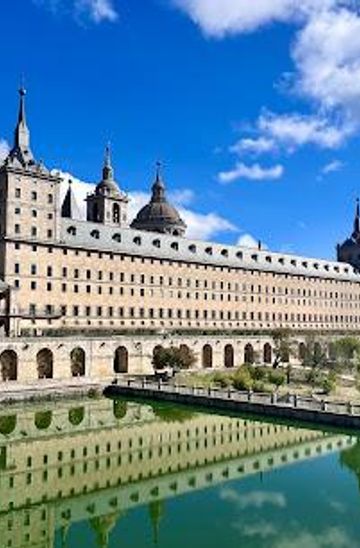
Precision-clipped parterres and fountain murmurs frame El Escorial's granite majesty, where Renaissance geometry meets mountain vistas in timeless friars' repose.
Wander the meticulously manicured Frailes Garden, a tranquil oasis of geometric hedges, bubbling fountains, and shaded groves tucked against the grand Monastery of El Escorial. This Renaissance masterpiece garden offers peaceful paths lined with cypress trees, vibrant flowerbeds, and panoramic views over the Sierra de Guadarrama foothills, providing a serene escape amid royal history.
A brief summary to Frailes Garden
- Av. de Juan de Borbón y Battenberg, 1, San Lorenzo de El Escorial, Madrid, 28200, ES
- Click to display
- Click to display
- Budget
-
 Outdoor
- Mobile reception: 4 out of 5
- Tuesday 10 am-6 pm
- Wednesday 10 am-6 pm
- Thursday 10 am-6 pm
- Friday 10 am-6 pm
- Saturday 10 am-6 pm
- Sunday 10 am-6 pm

Know before you go
Hi, I'm Eve. Here are a few practical things to know before exploring Frailes Garden.
- Pair your visit with the adjacent Monastery of El Escorial for a full appreciation of the site's Renaissance design unity.
- Visit in spring or autumn when milder weather enhances the garden's floral displays and crisp air.
- Wear comfortable shoes for gravel paths and slight inclines across terraced levels.
- Bring a camera to capture geometric hedges against the dramatic Sierra Guadarrama backdrop.
Do you manage this location?
Take control to get all the benefits, like improved information, better appearance, and stronger visibility across AI-powered discovery. Learn more
Activate your presenceOther nearby places you may find interesting
The closest places of the same kind, if this one is not quite what you had in mind.
Explore Frailes Garden on the Map
A handpicked selection of must-see spots near Frailes Garden, mapped for you.
Getting There
-
Train
Take Cercanías C-3 line from Madrid's Atocha station to El Escorial (about 50 minutes, €5-7 one-way), then 15-minute uphill walk or local bus.
-
Bus
Direct buses from Madrid's Moncloa or Príncipe Pío (lines 684/684A, 45-60 minutes, €4-6), stopping near the monastery entrance.
-
Car
Drive A-5 then M-600 northwest from Madrid center (45-60 minutes, tolls €5-10), ample parking at site (€3-5/hour).
For the on-the-go comforts that matter to you
-
 Restrooms
-
 Seating Areas
-
 Sheltered Areas
-
 Trash Bins
-
 Information Boards
Discover more about Frailes Garden
Historical Foundations
The Frailes Garden forms an integral part of the sprawling Monastery of San Lorenzo de El Escorial complex, commissioned by King Philip II in the 16th century as a royal residence, mausoleum, and symbol of Spanish Habsburg power. Designed by architect Juan de Herrera, the garden reflects the era's Renaissance ideals of order and harmony, contrasting the austere granite facade of the monastery. Friars once tended these grounds, cultivating both spiritual and botanical beauty in a space that balanced utility with aesthetic perfection.Design and Layout
Laid out in precise geometric patterns, the garden spans terraced levels with boxwood parterres forming intricate knot designs, clipped yew hedges defining walkways, and central fountains fed by mountain springs. Cypress trees rise like dark sentinels, casting long shadows over gravel paths, while rosebeds and lavender borders add seasonal bursts of color. Stone balustrades overlook lower orchards and the vast esplanade, framing views toward the rugged Guadarrama peaks. Every element underscores the Spanish formal garden tradition, emphasizing symmetry and control over nature.Atmosphere and Sensory Experience
A profound sense of calm permeates the air, broken only by the gentle trickle of water from Renaissance fountains and the distant chime of monastery bells. The scent of boxwood mingles with citrus blossoms in spring, evolving to earthy pine notes in autumn. Sunlight filters through dense foliage, creating dappled light on stone benches ideal for quiet reflection. Birds flit among the branches, and the faint rustle of leaves accompanies soft breezes, evoking timeless monastic tranquility amid monumental architecture.Architectural Integration
Adjoining the monastery's southern flank, the garden serves as a living extension of Herrera's Herrerian style—simple, robust, and unadorned. Massive retaining walls of the same gray granite blend seamlessly with the building, while arched niches house statues of saints. Pathways lead directly to cloisters and patios, blurring boundaries between cultivated landscape and sacred interior spaces. This integration highlights Philip II's vision of a self-contained microcosm uniting palace, church, library, and pantheon.Cultural and Natural Context
Situated at 900 meters elevation in San Lorenzo de El Escorial, the garden thrives in the crisp Castilian climate, with hardy Mediterranean plants enduring harsh winters and dry summers. It stands as a testament to 16th-century hydraulic engineering, channeling water from distant sierras to sustain its features. Visitors encounter not just horticultural artistry but a layered narrative of royal piety, artistic patronage, and environmental adaptation in Spain's central highlands.Visitor Expectations
Exploring reveals hidden vignettes: secluded nooks for contemplation, vantage points for monastery panoramas, and groves evoking royal hunts of old. The space invites slow pacing, rewarding attention to detail—from mossy urns to espaliered fruit trees. As part of a UNESCO World Heritage site, it immerses travelers in Spain's Golden Age legacy, offering respite from busier tourist circuits while connecting to the monastery's vast artistic and historical treasures.












Your all‑in‑one travel companion app
Explore expert travel guides, compare and book tours, experiences, hotels, and more—all from the palm of your hand. Download now for seamless trip planning wherever your wanderlust takes you.


Explore More of Madrid Community
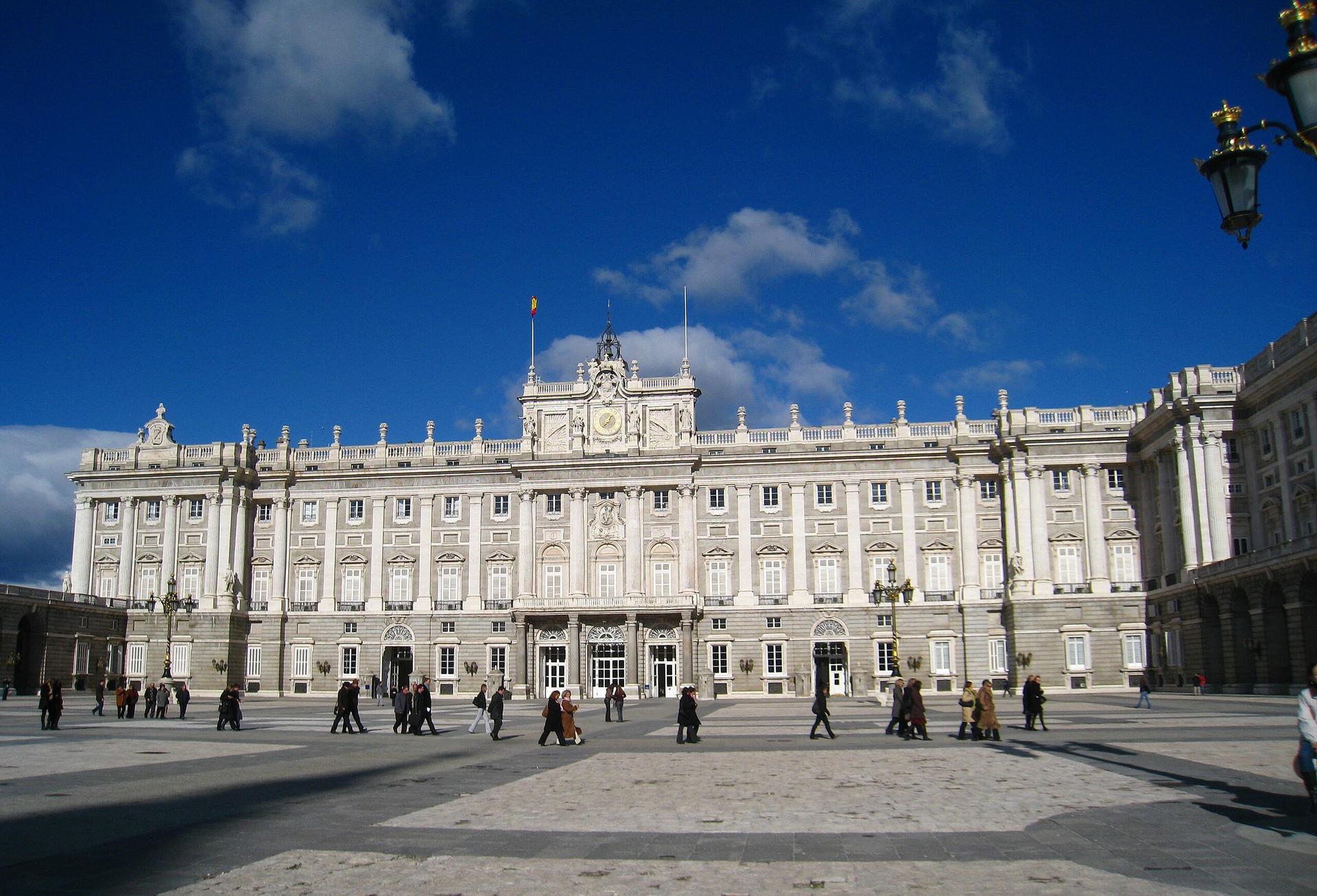
Looking beyond Frailes Garden? Discover Madrid Community for broader travel guides, local hot-spots, and regional highlights.
Explore Madrid Community