

Arab Walls, Madrid Travel Guide
9th-century Moorish fortifications anchoring Madrid's origins amid Centro's historic core, with preserved towers revealing Islamic engineering on the Manzanares bluff.
Amid the vibrant streets of Madrid's Centro district, the Arab Walls stand as silent sentinels of the city's 9th-century origins. These weathered stone fortifications, remnants of the Moorish era, offer a tangible link to Islamic rule in the Iberian Peninsula. Explore the preserved sections, admire the robust masonry, and read multilingual placards detailing their construction under Caliph Abd al-Rahman II. Surrounded by urban life yet steeped in antiquity, this historical landmark reveals Madrid's layered past just steps from bustling plazas. Perfect for history enthusiasts seeking authentic glimpses of medieval engineering amid modern Madrid.
A brief summary to Arab Walls
- Madrid, Centro, Madrid, 28005, ES
- Click to display
- Free
-
 Outdoor
- Mobile reception: 5 out of 5
- Friday 10 am-9 pm
- Saturday 10 am-9 pm
- Sunday 10 am-9 pm

Know before you go
Hi, I'm Eve. Here are a few practical things to know before exploring Arab Walls.
- Visit early morning or late afternoon for optimal light on the stonework and fewer crowds, enhancing photo opportunities.
- Combine with a walk to the nearby Royal Palace via Cuesta de la Vega for a seamless historical progression.
- Read the multilingual information panels closely; they detail construction phases and defensive features not obvious at first glance.
- Wear comfortable shoes for the sloped terrain around the site, especially if exploring adjacent archaeological areas.
Do you manage this location?
Take control to get all the benefits, like improved information, better appearance, and stronger visibility across AI-powered discovery. Learn more about listing your business on Evendo
Activate your presenceOther nearby places you may find interesting
The closest places of the same kind, if this one is not quite what you had in mind.

Explore Arab Walls on the Map
A handpicked selection of must-see spots near Arab Walls, mapped for you.
Unlock the Best of Arab Walls
Buy tickets
-
No tickets available
Book tours with entry


Getting There
-
Walking
From La Latina center, stroll 10-15 minutes uphill through narrow streets; free, direct path with moderate incline, ideal for short distances.
-
Public Bus
Catch local bus lines serving Centro routes from La Latina plaza; 5-10 minutes ride, €1.50-2 fare, frequent service every 10 minutes.
-
Taxi
Hail a taxi in La Latina; 5-minute trip covering 1.5km, €5-7 cost, available on-demand with traffic variability.
For the on-the-go comforts that matter to you
-
 Seating Areas
-
 Trash Bins
-
 Information Boards
Discover more about Arab Walls
Historical Foundations
The Arab Walls, or Muralla Árabe, trace their origins to the 9th century when Madrid was known as Mayrit, a strategic fortress under Muslim control. Constructed around 860-880 AD under Emir Muhammad I and later reinforced by Caliph Abd al-Rahman II, these walls protected a burgeoning settlement on the Manzanares River. Spanning roughly 3 kilometers originally, they enclosed a citadel, mosque, and residential areas, forming the core of what would become Spain's capital. The fortifications featured robust stone blocks, towers for defense, and gates for trade, reflecting advanced Islamic military architecture adapted to the Iberian landscape.Preservation and Rediscovery
Buried under centuries of urban expansion, significant sections resurfaced during 20th-century excavations, particularly in the 1950s near Cuesta de la Vega. Today, visible remnants include a 90-meter stretch with original towers and battlements, unearthed from layers of medieval and Renaissance overbuilds. Archaeological efforts have stabilized the structures, revealing intricate construction techniques like ashlar masonry and lime mortar binding. These walls predate Christian reconquest by Alfonso VI in 1085, marking the transition from al-Andalus to Castilian rule, and survived sieges, floods, and city growth.Architectural Significance
Crafted from local granite and limestone, the walls showcase tapered merlons for archer protection and semi-circular towers for surveillance. Influenced by North African designs, they integrated Roman and Visigothic elements, blending cultures in a hybrid style. Key features include the Arco de la Judería gate remnants and alcubilla water systems, highlighting engineering prowess in water management vital for the arid plateau. Compared to similar structures in Toledo or Córdoba, Madrid's walls emphasize defensive utility over ornamentation, underscoring Mayrit's frontier outpost role.Modern Context and Surroundings
Nestled in Centro's 28005 postcode, the site blends seamlessly with Madrid's dynamic fabric. Elevated on Cuesta de la Vega hill, it overlooks the Royal Palace and Almudena Cathedral, creating a palimpsest of eras where Moorish stones abut Baroque grandeur. The park-like setting invites contemplation amid olive trees and gardens, with interpretive panels in Spanish, English, and French explaining construction phases and historical vignettes. Nearby, the city pulses with tapas bars and markets, contrasting the site's quiet gravitas.Visitor Experience
Approaching the walls feels like peeling back Madrid's contemporary veneer to touch its foundational layer. The textured stones, moss-covered and time-eroded, evoke resilience against invasions and urban sprawl. Views from the elevated path frame the Manzanares gorge, evoking Mayrit's strategic perch. Families picnic nearby, photographers capture light playing on crenellations, and scholars pore over plaques. The atmosphere hums with subtle reverence, bridging 12 centuries in a compact, accessible space that rewards close inspection and historical imagination.Cultural Legacy
Beyond stone, the walls symbolize Madrid's multicultural genesis, influencing urban layout and nomenclature like Calle de la Muralla. They anchor narratives of tolerance under Muslim rule, agricultural alcazaba systems, and the alcubilla aqueducts feeding orchards. In contemporary discourse, they highlight heritage preservation amid tourism pressures, serving as an educational nexus for understanding Spain's Reconquista prelude. This understated landmark quietly asserts Madrid's non-Catholic roots, enriching visits to nearby icons.












Your all‑in‑one travel companion app
Explore expert travel guides, compare and book tours, experiences, hotels, and more—all from the palm of your hand. Download now for seamless trip planning wherever your wanderlust takes you.


Explore More of Madrid
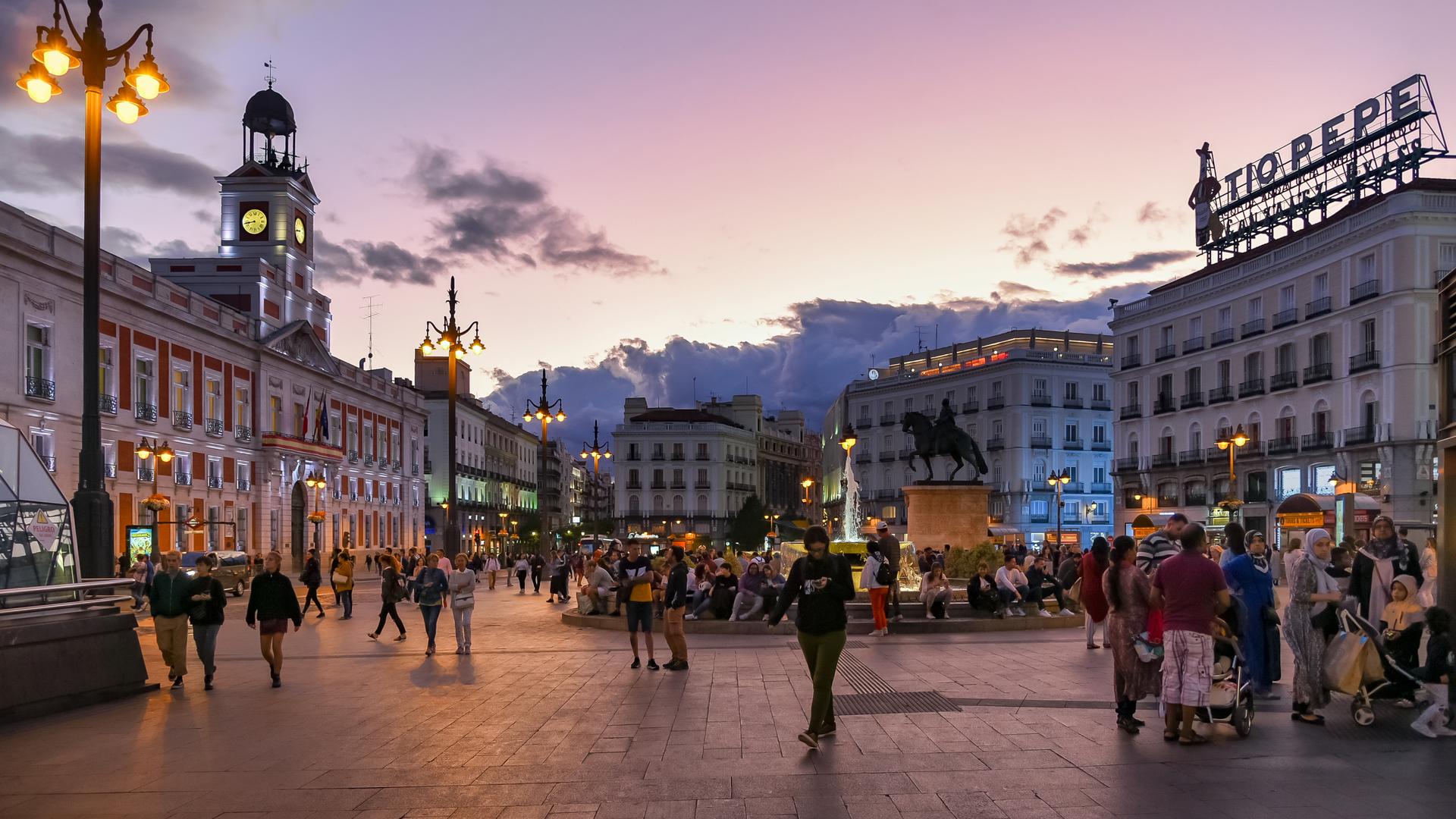
Looking beyond Arab Walls? Discover Madrid for broader travel guides, local hot-spots, and regional highlights.
Explore Madrid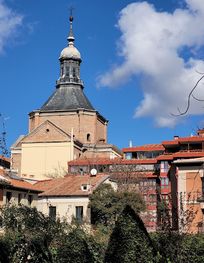
Madrid's tiniest aristocratic garden, where 18th-century fountains and clipped hedges craft secluded serenity steps from La Latina's tapas trails and ancient plazas.
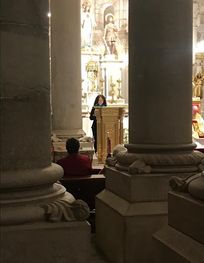
Over 400 pillars form a stone forest in Madrid's subterranean neo-Byzantine crypt, anchoring the Almudena Cathedral with vaulted grandeur and sacred history beneath the Royal Palace.
