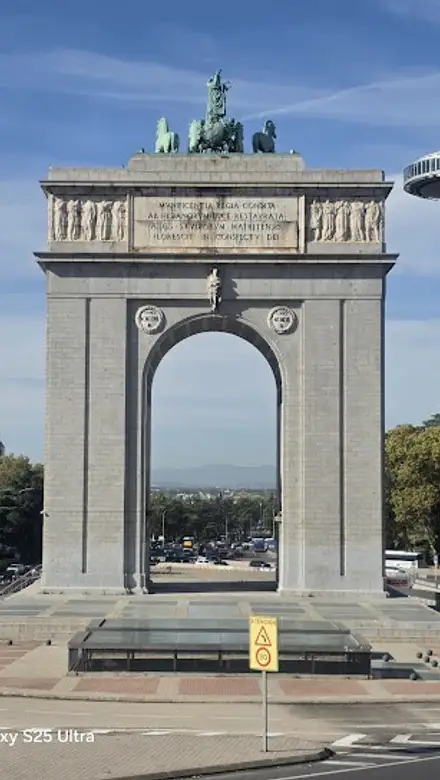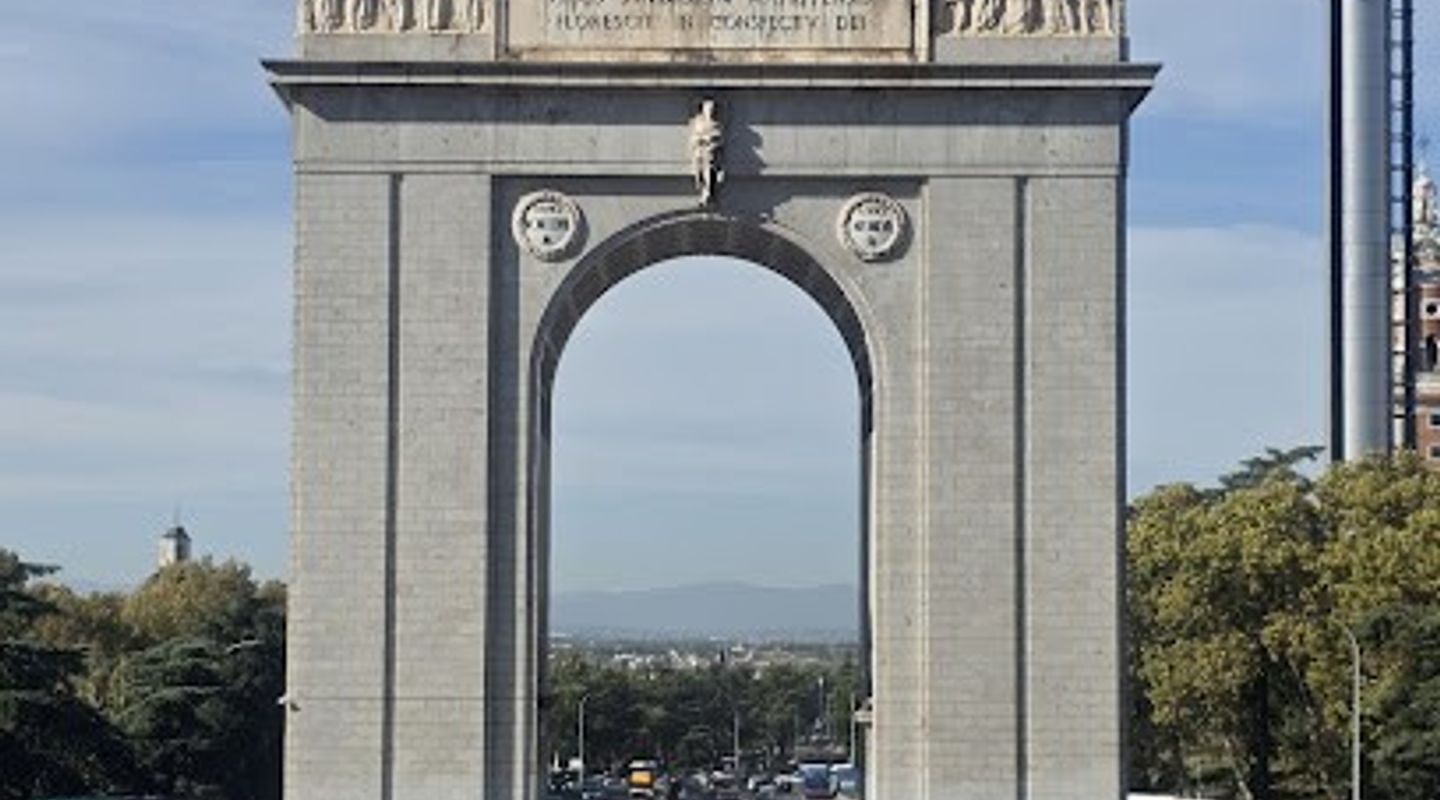
Arco de Moncloa, Madrid Travel Guide
Monumental arch marking Madrid's imperial era at university gates, blending neoclassical might with student pulse and mountain-framed city sweeps.
Towering over the Ciudad Universitaria, the Arco de Moncloa stands as a monumental arch celebrating Spain's 19th-century colonial triumphs. Built in 1956 for Franco's regime, this 50-meter granite structure symbolizes Madrid's imperial past amid university buzz and panoramic city views. Free access draws history buffs and casual strollers to its base, where sculptures and inscriptions evoke exploration eras. Perfect for quick photo stops or reflective walks in Moncloa-Aravaca.
A brief summary to Arco de Moncloa
- Av. de la Memoria, 32, Madrid, Moncloa - Aravaca, Madrid, 28040, ES
- Click to display
- Free
-
 Outdoor
- Mobile reception: 5 out of 5
- Monday 12 am-12 pm
- Tuesday 12 am-12 pm
- Wednesday 12 am-12 pm
- Thursday 12 am-12 pm
- Friday 12 am-12 pm
- Saturday 12 am-12 pm
- Sunday 12 am-12 pm

Know before you go
Hi, I'm Eve. Here are a few practical things to know before exploring Arco de Moncloa.
- Visit at dusk for dramatic lighting on the sculptures and unobstructed sunset views over the city.
- Combine with a stroll through nearby Ciudad Universitaria to feel the blend of history and academic energy.
- Examine the bronze plaques listing explorers for context on Spain's colonial history.
- Avoid midday weekends when student crowds peak around the base.
Do you manage this location?
Take control to get all the benefits, like improved information, better appearance, and stronger visibility across AI-powered discovery. Learn more about listing your business on Evendo
Activate your presenceOther nearby places you may find interesting
The closest places of the same kind, if this one is not quite what you had in mind.
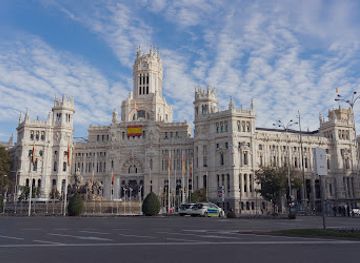
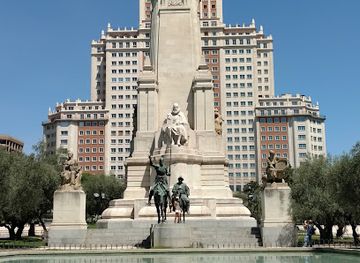
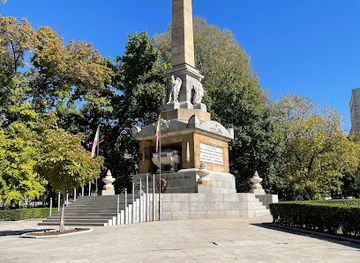
Explore Arco de Moncloa on the Map
A handpicked selection of must-see spots near Arco de Moncloa, mapped for you.
Getting There
-
Metro
Take Line 6 from central Madrid (e.g., Nuevos Ministerios) to Moncloa station, 10-min ride, €1.50-€2 ticket; 5-min walk uphill to arch.
-
Bus
Lines 46 or 65 from Plaza Mayor or Sol, 20-25 min journey, €1.50 fare; direct drop-off near university entrance.
-
Walking
From Plaza de España, 25-min uphill walk via Aravaca Avenue, free; scenic route through green spaces.
-
Bicycle
BiciMAD stations near Moncloa, 15-min ride from center, €0.50-€2 unlock fee; bike lanes lead directly to site.
For the on-the-go comforts that matter to you
-
 Restrooms
-
 Seating Areas
-
 Trash Bins
-
 Information Boards
Discover more about Arco de Moncloa
Historical Foundations
The Arco de Moncloa emerges from Madrid's complex 20th-century narrative, erected in 1956 under Francisco Franco's dictatorship to commemorate the third centenary of the completion of the Spanish American empire's construction. Designed by architects like Juan Moctezuma Sanabria, Pascual Bravo San Esteban, and Federico López, it replicates the style of classical triumphal arches while honoring Spain's Age of Discovery. Originally positioned at Atocha station, relocation to the university district in 1996 preserved its role as a public monument amid academic surroundings.Architectural Grandeur
Rising 50 meters high from a robust granite base, the arch spans 32 meters wide with four massive Doric columns supporting an attic adorned with inscriptions and allegorical sculptures. Flanking figures depict allegories of Science and Work on one side, flanked by maritime and historical motifs. The structure's neoclassical lines blend Roman inspiration with Franco-era propaganda, featuring bronze plaques listing explorers like Columbus and Magellan. Its imposing scale dominates the Avenue of Memory, framing views toward the Sierra de Guadarrama.University District Integration
Situated at the entrance to Ciudad Universitaria, Europe's largest university campus, the arch pulses with student energy. Surrounding green spaces host protests, festivals, and daily commutes, contrasting the monument's static symbolism with youthful dynamism. Proximity to Complutense University fosters a blend of intellectual heritage and modern Madrid life, where history meets contemporary academia.Cultural and Symbolic Role
Beyond aesthetics, the Arco de Moncloa encapsulates Spain's imperial legacy and post-war identity. Sculptures by Carlos Sáenz de Tejada and others illustrate conquest themes, sparking debates on colonialism. As a free, 24/7 accessible landmark, it invites contemplation of Madrid's evolution from empire to democracy, with its vantage point offering sweeping vistas of the cityscape and distant mountains.Visitor Expectations
Approach via tree-lined avenues to experience the arch's full drama against the sky. Ground-level exploration reveals intricate details, while elevated perspectives capture its contextual harmony with university spires. Evenings transform it into a silhouette against sunsets, ideal for photographers. The site's open layout encourages unstructured visits, blending solitude with ambient campus activity for an authentic Madrileño encounter.












Your all‑in‑one travel companion app
Explore expert travel guides, compare and book tours, experiences, hotels, and more—all from the palm of your hand. Download now for seamless trip planning wherever your wanderlust takes you.


Explore More of Madrid
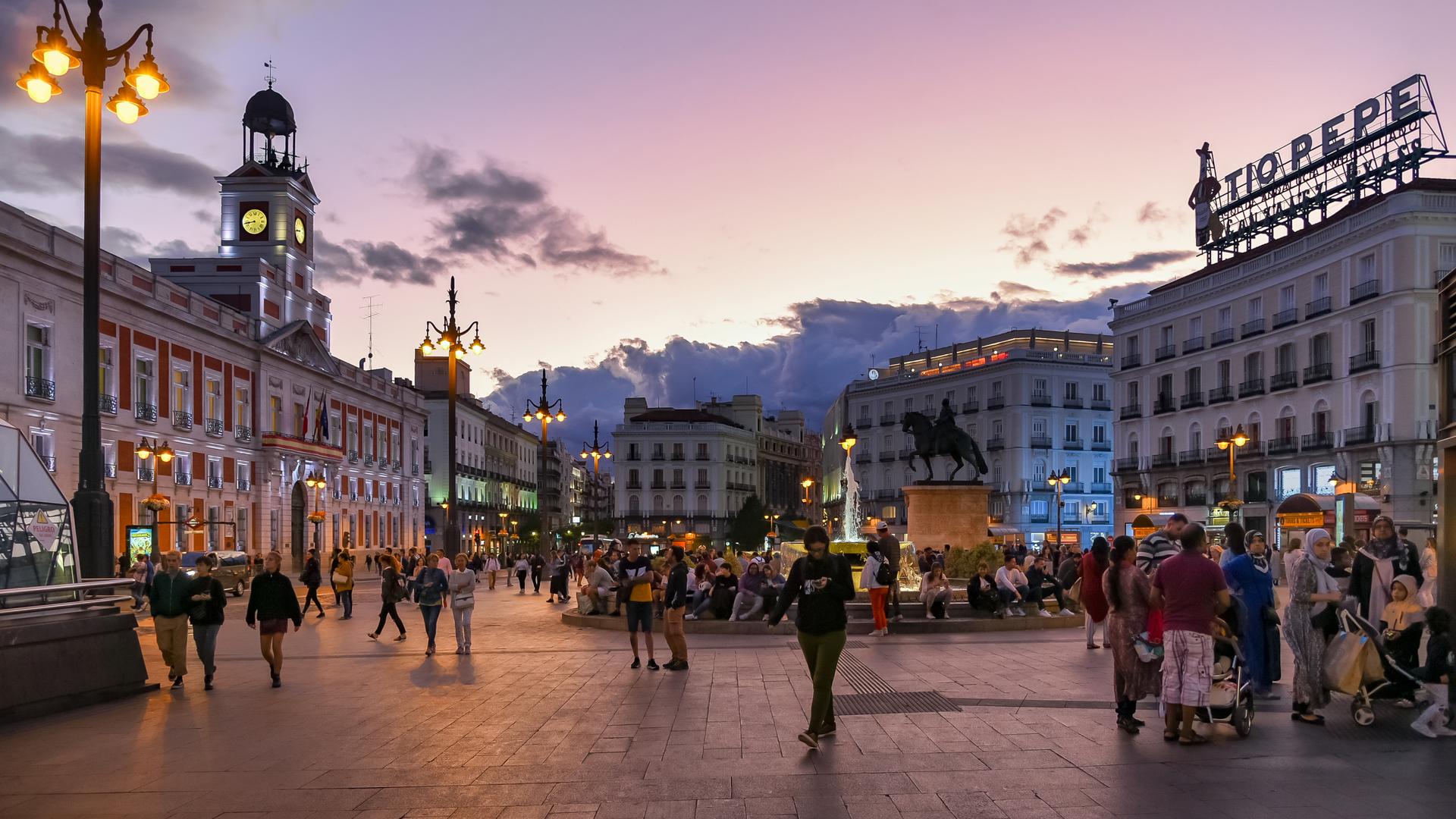
Looking beyond Arco de Moncloa? Discover Madrid for broader travel guides, local hot-spots, and regional highlights.
Explore Madrid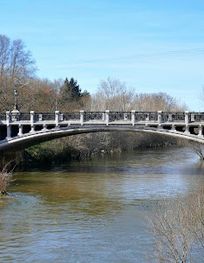
Iron lattice spans Manzanares in Casa de Campo, linking Madrid's verdant parklands with panoramic river views and historic British-Spanish craftsmanship.
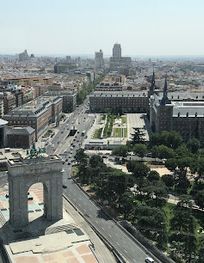
Experience the breathtaking views of Madrid from Moncloa's Lighthouse, a must-see landmark that offers stunning panoramas of Spain’s vibrant capital.