

Edificio España, Madrid Travel Guide
Free Guide: Gran Vía's 1950s towers fuse baroque sculpture and deco lines into Madrid's tallest mid-century monument overlooking Plaza de España's literary plaza.


A brief summary of Edificio España
Gran Vía's 1950s towers fuse baroque sculpture and deco lines into Madrid's tallest mid-century monument overlooking Plaza de España's literary plaza.
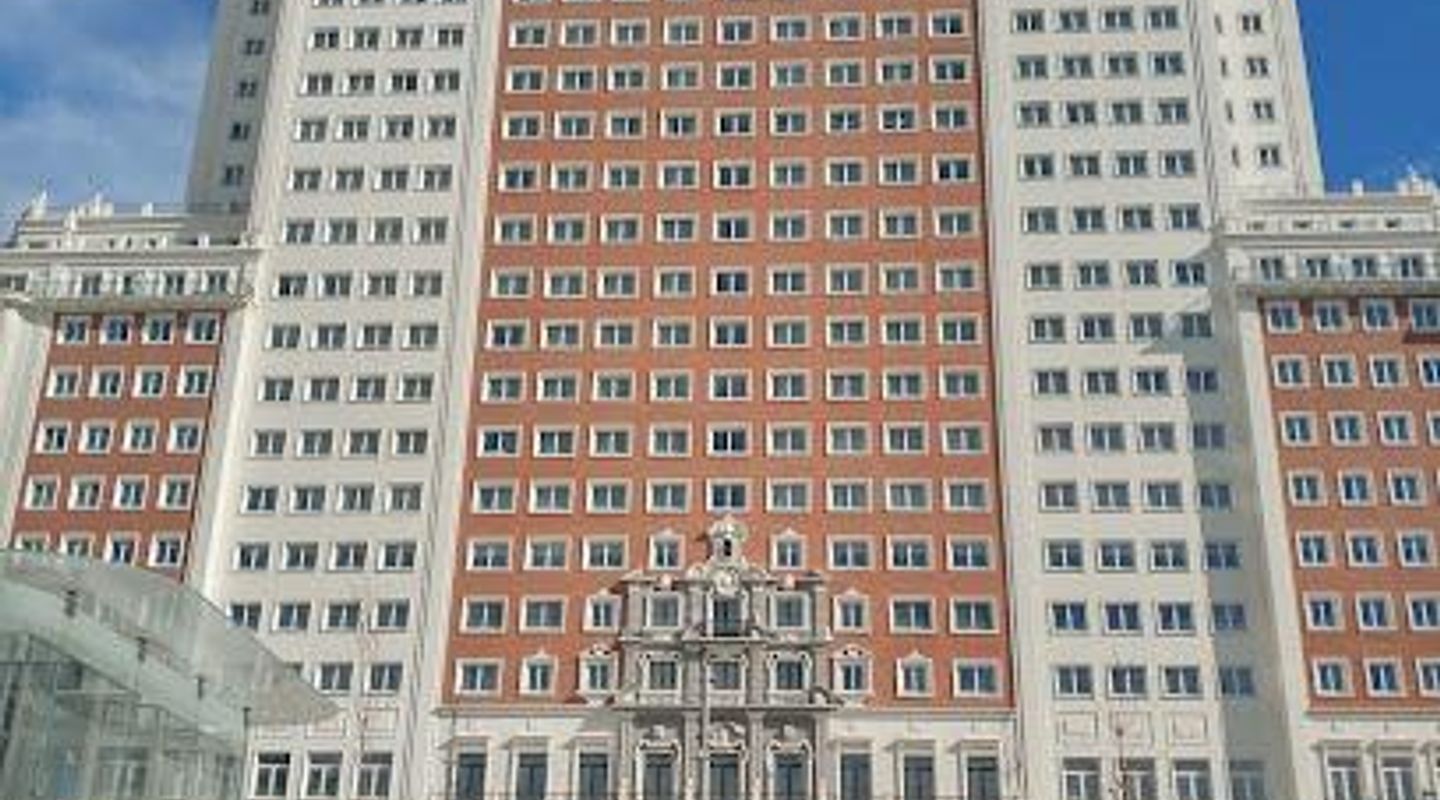
Towering over Gran Vía, Edificio España stands as a 1950s architectural masterpiece blending art deco grandeur with modernist flair. Its twin towers, ornate facade, and panoramic rooftop views capture Madrid's post-war ambition, drawing admirers to this Centro icon amid the city's bustling theater district.
On-site amenities
 Restrooms
 Food options
 Seating areas
 Trash bins
 Information boards
- Address
- Centro, Madrid
Getting there
Metro
Bus
Walking
Discover more about Edificio España
Architectural Legacy
Completed in 1953, Edificio España exemplifies Madrid's mid-20th-century architectural renaissance. Designed by brothers Julián and Joaquín Otamendi, the structure rises 117 meters with two symmetrical towers crowned by pyramid spires. Its facade fuses neo-baroque ornamentation—featuring sculpted eagles, bas-reliefs of historical figures, and intricate friezes—with streamlined art deco lines, reflecting Spain's transition from Franco-era austerity to optimistic modernity. The building's scale and detailing make it a visual anchor on Gran Vía, Madrid's 'Broadway,' where it competes with cinemas and theaters for skyline dominance.
Historical Context
Erected on the site of demolished 19th-century structures, Edificio España symbolized post-Civil War reconstruction. The Otamendis, known for the nearby Capitol cinema, incorporated innovative engineering like a steel frame clad in stone, allowing vast interior spaces. During construction, it briefly held the title of Madrid's tallest building, embodying the regime's push for monumental urbanism. Over decades, it housed offices, a luxury hotel, and apartments, witnessing the neighborhood's evolution from residential to commercial hub. Today, its preserved exterior contrasts with modern Gran Vía developments, preserving a slice of 1950s Spain.
Artistic and Cultural Details
The building's artistry shines in its sculptural elements. Facade panels depict allegories of Spanish regions, labor, and mythology, carved by masters like Ángel Murciano. Inside the former España Hotel lobby—now repurposed—survive marble floors, crystal chandeliers, and frescoed ceilings evoking grand transatlantic liners. The rooftop terrace, once exclusive, offered unrivaled vistas; recent renovations have revived public access points, allowing glimpses of its Moorish-inspired domes and geometric motifs. These details root Edificio España in Madrid's eclectic architectural narrative, bridging historicism and futurism.
Neighborhood Integration
Situated in Centro's beating heart, the building frames Plaza de España, facing Cervantes monument and the Temple of Debod. Its presence enhances the area's cinematic vibe, appearing in films like Pedro Almodóvar's works. Street-level arcades bustle with cafes and shops, while upper floors host offices and residences. Visitors experience the contrast of its imposing exterior against Gran Vía's neon chaos, especially at dusk when lights accentuate its contours. This integration makes it not just a structure, but a lived landmark pulsing with urban energy.
Modern Visitor Perspective
Approaching Edificio España rewards with layered discoveries: zoom in on facade motifs from across the plaza, or circle its base to spot hidden bas-reliefs. Photographers favor dawn light for shadow play on its setbacks. Though primarily exterior-focused, occasional exhibitions in ground-floor spaces highlight its heritage. It invites contemplation of Madrid's vertical growth, standing resilient amid glass towers. For architecture buffs, it's a testament to enduring craftsmanship in a fast-changing cityscape.
Evendo Review Centre
 Google
Guest reviews
Best time to go
Quietest: Jan, Feb & Mar
Busy times are Evendo estimates for a typical year, to help you plan. Actual crowds vary with events, school holidays and the weather.
Explore Edificio España on the map
A handpicked selection of must-see spots near Edificio España, mapped for you.
Get your free copy of our complete guide to Edificio España, delivered straight to you.
Everything on this page, from opening hours and how to get there to Eve’s tips and the best time to go, in one PDF you can read offline, print or share.
Already have an account? Sign in
Your Edificio España guide is ready.
We'll send it to · Not you? Sign out

Getting your guide ready…
We are putting together a fresh copy of the Edificio España guide. This can take up to a minute.
This can take a few moments. If your browser asks, choose Allow so the download can start. You'll find the guide in your Downloads folder.
Nothing happened? Download it again
Sorry, the guide is taking longer than usual. Please try again in a minute, or get it by email instead.
Other nearby places you may find interesting
The closest places of the same kind, if this one is not quite what you had in mind.
-
-
-
-
-


Swipe for more places
More to explore near Edificio España

 Best experiences near Edificio España
 Best hotels near Edificio España
 Best landmarks near Edificio España
 Best attractions near Edificio España
 Best shops near Edificio España
 Best restaurants near Edificio España
 Best bars near Edificio España
Do you manage this location?
Take control to get all the benefits, like improved information, better appearance, and stronger visibility across AI-powered discovery.
Explore more

Explore more of Madrid
Discover Madrid: A city of art, culture, and culinary delights, where history and modern vibrancy meet in the heart of Spain.
Explore Madrid
Explore more of Spain
Discover Spain: A vibrant tapestry of culture, history, and breathtaking landscapes, where every city offers a unique adventure and unforgettable experiences.
Explore Spain
