La Mariblanca, Madrid Travel Guide
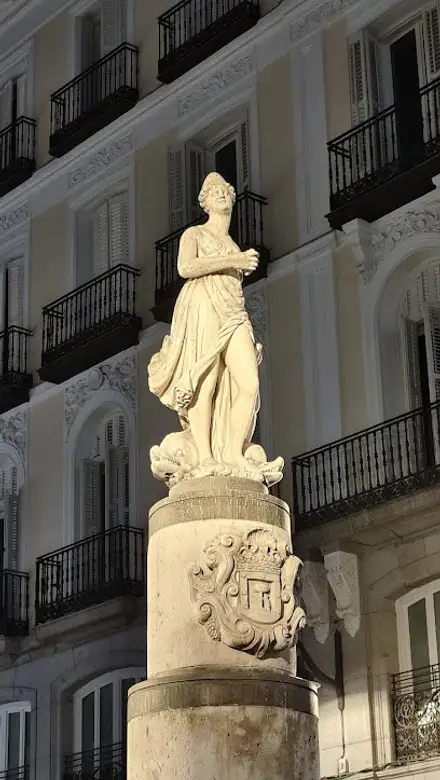
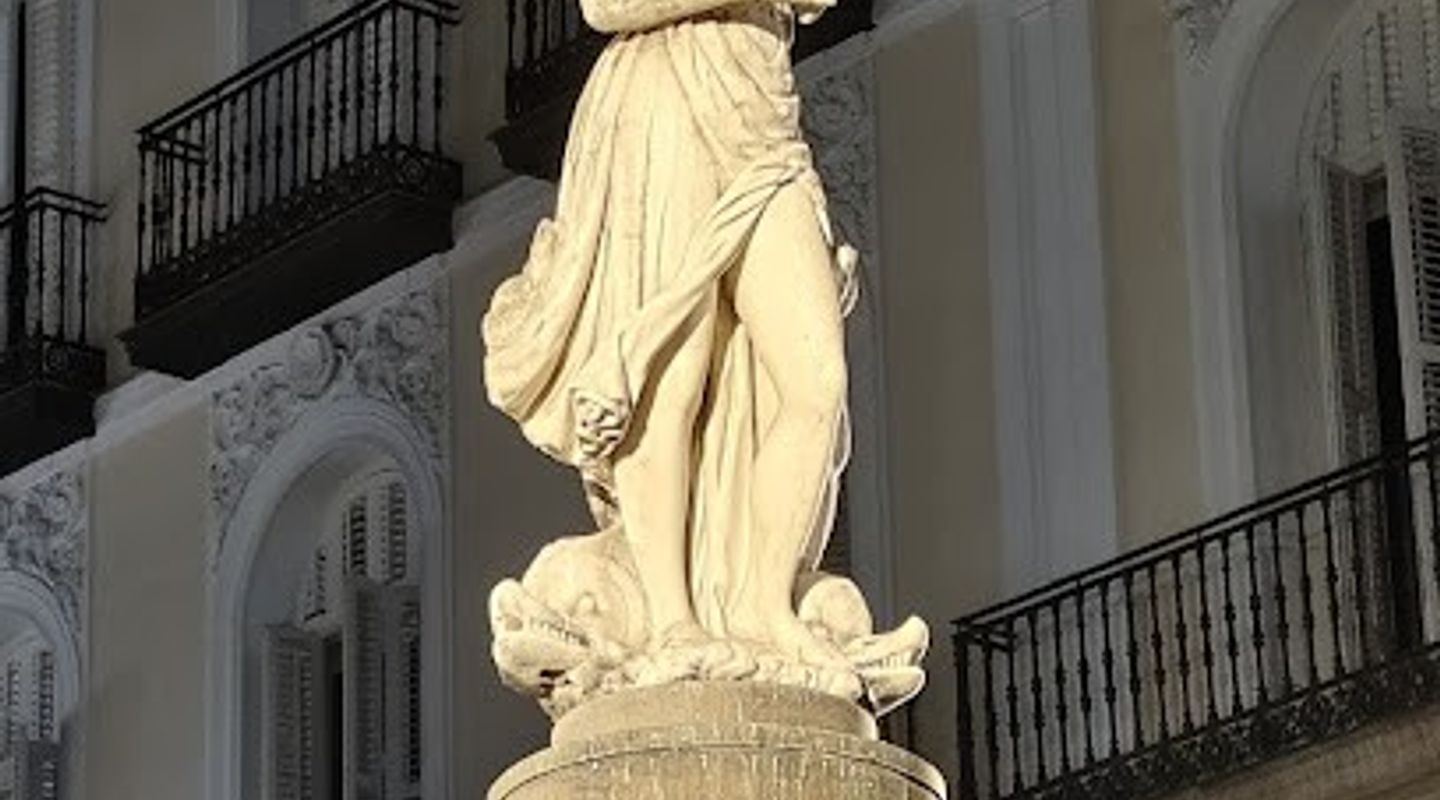
La Mariblanca crowns Puerta del Sol with her winged grace, overlooking Madrid's radial core where classical sculpture meets ceaseless urban momentum.
Perched atop the Real Casa de Correos in Puerta del Sol, La Mariblanca captivates as Madrid's iconic statue of a winged woman, symbolizing the city's triumph and classical beauty. This replica of ancient Roman Venus overlooks the bustling heart of the capital, blending mythology with urban energy in a timeless landmark that draws eyes upward amid the chaos of daily life.
A brief summary to La Mariblanca
- C. del Arenal, 2, Madrid, Centro, Madrid, 28013, ES
- Click to display
- Click to display
- Free
-
 Outdoor
- Mobile reception: 5 out of 5
- Monday 12 am-12 pm
- Tuesday 12 am-12 pm
- Wednesday 12 am-12 pm
- Thursday 12 am-12 pm
- Friday 12 am-12 pm
- Saturday 12 am-12 pm
- Sunday 12 am-12 pm

Know before you go
Hi, I'm Eve. Here are a few practical things to know before exploring La Mariblanca.
- Visit at dusk when the square lights up, casting a golden glow on her wings for striking contrasts against the evening sky.
- Stand at Kilometer Zero nearby to orient yourself, then tilt your gaze upward to spot her amid the architectural ensemble.
- Combine with a full Puerta del Sol circuit to appreciate how she anchors the square's visual hierarchy from multiple angles.
- Avoid midday peak hours if crowds overwhelm; early mornings offer clearer lines of sight for contemplation.
Do you manage this location?
Take control to get all the benefits, like improved information, better appearance, and stronger visibility across AI-powered discovery. Learn more about listing your business on Evendo
Activate your presenceOther nearby places you may find interesting
The closest places of the same kind, if this one is not quite what you had in mind.
Explore La Mariblanca on the Map
A handpicked selection of must-see spots near La Mariblanca, mapped for you.
Getting There
-
Metro
Take lines 1, 2, or 3 to Sol station (3-5 min from central Madrid, €1.50-2 single ticket), direct underground access emerges steps from Puerta del Sol.
-
Walking
From Plaza Mayor or Gran Vía center, 10-15 min stroll through pedestrian zones, free and immersive in street life.
-
Bus
Lines 51, 65, or 75 from city center stops to Sol (5-10 min, €1.50), frequent service with drop-off at square edge.
For the on-the-go comforts that matter to you
-
 Restrooms
-
 Food Options
-
 Drink Options
-
 Seating Areas
-
 Trash Bins
-
 Information Boards
Discover more about La Mariblanca
Iconic Presence in Puerta del Sol
La Mariblanca stands as one of Madrid's most recognizable silhouettes, crowning the clock tower of the Real Casa de Correos at the epicenter of Puerta del Sol. This 18th-century sculpture depicts a graceful female figure with outstretched wings, her form echoing the classical ideal of Venus, the Roman goddess of love and beauty. Positioned high above the throngs of pedestrians, she serves as a silent sentinel over the square's perpetual motion—where locals rush to work, tourists snap photos, and street performers vie for attention. Her elevated vantage offers a subtle counterpoint to the ground-level frenzy, inviting passersby to pause and appreciate the artistry amid the urban pulse.Historical Origins and Symbolism
Originally sculpted in 1770 by Francisco Gutiérrez, La Mariblanca draws from Roman mythology, representing not just Venus but also embodying Madrid's spirit of resilience and elevation. The name 'Mariblanca,' translating to 'Sea White,' hints at her luminous marble-like appearance under the sun. Installed atop the postal headquarters building, she became a fixture during a time when Puerta del Sol was evolving from a gate in the old city walls into the radial hub it is today. Over centuries, she has witnessed revolutions, royal proclamations, and the square's role as the symbolic Kilometer Zero of Spain's road network, her unchanging gaze a testament to endurance amid political and social upheavals.Artistic and Architectural Context
Crafted in lead to withstand Madrid's variable weather, the statue's design features flowing drapery, dynamic wings, and a poised stance that captures motion frozen in time. She complements the neoclassical facade of the Real Casa de Correos, built by Sabatini in the late 18th century as the city's main post office. Today, the building houses the Madrid regional presidency, adding layers of administrative history to her perch. La Mariblanca's replication of Venus ties her to broader European artistic traditions, where mythological figures adorned public spaces to inspire civic pride and aesthetic refinement.Role in Madrid's Urban Tapestry
In Puerta del Sol, La Mariblanca competes visually with the square's other icons—the clock that chimes New Year's Eve, the Bear and Strawberry Tree statue, and swirling digital billboards. Yet her height sets her apart, offering a vertical accent that draws the eye skyward from the tiled expanse below. She embodies the fusion of Madrid's classical heritage with its vibrant street life, where history literally looms over contemporary commerce and celebration. Visitors often capture her in wide-angle shots that frame the square's architecture, making her a pivotal element in photographic compositions.Cultural Significance and Visitor Draw
Beyond aesthetics, La Mariblanca reinforces Puerta del Sol's status as Madrid's beating heart, a place where national holidays unfold and daily rhythms converge. Her presence evokes a sense of continuity, linking the Enlightenment-era craftsmanship to modern tourism. Art enthusiasts appreciate the sculpture's anatomical precision and allegorical depth, while casual strollers find in her a whimsical highlight amid the square's intensity. She prompts reflection on how public art integrates into city identity, standing as a beacon of Madrid's layered past and lively present.












Your all‑in‑one travel companion app
Explore expert travel guides, compare and book tours, experiences, hotels, and more—all from the palm of your hand. Download now for seamless trip planning wherever your wanderlust takes you.


Explore More of Madrid
Looking beyond La Mariblanca? Discover Madrid for broader travel guides, local hot-spots, and regional highlights.
Explore Madrid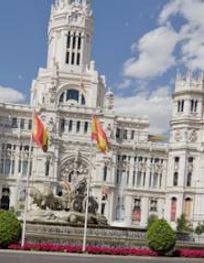
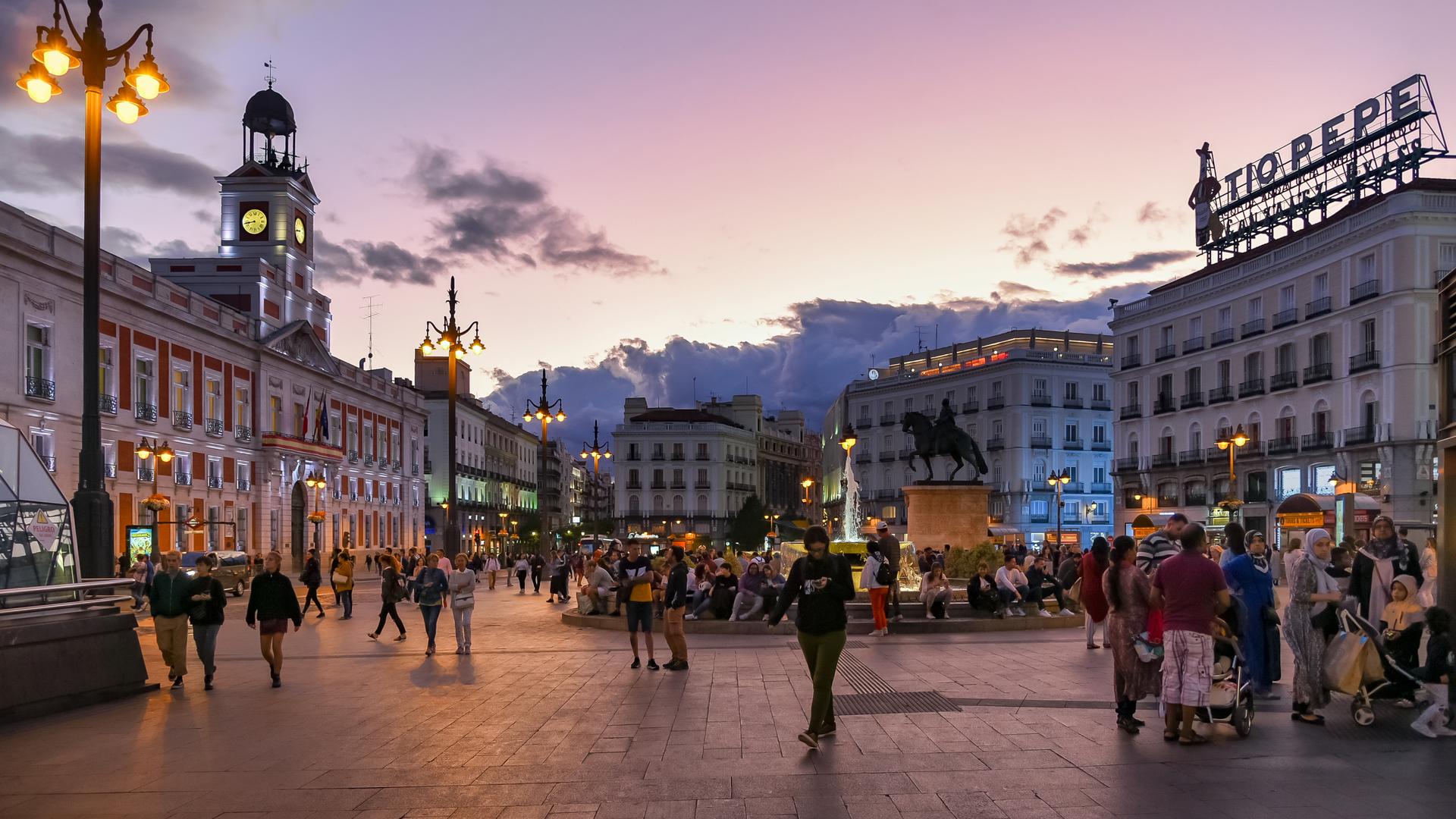
Puerta del Sol's clock tower and bear statue anchor Madrid's kilometer zero, where Calle de Carretas feeds into a plaza alive with protests, performers, and midnight grape rituals.

Calle del Arenal's enduring sentinel, where Madrid's theatrical pulse meets century-old stonework in Centro's historic core.