Hotel Emperador, Madrid Travel Guide
Free Guide: Gran Vía's mid-century sentinel with rooftop skyline views, anchoring Madrid's theater district amid neon-lit theaters and bustling pedestrian energy.


A brief summary of Hotel Emperador
Gran Vía's mid-century sentinel with rooftop skyline views, anchoring Madrid's theater district amid neon-lit theaters and bustling pedestrian energy.
Perched on Madrid's pulsating Gran Vía, Hotel Emperador stands as a striking landmark blending mid-century grandeur with modern flair. Its facade commands attention amid the theater district's neon glow, offering travelers a front-row seat to the city's vibrant street life and rooftop panoramas that capture Madrid's skyline magic. This iconic structure embodies the avenue's legacy as Spain's 'Broadway,' drawing visitors to its elegant presence.
On-site amenities
 Restrooms
 Drink options
 Food options
 Seating areas
- Address
- Gran Vía, 53, Centro, 28013 Madrid
- Phone
- Website
Getting there
Metro
Bus
Walking
Taxi
Discover more about Hotel Emperador
Iconic Presence on Gran Vía
Hotel Emperador occupies a prime position on Gran Vía, Madrid's legendary artery often dubbed the Spanish Broadway. Opened in the 1950s, this hotel emerged during the post-war era when the avenue itself was transforming into a symbol of modernity. Its multi-story facade, with clean lines and symmetrical windows, contributes to the street's cohesive architectural rhythm, where theaters, cinemas, and grand buildings create an unbroken wall of urban spectacle. Travelers approaching from Plaza de Callao or Calle Alcalá immediately notice its illuminated signage and vertical rise, making it a natural orientation point in Centro district.
Architectural Character and Design
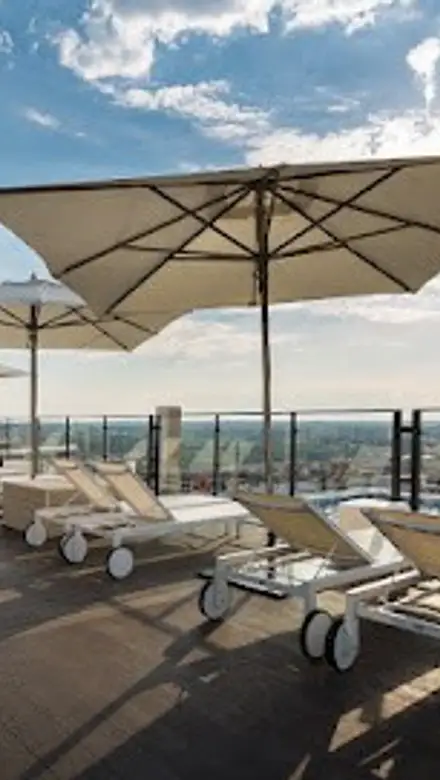
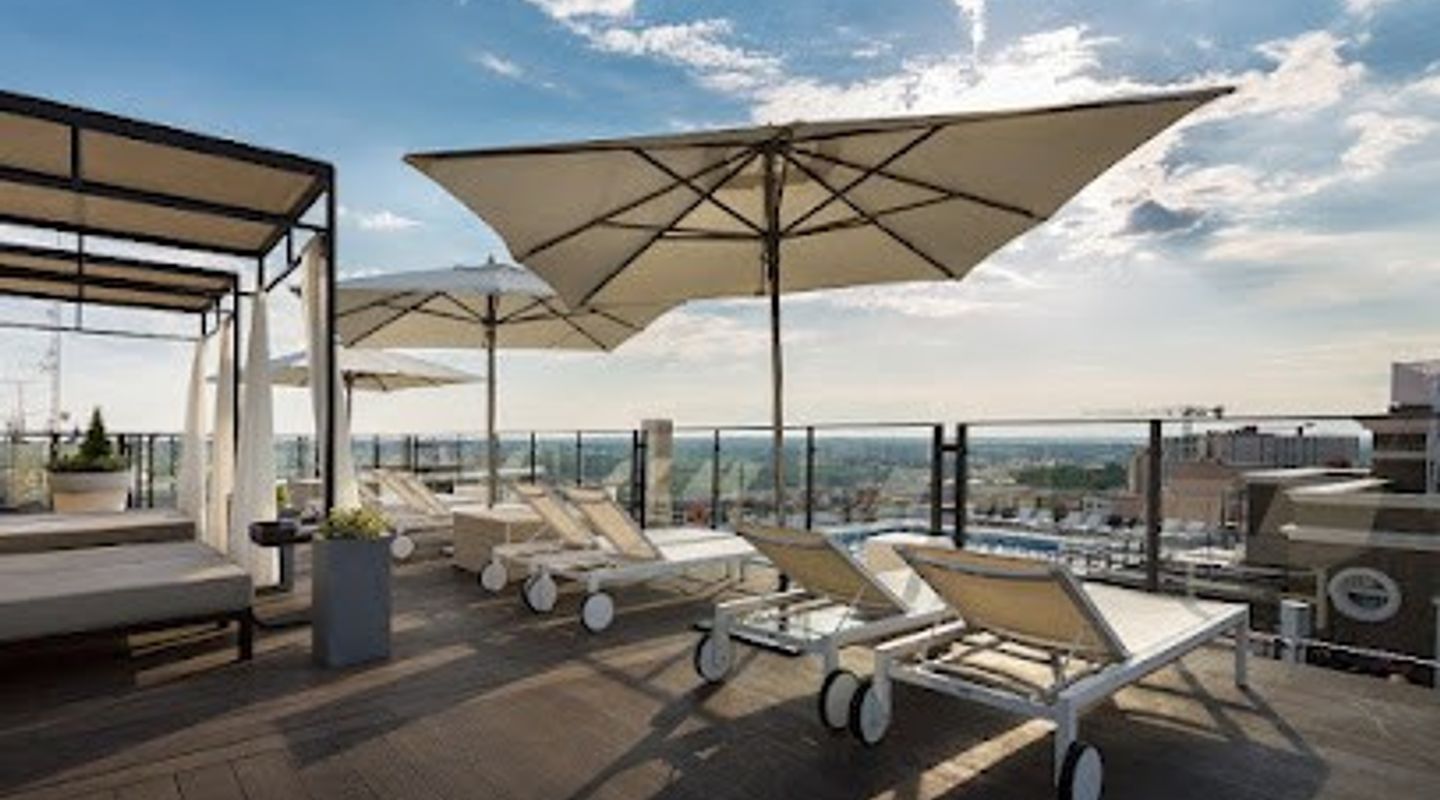
The building's design reflects mid-20th-century Spanish architecture, favoring functional elegance over ornate decoration. Tall vertical windows allow natural light to flood interiors, while the exterior stone cladding withstands the avenue's constant bustle. A standout feature is the rooftop terrace, elevated high above the street, providing unobstructed views across Madrid's rooftops toward the Sierra de Guadarrama on clear days. This vantage echoes Gran Vía's role as a viewpoint hub, where the hotel's structure frames the city's layered skyline, blending historical silhouettes like the Metropolis Building with contemporary towers. The lobby entrance, marked by revolving doors, funnels the energy of passing crowds into a welcoming vestibule.
Historical Context in Madrid's Evolution
Gran Vía's construction began in 1910, carving through old neighborhoods to link key plazas and symbolize progress. Hotel Emperador arrived decades later, during Franco-era developments that modernized the capital. It witnessed pivotal moments, from the economic boom of the 1960s to Madrid's democratic renaissance in the 1980s. As a landmark, it anchors the avenue's theater stretch, near venues like the Gran Vía Theater hosting long-running shows. Its endurance through renovations highlights adaptive reuse, preserving the era's optimism amid today's pedestrian-friendly upgrades and bike lanes.
Vibe and Atmosphere as a Landmark
The atmosphere around Hotel Emperador pulses with Gran Vía's non-stop rhythm: street performers, luxury shops, and evening crowds heading to flamenco bars or cocktail lounges. Daytime brings shoppers and sightseers; nights ignite with neon reflections on its facade. The rooftop offers a serene contrast, where the hum of traffic fades into panoramic calm, ideal for contemplating Madrid's blend of old and new. Visitors feel the thrill of centrality—steps from Puerta del Sol yet elevated above the fray—capturing the avenue's dual role as commercial spine and cultural corridor.
Visitor Experience and Surroundings
Approaching the hotel immerses you in Gran Vía's sensory overload: the scent of churros from nearby cafes, echoes of buskers' guitars, and the rush of red double-decker tourist buses. Its location facilitates exploration of adjacent landmarks like the Palacio de la Prensa or Edificio Telefónica. Photographers prize its clean lines against the avenue's chaos, while walkers appreciate the wide sidewalks for lingering. The hotel's prominence ensures it's woven into guided tours, emphasizing how such structures define Madrid's identity as a city of bold facades and endless energy.
Legacy and Cultural Footprint
Beyond hospitality, Hotel Emperador symbolizes Gran Vía's cinematic fame, appearing in films portraying Madrid's glamour. Its rooftop has hosted events mirroring the avenue's festival spirit during Carnival or Christmas illuminations. For travelers, it represents accessibility to Madrid's heart, where history layers with contemporary life. Visiting reinforces the avenue's narrative as a testament to urban ambition, with the hotel as a steadfast sentinel overlooking the eternal flow of capital life.
Evendo Review Centre
 Google
Guest reviews
Best time to go
Quietest: Jan, Feb & Mar · at 2am or at 3am or at 4am
Busy times are Evendo estimates for a typical year, to help you plan. Actual crowds vary with events, school holidays and the weather.
Explore Hotel Emperador on the map
A handpicked selection of must-see spots near Hotel Emperador, mapped for you.
Get your free copy of our complete guide to Hotel Emperador, delivered straight to you.
Everything on this page, from opening hours and how to get there to Eve’s tips and the best time to go, in one PDF you can read offline, print or share.
Already have an account? Sign in
Your Hotel Emperador guide is ready.
We'll send it to · Not you? Sign out

Getting your guide ready…
We are putting together a fresh copy of the Hotel Emperador guide. This can take up to a minute.
This can take a few moments. If your browser asks, choose Allow so the download can start. You'll find the guide in your Downloads folder.
Nothing happened? Download it again
Sorry, the guide is taking longer than usual. Please try again in a minute, or get it by email instead.
Other nearby places you may find interesting
The closest places of the same kind, if this one is not quite what you had in mind.
-
Plaza Mayor Madrid's 17th-century plaza where Habsburg brick arcades enclose markets, performers, and royal statues in a vibrant rectangle of Spanish urban history.
-
Royal Palace of Madrid Europe's grandest royal residence commands Madrid's skyline with 3,418 rooms of Baroque splendor, armories of ancient steel, and gardens echoing Versailles amid the city's vibrant pulse.
-
Cibeles Fountain Cybele's marble chariot commands Plaza Cibeles, where cascading waters meet Madrid's bustling arteries in a timeless display of neoclassical power and urban vitality.
-
Plaza de España Madrid's colossal Plaza de España fuses Cervantes monument, provincial mosaics and twin skyscrapers into a vast open stage where urban grandeur meets daily spectacle.
-
Monumento a los Caídos por España Granite sentinel in Retiro Park salutes Spain's wartime sacrifices with Blay's masterful equestrian bronze, anchoring Madrid's green heart in heroic legacy.
Swipe for more places
More to explore near Hotel Emperador

 Best experiences near Hotel Emperador
 Best hotels near Hotel Emperador
 Best landmarks near Hotel Emperador
 Best attractions near Hotel Emperador
 Best shops near Hotel Emperador
 Best restaurants near Hotel Emperador
 Best bars near Hotel Emperador
Do you manage this location?
Take control to get all the benefits, like improved information, better appearance, and stronger visibility across AI-powered discovery.
Explore more

Explore more of Madrid
Discover Madrid: A city of art, culture, and culinary delights, where history and modern vibrancy meet in the heart of Spain.
Explore Madrid
Explore more of Spain
Discover Spain: A vibrant tapestry of culture, history, and breathtaking landscapes, where every city offers a unique adventure and unforgettable experiences.
Explore Spain