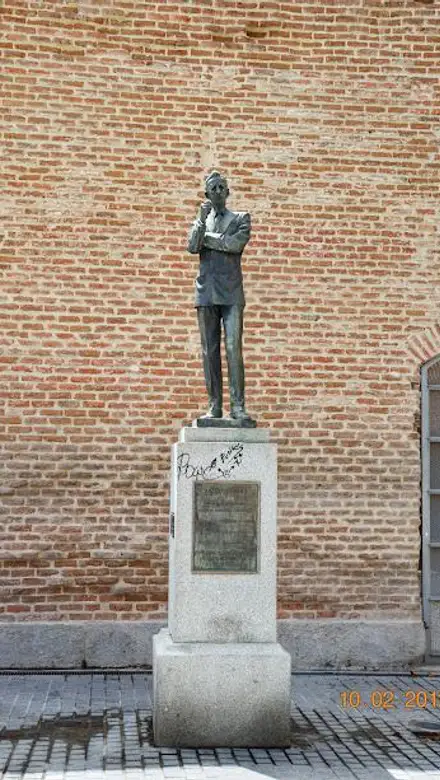
Monumento a Agustín Lara, Madrid Travel Guide
Free Guide: Bronze tribute to bolero maestro Agustín Lara on a Centro side street, where Mexican melody meets Madrid's historic streets in quiet bronze contemplation.


A brief summary of Monumento a Agustín Lara
Bronze tribute to bolero maestro Agustín Lara on a Centro side street, where Mexican melody meets Madrid's historic streets in quiet bronze contemplation.
In Madrid's vibrant Centro district, this bronze sculpture honors Mexican composer Agustín Lara, whose romantic boleros enchanted generations. Captured in a contemplative pose on a quiet street, the monument blends artistic elegance with cultural homage, inviting passersby to pause and reflect on music's timeless allure amid the city's historic pulse.
On-site amenities
 Restrooms
 Food options
 Seating areas
 Trash bins
Opening hours
- Every dayOpen 24 hours
Opening hours as listed on the venue’s Google Business Profile. Hours can change for services and special events, so check with the venue before you go.
- Address
- C. del Sombrerete, 26, Centro, 28012 Madrid
- Website
Getting there
Metro
Walking
Bus
Discover more about Monumento a Agustín Lara
Historical Significance
The Monument to Agustín Lara stands as a tribute to one of Mexico's most celebrated composers, Agustín Lara, known as 'El Flaco de Oro.' Erected in Madrid's Centro neighborhood, it commemorates his profound influence on Latin American music and his personal ties to Spain. Lara, born in 1897, rose to fame with boleros like 'Granada' and 'Solamente Una Vez,' blending classical training with popular sensibilities. The statue, installed in the late 20th century, reflects Madrid's appreciation for his legacy, especially given his performances and connections in Europe. Positioned on Calle del Sombrerete, it marks a subtle nod to transatlantic cultural exchanges during the post-Spanish Civil War era when many artists sought refuge or inspiration abroad.
Artistic Design
Crafted in bronze, the sculpture depicts Lara seated, gazing thoughtfully, perhaps evoking the introspective mood of his compositions. The figure's elongated form and detailed attire capture his nickname 'El Flaco'—the skinny one—while the pedestal bears inscriptions honoring his contributions. Surrounding elements include subtle musical motifs, integrating the monument into the streetscape without overwhelming it. This restrained realism contrasts with Madrid's grander plazas, offering an intimate encounter that rewards close observation. The patinaed surface, weathered by urban elements, adds layers of character, mirroring the enduring quality of Lara's melodies.
Location and Atmosphere
Nestled in the heart of Centro, near bustling avenues yet on a calmer side street, the monument enjoys a serene vibe amid Madrid's energy. Foot traffic from nearby tapas bars and theaters brings a mix of locals and visitors, creating spontaneous moments of discovery. Evenings amplify the romance, with streetlights casting warm glows on the bronze, evoking Lara's nocturnal inspirations. The surrounding architecture—19th-century facades and iron balconies—enhances the nostalgic air, making it a perfect pause point during walks through Malasaña or Gran Vía explorations.
Cultural Context
Agustín Lara's music bridged Mexico and Spain, influencing flamenco and copla traditions. His marriage to Spanish actress María Félix deepened these links, and Madrid honored him partly for such bonds. The monument serves as a cultural bridge, reminding visitors of shared Iberian-Latin heritage. It subtly highlights how music transcends borders, much like Lara's tunes that still soundtrack films, dances, and serenades worldwide. For travelers, it underscores Madrid's role as a magnet for global artists.
Visitor Experience
Approaching the statue feels like stumbling upon a personal secret in Madrid's dense historic core. Touch the cool bronze for luck, as locals do, or sit nearby to hum a bolero. It's ideal for photography from low angles, emphasizing Lara's pensive expression against the sky. Pair it with a stroll to Plaza Mayor or a churro stop, weaving it into broader itineraries. The site's accessibility fosters reflection on artistry's quiet power, leaving an impression of elegance amid everyday Madrid life.
Evendo Review Centre
 Google
Guest reviews
Best time to go
Quietest: Jan, Feb & Mar · before 10am
Busy times are Evendo estimates for a typical year, to help you plan. Actual crowds vary with events, school holidays and the weather.
Explore Monumento a Agustín Lara on the map
A handpicked selection of must-see spots near Monumento a Agustín Lara, mapped for you.
Get your free copy of our complete guide to Monumento a Agustín Lara, delivered straight to you.
Everything on this page, from opening hours and how to get there to Eve’s tips and the best time to go, in one PDF you can read offline, print or share.
Already have an account? Sign in
Your Monumento a Agustín Lara guide is ready.
We'll send it to · Not you? Sign out

Getting your guide ready…
We are putting together a fresh copy of the Monumento a Agustín Lara guide. This can take up to a minute.
This can take a few moments. If your browser asks, choose Allow so the download can start. You'll find the guide in your Downloads folder.
Nothing happened? Download it again
Sorry, the guide is taking longer than usual. Please try again in a minute, or get it by email instead.
Unlock the best of Monumento a Agustín Lara
Skip-the-line tickets, guided tours with entry, and walking tours of the area, booked in a few clicks.

Other nearby places you may find interesting
The closest places of the same kind, if this one is not quite what you had in mind.
-
-
-
-
-


Swipe for more places
More to explore near Monumento a Agustín Lara
-
 Best experiences near Monumento a Agustín Lara
-
 Best hotels near Monumento a Agustín Lara
-
 Best landmarks near Monumento a Agustín Lara
-
 Best attractions near Monumento a Agustín Lara
-
 Best shops near Monumento a Agustín Lara
-
 Best restaurants near Monumento a Agustín Lara
-
 Best bars near Monumento a Agustín Lara


Do you manage this location?
Take control to get all the benefits, like improved information, better appearance, and stronger visibility across AI-powered discovery.
Explore more

Explore more of Madrid
Discover Madrid: A city of art, culture, and culinary delights, where history and modern vibrancy meet in the heart of Spain.
Explore Madrid
Explore more of Spain
Discover Spain: A vibrant tapestry of culture, history, and breathtaking landscapes, where every city offers a unique adventure and unforgettable experiences.
Explore Spain