Pl. de la Independencia, Madrid Travel Guide
Free Guide: Puerta de Alcalá anchors Plaza de la Independencia, channeling 18th-century neoclassical power through its vaulted arches and sculpted triumphs at Madrid's dynamic eastern frontier.


A brief summary of Pl. de la Independencia
Puerta de Alcalá anchors Plaza de la Independencia, channeling 18th-century neoclassical power through its vaulted arches and sculpted triumphs at Madrid's dynamic eastern frontier.
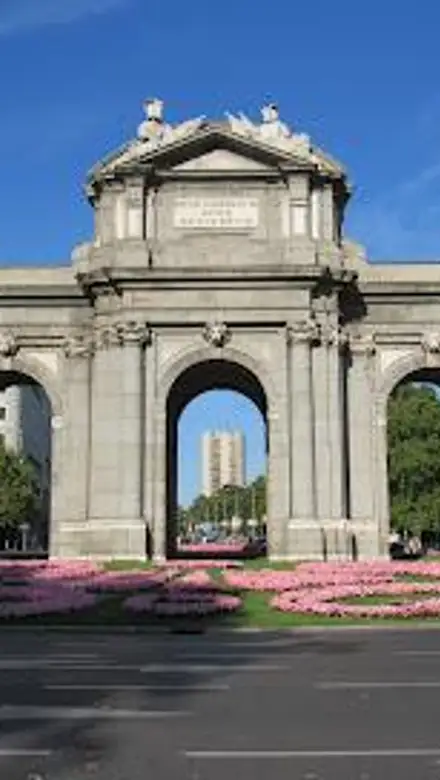
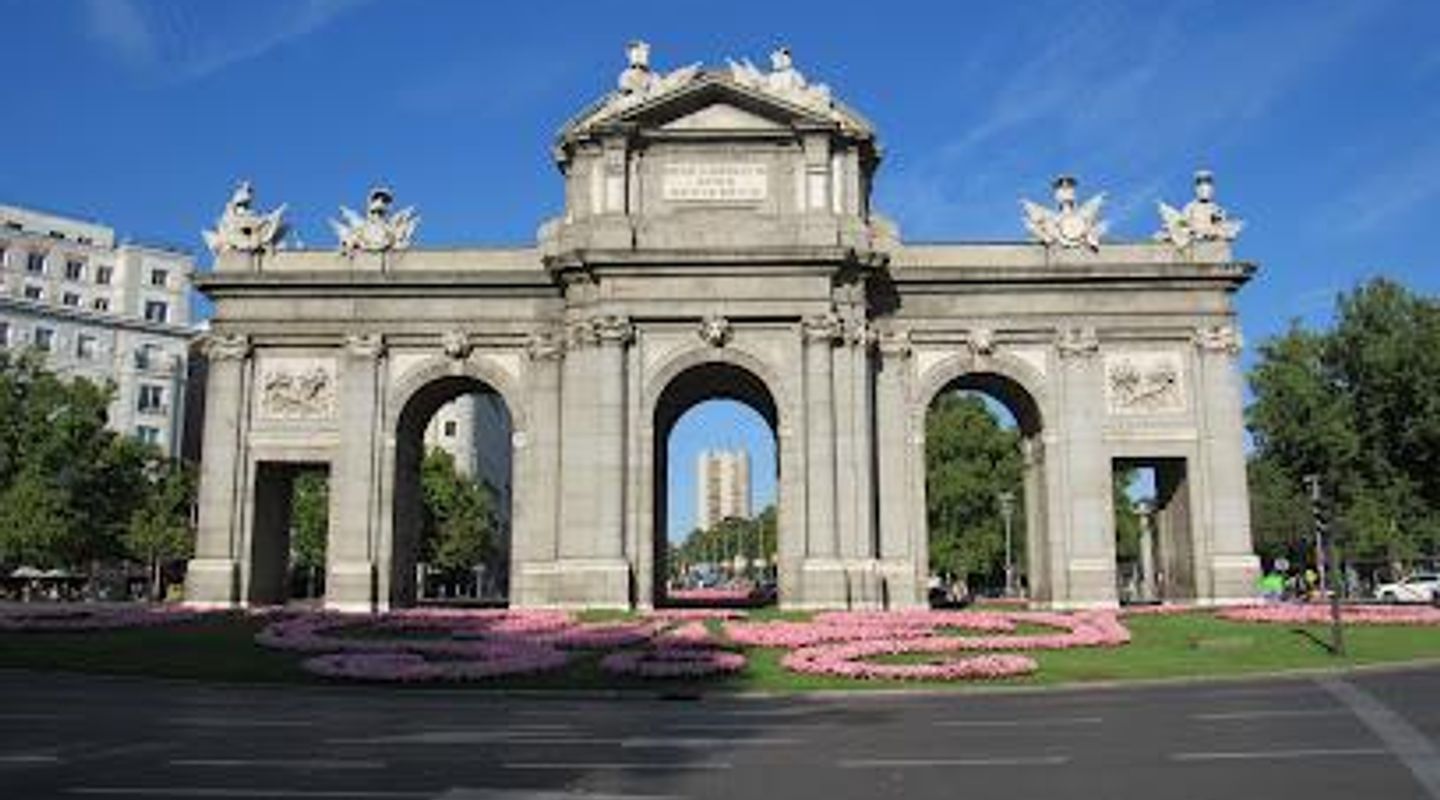
Towering at Plaza de la Independencia, the Puerta de la Independencia frames the grand Puerta de Alcalá, a neoclassical monument built to honor King Carlos III. This iconic arch stands as a gateway between the historic heart of Madrid and the sprawling Retiro Park, drawing visitors with its elegant sculptures and commanding presence amid the city's vibrant street life.
On-site amenities
 Restrooms
 Drink options
 Food options
 Seating areas
 Sheltered areas
 Trash bins
 Information boards
- Address
- 28001 Madrid
Getting there
Metro
Bus
Walking
Taxi
Discover more about Pl. de la Independencia
Historical Foundations
The Puerta de Alcalá occupies the eastern edge of Plaza de la Independencia, a symbolically charged square named for Spain's 1808 uprising against Napoleonic forces. At its center rises the Puerta de Alcalá, originally constructed in 1778 under orders from King Carlos III to replace an earlier Baroque gate. Designed by Italian architect Francesco Sabatini, this neoclassical triumphal arch emulates Roman models like the Arch of Titus, featuring three vaulted passages flanked by Corinthian columns and crowned by a pediment. Sculptures by Miguel de la Cruz depict allegories of abundance and glory, capturing the era's Bourbon optimism.
Architectural Splendor
Sabatini's design emphasizes symmetry and proportion, with the central arch soaring higher than the side passages to guide royal processions. Gray granite from Segovia forms its robust structure, weathered yet imposing against Madrid's skyline. Intricate bas-reliefs illustrate historical vignettes, including the king's entry into Madrid, while the upper balustrade supports statues symbolizing Spanish virtues. This blend of classical restraint and ornamental detail positions the Puerta as a pinnacle of 18th-century Spanish architecture, distinct from the city's later eclectic styles.
Strategic Location and Surroundings
Positioned at the convergence of Calle de Alcalá and Carrera de San Jerónimo, the plaza serves as a pivotal junction linking Madrid's literary quarter to the green expanse of Retiro Park. Opposite stands the neoclassical Palacio de los Duques de Medinaceli, adding patrician gravitas. The site's elevation offers unobstructed views, making it a natural focal point for parades and protests throughout history. Fountains in the plaza provide a soothing counterpoint to the ceaseless flow of traffic and pedestrians.
Cultural and Symbolic Role
Beyond its physical form, the Puerta embodies Madrid's layered identity—from absolutist monarchy to democratic republic. It has witnessed key events, including military reviews and modern celebrations. Artists and photographers gravitate here for its photogenic lines and dramatic lighting, especially at dusk when the arch glows under floodlights. The monument's endurance reflects Spain's resilience, inviting contemplation on continuity amid change.
Visitor Experience
Approaching from Puerta del Sol, the arch reveals itself gradually, building anticipation. Circumambulate its base to appreciate sculptural details up close, or linger in the plaza to observe Madrileños at ease. Nearby Retiro offers respite, while the adjacent Fuente de Neptuno adds mythological flair. The atmosphere shifts with the time of day: brisk mornings yield to leisurely evenings, alive with conversation and the aroma of nearby churros stands.
Evendo Review Centre
 Google
Guest reviews
Best time to go
Quietest: Jan, Feb & Dec · before 3am
Busy times are Evendo estimates for a typical year, to help you plan. Actual crowds vary with events, school holidays and the weather.
Explore Pl. de la Independencia on the map
A handpicked selection of must-see spots near Pl. de la Independencia, mapped for you.
Get your free copy of our complete guide to Pl. de la Independencia, delivered straight to you.
Everything on this page, from opening hours and how to get there to Eve’s tips and the best time to go, in one PDF you can read offline, print or share.
Already have an account? Sign in
Your Pl. de la Independencia guide is ready.
We'll send it to · Not you? Sign out

Getting your guide ready…
We are putting together a fresh copy of the Pl. de la Independencia guide. This can take up to a minute.
This can take a few moments. If your browser asks, choose Allow so the download can start. You'll find the guide in your Downloads folder.
Nothing happened? Download it again
Sorry, the guide is taking longer than usual. Please try again in a minute, or get it by email instead.
Other nearby places you may find interesting
The closest places of the same kind, if this one is not quite what you had in mind.
-
-
-
-
-


Swipe for more places
More to explore near Pl. de la Independencia
-
 Best experiences near Pl. de la Independencia
-
 Best hotels near Pl. de la Independencia
-
 Best landmarks near Pl. de la Independencia
-
 Best attractions near Pl. de la Independencia
-
 Best shops near Pl. de la Independencia
-
 Best restaurants near Pl. de la Independencia
-
 Best bars near Pl. de la Independencia


Do you manage this location?
Take control to get all the benefits, like improved information, better appearance, and stronger visibility across AI-powered discovery.
Explore more

Explore more of Madrid
Discover Madrid: A city of art, culture, and culinary delights, where history and modern vibrancy meet in the heart of Spain.
Explore Madrid
Explore more of Spain
Discover Spain: A vibrant tapestry of culture, history, and breathtaking landscapes, where every city offers a unique adventure and unforgettable experiences.
Explore Spain