Pl. de las Descalzas, Madrid Travel Guide
Free Guide: Cobblestone square anchoring Madrid's Centro with 17th-century fountain and royal monastery shadows, blending Baroque sculpture against urban rhythm.


A brief summary of Pl. de las Descalzas
Cobblestone square anchoring Madrid's Centro with 17th-century fountain and royal monastery shadows, blending Baroque sculpture against urban rhythm.
Tucked in Madrid's bustling Centro district, Plaza de las Descalzas captivates with its elegant 17th-century fountain and proximity to the Royal Monastery of Descalzas Reales. Cobblestone charm meets royal legacy in this intimate square, where Baroque details whisper tales of Habsburg grandeur amid the city's vibrant pulse. Perfect for a serene pause amid urban energy.
On-site amenities
 Restrooms
 Drink options
 Food options
 Seating areas
 Trash bins
 Information boards
- Address
- Centro, 28013 Madrid
Getting there
Metro
Walking
Bus
Discover more about Pl. de las Descalzas
Historical Foundations
Plaza de las Descalzas occupies a prime spot in Madrid's Centro district, emerging in the 17th century as a key public space near the nascent Habsburg court. Originally part of the urban expansion under Philip IV, the square took shape around 1630 when the fountain of Andrómeda—crafted by Jerónimo de Quesada—became its centerpiece. This marble sculpture, depicting the mythological figure chained to a rock, draws from classical tales and exemplifies Baroque artistry with its dynamic forms and expressive details. The plaza's name derives from the adjacent Real Monasterio de las Descalzas Reales, founded in 1559 by Joanna of Austria, sister of Philip II, transforming a Renaissance palace into a cloistered haven for noblewomen.
Architectural Highlights
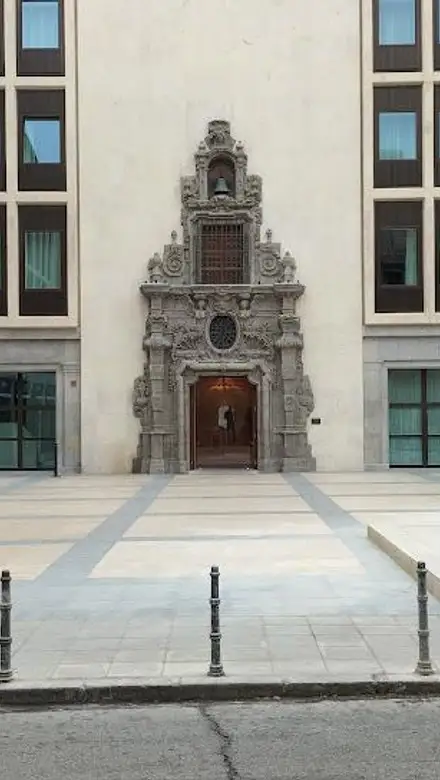
At the square's core stands the Fuente de Andrómeda, a testament to Madrid's golden age sculptural prowess. Restored in the 20th century, its intricate carvings capture motion and drama, with water once cascading from seashell motifs—a nod to the city's fountains tradition. Surrounding buildings blend Baroque and neoclassical styles, their facades adorned with wrought-iron balconies and carved coats of arms. The monastery's austere exterior looms large, its massive wooden doors hinting at the opulent interiors housing royal art collections amassed by Habsburg queens. Narrow alleys radiate outward, linking the plaza to Gran Vía's modernity and the Palacio Real's majesty.
Cultural Significance
Historically, Plaza de las Descalzas served as a social nexus for Madrid's elite, hosting markets, festivals, and royal processions. Its location at the intersection of Calle Preciados and Plaza del Callao positioned it as a gateway between the old city's spiritual core and emerging commercial hubs. The monastery, one of Spain's richest, preserves relics from the Catholic Monarchs era, including Flemish tapestries and jeweled reliquaries, reflecting the fusion of devotion and artistry. Today, the square embodies Madrid's layered identity: a stage for street performers, a backdrop for fashion shoots, and a quiet retreat from Sol's crowds.
Atmosphere and Vibe
Daylight reveals a tranquil oasis amid Centro's frenzy, with sunlight glinting off the fountain and pigeons scattering across weathered stones. Evenings bring a lively hum—locals linger on café terraces, musicians strum flamenco riffs, and the air carries espresso scents mingled with distant traffic. The vibe shifts seasonally: summer fills it with terrazas overflowing with sangría, while winter wraps it in festive lights during Navidad markets. Free from overt commercialization, the plaza retains an authentic Madrileño essence, where history feels immediate and uncurated.
Visitor Expectations
Wanderers encounter a compact yet immersive space ideal for contemplation or people-watching. Peer through the monastery's grille for glimpses of its cloister, or trace the square's edges to spot hidden plaques commemorating literary figures like Lope de Vega, who roamed these streets. The plaza invites lingering without demands, offering photogenic angles of the fountain against sunset skies or the monastery under moonlight. It rewards the curious with subtle details: faded sgraffiti on walls, embedded milestones marking old distances to other Spanish cities. In Madrid's dense tapestry, this unpretentious square delivers profound connection to the capital's soul.
Evendo Review Centre
 Google
Guest reviews
Best time to go
Quietest: Jan, Feb & Mar · before 8am
Busy times are Evendo estimates for a typical year, to help you plan. Actual crowds vary with events, school holidays and the weather.
Explore Pl. de las Descalzas on the map
A handpicked selection of must-see spots near Pl. de las Descalzas, mapped for you.
Get your free copy of our complete guide to Pl. de las Descalzas, delivered straight to you.
Everything on this page, from opening hours and how to get there to Eve’s tips and the best time to go, in one PDF you can read offline, print or share.
Already have an account? Sign in
Your Pl. de las Descalzas guide is ready.
We'll send it to · Not you? Sign out

Getting your guide ready…
We are putting together a fresh copy of the Pl. de las Descalzas guide. This can take up to a minute.
This can take a few moments. If your browser asks, choose Allow so the download can start. You'll find the guide in your Downloads folder.
Nothing happened? Download it again
Sorry, the guide is taking longer than usual. Please try again in a minute, or get it by email instead.
Unlock the best of Pl. de las Descalzas
Skip-the-line tickets, guided tours with entry, and walking tours of the area, booked in a few clicks.


Other nearby places you may find interesting
The closest places of the same kind, if this one is not quite what you had in mind.
-
-
-
-
-


Swipe for more places
More to explore near Pl. de las Descalzas

 Best experiences near Pl. de las Descalzas
 Best hotels near Pl. de las Descalzas
 Best landmarks near Pl. de las Descalzas
 Best attractions near Pl. de las Descalzas
 Best shops near Pl. de las Descalzas
 Best restaurants near Pl. de las Descalzas
 Best bars near Pl. de las Descalzas
Do you manage this location?
Take control to get all the benefits, like improved information, better appearance, and stronger visibility across AI-powered discovery.
Explore more

Explore more of Madrid
Discover Madrid: A city of art, culture, and culinary delights, where history and modern vibrancy meet in the heart of Spain.
Explore Madrid
Explore more of Spain
Discover Spain: A vibrant tapestry of culture, history, and breathtaking landscapes, where every city offers a unique adventure and unforgettable experiences.
Explore Spain