Plaza de España, Madrid Travel Guide
Madrid's colossal Plaza de España fuses Cervantes monument, provincial mosaics and twin skyscrapers into a vast open stage where urban grandeur meets daily spectacle.
Plaza de España stands as one of Madrid's grandest public squares, framed by twin towers and a monumental Cervantes monument. This bustling hub blends neoclassical grandeur with vibrant urban life, offering panoramic city views, shaded walkways, and a perfect vantage for soaking in the Spanish capital's dynamic energy. Visitors wander amid fountains, gardens, and towering architecture that captures early 20th-century ambition.
A brief summary to Plaza de España
- Pl. de España, Madrid, Moncloa - Aravaca, Madrid, 28008, ES
- Free
-
 Outdoor
- Mobile reception: 5 out of 5

Know before you go
Hi, I'm Eve. Here are a few practical things to know before exploring Plaza de España.
- Visit at dawn for uncrowded photos of the Cervantes monument with soft light enhancing the bronze statues.
- Combine with a walk to nearby Templo de Debod for sunset views over the plaza's skyline.
- Watch for seasonal flower displays around the fountains, peaking in spring and autumn.
- Use the elevated walkways for bird's-eye perspectives without navigating traffic.
- Arrive early evening to catch street musicians performing classic Spanish guitar.
Do you manage this location?
Take control to get all the benefits, like improved information, better appearance, and stronger visibility across AI-powered discovery. Learn more about listing your business on Evendo
Activate your presenceOther nearby places you may find interesting
The closest places of the same kind, if this one is not quite what you had in mind.
Explore Plaza de España on the Map
A handpicked selection of must-see spots near Plaza de España, mapped for you.
Getting There
-
Metro
Take Line 10 from central Sol or Line 3 from Puerta del Sol; 10-15 min ride to Plaza de España station, direct exit to plaza. €1.50-2 single ticket.
-
Bus
EMT lines 1, 44, or 133 from Puerta del Sol or Gran Vía; 10-20 min depending on traffic, stops right at plaza edge. €1.50 flat fare.
-
Walking
From Royal Palace, 25-30 min stroll via Calle Bailén; flat paths through parks, free and scenic.
-
Taxi
From city center like Sol, 5-10 min ride; €6-10 fare, easy drop-off at plaza perimeter.
For the on-the-go comforts that matter to you
-
 Restrooms
-
 Drink Options
-
 Food Options
-
 Seating Areas
-
 Trash Bins
-
 Information Boards
Discover more about Plaza de España
Iconic Architecture and Layout
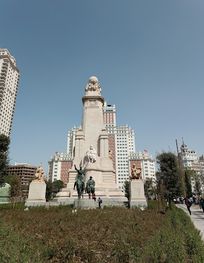
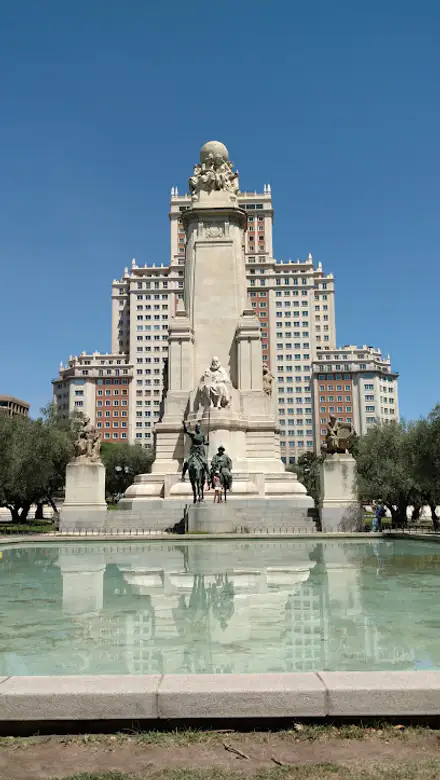
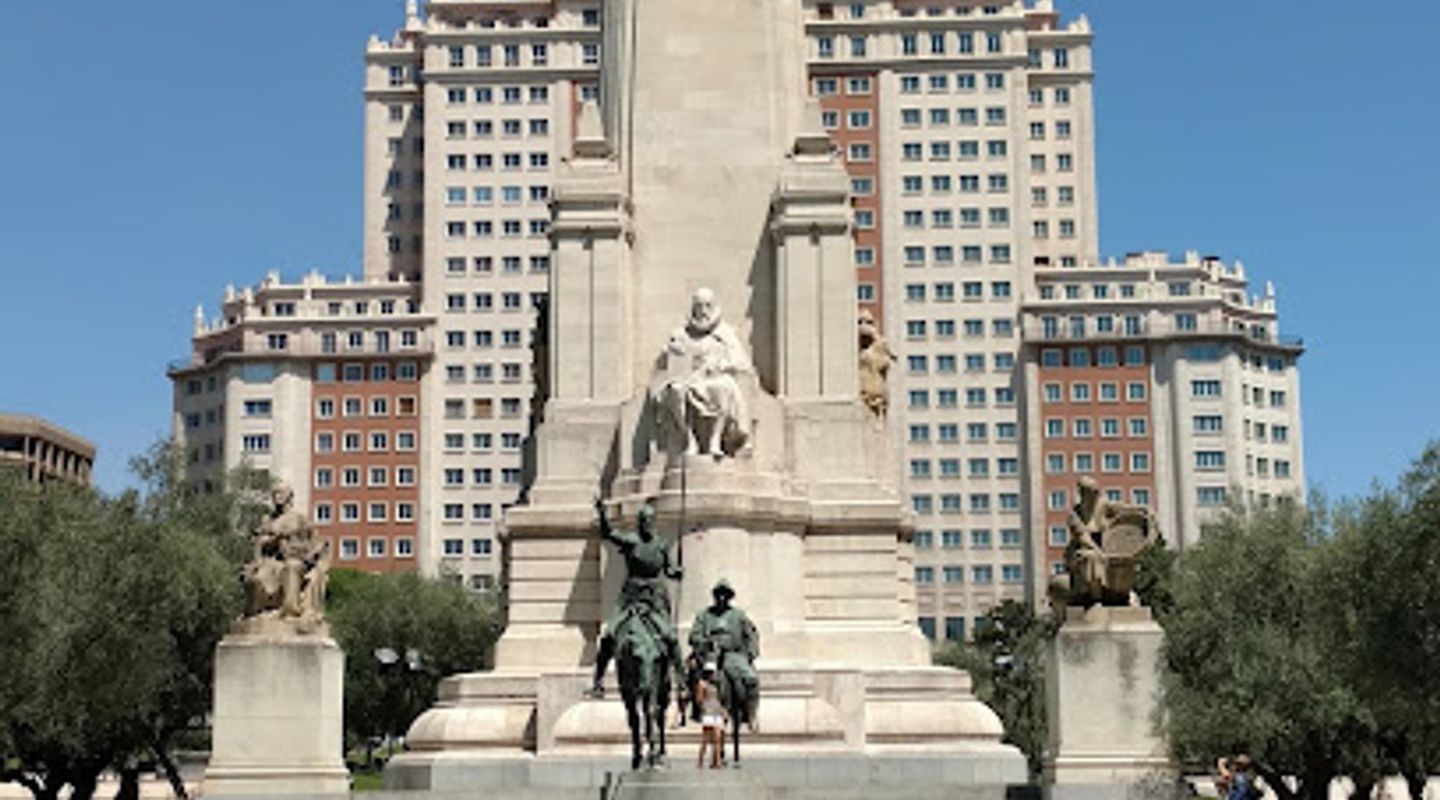
Plaza de España occupies a vast rectangular space in Madrid's Moncloa-Aravaca district, measuring over 36,000 square meters and ranking among Europe's largest plazas. Designed by architects Julio Palacios and Antonio Palacios in the 1920s-1930s, it features two symmetrical 132-meter towers connected by curved facades adorned with regional emblems from Spain's provinces. The central monument to Miguel de Cervantes towers 28 meters high, flanked by bronze statues of Don Quixote and Sancho Panza, symbolizing Spain's literary golden age. Fountains, ponds, and manicured gardens punctuate the expanse, creating a harmonious blend of open space and ornate detailing.Historical Significance
Conceived as part of the 1929 International Exhibition, the plaza embodies Franco-era Spain's vision of national unity and imperial pride. Construction spanned 1927-1937, transforming former royal lands into a civic showcase. The Cervantes monument, sculpted by Lorenzo Coullaut Valera, honors the author of Don Quixote, with reliefs depicting scenes from the novel etched into the pedestal. Over decades, it has hosted military parades, protests, and celebrations, evolving into a living chronicle of Madrid's modern history amid political upheavals and cultural shifts.Urban Vibe and Atmosphere
Today, the plaza pulses with Madrid's characteristic vitality: locals jog along tree-lined paths, street performers entertain crowds, and tourists capture photos against the dramatic skyline. The atmosphere shifts from serene mornings with mist over the fountains to lively evenings when surrounding cafes spill onto the pavement. Towering plane trees provide dappled shade, while the Gran Vía's proximity infuses a cinematic buzz, reminiscent of Hollywood backlots where films like Around the World in 80 Days were shot here.What to Expect on a Visit
Expect expansive pedestrian areas ideal for strolling, with benches for people-watching and grassy patches for impromptu picnics. The plaza's scale invites exploration: circle the Cervantes monument for intricate details, cross the footbridge over tree canopies for elevated views, or relax by the central pond where ducks glide. It's a nexus for nearby Warner Bros studios tours and the Debod Temple, making it a strategic stop for broader sightseeing. The open design fosters a sense of grandeur, tempered by everyday Madrileño life unfolding around you.Cultural and Visual Appeal
Photographers flock to the plaza for its photogenic symmetry—the twin towers framing the sky, Cervantes gazing eternally over the city. At dusk, lights illuminate the facades, casting golden reflections in the water features. It's a microcosm of Madrid's layered identity: historic yet accessible, monumental yet intimate. Seasonal flower beds and occasional markets add color, ensuring each visit reveals new facets of this enduring urban landmark.












Your all‑in‑one travel companion app
Explore expert travel guides, compare and book tours, experiences, hotels, and more—all from the palm of your hand. Download now for seamless trip planning wherever your wanderlust takes you.


Explore More of Madrid
Looking beyond Plaza de España? Discover Madrid for broader travel guides, local hot-spots, and regional highlights.
Explore Madrid