

Monumento Cervantes, Madrid Travel Guide
Bronze guardians of Quixote's quest rise in Plaza de España, immortalizing Cervantes amid Madrid's grandest square and literary legacy.
Towering over Plaza de España, this grand monument honors Spain's literary giant Miguel de Cervantes with bronze statues of Don Quixote and Sancho Panza. A striking tribute blending literary heritage and neoclassical grandeur in Madrid's bustling heart.
A brief summary to Monumento Cervantes
- Pl. de España, 3, Madrid, Moncloa - Aravaca, Madrid, 28008, ES
- Click to display
- Free
-
 Outdoor
- Mobile reception: 5 out of 5

Know before you go
Hi, I'm Eve. Here are a few practical things to know before exploring Monumento Cervantes.
- Visit at dusk when plaza lights illuminate the statues, creating dramatic shadows and fewer crowds for better photos.
- Stand between Don Quixote and Sancho for the classic photo angle that captures the monument's full height and plaza expanse.
- Combine with nearby Gran Vía exploration; the monument marks the perfect transition from literary homage to shopping and theater.
- Watch for Cervantes-themed street art or performers in the plaza, adding live interpretations to the static bronzes.
Do you manage this location?
Take control to get all the benefits, like improved information, better appearance, and stronger visibility across AI-powered discovery. Learn more about listing your business on Evendo
Activate your presenceOther nearby places you may find interesting
The closest places of the same kind, if this one is not quite what you had in mind.
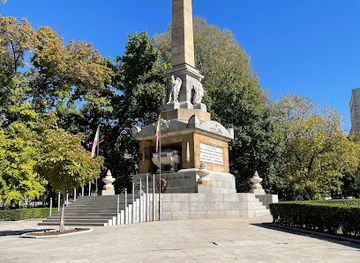
Explore Monumento Cervantes on the Map
A handpicked selection of must-see spots near Monumento Cervantes, mapped for you.
Getting There
-
Metro
Take Line 3 or 10 to Plaza de España station, 2-min walk, €1.50-2 single ticket, frequent service every 3-5 min from central Madrid.
-
Bus
Lines 1, 2, 46, 84 stop at Plaza de España, 10-20 min from Sol, €1.50 flat fare, reliable daytime frequency.
-
Walking
25-min stroll from Puerta del Sol along Gran Vía, free, scenic route through pedestrian zones and shops.
For the on-the-go comforts that matter to you
-
 Restrooms
-
 Drink Options
-
 Food Options
-
 Seating Areas
-
 Sheltered Areas
-
 Trash Bins
-
 Information Boards
Discover more about Monumento Cervantes
Iconic Literary Tribute
The Monumento a Cervantes stands as a majestic centerpiece in Plaza de España, Madrid, erected between 1928 and 1956 to commemorate the 400th anniversary of Miguel de Cervantes' birth. Designed by architect Rafael Martínez Zapatero and sculptor Lorenzo Coullaut Valera, this 26-meter-high structure captures the essence of Spain's Golden Age literature through its imposing central figure of Cervantes himself, seated in contemplative pose atop a pedestal, gazing over the plaza.Don Quixote and Sancho Panza
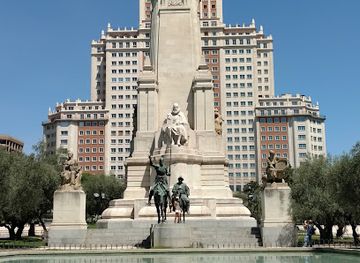
Flanking the base are larger-than-life bronze statues of Don Quixote and Sancho Panza, Cervantes' most famous creations from the novel 'Don Quixote de la Mancha.' Don Quixote appears astride his steed Rocinante, lance in hand, embodying chivalric idealism, while Sancho Panza stands squat and sturdy beside his donkey, representing earthy realism. These figures, recast after the originals were destroyed in a 1957 fire, draw countless admirers who pose for photos with the iconic duo against the plaza's expansive backdrop.Artistic Reliefs and Symbolism
The monument's facade features intricate high-relief panels depicting scenes from Cervantes' works, including 'Don Quixote,' 'La Galatea,' and 'Persiles and Sigismunda.' Additional statues of Numancia, Persiles, and Don Quixote's love Dulcinea adorn the corners, weaving a narrative tapestry of Cervantes' prolific output. The structure's neoclassical style, with its tall column and ornate detailing, harmonizes with the surrounding architecture, symbolizing enduring cultural pride.Plaza de España Integration
Perfectly integrated into Plaza de España, one of Madrid's largest public squares, the monument serves as a focal point amid fountains, gardens, and towering buildings housing the Torre de España and Edificio España. Its elevated position offers vantage points for viewing the plaza's vibrancy, from street performers to passing crowds, making it a natural gathering spot.Cultural and Historical Context
Unveiled in stages during the mid-20th century, the monument reflects Franco-era emphasis on national literary heroes. It has witnessed political rallies, celebrations, and daily life, evolving into a symbol of Madrid's literary soul. Visitors experience a blend of history and public energy, with the monument's weathered bronzes telling stories of time and tribute.Visitor Experience
Approaching the monument, travelers encounter its scale up close, ideal for reflection on Cervantes' influence on world literature. The surrounding plaza enhances the visit with open spaces for strolling, providing context to Madrid's blend of monumental art and urban pulse.












Your all‑in‑one travel companion app
Explore expert travel guides, compare and book tours, experiences, hotels, and more—all from the palm of your hand. Download now for seamless trip planning wherever your wanderlust takes you.


Explore More of Madrid
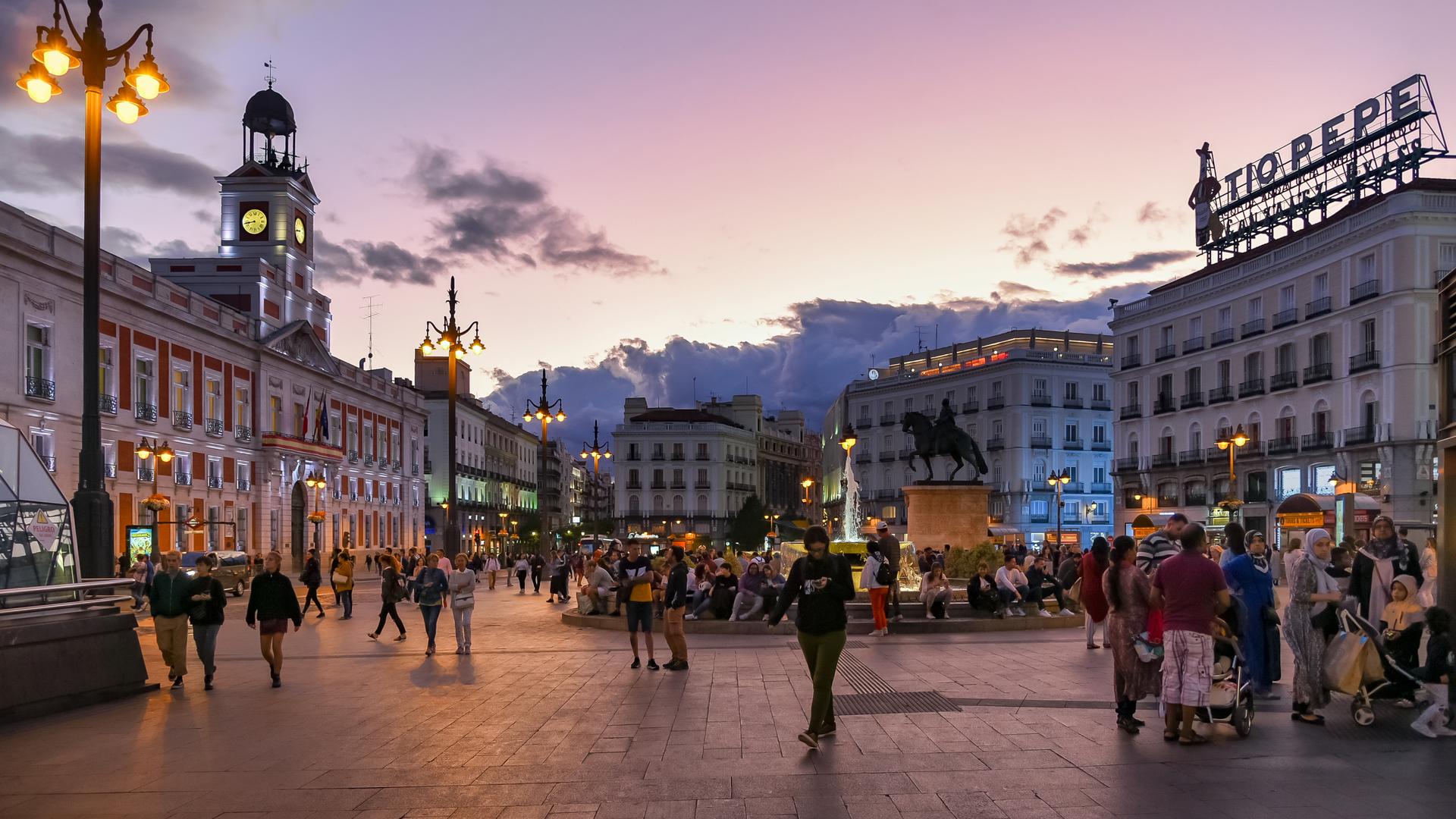
Looking beyond Monumento Cervantes? Discover Madrid for broader travel guides, local hot-spots, and regional highlights.
Explore Madrid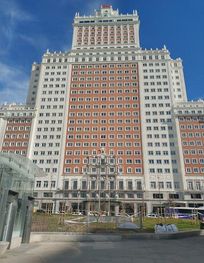
Gran Vía's 1950s towers fuse baroque sculpture and deco lines into Madrid's tallest mid-century monument overlooking Plaza de España's literary plaza.
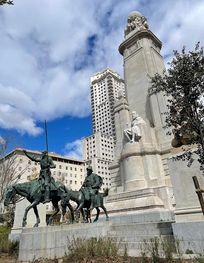
Bronze giants Don Quijote and Sancho Panza command Plaza de España, immortalizing Cervantes' epic in Madrid's lively square—a bold clash of literary legend and city pulse.
