Landsorts fyr Travel Guide
Free Guide: A weathered 17th-century stone lighthouse on Öja’s southern point where maritime history, seabirds and wartime relics meet the Baltic horizon.


A brief summary of Landsorts fyr
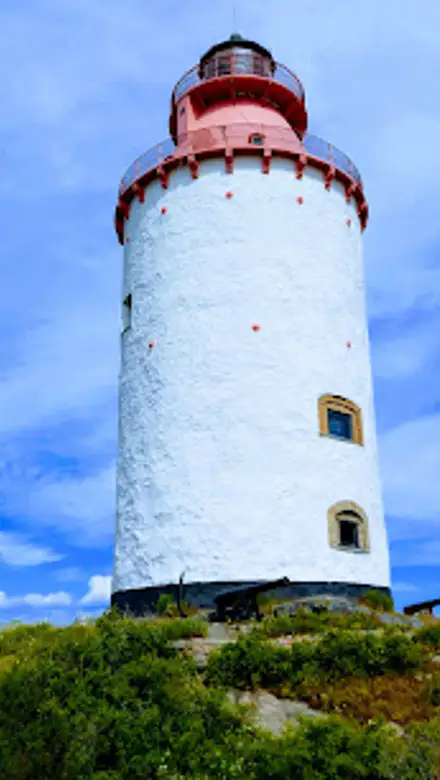
A weathered 17th-century stone lighthouse on Öja’s southern point where maritime history, seabirds and wartime relics meet the Baltic horizon.
Perched on the southern tip of Öja (Landsort) in the Stockholm archipelago, Landsorts fyr is a stone lighthouse with centuries of maritime history, weathered coastal buildings and wartime remnants. The tower, a low-cliff vantage point and adjacent keeper’s buildings sit within a nature-rich headland where seabirds, sea-smoothed rock and the persistent sound of the Baltic define the place.
On-site amenities
 Information boards
 Seating areas
 Sheltered areas
 Trash bins
- Address
- Landsort, 149 95 Nynäshamn
- Website
Getting there
Ferry and local boat
Regional bus then boat
Private boat
Discover more about Landsorts fyr
Origins on a windswept headland
Landsorts fyr occupies a narrow promontory at the southernmost edge of the island of Öja and has guided ships through the Baltic’s tricky channels since the 17th century. The existing stone tower dates back to late 1600s rebuilding efforts that replaced earlier wooden beacons; thick masonry and a squat profile were chosen to resist the winds, salt and the risk of fire that wrecked earlier structures on this exposed isle.
How the site reads as you approach
The approach reveals a compact cluster of maritime architecture: the cylindrical lighthouse, low former keepers’ houses, small outbuildings and traces of 20th-century coastal defence installations. Weathered paint, ironwork and mossed stone create a tactile palette; when wind and wave meet rock you feel the lighthouse’s purpose viscerally—an engineered signal and a built response to a wild sea.
Light, optics and technological layers
Over its life the tower has carried several lighting systems, from open coal baskets to lens optics and modern electric lamps. The current optical apparatus and automation are the outcome of incremental upgrades: each technical layer is legible in the fabric and surrounding displays, demonstrating the slow conversion from manual tending by keepers to the remote, electrified operation of recent decades.
Nature, birds and seasonal moods
The headland is a magnet for seabirds and migratory species; the cliffs and shoals nearby are home to colonies and passage flocks, giving the place a distinctly avian soundtrack in spring and autumn. Low scrub, rocky terraces and tidal mooring pools attract hardy coastal wildflowers and insects; on clear mornings the cold, crystalline light and wide horizon make the site roomy and contemplative.
Wartime traces and local stories
Scattered around the keeper’s compound are remains of coastal defence works dating from the 20th century: bunkers, gun emplacements and concrete platforms that hint at the island’s strategic role. These ruins sit next to the maritime heritage of the lighthouse itself, producing a layered landscape where navigation, national defence and local livelihoods overlap.
Visitor experience and quiet observation
The visit is an exercise in close looking: architectural detail of the stone tower, the patina of metal railings, the smell of seaweed and kerosene-turned-heritage, and long east–west views across the Baltic. Small information panels on site explain technical aspects and local history, while the compact layout invites slow exploration—standing on the cliff edge to watch ships recede, listening for distant fog signals and absorbing the elemental rhythms that made this light essential for centuries.
Evendo Review Centre
 Google
Guest reviews
Best time to go
Quietest: Jan, Feb & Dec · before 3am
Busy times are Evendo estimates for a typical year, to help you plan. Actual crowds vary with events, school holidays and the weather.
Explore Landsorts fyr on the map
A handpicked selection of must-see spots near Landsorts fyr, mapped for you.
Get your free copy of our complete guide to Landsorts fyr, delivered straight to you.
Everything on this page, from opening hours and how to get there to Eve’s tips and the best time to go, in one PDF you can read offline, print or share.
Already have an account? Sign in
Your Landsorts fyr guide is ready.
We'll send it to · Not you? Sign out

Getting your guide ready…
We are putting together a fresh copy of the Landsorts fyr guide. This can take up to a minute.
This can take a few moments. If your browser asks, choose Allow so the download can start. You'll find the guide in your Downloads folder.
Nothing happened? Download it again
Sorry, the guide is taking longer than usual. Please try again in a minute, or get it by email instead.
Other nearby places you may find interesting
The closest places of the same kind, if this one is not quite what you had in mind.
-
-
-
-
-


Swipe for more places
More to explore near Landsorts fyr

 Best experiences near Landsorts fyr
 Best hotels near Landsorts fyr
 Best landmarks near Landsorts fyr
 Best attractions near Landsorts fyr
 Best shops near Landsorts fyr
 Best restaurants near Landsorts fyr
 Best bars near Landsorts fyr
Do you manage this location?
Take control to get all the benefits, like improved information, better appearance, and stronger visibility across AI-powered discovery.
Explore more
Explore more of Bohuslän
Explore Bohuslän, Sweden's stunning coastal region known for its picturesque islands, rich history, and delectable seafood. A paradise for nature lovers and history enthusiasts.
Explore Bohuslän
Explore more of Sweden
Discover Sweden's breathtaking landscapes, vibrant cities, and rich cultural heritage. From the Northern Lights to historic castles, experience the essence of Scandinavia.
Explore Sweden