

Dalhalla Travel Guide
Free Guide: An ancient limestone pit turned world‑class open‑air theatre where towering cliffs and natural acoustics make every concert monumental.


A brief summary of Dalhalla
An ancient limestone pit turned world‑class open‑air theatre where towering cliffs and natural acoustics make every concert monumental.
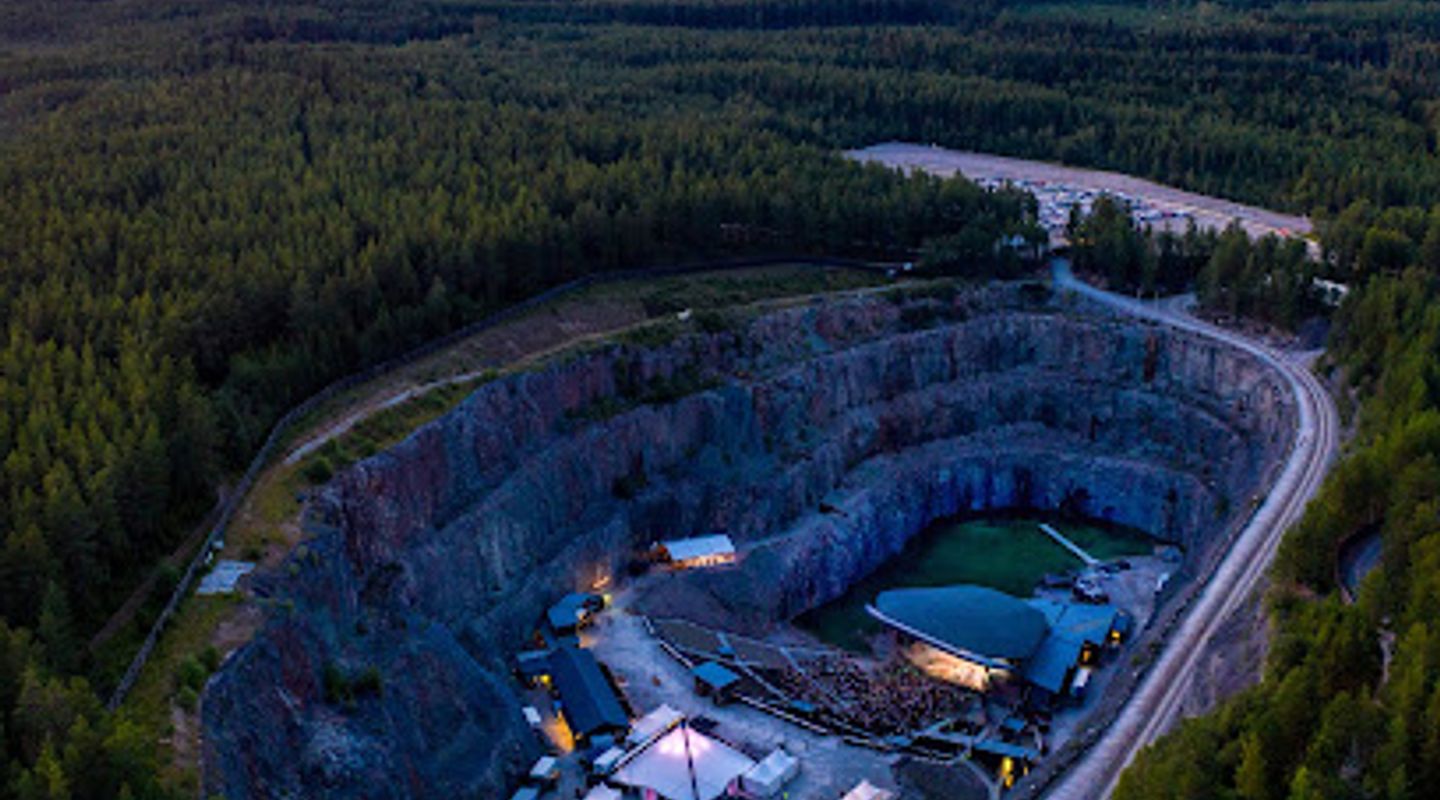
A dramatic open‑air theatre carved from a former limestone quarry near Rättvik, Dalhalla pairs towering rock walls and exceptional natural acoustics with a summer season of opera, choral works, jazz and contemporary concerts. The bowl‑shaped arena, set within the Siljan landscape, offers a sensory experience of stone, sky and sound that is as much geological spectacle as performance venue.
On-site amenities
 Food options
 Drink options
 Seating areas
 Sheltered areas
 Restrooms
 Information boards
- Address
- Dalhallavägen 201, 795 91 Rättvik
- Website
Getting there
By regional bus
By car
By regional train plus shuttle
Discover more about Dalhalla
How the quarry became a stage
Dalhalla occupies a drained limestone quarry once known as Draggängarna; over decades of mining the pit developed steep, colorful rock faces and a deep bowl that proved ideal for sound. In the early 1990s the site was reconceived as an arena: the raw geometry of the walls, their textured surfaces and the proportions of the pit combine to damp sharp reflections and produce a long, warm reverberation that allows acoustic music to carry without heavy amplification. The result is an outdoor space where voices and instruments are framed by vertical cliffs and an open northern sky.
What you’ll see and hear inside the bowl
From the stage area look up to sheer cliff faces—strata of pale limestone and weathered patches that catch evening light—while the audience terraces rise in a broad semicircle. Sightlines are intimate despite the large capacity, and the sound character changes subtly with position: lower rows feel the directness of the stage, higher seats hear a fuller, blended resonance. When an orchestra tunes the first notes take on a clarity and bloom that is both tactile and cinematic; at night stage lights wash the rock with color, turning geological layers into a dramatic backdrop.
A seasonal cultural programme shaped by place
Dalhalla’s event calendar concentrates in summer months, offering a mix of large concerts, opera and choral programmes, jazz nights and crossover acts. The schedule reflects the arena’s dual identity as a site for high‑art presentations and popular music: opera and large ensembles exploit the exceptional acoustics, while contemporary artists use the theatrical setting and scale for visually striking performances. Between events the space reads as a monumental, quiet hollow—an engineered ruin reclaimed by nature and culture.
Character and atmosphere on an event evening
Arrive as light softens and you’ll notice how wind and weather subtly alter the mood: calm evenings accentuate acoustic bloom, while a cool breeze can sharpen timbre and bring a chill that invites layered clothing. Smells are of warm stone, cut grass and, on busy nights, food stalls and coffee. The human hum of an expectant crowd contrasts with the ancient, still quality of the quarry walls; when the music begins that contrast becomes part of the thrill—the modern audience framed against deep geological time.
Notable physical features and capacity
The quarry measures hundreds of metres across with walls tens of metres high; the arena can host several thousand spectators depending on seating configuration and standing areas. The stage sits at the bottom of the pit with audience terraces arranged in an arc that preserves sightlines and acoustic balance. Lighting rigs and temporary staging are integrated each season with care to respect the quarry’s lines, so the built elements feel subordinate to the raw rock architecture.
Why the place matters beyond performances
Dalhalla is as much a geological exhibit as a music venue: its cliffs are visible records of ancient processes tied to the larger Siljan region. The transformation from industrial extraction site to cultural landmark highlights adaptive reuse of a dramatic landscape feature. Even on non‑performance days the quarry’s scale and textures reward quiet inspection; the site invites reflection on sound, space and the way human activity can reframe a place’s purpose.
Evendo Review Centre
 Google
Guest reviews
Best time to go
Quietest: Jan, Feb & Dec · before 9am
Busy times are Evendo estimates for a typical year, to help you plan. Actual crowds vary with events, school holidays and the weather.
Explore Dalhalla on the map
A handpicked selection of must-see spots near Dalhalla, mapped for you.
Get your free copy of our complete guide to Dalhalla, delivered straight to you.
Everything on this page, from opening hours and how to get there to Eve’s tips and the best time to go, in one PDF you can read offline, print or share.
Already have an account? Sign in
Your Dalhalla guide is ready.
We'll send it to · Not you? Sign out

Getting your guide ready…
We are putting together a fresh copy of the Dalhalla guide. This can take up to a minute.
This can take a few moments. If your browser asks, choose Allow so the download can start. You'll find the guide in your Downloads folder.
Nothing happened? Download it again
Sorry, the guide is taking longer than usual. Please try again in a minute, or get it by email instead.
Other nearby places you may find interesting
The closest places of the same kind, if this one is not quite what you had in mind.
-
-
-
-

-


Swipe for more places
More to explore near Dalhalla

 Best experiences near Dalhalla
 Best hotels near Dalhalla
 Best landmarks near Dalhalla
 Best attractions near Dalhalla
 Best shops near Dalhalla
 Best restaurants near Dalhalla
 Best bars near Dalhalla
Do you manage this location?
Take control to get all the benefits, like improved information, better appearance, and stronger visibility across AI-powered discovery.
Explore more
Explore more of Dalarna
Discover Dalarna: Sweden's enchanting region of lakes, forests, and rich cultural heritage, perfect for nature lovers and cultural enthusiasts alike.
Explore Dalarna
Explore more of Sweden
Discover Sweden's breathtaking landscapes, vibrant cities, and rich cultural heritage. From the Northern Lights to historic castles, experience the essence of Scandinavia.
Explore Sweden
