

Falu Mine Travel Guide
Free Guide: A UNESCO World Heritage copper landscape — descend into centuries of mining, stand at the scar of the Great Pit and trace Sweden’s industrial rise.


A brief summary of Falu Mine
A UNESCO World Heritage copper landscape — descend into centuries of mining, stand at the scar of the Great Pit and trace Sweden’s industrial rise.
Falu Gruva is the vast, centuries-old copper mine that shaped Sweden’s economy and landscape; today the Great Pit, preserved industrial buildings and underground galleries form a UNESCO World Heritage ensemble offering museum exhibitions, guided descents and sweeping viewpoints revealing a millennium of mining technology and local life.
On-site amenities
 Restrooms
 Drink options
 Food options
 Seating areas
 Information boards
 Visitor centre
Opening hours
- Every day9:30 am–5:30 pm
Opening hours as listed on the venue’s Google Business Profile. Hours can change for services and special events, so check with the venue before you go.
- Address
- Gruvgatan 1, 791 61 Falun
- Phone
- Website
Getting there
Regional bus or coach
Local taxi or rideshare
Regional train plus short bus
Discover more about Falu Mine
A landscape carved by copper
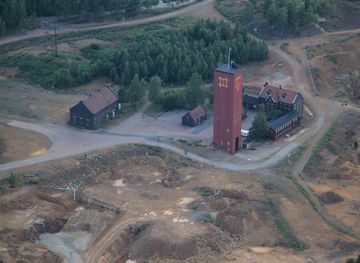
The centrepiece here is the enormous open excavation known as the Great Pit, a dramatic red gorge created and deepened over centuries of extraction and a dramatic collapse in 1687. Around the pit lie chimneyed workshops, wheelhouses, headframes and hoisting houses: a compact industrial ensemble that records the evolution of mining technology from pre‑industrial handwork to steam and later mechanisation.
How the site shaped a nation
Copper from Falun financed large parts of Swedish state power in the 17th century and supplied roofs, coins and raw materials across Europe. The mine’s long history—archaeological evidence places activity here from the first millennium—left a layered cultural landscape: miners’ cottages, manor houses, smelting remains and transport works cluster across the slopes and lowlands, testifying to the social and economic systems that grew up around extraction.
Underground spaces and surviving machines
Beneath the surface are galleries, shafts and chambers cut into the rock where generations of miners worked, lit fires for rock‑breaking and built drainage and hoisting systems. Many of the mid‑19th‑century structures used for raising ore and powering pumps survive, offering a rare, tangible sequence of the equipment and architecture that kept deep mining viable for centuries.
Stories, rituals and surprising relics
The site preserves human stories that range from everyday labour to legends: ritual practices, miners’ wages paid in copper, and the oddities of mining life. One well‑known local tale concerns a miner whose body was recovered many years after a collapse and preserved by the mine’s microclimate—an evocative reminder of the hazards below and the long memory of the place.
Surface routes, viewpoints and town connections
The Great Pit is framed by signposted walks and vantage points that let you read the landscape: slag heaps, smelting sites and the planned 17th‑century town of Falun lie within the same World Heritage area. From nearby hills you get panoramas that juxtapose woodland and lakes with the stark, red cut of the mine, making the industrial traces visible across a wide area.
Museum displays and tactile learning
Complementing the outdoor ensemble are museum galleries that present ore, tools and interpretation of mining processes, together with interactive exhibits that explain metallurgy, social conditions and the long technological arc from fire‑setting to mechanised pumping. The combined experience—surface archaeology, interiors and the underground visitor mine—gives a comprehensive view of how resource extraction reshaped both a locality and a nation.
Evendo Review Centre
 Google
Guest reviews
Best time to go
Quietest: Jan, Feb & Dec · before 7am or from 9pm
Busy times are Evendo estimates for a typical year, to help you plan. Actual crowds vary with events, school holidays and the weather.
Explore Falu Mine on the map
A handpicked selection of must-see spots near Falu Mine, mapped for you.
Get your free copy of our complete guide to Falu Mine, delivered straight to you.
Everything on this page, from opening hours and how to get there to Eve’s tips and the best time to go, in one PDF you can read offline, print or share.
Already have an account? Sign in
Your Falu Mine guide is ready.
We'll send it to · Not you? Sign out

Getting your guide ready…
We are putting together a fresh copy of the Falu Mine guide. This can take up to a minute.
This can take a few moments. If your browser asks, choose Allow so the download can start. You'll find the guide in your Downloads folder.
Nothing happened? Download it again
Sorry, the guide is taking longer than usual. Please try again in a minute, or get it by email instead.
Other nearby places you may find interesting
The closest places of the same kind, if this one is not quite what you had in mind.
-
-
-
-

-


Swipe for more places
More to explore near Falu Mine

 Best experiences near Falu Mine
 Best hotels near Falu Mine
 Best landmarks near Falu Mine
 Best attractions near Falu Mine
 Best shops near Falu Mine
 Best restaurants near Falu Mine
 Best bars near Falu Mine
Do you manage this location?
Take control to get all the benefits, like improved information, better appearance, and stronger visibility across AI-powered discovery.
Explore more
Explore more of Dalarna
Discover Dalarna: Sweden's enchanting region of lakes, forests, and rich cultural heritage, perfect for nature lovers and cultural enthusiasts alike.
Explore Dalarna
Explore more of Sweden
Discover Sweden's breathtaking landscapes, vibrant cities, and rich cultural heritage. From the Northern Lights to historic castles, experience the essence of Scandinavia.
Explore Sweden
