Linnaeus' Hammarby Travel Guide
Free Guide: Carl Linnaeus’s well‑preserved 18th‑century country estate: a living laboratory of gardens, farm buildings and cultural landscapes outside Uppsala.


A brief summary of Linnaeus' Hammarby
Carl Linnaeus’s well‑preserved 18th‑century country estate: a living laboratory of gardens, farm buildings and cultural landscapes outside Uppsala.
Linnaeus' Hammarby is the preserved 18th‑century country estate and summer home of Carl Linnaeus, set in a recreated cultural landscape just outside Uppsala. The site combines a timber manor house, original outbuildings and kitchen gardens where Linnaeus cultivated plants for study, plus meadows and trails that illustrate 1700s farming practices. Managed as a museum and cultural reserve, Hammarby offers guided tours, period interiors and a visitor centre with café and shop.
On-site amenities
 Restrooms
 Drink options
 Food options
 Seating areas
 Information boards
 Visitor centre
Opening hours
- MonClosed
- Tue11 am–5 pm
- Wed11 am–5 pm
- Thu11 am–5 pm
- Fri11 am–5 pm
- Sat11 am–5 pm
- Sun11 am–5 pm
Opening hours as listed on the venue’s Google Business Profile. Hours can change for services and special events, so check with the venue before you go.
- Address
- Danmarks-Hammarby, 741 76 Uppsala
- Phone
- Website
Getting there
Regional bus
Car
Bicycle
Discover more about Linnaeus' Hammarby
An intimate scientist’s retreat
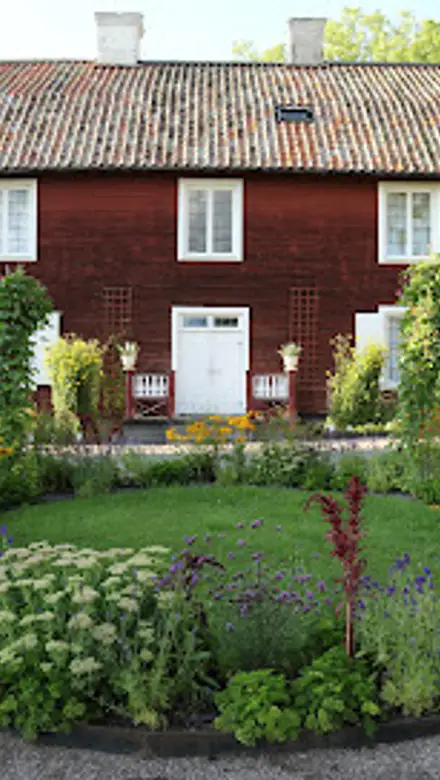
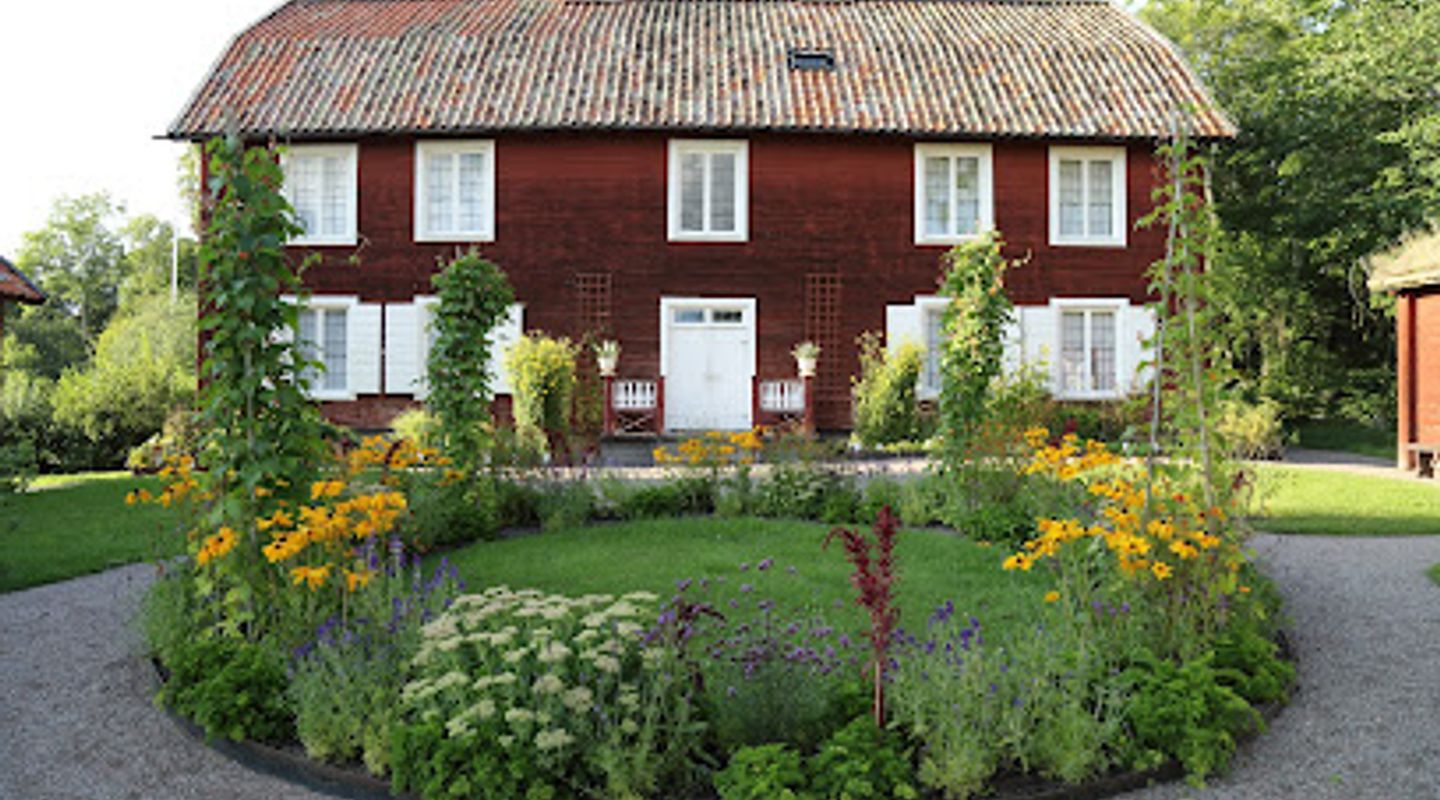
The manor at Hammarby was purchased by Carl Linnaeus in 1758 and became his family’s rural refuge and working laboratory; its compact cluster of timber buildings, walled kitchen garden and surrounding fields were reshaped by Linnaeus to suit both domestic life and botanical study. The main house retains the character of an 18th‑century Swedish country home, with wooden log construction, period interiors and surviving decorative details that offer a direct link to Linnaeus’s daily life and teaching.
Gardens as living collections
Around the house the historic gardens were used by Linnaeus to grow fruit, vegetables and the experimental plants he could not accommodate in the city botanical garden. Beds and borders reflect traditional layouts, and plantings are arranged to illustrate both domestic cultivation—cabbages, root crops and herbs—and species Linnaeus studied and catalogued. Adjacent meadow and outfield habitats show the agricultural practices of the era, including hayfields and demonstration patches of crop rotation.
Buildings and small museums
The estate’s composition includes the east and west wings, formerly home to a bakehouse, brewery and staff accommodation, plus a small fireproof building Linnaeus used to store parts of his collections. Many of the auxiliary structures survive, giving a vivid sense of an operational farm rather than a stand‑alone manor. A compact natural history display in one of the outbuildings explains how Linnaeus combined household economy with scientific collecting.
The cultural reserve and landscape memory
The land around Hammarby is managed as a cultural reserve that reconstructs the late‑1700s agricultural landscape. Paths lead across meadows and pastures where traditional grazing and two‑field systems are interpreted; the reserve conserves hedgerows, historic field patterns and small villages connected to the manor’s operations. The site’s aim is to preserve both the tangible buildings and the working countryside that shaped Linnaeus’s methods.
Seasonal rhythms and visitor experience
Hammarby’s character shifts with the seasons: spring brings fresh growth in the kitchen garden and songbirds in the hedgerows, summer fills borders with blooms and draws light across the farmhouse interiors, while autumn highlights harvest textures and winter reduces the estate to its architectural silhouette. Rooms in the manor—study walls illustrated with botanical images and family chambers—feel domestic rather than museum‑white, making guided tours especially effective at conveying the site’s lived atmosphere.
Why the place matters
Beyond its connection to a single famous figure, Hammarby is an intact example of an 18th‑century scientist’s working estate where botanical practice, agricultural management and family life intersected. The combination of preserved architecture, reconstructed cultivation and protected countryside provides a coherent picture of how natural history was practised outside the university lecture hall and why land management mattered to scientific inquiry in Linnaeus’s time.
Evendo Review Centre
 Google
Guest reviews
Best time to go
Quietest: Jan, Feb & Dec · before 8am or from 7pm
Busy times are Evendo estimates for a typical year, to help you plan. Actual crowds vary with events, school holidays and the weather.
Explore Linnaeus' Hammarby on the map
A handpicked selection of must-see spots near Linnaeus' Hammarby, mapped for you.
Get your free copy of our complete guide to Linnaeus' Hammarby, delivered straight to you.
Everything on this page, from opening hours and how to get there to Eve’s tips and the best time to go, in one PDF you can read offline, print or share.
Already have an account? Sign in
Your Linnaeus' Hammarby guide is ready.
We'll send it to · Not you? Sign out

Getting your guide ready…
We are putting together a fresh copy of the Linnaeus' Hammarby guide. This can take up to a minute.
This can take a few moments. If your browser asks, choose Allow so the download can start. You'll find the guide in your Downloads folder.
Nothing happened? Download it again
Sorry, the guide is taking longer than usual. Please try again in a minute, or get it by email instead.
Other nearby places you may find interesting
The closest places of the same kind, if this one is not quite what you had in mind.
-
-
-
-

-


Swipe for more places
More to explore near Linnaeus' Hammarby

 Best experiences near Linnaeus' Hammarby
 Best hotels near Linnaeus' Hammarby
 Best landmarks near Linnaeus' Hammarby
 Best attractions near Linnaeus' Hammarby
 Best shops near Linnaeus' Hammarby
 Best restaurants near Linnaeus' Hammarby
 Best bars near Linnaeus' Hammarby
Do you manage this location?
Take control to get all the benefits, like improved information, better appearance, and stronger visibility across AI-powered discovery.
Explore more
Explore more of Dalarna
Discover Dalarna: Sweden's enchanting region of lakes, forests, and rich cultural heritage, perfect for nature lovers and cultural enthusiasts alike.
Explore Dalarna
Explore more of Sweden
Discover Sweden's breathtaking landscapes, vibrant cities, and rich cultural heritage. From the Northern Lights to historic castles, experience the essence of Scandinavia.
Explore Sweden