Skräddar-Djurberga, Dalarna Travel Guide
A compact, well‑preserved 17th‑century fäbod cluster in Orsa with carved doors, timber craft and a strong sense of seasonal pastoral life.
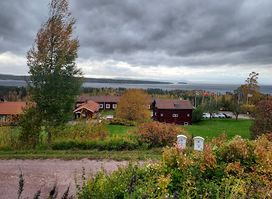
Skräddar‑Djurberga is a well‑preserved traditional fäbod (summer mountain dairy farm) north of Orsa in Dalarna, Sweden, featuring about twenty timber buildings with roots in the 17th century. Set in a gently rolling woodland clearing, the cluster of cottages, milk houses and storehouses preserves painted doors, carved details and pastoral layouts that reflect centuries of Swedish upland dairy practice and seasonal life.
A brief summary to Skräddar-Djurberga
- Unnamed Road, Orsa, 794 91, SE
- Click to display
- Duration: 0.5 to 2 hours
- Free
-
 Outdoor
- Mobile reception: 3 out of 5

Know before you go
Hi, I'm Eve. Here are a few practical things to know before exploring Skräddar-Djurberga.
- Respect the historic buildings: they are fragile timber structures—observe from paths and avoid climbing on roofs or doorframes.
- Bring insect repellent in summer and sturdy footwear for uneven grass and dirt paths around the yards.
- Photography is rewarding—focus on carved doors, joinery details and the contrast between sunlit yards and shaded forest edges.
Do you manage this location?
Take control to get all the benefits, like improved information, better appearance, and stronger visibility across AI-powered discovery. Learn more about listing your business on Evendo
Activate your presenceOther nearby places you may find interesting
The closest places of the same kind, if this one is not quite what you had in mind.

Explore Skräddar-Djurberga on the Map
A handpicked selection of must-see spots near Skräddar-Djurberga, mapped for you.
Getting There
-
By car
Drive from Orsa or nearby towns by regional roads; typical travel time from Orsa town centre is about 25–40 minutes depending on road conditions and season; parking is informal at a small lot near the fäbod—spaces limited and snow can restrict access in winter; no paid parking fees.
-
Local bus + walk
Use regional bus services that call at nearby stops in summer season; combined bus journey from Orsa is typically 35–60 minutes including transfer waits, followed by a walk of approximately 200–400 metres over uneven forest path; bus service frequency is limited and seasonal, fare usually charged by regional transit zone (expect a single adult ticket in the local currency).
-
Hike from nearby trailheads
Follow marked forest or farm trails from local trailheads for a walk of 30–90 minutes depending on start point; terrain is unpaved with roots and gentle slopes—suitable for hikers and families used to countryside walking but not for wheelchairs; bring weather‑proof footwear and plan for changing conditions.
For the on-the-go comforts that matter to you
-
 Information Boards
-
 Seating Areas
-
 Trash Bins
Discover more about Skräddar-Djurberga
A surviving fäbod landscape
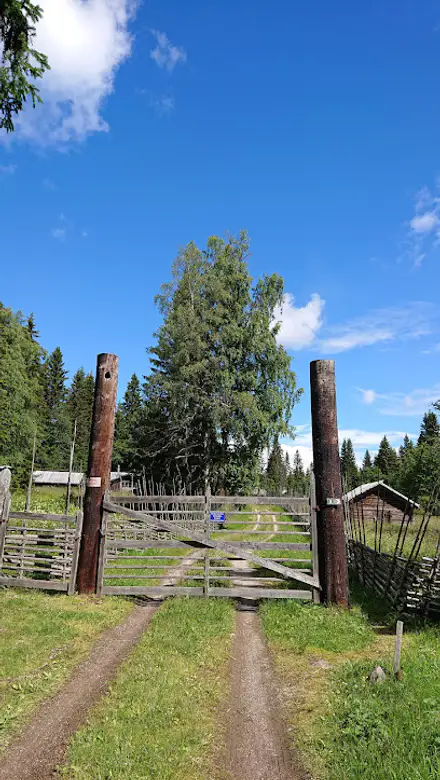
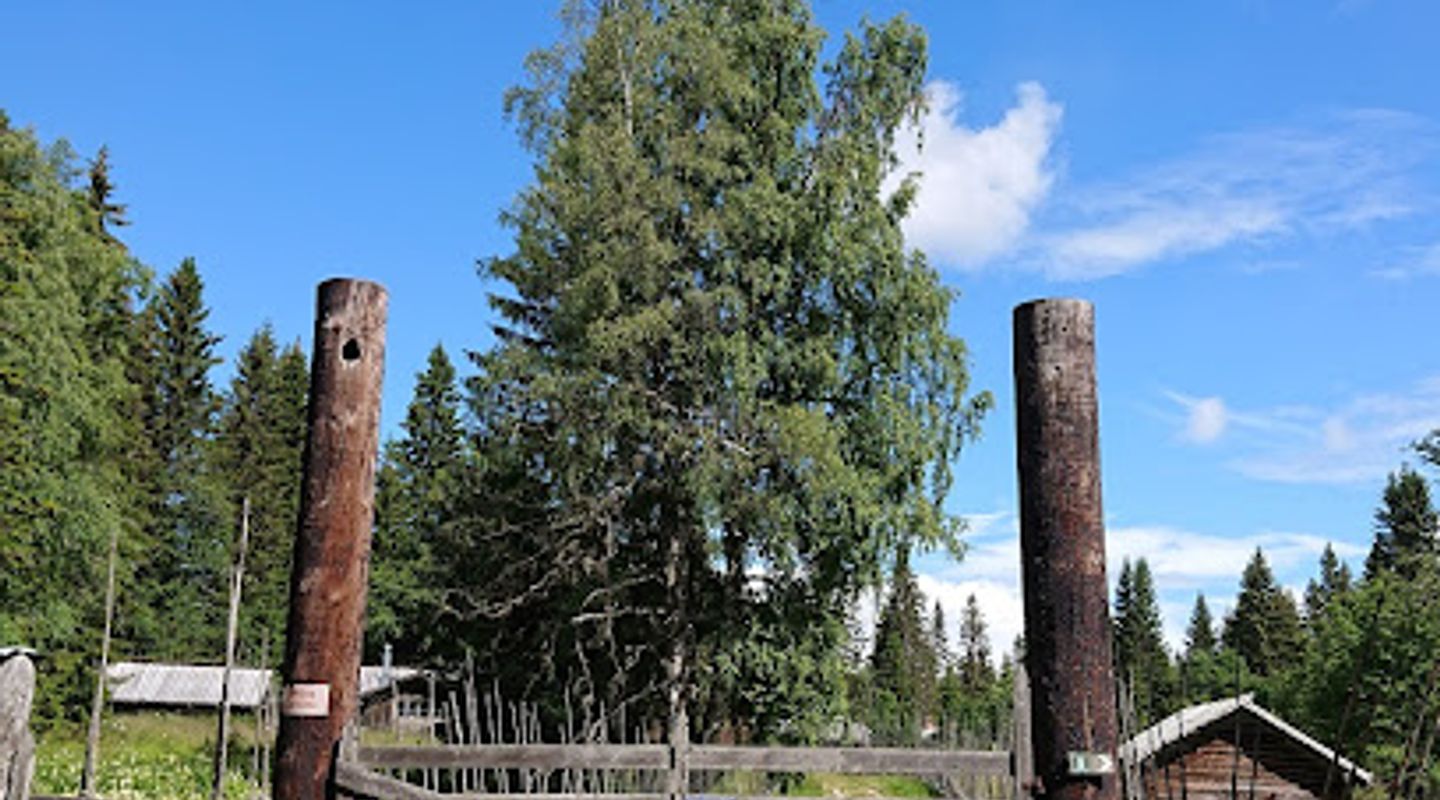
Skräddar‑Djurberga is a compact ensemble of roughly twenty timber structures gathered in a small clearing set within the forests of Orsa municipality. The farm group retains building types typical for fäbodbruk — cottages, a milking house, storehouses and simple service buildings — arranged around grassy yards and old paths. Many of the wooden façades, doors and joinery show patina and craft details that speak to long‑running use and repair, giving the place a lived‑in, layered appearance.Historic layers and craft traces
Documentary and field evidence link Skräddar‑Djurberga to at least the 1600s, and the site preserves carved and painted motifs on doors and boards that date to the 17th and 18th centuries. Among the most striking features are ornamental door carvings and name initials, and a relocated milking booth with unusual figurative carvings. These marks are both personal and communal records — ownership initials, dates and iconography that chart generations of seasonal life at the fäbod.Daily life and seasonal rhythms
A fäbod like Skräddar‑Djurberga is rooted in seasonal pastoral practice: animals were moved out from winter farms to summer pastures where women and children, together with hired girls or relatives, managed milking, butter and cheese production, and the small domestic economies of the site. The arrangement of buildings — a milking room close to grazing edge, drying racks, haystacks and compact dwellings — reflects tasks organised for efficiency and mutual surveillance across summer months when the place was in active use.Sensory character of the place
The site reads as a quiet, rural pocket. Expect the smell of sun‑warmed timber and dried hay in summer; the sound of wind through pine and the distant call of woodland birds; and the tactile variety of rough saw marks, hand‑hewn beams and weathered boards. In low light the carved door motifs appear particularly intimate; in high summer the yards open as bright, grassy rooms dotted with wildflowers and insects.Pastoral archaeology and cultural connections
Skräddar‑Djurberga sits within a wider cultural landscape of Orsa Finnmark and the inland fäbod tradition of Dalarna. Traces at the site — relocated buildings, carved motifs and unusual pictorial door panels — connect local practice to broader patterns of upland grazing, household economy and occasional contact with Sámi motifs recorded on movable timber. These connections make the site interesting for anyone curious about vernacular building, rural lifeways and the movement of cultural motifs across northern Sweden.What to look for on arrival
Wander the small lanes and yards to observe building types and carved surfaces up close: milking booths, small storage houses on staddle supports, and cottages with worked thresholds and initials. Note the arrangement of roofs and eaves that channel rain and snow away from yards, the survival of older joinery, and relocated elements such as the milking house brought here in the 20th century. The ensemble is compact, offering a concentrated sense of fäbod organization rather than a dispersed pastoral landscape.












Your all‑in‑one travel companion app
Explore expert travel guides, compare and book tours, experiences, hotels, and more—all from the palm of your hand. Download now for seamless trip planning wherever your wanderlust takes you.


Explore More of Dalarna
Looking beyond Skräddar-Djurberga? Discover Dalarna for broader travel guides, local hot-spots, and regional highlights.
Explore Dalarna