

Dalahästen Travel Guide
Free Guide: A towering, vividly painted 13 m Dala horse — a monumental take on the beloved Dalarna folk symbol, restored and maintained as Avesta’s roadside emblem.


A brief summary of Dalahästen
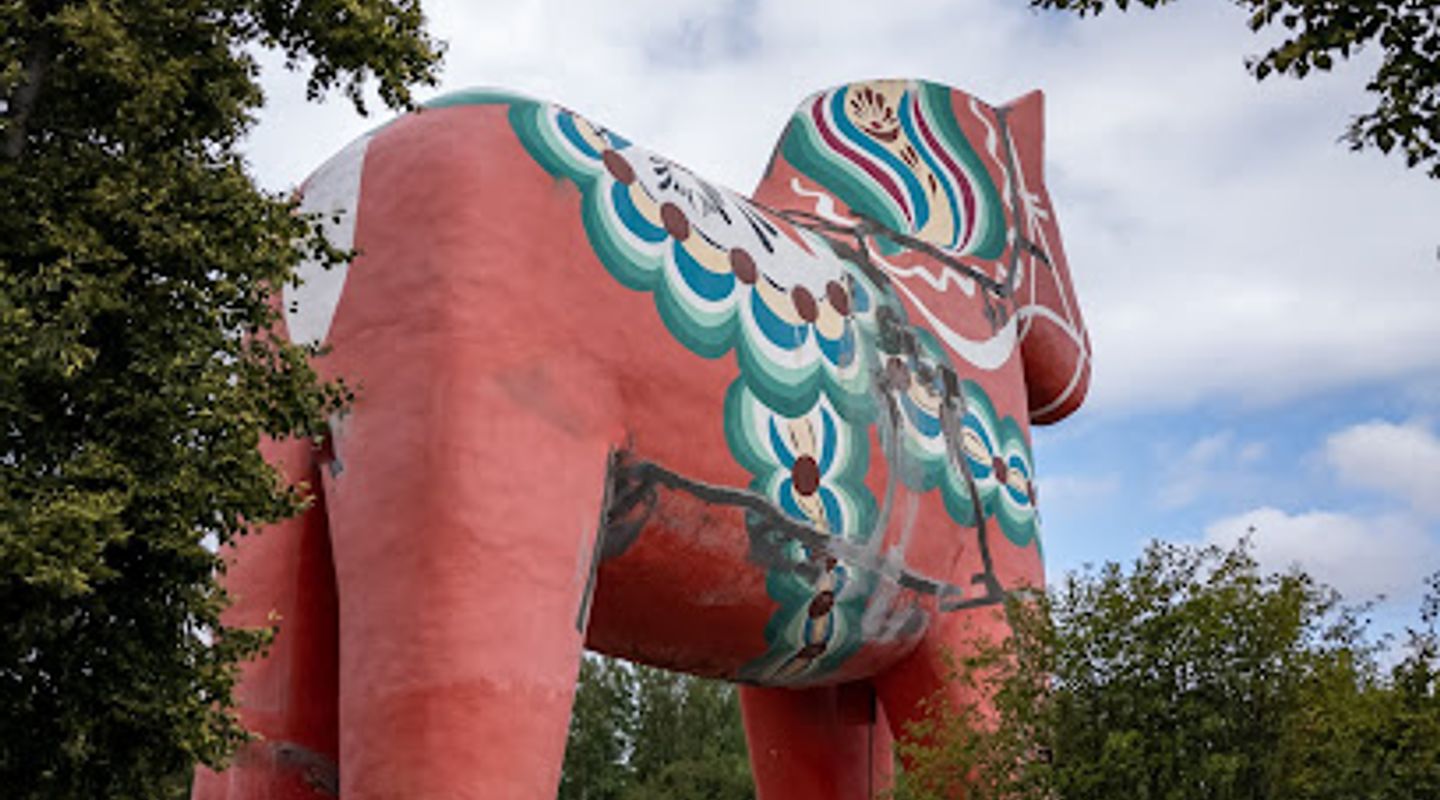
A towering, vividly painted 13 m Dala horse — a monumental take on the beloved Dalarna folk symbol, restored and maintained as Avesta’s roadside emblem.
A 13-metre-tall, vividly painted giant Dala horse that has stood near the crossroads outside Avesta since 1989; built in steel and sprayed concrete as a roadside landmark, it celebrates the Dalarna carving tradition on an epic scale and was restored and repainted after municipal takeover in 2019.
On-site amenities
 Seating areas
 Trash bins
 Information boards
Opening hours
- Every dayOpen 24 hours
Opening hours as listed on the venue’s Google Business Profile. Hours can change for services and special events, so check with the venue before you go.
- Address
- 774 63 Avesta
- Website
Getting there
By car
Regional bus
Taxi or rideshare
Discover more about Dalahästen
Origins and civic intent
The oversized Dala horse beside Avesta was erected as a bold roadside landmark in 1989 with the explicit aim of drawing attention and passing trade to the adjacent commercial area. Constructed with a steel frame and a sprayed concrete shell, it reproduces in monumental form the familiar red, white and blue painted kurbits motif of the traditional wooden Dala horse made in Dalarna.
Construction, scale and materials
Standing roughly 13 metres tall and weighing in the tens of tonnes, the statue was engineered rather than carved; its internal skeleton supports heavy concrete layers that form the smooth, rounded silhouette visitors recognise from smaller folk-art examples. The painted surface is crafted to mimic the hand-brushed decoration of folk artisans, but the scale and material — steel and sprayed concrete rather than carved pine — make its conservation needs more like those of an outdoor sculpture than a wooden toy.
A history of wear and repair
The location’s exposed position made the concrete shell vulnerable to freeze–thaw cycles and ultraviolet fading, so over the decades the paint dulled and cracking developed in the concrete. After expert inspection raised concerns about structural fatigue, responsibility for the monument changed hands and a programme of restoration and repainting was completed; the municipality formally reclaimed stewardship to secure ongoing maintenance and preserve the figure as a local emblem.
The Dala horse as cultural shorthand
Although the original, small Dala horses come from Nusnäs and the Mora area, this gigantic interpretation plays on the widespread symbolic power of the motif. It functions as a piece of civic branding — an instantly recognisable image that ties the town to the wider cultural identity of Dalarna and Sweden. The painted krus pattern, saddle and bridle details are scaled-up echoes of the brushwork used by folk painters across the region.
Setting and sensory character
Positioned adjacent to major regional roads and a retail precinct, the horse reads at once as a landmark visible from parked cars and as an object encountered close up on foot. Up close you can see the texture of the sprayed concrete, faint hairline repairs along seams and the boldness of the restored red paint. On bright days the coat gleams; in low sun the silhouette cuts a dramatic profile against the sky.
Why it matters locally
Beyond its initial commercial purpose the statue has become a durable piece of local identity and a waypoint for travellers exploring Dalarna. Its existence tells a practical story about how folk symbols are repurposed at large scale to mark place, encourage passing trade and create a recognisable image that visitors remember long after they leave the town.
Evendo Review Centre
 Google
Guest reviews
Best time to go
Quietest: Jan, Feb & Mar · before 7am
Busy times are Evendo estimates for a typical year, to help you plan. Actual crowds vary with events, school holidays and the weather.
Explore Dalahästen on the map
A handpicked selection of must-see spots near Dalahästen, mapped for you.
Get your free copy of our complete guide to Dalahästen, delivered straight to you.
Everything on this page, from opening hours and how to get there to Eve’s tips and the best time to go, in one PDF you can read offline, print or share.
Already have an account? Sign in
Your Dalahästen guide is ready.
We'll send it to · Not you? Sign out

Getting your guide ready…
We are putting together a fresh copy of the Dalahästen guide. This can take up to a minute.
This can take a few moments. If your browser asks, choose Allow so the download can start. You'll find the guide in your Downloads folder.
Nothing happened? Download it again
Sorry, the guide is taking longer than usual. Please try again in a minute, or get it by email instead.
Other nearby places you may find interesting
The closest places of the same kind, if this one is not quite what you had in mind.
-
-
-
-
-


Swipe for more places
More to explore near Dalahästen

 Best experiences near Dalahästen
 Best hotels near Dalahästen
 Best landmarks near Dalahästen
 Best attractions near Dalahästen
 Best shops near Dalahästen
 Best restaurants near Dalahästen
 Best bars near Dalahästen
Do you manage this location?
Take control to get all the benefits, like improved information, better appearance, and stronger visibility across AI-powered discovery.
Explore more
Explore more of Dalarna
Discover Dalarna: Sweden's enchanting region of lakes, forests, and rich cultural heritage, perfect for nature lovers and cultural enthusiasts alike.
Explore Dalarna
Explore more of Sweden
Discover Sweden's breathtaking landscapes, vibrant cities, and rich cultural heritage. From the Northern Lights to historic castles, experience the essence of Scandinavia.
Explore Sweden
