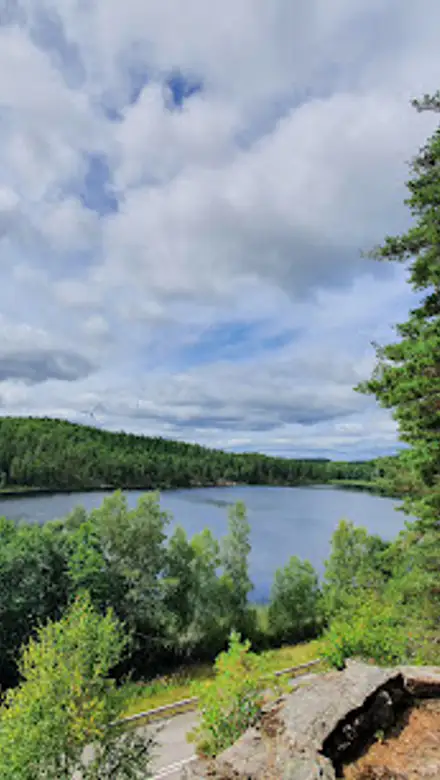
Parsetjärns Skans Travel Guide
Free Guide: A small, atmospheric WWII fortification by a woodland tarn—intimate concrete bunkers, trenches and quiet landscape that tell a local borderland defence story.


A brief summary of Parsetjärns Skans
A small, atmospheric WWII fortification by a woodland tarn—intimate concrete bunkers, trenches and quiet landscape that tell a local borderland defence story.
Parsetjärns Skans is a compact WWII-era fortification near Ed in Dalsland, built 1940–43 as part of Sweden’s defensive line against incursions from Norway. Set by a small tarn and low forested ridges, the site preserves concrete bunkers, trenches and observation posts that evoke wartime vigilance and rural solitude, making it a focused stop for history-minded visitors and quiet outdoor exploration.
On-site amenities
 Seating areas
 Information boards
 Trash bins
Opening hours
- Every dayOpen 24 hours
Opening hours as listed on the venue’s Google Business Profile. Hours can change for services and special events, so check with the venue before you go.
- Address
- 668 93 Ed
- Website
Getting there
By car
Local bus + walk
Cycling
Discover more about Parsetjärns Skans
Origins and wartime purpose
Parsetjärns Skans was constructed during the emergency years of 1940–1943 when Sweden strengthened defenses after neighbouring Norway was invaded; the skans formed part of a layered line intended to block routes inland from Østfold and delay any attempted advance. Its concrete bunkers, firing positions and earthworks were designed for infantry defence and observation rather than large-scale artillery, reflecting the tactical priority of controlling road and forest approaches in this borderland.
Layout and surviving features
The site is a compact complex of reinforced concrete positions, dugouts and connecting trenches set on modest rises around a small tarn. You’ll find plainly engineered pillboxes with narrow embrasures, low-profile observation points and remnants of dug-in shelters; many elements are partially overgrown, which both protects the fabric and softens the military lines into the forested landscape. The scale is intimate—features are close together, readable on foot and suited to a short exploratory walk rather than a long battlefield tour.
Landscape and atmosphere
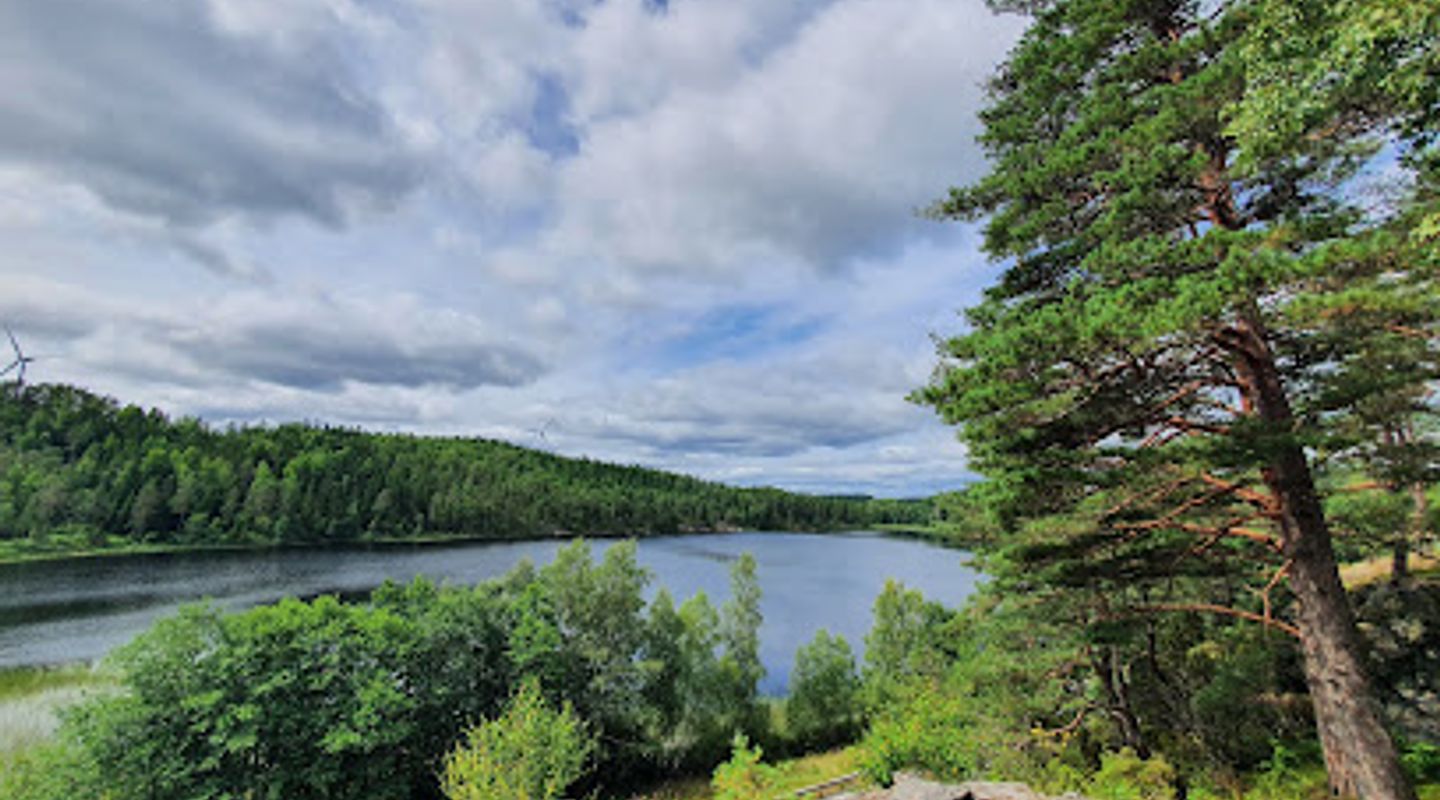
Parsetjärn itself—the small pond near the fortifications—gives the site a still, reflective quality: the water mirrors tree silhouettes, and the quiet is punctuated by birdsong and rustling birch leaves. The surrounding terrain is gently undulating mixed woodland and heath; in summer the undergrowth frames the concrete in green, while in late autumn the bare branches and fog lend a more austere, cinematic mood. The sensory impression is one of restrained solitude rather than drama: the site prompts quiet imagination about the troop sentries and purpose that animated it decades ago.
Historical context and interpretation
Parsetjärns Skans sits within a broader regional network of wartime defences built to protect Swedish border provinces and lines of communication. It illustrates national defence planning that emphasised small, dispersed strongpoints sited to control local approaches through forest and road corridors. The surviving structures are tangible evidence of that strategy and of the rapid mobilisation of labour and material in 1940–43; plaques or local information may be minimal, so the remains themselves are the primary interpretive resource.
Visitor experience and practical character
Visiting Parsetjärns Skans is a compact, contemplative experience: expect a short, on-foot exploration of bunkers and trenches with close-up inspection of weathered concrete, rusted fittings and moss-covered surfaces. The place suits a twenty- to ninety-minute visit depending on how thoroughly you examine each position and linger by the tarn. There are no elaborate facilities on the site itself, and the tone is quiet and reflective rather than curated—this is a place for reading the landscape and imagining its wartime role.
Preservation and significance
As a surviving example of Sweden’s early WWII fortifications, Parsetjärns Skans carries cultural-historical value for the region: it is a modest but intact piece of military heritage that helps explain local responses to a sudden national crisis. Its preservation is largely passive—the forest and time have mellowed the concrete—so visitors should treat the site respectfully, avoid disturbing fragile fabric and regard it as a piece of countryside history embedded in the Dalsland landscape.
Evendo Review Centre
 Google
Guest reviews
Best time to go
Quietest: Jan, Feb & Dec · before 7am or at 8pm
Busy times are Evendo estimates for a typical year, to help you plan. Actual crowds vary with events, school holidays and the weather.
Explore Parsetjärns Skans on the map
A handpicked selection of must-see spots near Parsetjärns Skans, mapped for you.
Get your free copy of our complete guide to Parsetjärns Skans, delivered straight to you.
Everything on this page, from opening hours and how to get there to Eve’s tips and the best time to go, in one PDF you can read offline, print or share.
Already have an account? Sign in
Your Parsetjärns Skans guide is ready.
We'll send it to · Not you? Sign out

Getting your guide ready…
We are putting together a fresh copy of the Parsetjärns Skans guide. This can take up to a minute.
This can take a few moments. If your browser asks, choose Allow so the download can start. You'll find the guide in your Downloads folder.
Nothing happened? Download it again
Sorry, the guide is taking longer than usual. Please try again in a minute, or get it by email instead.
Other nearby places you may find interesting
The closest places of the same kind, if this one is not quite what you had in mind.
-
-


Swipe for more places
More to explore near Parsetjärns Skans

 Best experiences near Parsetjärns Skans
 Best hotels near Parsetjärns Skans
 Best landmarks near Parsetjärns Skans
 Best attractions near Parsetjärns Skans
 Best shops near Parsetjärns Skans
 Best restaurants near Parsetjärns Skans
 Best bars near Parsetjärns Skans
Do you manage this location?
Take control to get all the benefits, like improved information, better appearance, and stronger visibility across AI-powered discovery.
Explore more

Explore more of Dalsland
Discover Dalsland in Sweden: A natural haven with serene lakes, lush forests, and rich cultural heritage, perfect for outdoor adventures and peaceful retreats.
Explore Dalsland
Explore more of Sweden
Discover Sweden's breathtaking landscapes, vibrant cities, and rich cultural heritage. From the Northern Lights to historic castles, experience the essence of Scandinavia.
Explore Sweden