Järntorgsbrunnen, Gotaland Travel Guide
A 1927 granite and bronze fountain at Järntorget that tells Göteborg’s iron‑export story through five allegorical figures and thirty ironworks’ stamps.
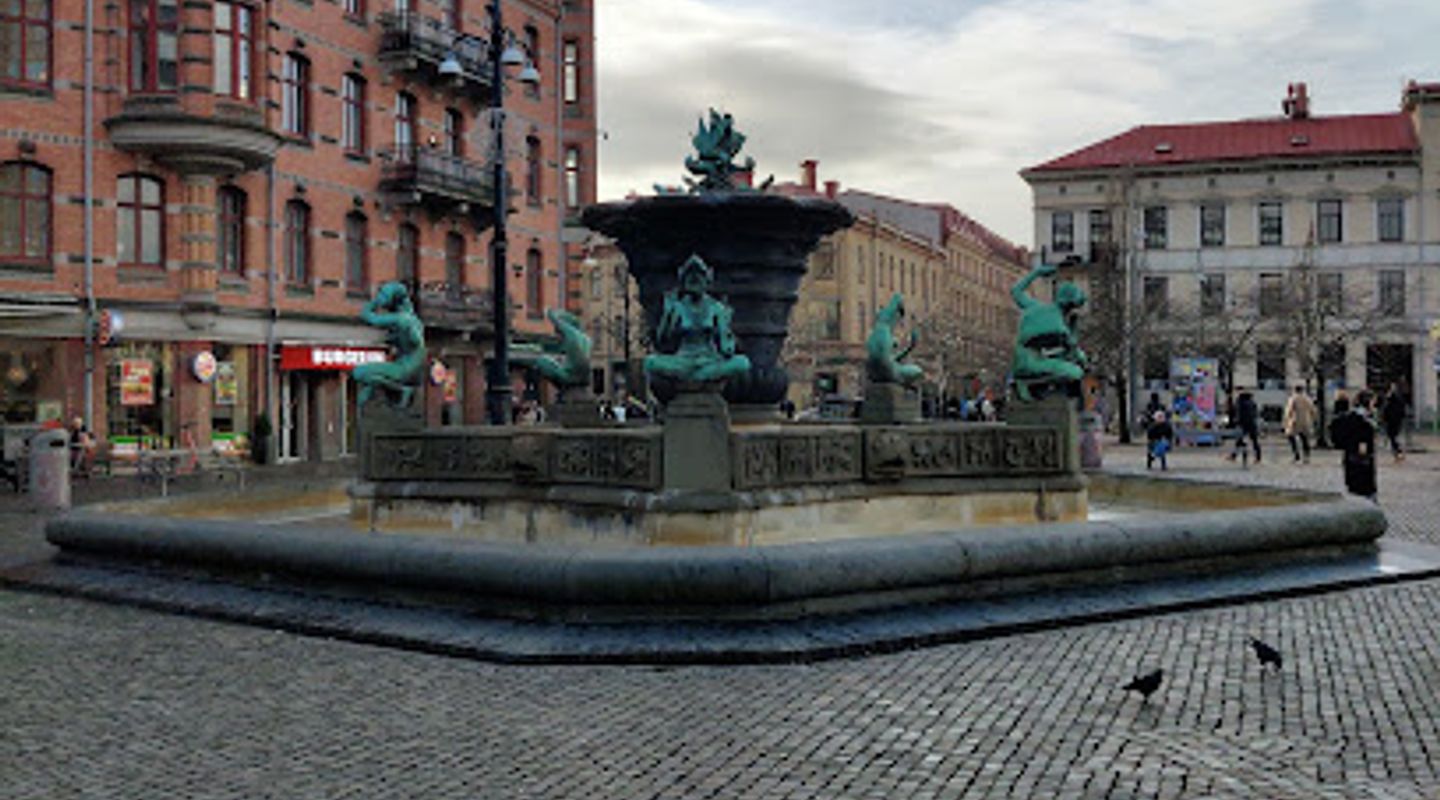
Järntorgsbrunnen, sculpted by Tore Strindberg and unveiled in 1927, is a granite fountain and cast-iron basin at Göteborg’s historic Järntorget that commemorates the city’s past as a major iron-export harbour. Five bronze female figures represent the continents, a ship rides above five waves and thirty ironworks’ stamps ring the basin — a public artwork that blends civic memory, maritime motifs and early 20th-century sculptural detail.
A brief summary to Järntorgsbrunnen
- Järntorget 6, Gothenburg, 413 04, SE
- Click to display
- Click to display
- Duration: 0.25 to 1 hours
- Free
-
 Outdoor
- Mobile reception: 4 out of 5

Know before you go
Hi, I'm Eve. Here are a few practical things to know before exploring Järntorgsbrunnen.
- Visit in daylight to appreciate the sculptural details, hallmarks and different patinas on bronze, iron and granite.
- Listen for city sounds—trams and cafés nearby—and allow time to compare the fountain’s motifs with plaques and signage in the square.
- Bring a camera with a moderate zoom to capture the ship and hallmark details without stepping into planted or restricted areas.
- Remember that the figures reflect early 20th-century iconography; approach them as historical artworks that invite contextual reflection.
Do you manage this location?
Take control to get all the benefits, like improved information, better appearance, and stronger visibility across AI-powered discovery. Learn more about listing your business on Evendo
Activate your presenceOther nearby places you may find interesting
The closest places of the same kind, if this one is not quite what you had in mind.

Explore Järntorgsbrunnen on the Map
A handpicked selection of must-see spots near Järntorgsbrunnen, mapped for you.
Unlock the Best of Järntorgsbrunnen
Buy tickets
-
No tickets available
Book tours with entry
-
No tours available
Book tours without entry

Getting There
-
Tram
Use the city tram network to reach Järntorget: typical tram journeys from central Gothenburg take about 10–20 minutes depending on line and origin; services run frequently (every 6–15 minutes on main lines) but may be reduced late at night or during holidays. A single tram ticket costs in the local fare band and is valid for a set time period; purchase from machines or mobile validators before boarding. Note that stop-to-stop travel times vary with traffic and service patterns.
-
Bus
Several local bus routes serve the Järntorget area; travel times from central districts are commonly 10–25 minutes depending on route and time of day. Buses can be subject to peak‑hour congestion; purchase tickets in advance via the regional ticket app or from ticket machines. Some night services operate at reduced frequency—check schedules if arriving late.
-
Taxi / Rideshare
A taxi from central Gothenburg typically takes 8–20 minutes depending on traffic; fares vary by company and time but expect a city-centre short trip price range in local currency. Taxis drop off close to the square but may be slower during event nights when kerbside access is constrained.
-
Walking
Järntorget is a compact urban square reachable on foot from nearby neighbourhoods in 10–30 minutes depending on starting point; pavements are generally even but some streets nearby have cobbles, and tram tracks cross pedestrian routes—allow for a steady, urban stroll rather than a steep walk.
For the on-the-go comforts that matter to you
-
 Seating Areas
-
 Drink Options
-
 Food Options
-
 Information Boards
-
 Trash Bins
Discover more about Järntorgsbrunnen
Origins and artistic intent
Järntorgsbrunnen — often called De fem världsdelarna — was created by sculptor Tore Strindberg and unveiled in 1927 as a memorial to the old iron-scale and Gothenburg’s role as an iron-export port. The composition combines a granite fountain, a cast-iron basin and bronze figures; the basin was produced with input from architect Carl Bergsten and cast at a Swedish foundry. The overall programme is civic and commemorative: the fountain references the commerce, shipbuilding and international trade that shaped the neighbourhood from the 17th century into the industrial age.Symbolism carved in bronze and iron
Five nude female figures encircle the basin as allegorical personifications of the continents — Europe, Asia, Africa, America and Australia — each rendered with attributes that were intended as identifying signs when the work was made. Above them a ship motif sails over five undulating waves, a compact sculptural shorthand for the sea routes that carried Swedish iron to markets worldwide. Around the rim of the basin are thirty hallmarks: the stamps of the ironworks whose products were weighed and shipped from Göteborg, a literal listing of industrial provenance built into the piece’s surface.Design, materials and interventions
The fountain pairs hand-worked stone with cast metal: the solid granite contrasts with the darker, worked surfaces of the iron basin while the bronze figures weather to a green-brown patina. Over the decades the fountain has experienced small interventions — it was moved from its exact original spot when traffic patterns changed, then returned closer to its initial position as the square was pedestrianised. Conservation work has included replacements of stolen or damaged elements, handled by craftspeople who used historic photographs and traditional casting techniques to restore missing details.Context within Järntorget and the neighbourhood
Järntorget sits at the intersection of the lively Långgatorna district and older urban layers of Göteborg; the fountain acts as a focal point amid theatres, bars and cafés. Its subject matter anchors the square to the city’s mercantile past: the iron scale once stood here and the square’s name literally references that function. The surrounding streets carry a mix of late 19th- and early 20th-century architecture, giving the fountain a grounded setting where everyday life and heritage meet.Interpretation and changing perspectives
While the fountain’s allegories and maritime iconography recall trade and industry, modern readings note the work’s colonial-era references and stereotyped portrayals of non-European continents. That tension — between commemoration of local economic history and critique of historic worldviews — is part of the fountain’s continuing relevance as an object that prompts reflection on how public art encodes past values.Material traces to observe on a close look
Up close the foundry marks, tool traces and the polished edges of the granite are visible; the bronze figures show subtle modelling of hair, drapery and gesture, while the cast-iron basin bears the hallmarks of the ironworks with crisp impressed stamps. Weathering and patina create a layered surface texture that records the fountain’s exposure to sea air, winter salts and decades of urban life, turning it into a tactile ledger of place and time.












Your all‑in‑one travel companion app
Explore expert travel guides, compare and book tours, experiences, hotels, and more—all from the palm of your hand. Download now for seamless trip planning wherever your wanderlust takes you.


Explore More of Gotaland
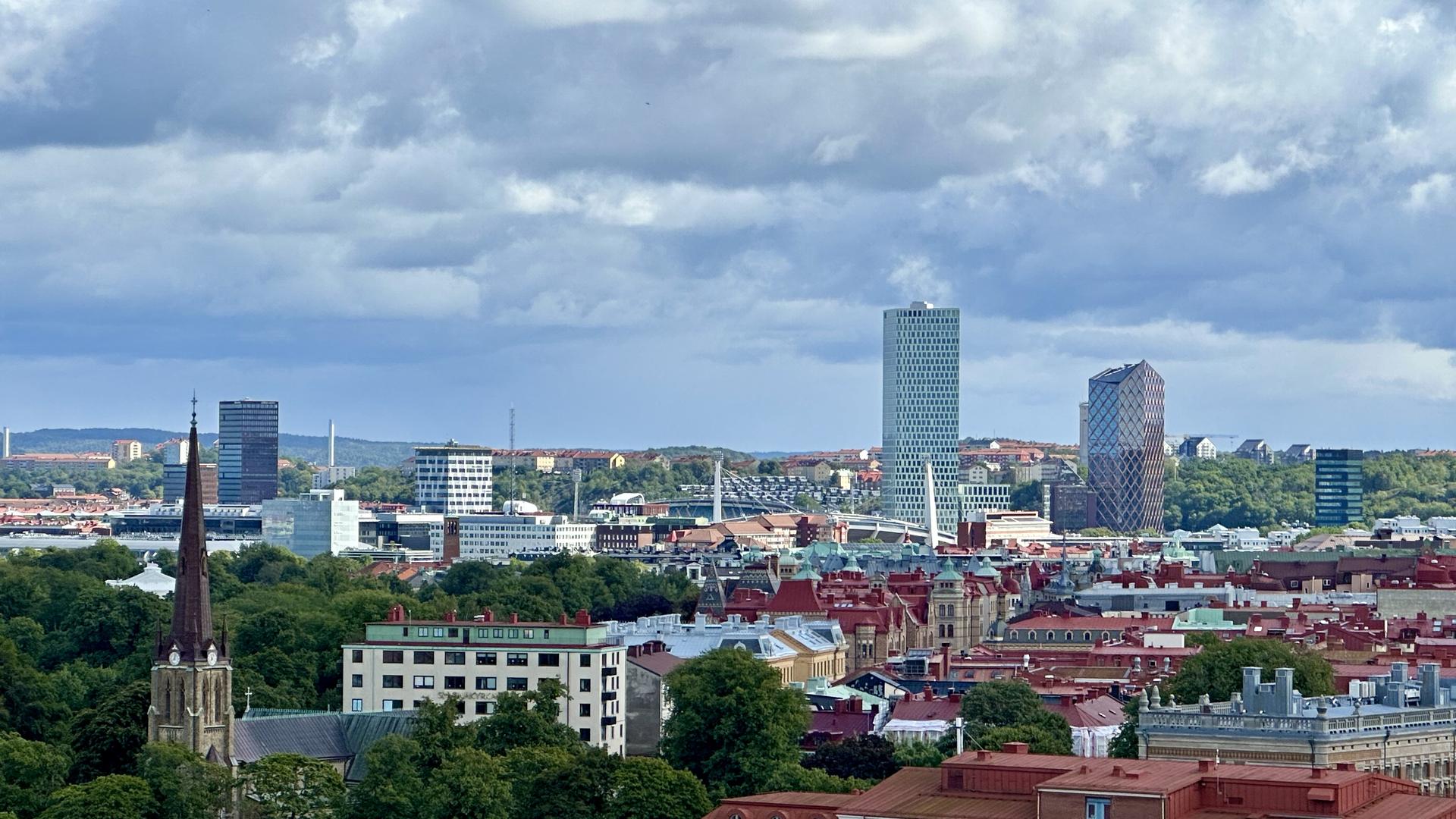
Looking beyond Järntorgsbrunnen? Discover Gotaland for broader travel guides, local hot-spots, and regional highlights.
Explore Gotaland