Folhammar Raukområde Travel Guide
Free Guide: An unbroken ribbon of sculpted limestone rauks on Gotland’s eastern shore — raw geology, sea-swept skies and intimate coastal life.


A brief summary of Folhammar Raukområde
An unbroken ribbon of sculpted limestone rauks on Gotland’s eastern shore — raw geology, sea-swept skies and intimate coastal life.
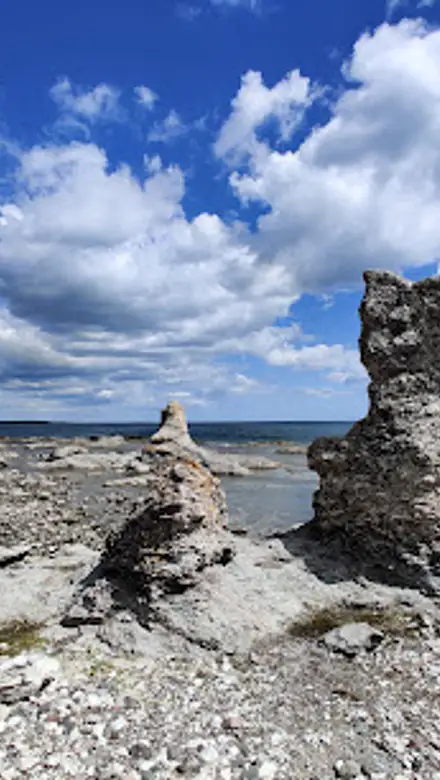
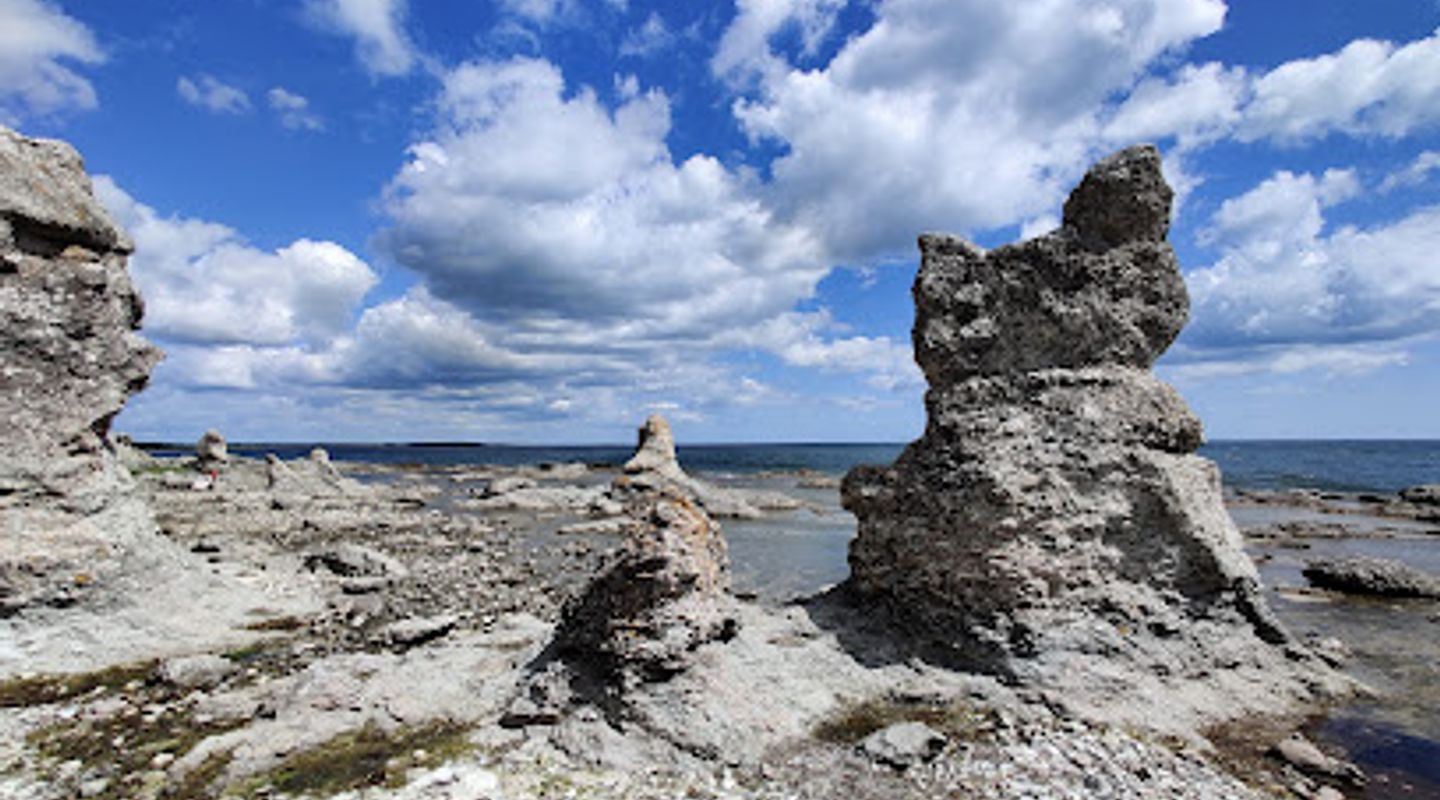
Folhammar is a protected coastal nature reserve on eastern Gotland famed for an uninterrupted stretch of raukar (limestone sea stacks) sculpted by ice, wind and waves; a roughly 500‑metre line of sculptural limestone pillars and slabs set above a rocky shore and flanked by sandy beaches, picnic clearings and low coastal heaths that feel both ancient and elemental.
On-site amenities
 Seating areas
 Picnic areas
 Trash bins
 Information boards
Opening hours
- Every dayOpen 24 hours
Opening hours as listed on the venue’s Google Business Profile. Hours can change for services and special events, so check with the venue before you go.
- Address
- 623 65 Ljugarn
- Phone
- Website
Getting there
By regional bus and walk
By car
Cycle and coastal path
Discover more about Folhammar Raukområde
A coastline shaped over deep time
Folhammar preserves a continuous band of rauks — vertical, weathered limestone pillars and slabs formed from the fossil-rich seabed of an ancient sea and then carved by millennia of wave action and glacial abrasion. The formation runs along the shoreline in a roughly half‑kilometre stretch where strata tilt and break into stacked, fingerlike columns and flattened pavement; some rocks rise several metres above the water, revealing layers of compressed marine sediments and occasional fossil fragments.
Textures, colours and seasonal moods
Underfoot the landscape alternates between millimetre‑fine sand and rough, pitted limestone surfaces. In summer the limestone warms to a pale honey and ochre; after rain the rock darkens, and in low light the shallow pools caught in the hollows mirror tiny skies. Seaweeds and lichens add emerald and russet splashes, while the soundscape mixes wind, distant surf and seabird calls. In winter the same forms take on austere silhouettes against a low northern sky and, if sea ice gathers, the contrast between white floes and grey stone becomes sharply graphic.
Living edge: flora and fauna of the reserve
Folhammar’s exposed shore supports low, salt‑tolerant vegetation in cracks and pockets of soil: thrift, saxifrages and tough coastal grasses hold to thin substrate, while insect life — solitary bees, small butterflies and coastal beetles — exploits sheltered microhabitats. Seabirds use ledges and nearby beaches during the breeding season, and the intertidal zones are alive with small crustaceans, limpets and snails when the tide reveals rock pools.
Human traces and conservation history
Designated and managed to conserve its unusual geology, Folhammar has long attracted naturalists and students of coastal geomorphology. Evidence of modest human use — picnic clearings, simple barbecue pits and occasional informal paths — sits lightly on the land; formal protections focus on preserving the rauks and the coastal processes that continue to mold them. The reserve’s care aims to balance public access with minimizing disturbance to fragile lichens, nesting birds and the exposed rock surfaces.
What to notice while you explore
Walk slowly and change your vantage: viewed from the land the rauks read as a serried line of sculpted columns; from slightly higher ground the pattern of cracks, plates and hollows becomes apparent. Look inside crevices for fossil casts and for the tiny ecology of algae and invertebrates in rock pools. The light at sunrise and sunset emphasizes relief and texture; windy afternoons highlight the rawness of the exposed coastline.
Practical character of the place
Folhammar feels elemental rather than manicured — a place for short wanderings, geological curiosity and quiet observation rather than built attractions. Benches and a few cleared areas make it suitable for picnics, but surfaces are uneven and some walks require careful footing. The reserve’s compact ribbon of rauks gives a concentrated, visually dramatic experience without urban infrastructure intrusions.
Evendo Review Centre
 Google
Guest reviews
Best time to go
Quietest: Jan, Feb & Dec · before 6am or at 9pm
Busy times are Evendo estimates for a typical year, to help you plan. Actual crowds vary with events, school holidays and the weather.
Explore Folhammar Raukområde on the map
A handpicked selection of must-see spots near Folhammar Raukområde, mapped for you.
Get your free copy of our complete guide to Folhammar Raukområde, delivered straight to you.
Everything on this page, from opening hours and how to get there to Eve’s tips and the best time to go, in one PDF you can read offline, print or share.
Already have an account? Sign in
Your Folhammar Raukområde guide is ready.
We'll send it to · Not you? Sign out

Getting your guide ready…
We are putting together a fresh copy of the Folhammar Raukområde guide. This can take up to a minute.
This can take a few moments. If your browser asks, choose Allow so the download can start. You'll find the guide in your Downloads folder.
Nothing happened? Download it again
Sorry, the guide is taking longer than usual. Please try again in a minute, or get it by email instead.
Other nearby places you may find interesting
The closest places of the same kind, if this one is not quite what you had in mind.
-
-
-
-
-


Swipe for more places
More to explore near Folhammar Raukområde

 Best experiences near Folhammar Raukområde
 Best hotels near Folhammar Raukområde
 Best landmarks near Folhammar Raukområde
 Best attractions near Folhammar Raukområde
 Best shops near Folhammar Raukområde
 Best restaurants near Folhammar Raukområde
 Best bars near Folhammar Raukområde
Do you manage this location?
Take control to get all the benefits, like improved information, better appearance, and stronger visibility across AI-powered discovery.
Explore more

Explore more of Gotland
Explore Gotland, Sweden's largest island, known for its medieval charm, stunning natural landscapes, and vibrant cultural scene in the heart of the Baltic Sea.
Explore Gotland
Explore more of Sweden
Discover Sweden's breathtaking landscapes, vibrant cities, and rich cultural heritage. From the Northern Lights to historic castles, experience the essence of Scandinavia.
Explore Sweden