

Ojnareskogen, Gotland Travel Guide
A wild, varied Gotland forest of fens, springs and lakes — rugged walking and delicate wetlands where conservation and community meet.
Ojnareskogen is Gotland’s largest contiguous wildwood, a mosaic of ancient forest, wetlands and the lake Bästeträsk that supplies local drinking water. The area feels raw and elemental: moss-draped pines, spring-fed streams, open marshes with orchids and rare fauna, and quiet trails that thread viewpoints and small bog-clearings. Conservation history and a rugged coastal limestone backdrop give Ojnareskogen a strong sense of place for nature-focused visits.
A brief summary to Ojnareskogen
- BUNGE DUCKER 103, Fårösund, 624 64, SE
- Duration: 0.5 to 4 hours
- Free
-
 Outdoor
- Mobile reception: 3 out of 5

Know before you go
Hi, I'm Eve. Here are a few practical things to know before exploring Ojnareskogen.
- Wear waterproof footwear and bring gaiters — many trails cross boggy or seasonally wet ground.
- Carry a field guide or plant app for orchids and wetland species; early morning light is best for bird activity.
- Respect protected zones and marked boardwalks to avoid damaging sensitive fen vegetation and nesting sites.
- Pack water and a snack; amenities are limited and phone reception can be patchy in dense sections.
Do you manage this location?
Take control to get all the benefits, like improved information, better appearance, and stronger visibility across AI-powered discovery. Learn more about listing your business on Evendo
Activate your presenceOther nearby places you may find interesting
The closest places of the same kind, if this one is not quite what you had in mind.
Explore Ojnareskogen on the Map
A handpicked selection of must-see spots near Ojnareskogen, mapped for you.
Getting There
-
By car
Private car: typical drive times from central Visby are about 45–60 minutes depending on season and traffic; parking is informal near trailheads and can be limited during peak summer weekends, so arrive earlier in the day. No tolls; fuel costs vary by vehicle.
-
Regional bus + walk
Regional bus service from Visby to the Fårösund/Bunge area takes approximately 50–70 minutes depending on route; services are less frequent outside summer months and schedules change seasonally. Expect a final on-foot approach of 10–30 minutes over uneven ground from the nearest stop; carry weatherproof clothing.
-
Bike
Cycling from nearby villages: allow 30–90 minutes depending on start point and fitness. Local roads are generally quiet but can be exposed to wind; some unpaved tracks lead into the forest and sections may be muddy after rain.
For the on-the-go comforts that matter to you
-
 Seating Areas
-
 Information Boards
-
 Trash Bins
Discover more about Ojnareskogen
A living mosaic of forest, fen and freshwater
Ojnareskogen unfolds as a varied patchwork rather than a single “park” — damp meadows lead to compact spruce and pine stands, scattered springs ripple into reed-fringed channels, and the expanse includes Bästeträsk, a clear freshwater lake crucial to the island’s hydrology. Across short distances the terrain shifts from hummocky peat and sphagnum carpets to firmer glades where older trees rise above the understory. This variety supports specialised plants and provides distinctive textures and colours through the seasons.Wildlife, rare plants and ecological value
The forest is noted for hosting many uncommon species: specialized orchids, wetland herbs and reptiles adapted to the microclimates of sinkholes and marsh edges. Birds use the wetlands and shorelines for feeding and nesting while mammals and amphibians make use of the interconnected wet corridors. Local conservation efforts emphasise the area’s role as both habitat and catchment: springs and bogs here feed aquifers and help sustain drinking-water supplies for adjacent communities.History of stewardship and local activism
Ojnareskogen’s modern story includes sustained local stewardship and a history of conservation campaigning that highlights the tension between resource extraction and habitat protection. Community groups, naturalists and regional planners have all played roles in shaping protections; the result is a landscape where traces of past land use sit alongside actively protected stands and restored wetland niches. The area’s cultural history and current governance shape the experience you have walking its trails.Visitor character and on-foot experience
Trails through Ojnareskogen are largely natural rather than engineered: expect narrow woodland paths, boggy stretches that may be seasonally wet, boardwalks at sensitive spots and occasional rocky ground near limestone outcrops. Movement here is slow and intentional — walkers pause to study a spring, to examine an orchid spike or to listen for woodpeckers. Light filters differently in each patch: dappled sun under mixed canopy, bright reflections across marsh pools, and long low light in autumn that brings out reds and golds.Notable landscapes and nearby geological context
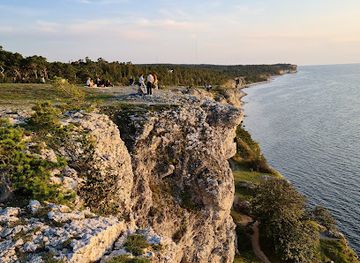
Ojnareskogen sits in northern Gotland amid limestone quarries and coastal features that create a dramatic local contrast — dense, peat-rich forest abutting pale quarried rock and open shorelines. Small viewpoints and clearings offer glimpses of this interplay and make for memorable photographic subjects: a dark, mossy foreground against pale cliffs or a still bog mirror framed by pines. The proximity to coastal limestone gives the area an unusual geological interplay for a forested reserve.Best approach as a respectful visitor
Approach Ojnareskogen with quiet attention: stay on marked tracks where they exist, avoid trampling fragile fen vegetation, and be prepared for variable ground underfoot. Seasonal changes alter access — summer brings lush growth and easier walking in many places, while spring and autumn can leave sections wet. The area rewards patience: slow, observant visits yield botanical discoveries, detailed birdlife encounters and a strong impression of a northern Baltic wilderness that remains intimately connected to community care.












Your all‑in‑one travel companion app
Explore expert travel guides, compare and book tours, experiences, hotels, and more—all from the palm of your hand. Download now for seamless trip planning wherever your wanderlust takes you.


Explore More of Gotland
Looking beyond Ojnareskogen? Discover Gotland for broader travel guides, local hot-spots, and regional highlights.
Explore Gotland