
Rövar Liljas Håla, Gotland Travel Guide
Descend into the shadowy cleft cave of 18th-century bandit Rövar Lilja amid Högklint's collapsing cliffs, where outlaw legends clash with ancient fossils and roaring Baltic waves.
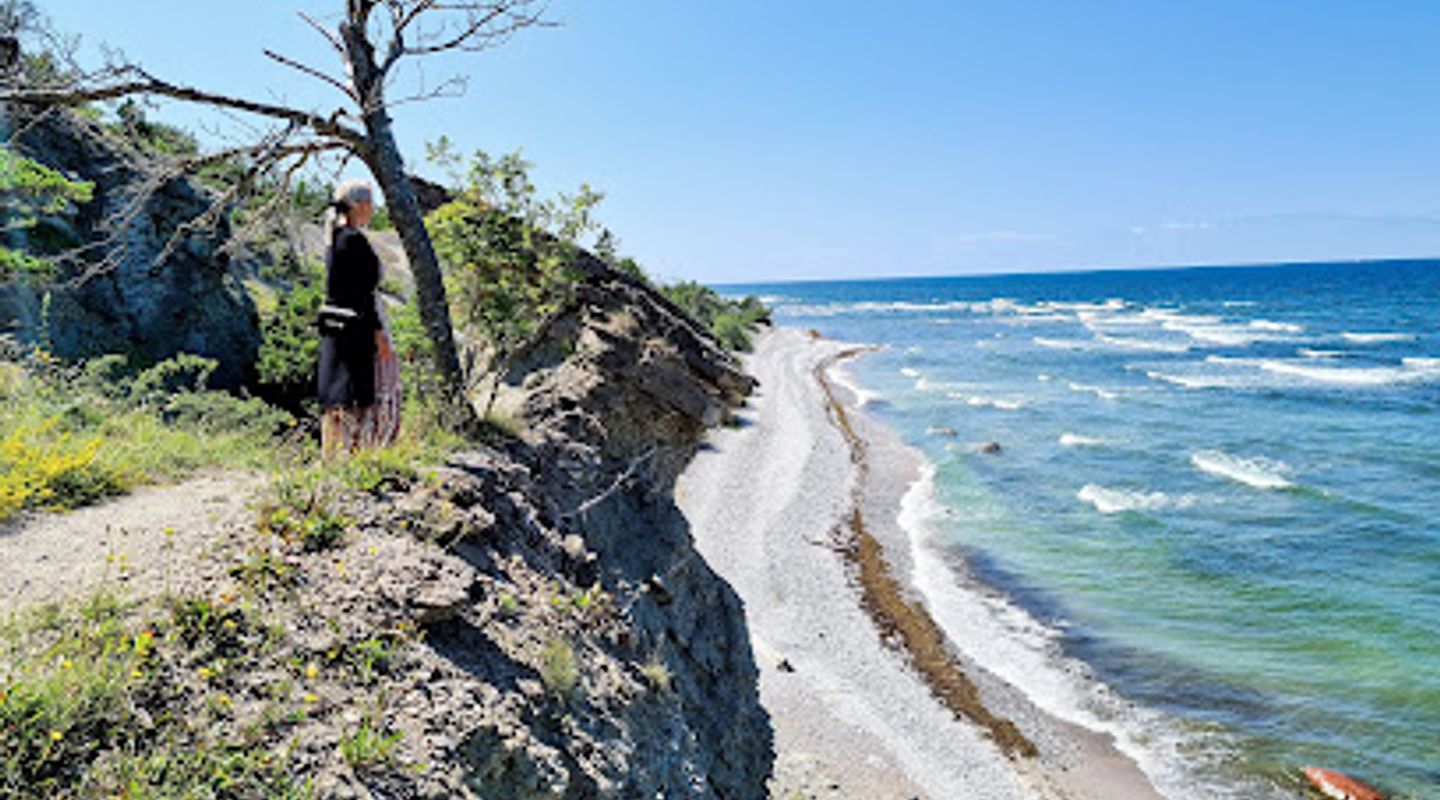
Rövar Liljas Håla is a dramatic cleft cave within Högklint nature reserve on Gotland's rugged coast south of Visby. Named after 18th-century outlaw Jonas Nilsson Lilja, who legend says used it as a hideout for his rural thefts, this geological wonder formed behind a collapsed cliff section known as a false rauk. Part of a 48-meter-high clifftop stretching 1.3 km, the site offers sweeping sea views, sea-eroded caves, and tales of stranded goats at Getsvältan ledge. Approach via steep paths from the cliff edge, but beware unstable rock from recent landslides—recent collapses in 2010 highlight the risks. Fossils from Wenlock-era limestone add prehistoric intrigue to this free, always-accessible coastal gem blending bandit lore, raw nature, and precarious beauty.
A brief summary to Rövar Liljas Håla
- Ygne Rövarbacken 9, Visby, 622 61, SE
- Click to display
- Click to display
- Duration: 0.5 to 1.5 hours
- Free
-
 Outdoor
- Mobile reception: 4 out of 5

Know before you go
Hi, I'm Eve. Here are a few practical things to know before exploring Rövar Liljas Håla.
- Wear grippy shoes for steep, uneven paths and potential slick rocks near the cave entrance.
- Stay well back from cliff edges and the false rauk—landslides like 2010's remain a hazard.
- Visit at low tide to explore sea caves at Getsvältan safely from the ledge.
- Bring binoculars for distant sea views and birdwatching from the clifftop.
- Check for fossils in fallen limestone chunks, but leave them in place to preserve the site.
Do you manage this location?
Take control to get all the benefits, like improved information, better appearance, and stronger visibility across AI-powered discovery. Learn more about listing your business on Evendo
Activate your presenceOther nearby places you may find interesting
The closest places of the same kind, if this one is not quite what you had in mind.
Explore Rövar Liljas Håla on the Map
A handpicked selection of must-see spots near Rövar Liljas Håla, mapped for you.
Getting There
-
Car
From Visby center, drive 10-15 minutes southwest along coastal road 143 to Högklint access; limited gravel parking at clifftop trailhead holds 10-15 vehicles, fills weekends, no fee.
-
Bus
Take regional bus from Visby station to Högklintsvägen stop, 20-30 minutes depending on route frequency (hourly peak season); 1-2 km walk on mixed pavement and dirt to site, SEK 40-60 adult fare.
-
Taxi
Taxi from Visby center takes 12-18 minutes direct to Högklint parking, SEK 250-350 depending on vehicle size; available 24/7 but book ahead off-season.
-
Bicycle
Cycle 25-35 minutes from Visby via route 143 coastal path, moderate hills and exposed to wind; bike racks at trailhead, hybrid or gravel tires recommended for final dirt section.
For the on-the-go comforts that matter to you
-
 Information Boards
-
 Trash Bins
-
 Drinking Water
-
 Seating Areas
Discover more about Rövar Liljas Håla
Bandit Hideout in the Cliff
Rövar Liljas Håla takes its name from Jonas Nilsson Lilja, a notorious thief active on Gotland in the mid-1700s. Born elsewhere, Lilja arrived on the island via military service but soon turned to crime, stealing silverware and livestock across the countryside. Legend holds that this shadowy cleft cave served as his base, a strategic spot near the coast for stashing loot and evading capture. Historical records confirm his 1754 conviction for theft, leading to a death sentence commuted to life imprisonment at Carlsten Fortress, where he perished in 1763 from scurvy and illness.The cave itself formed through dramatic geological processes within Högklint's towering limestone cliffs. A massive section of the 48-meter-high klint slid seaward, creating a 'false rauk'—a freestanding pillar of softer, layered limestone unlike the island's harder rauks. The cave lurks behind this precarious structure, its dark opening inviting whispers of Lilja's exploits amid dripping walls and echoing drips.Högklint's Rugged Coastal Drama
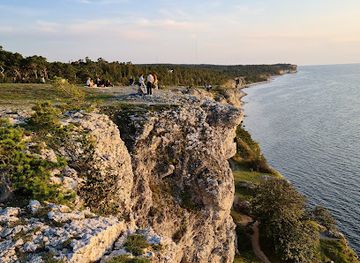
Högklint nature reserve encompasses a 1.3 km stretch of Gotland's steep southwestern coast, protected since 1969 and expanded in 1988 as a Natura 2000 site. The cliffs rise sharply from the Baltic Sea, sculpted by millennia of waves, wind, and collapses. At the northern end, the viewpoint commands panoramic vistas westward over endless waters and northeast toward Visby's medieval silhouette on clear days.Descending via a rugged staircase from the clifftop leads to Getsvältan, a grassy ledge where goats once grazed lush patches but starved after failing to climb back—hence its grim name. Sea caves pockmark the base, while southern paths reveal klevar fissures from landslides and another towering false rauk. The area's unstable geology persists; a significant collapse occurred in 2010, scattering boulders and underscoring the need for caution near edges.Geological and Prehistoric Layers
Gotland's Silurian limestone bedrock defines Högklint, with Wenlock-period (about 430 million years old) formations exposed in the cliffs. Rövar Liljas Håla yields fossils like the gastropod Euomphalopterus alatus from Visby Beds layers, remnants of ancient reefs teeming with marine life. These prehistoric traces contrast sharply with the 18th-century human drama, layering deep time atop recent banditry.The false rauk's softer composition—loose, stratified kalk—makes it prone to erosion, unlike denser rauk limestone elsewhere on Gotland. Waves relentlessly undercut the base, while freeze-thaw cycles and rain fracture the heights, perpetuating the site's dynamic, ever-changing form.Navigating the Wild Terrain
Trails wind from clifftop parking through grassy meadows fringed by hardy coastal flora, dropping steeply to the cave via uneven steps and dirt paths suited to sturdy footwear. The air carries salt spray and wild thyme scents, with gulls crying overhead. Summer brings wildflowers; winter exposes stark skeletal cliffs against stormy seas.Proximity to the water—just 60-70 meters in places—enhances the sensory pull: crashing waves amplify in the cave's confines, while vantage points frame Gotland's iconic seascape. Yet the site's rawness demands respect—no railings protect sheer drops, and loose stones tumble unpredictably.Enduring Legends and Legacy
Local lore embellishes Lilja's tale with myths of secret tunnels burrowing from the cave to Visby, easing his raids—though unproven, these stories fuel the site's mystique. Information boards recount the history, blending fact with folklore amid the natural amphitheater. As part of a privately owned yet publicly managed reserve, Högklint preserves this fusion of outlaw romance and elemental force for contemplative explorers.












Your all‑in‑one travel companion app
Explore expert travel guides, compare and book tours, experiences, hotels, and more—all from the palm of your hand. Download now for seamless trip planning wherever your wanderlust takes you.


Explore More of Gotland
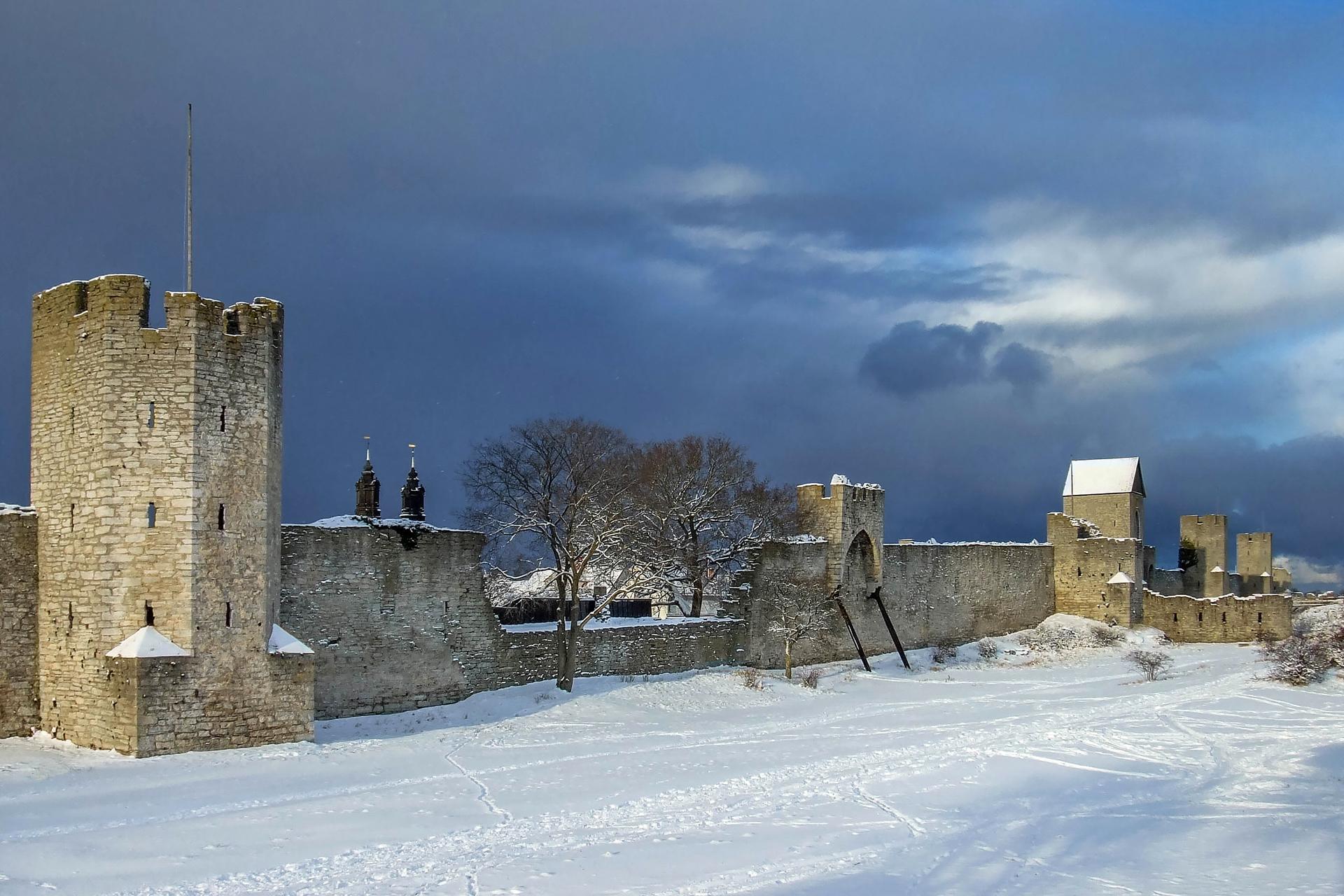
Looking beyond Rövar Liljas Håla? Discover Gotland for broader travel guides, local hot-spots, and regional highlights.
Explore Gotland
Evening smokehouse and Tex‑Mex cantina in Visby — home‑smoked barbecue, house tortillas and lively margaritas in a cosy, rustic setting.
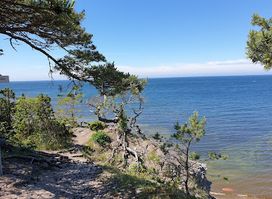
Descend into the shadowy cleft cave of outlaw Lilja amid Högklint's crumbling cliffs, where Baltic waves crash below 48m drops and roguish legends echo through Gotland's rugged coast.
