

Tjelvars grav, Boge Travel Guide
Free Guide: A Bronze Age stone‑ship on Gotland where myth, cremation traces and Baltic light meet in a quiet, elemental landscape.


A brief summary of Tjelvars grav, Boge
A Bronze Age stone‑ship on Gotland where myth, cremation traces and Baltic light meet in a quiet, elemental landscape.
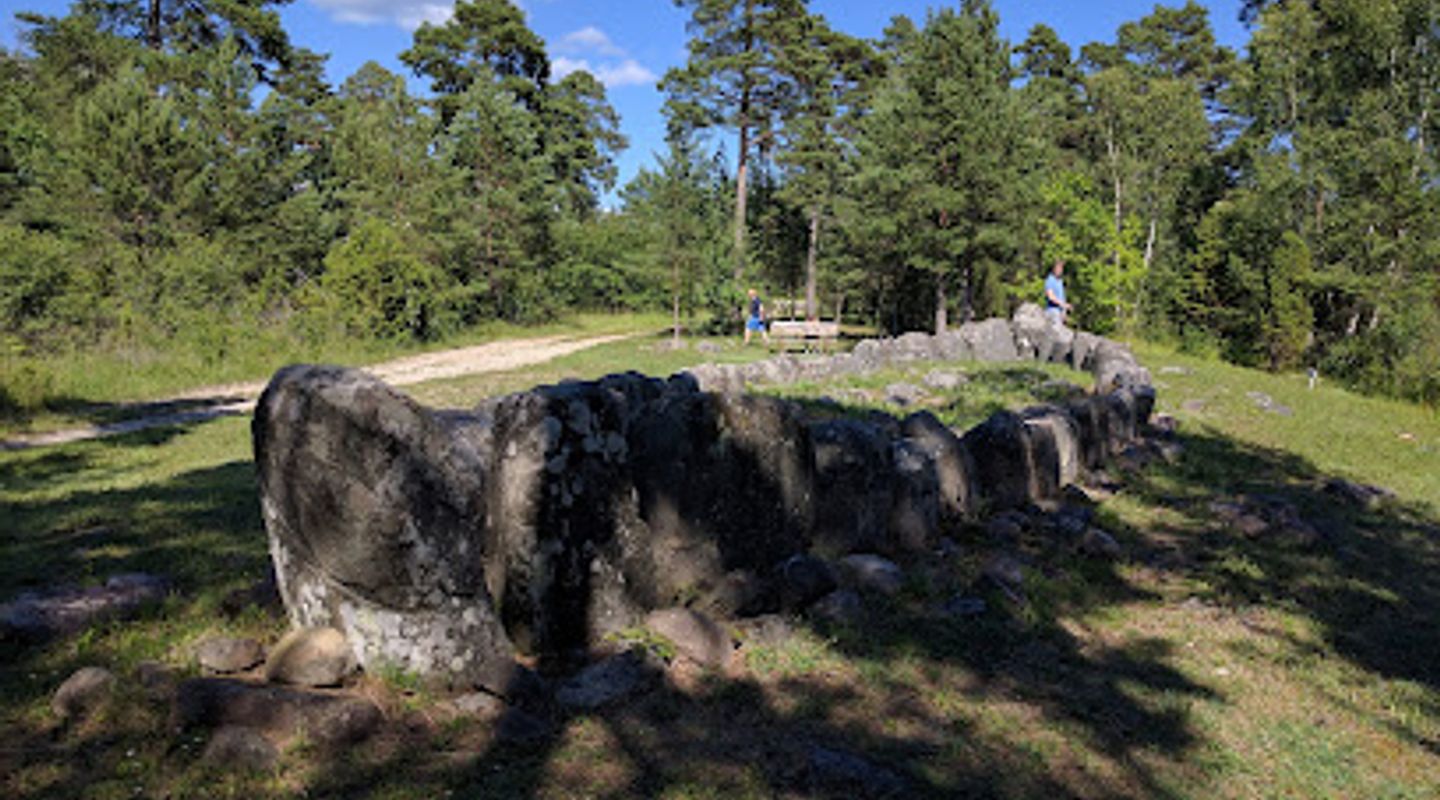
Tjelvar’s Grave is a striking Bronze Age stone ship setting near Boge on Gotland: an 18 m by 5 m oval of standing stones that reads like a timeworn monument to ancient ritual and sea‑faring belief. Framed by low pasture and the Baltic light, the cairn carries a legendary name from the Gutasaga and archaeological traces of cremation; it’s a calm, atmospheric site appealing to history lovers and photographers alike.
On-site amenities
 Seating areas
 Information boards
 Trash bins
Opening hours
- Every dayOpen 24 hours
Opening hours as listed on the venue’s Google Business Profile. Hours can change for services and special events, so check with the venue before you go.
- Address
- 624 30 Slite
- Website
Getting there
Car
Local bus + walk
Bicycle
Discover more about Tjelvars grav, Boge
An ancient ship cut from the land
Tjelvar’s Grave is a stone ship setting—an elongated ring of stones laid out to mimic a vessel—dating to the Bronze Age and later reused or repaired in subsequent eras. The monument’s roughly 18‑metre length and 5‑metre width create a clear, shiplike silhouette on the ground; within that outline lies compacted gravel and traces of ancient burial practice, including evidence of cremated remains discovered during early 20th‑century investigations. The form and scale of the setting link it to seafaring cosmology: the ship is both tomb and symbolic conveyance between worlds.
Legend woven into landscape
The name Tjelvar anchors the site in Gotlandic myth. In the medieval Gutasaga the island’s first human, Tjelvar, is the hero who brought fire and life to a once‑restless isle; naming the stone ship after him fuses tangible archaeology with a local foundation story. At the site you’ll notice how the monument’s spare geometry and the surrounding fields seem to embody that storytelling—stone, sea wind and horizon combine to suggest a long memory of human presence and mythic meaning.
Material traces and past investigations
Excavations and surveys in the early 1900s uncovered pottery fragments and human cremains in association with the ship setting, a pattern consistent with ritual burial and reopening across centuries. Conservation and partial restoration work carried out in the 20th century stabilized fallen stones and clarified the ship’s shape without altering its rough, weathered character. The composition—native limestone blocks set into the turf—reinforces the sense that the monument belongs to the island itself rather than to any single era.
Setting and sensory character
The grave sits within gently rolling farmland a little inland from Gotland’s eastern shore; when you stand at the stone edge the Baltic light and wide horizons feel immediate. On calm days sheep graze nearby, and on windier ones the grass ripples against the stones while the sea scents the air. The stones’ surfaces are lichen‑freckled, their faces warm under sun and cool to the touch after rain; birdsong and the low hum of summer insects fill the quieter hours, giving the place a contemplative stillness.
Why the place endures
Tjelvar’s Grave endures as a readable relic: an intentional human layout that has survived millennia with a clear silhouette and a layered story. It functions as an archaeological node—linking Bronze Age burial practice, later cultural memory and the island’s medieval saga literature. The monument’s modest footprint and open setting allow visitors to appreciate construction techniques, spatial symbolism and the way landscape and myth reinforce one another.
Visitor character and respectful etiquette
The site is accessible as an outdoor antiquity and carries the quiet demands of an ancient burial place: observation, respectful distance from fragile stones and no removal of finds or graffiti. Interpretive signs are limited; understanding comes from looking closely at the stones, imagining the craft that placed them and reading the island’s sagas for context. In all seasons the grave rewards slow attention—early light, overcast mood or the low winter sun each highlight different textures of stone and turf.
Evendo Review Centre
 Google
Guest reviews
Best time to go
Quietest: Jan, Feb & Dec · before 7am or at 9pm
Busy times are Evendo estimates for a typical year, to help you plan. Actual crowds vary with events, school holidays and the weather.
Explore Tjelvars grav, Boge on the map
A handpicked selection of must-see spots near Tjelvars grav, Boge, mapped for you.
Get your free copy of our complete guide to Tjelvars grav, Boge, delivered straight to you.
Everything on this page, from opening hours and how to get there to Eve’s tips and the best time to go, in one PDF you can read offline, print or share.
Already have an account? Sign in
Your Tjelvars grav, Boge guide is ready.
We'll send it to · Not you? Sign out

Getting your guide ready…
We are putting together a fresh copy of the Tjelvars grav, Boge guide. This can take up to a minute.
This can take a few moments. If your browser asks, choose Allow so the download can start. You'll find the guide in your Downloads folder.
Nothing happened? Download it again
Sorry, the guide is taking longer than usual. Please try again in a minute, or get it by email instead.
Other nearby places you may find interesting
The closest places of the same kind, if this one is not quite what you had in mind.
-
-
-
-
-


Swipe for more places
More to explore near Tjelvars grav, Boge

 Best experiences near Tjelvars grav, Boge
 Best hotels near Tjelvars grav, Boge
 Best landmarks near Tjelvars grav, Boge
 Best attractions near Tjelvars grav, Boge
 Best shops near Tjelvars grav, Boge
 Best restaurants near Tjelvars grav, Boge
 Best bars near Tjelvars grav, Boge
Do you manage this location?
Take control to get all the benefits, like improved information, better appearance, and stronger visibility across AI-powered discovery.
Explore more

Explore more of Gotland
Explore Gotland, Sweden's largest island, known for its medieval charm, stunning natural landscapes, and vibrant cultural scene in the heart of the Baltic Sea.
Explore Gotland
Explore more of Sweden
Discover Sweden's breathtaking landscapes, vibrant cities, and rich cultural heritage. From the Northern Lights to historic castles, experience the essence of Scandinavia.
Explore Sweden
