Kvarnfallet Travel Guide
Free Guide: A compact, historic riverside cascade beside Knäred’s old mill—ideal for short walks, picnics and shallow summer swims in Halland.


A brief summary of Kvarnfallet
A compact, historic riverside cascade beside Knäred’s old mill—ideal for short walks, picnics and shallow summer swims in Halland.
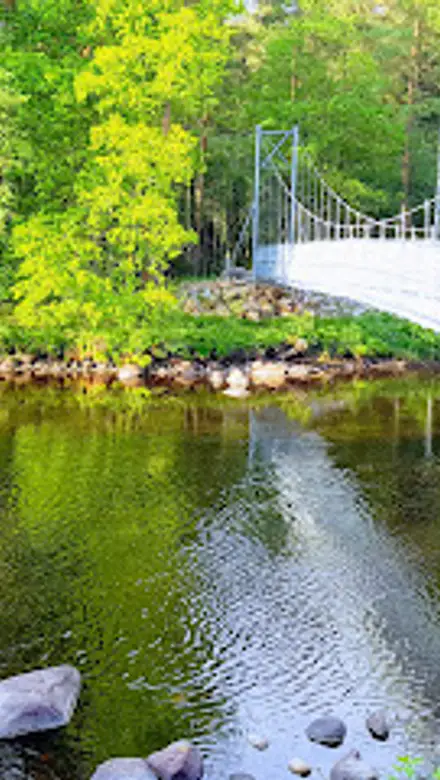
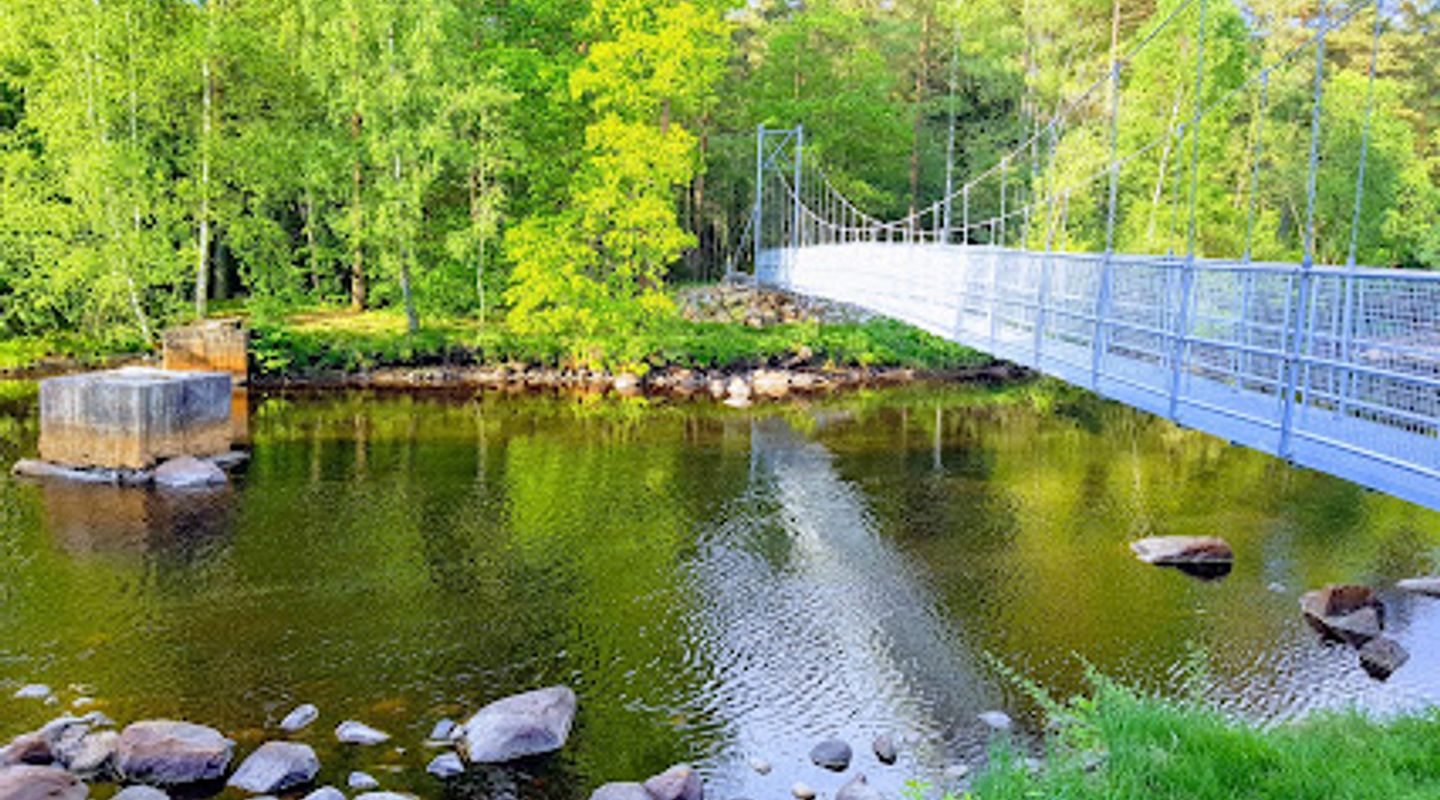
Kvarnfallet is a small, scenic waterfall on the Krokån beside the historic mill at Knäred, Halland. Framed by worn stone steps, mossy banks and mixed woodland, the site combines gentle cascades, shallow pools for paddling and picnic-ready clearings around the old mill buildings. It's a compact natural stop valued for short walks, photography and summer swims in calm, shallow water.
On-site amenities
 Seating areas
 Picnic areas
 Information boards
- Address
- 310 20, Krokåvägen 6, 312 51 Knäred
- Phone
- Website
Getting there
By car
By regional bus plus walk
On foot from nearby trails
Discover more about Kvarnfallet
Where river and history meet
Kvarnfallet sits where the Krokån slips over layered stone to form a sequence of shallow cascades and small plunge pools beside the old mill site at Knäred. The mill itself—whose roots reach back several centuries—was once an economic anchor for the parish, and traces such as millstones and foundations remain scattered near the stream. The watercourse and the mill buildings together create a mixed scene of industrial archaeology and gentle riverine nature.
Landscape and water features
The fall is not dramatic by height but is visually striking because of its stepped rock formations that guide the water into a series of short drops and calm basins. During higher flows the Krokån rushes with audible force over the stones; in summer the pace eases and shallow pools appear, edged by pebbled shallows and algae-smoothed rock where people often sit or paddle. Banks are wooded with a mix of birch and alder, and patches of damp meadow or reedbed appear where the stream broadens.
Sensory character and seasons
In spring the torrent is lively and loud, with froth and a cool spray that scents the air of wet stone and leaf litter. Summer brings a warmer, hushed quality: dragonflies, the faint clink of picnickers’ cutlery and the feel of sun on warm stones. In autumn the colours shift to ochre and russet; in frozen winter the fall can stud with ice ridges and delicate icicles on the overhangs, changing its sound and texture completely.
Visitor experience and activities
The place reads as a compact, family-friendly nature spot. Walks from nearby paths loop to viewpoints over the cascade, while sheltered banks and grassy clearings make practical picnic sites. The shallow pools are suitable for paddling and cooling off on warm days; photographers find detail in the interplay of water, lichen and old masonry. The small scale of the site encourages short visits—an hour or two—to enjoy the immediate riverside atmosphere.
Natural and cultural notes
Kvarnfallet lies in a landscape of mixed woodland, wet meadows and small-scale farmland, and it forms part of a local network of heritage sites tied to Knäred’s past. The remaining mill fragments and occasional visible millstone hint at the human use of the stream over centuries. The area also supports a modest wetland fringe and riparian plants adapted to periodic flooding, contributing to local biodiversity.
Practical character and care
The site’s character is intimate: paths are informal, banks can be uneven and some rock surfaces are slippery when wet. Visitors should respect its dual identity as a cultural relic and a natural feature—avoiding damage to masonry remnants and leaving no trace of picnics. Its compactness means the experience is close-up and tactile: listening to flowing water, feeling stone warmed by the sun, and noticing the small life that depends on the stream.
Evendo Review Centre
 Google
Guest reviews
Best time to go
Quietest: Jan, Feb & Dec · before 6am or at 10pm
Busy times are Evendo estimates for a typical year, to help you plan. Actual crowds vary with events, school holidays and the weather.
Explore Kvarnfallet on the map
A handpicked selection of must-see spots near Kvarnfallet, mapped for you.
Get your free copy of our complete guide to Kvarnfallet, delivered straight to you.
Everything on this page, from opening hours and how to get there to Eve’s tips and the best time to go, in one PDF you can read offline, print or share.
Already have an account? Sign in
Your Kvarnfallet guide is ready.
We'll send it to · Not you? Sign out

Getting your guide ready…
We are putting together a fresh copy of the Kvarnfallet guide. This can take up to a minute.
This can take a few moments. If your browser asks, choose Allow so the download can start. You'll find the guide in your Downloads folder.
Nothing happened? Download it again
Sorry, the guide is taking longer than usual. Please try again in a minute, or get it by email instead.
Other nearby places you may find interesting
The closest places of the same kind, if this one is not quite what you had in mind.
-
-
-
-
-


Swipe for more places
More to explore near Kvarnfallet

 Best experiences near Kvarnfallet
 Best hotels near Kvarnfallet
 Best landmarks near Kvarnfallet
 Best attractions near Kvarnfallet
 Best shops near Kvarnfallet
 Best restaurants near Kvarnfallet
 Best bars near Kvarnfallet
Do you manage this location?
Take control to get all the benefits, like improved information, better appearance, and stronger visibility across AI-powered discovery.
Explore more

Explore more of Halland
Discover Halland, Sweden's coastal paradise with sandy beaches, historic towns, and lush nature reserves. Perfect for outdoor adventures, cultural experiences, and relaxation.
Explore Halland
Explore more of Sweden
Discover Sweden's breathtaking landscapes, vibrant cities, and rich cultural heritage. From the Northern Lights to historic castles, experience the essence of Scandinavia.
Explore Sweden