
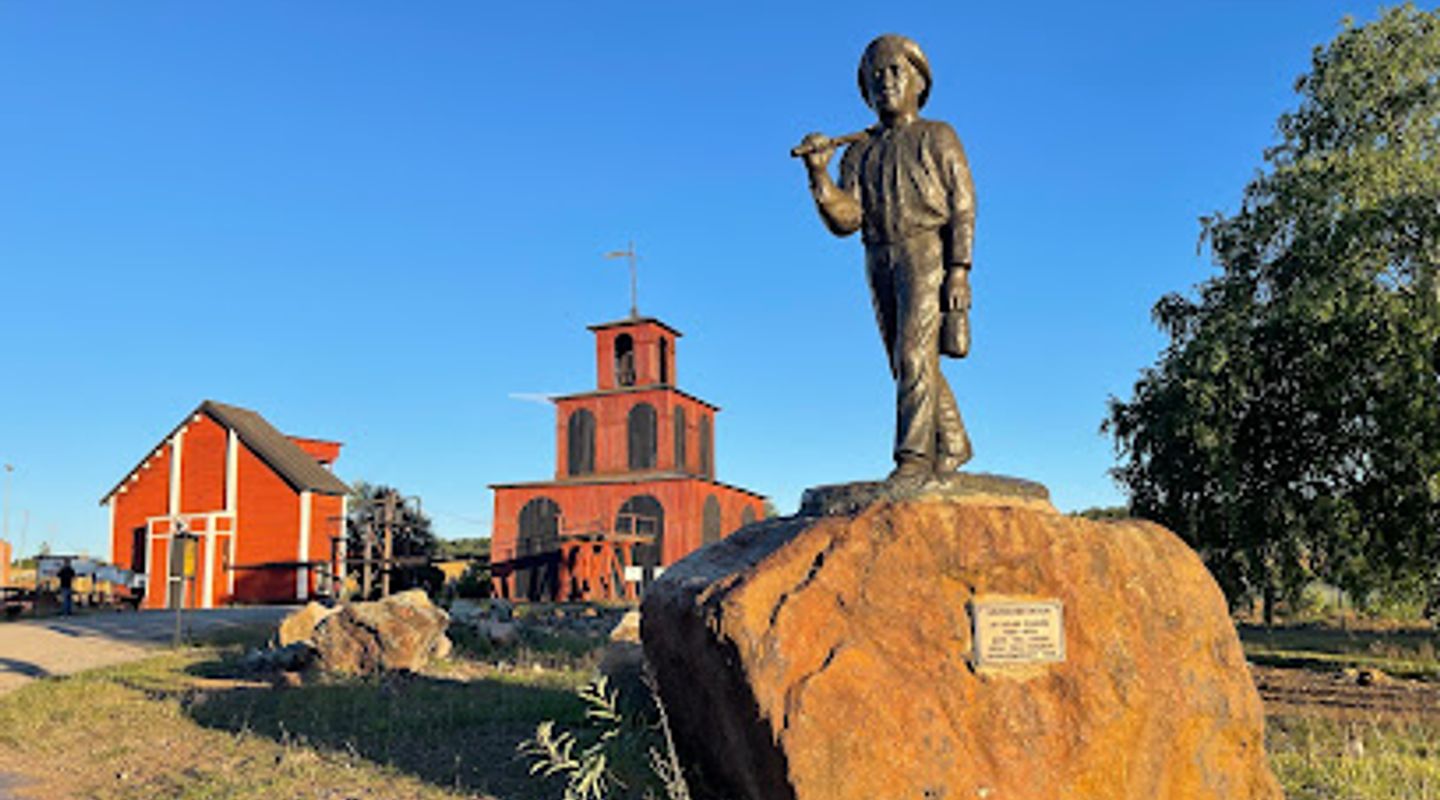
Falu Mine, Svealand Travel Guide
Descend into Sweden's millennium-old copper heart: UNESCO-listed Falun Mine's Great Pit and galleries reveal a world-shaping industry amid red-stained ruins and miner legends.
Falun Mine, a UNESCO World Heritage Site in central Sweden, operated for over a millennium until 1992, producing up to two-thirds of Europe's copper and fueling Sweden's rise as a power. The dramatic Great Pit, formed by a 1687 collapse, anchors this industrial landscape of shafts, wheelhouses, and historic Falun town painted in iconic Falu Red from mine byproducts. Underground tours reveal miners' harsh world amid galleries carved over centuries.
A brief summary to Falu Mine
- Gruvgatan 1, Falun, 791 61, SE
- Click to display
- Click to display
- Duration: 1.5 to 3 hours
- Mid ranged
-
 Outdoor
- Mobile reception: 4 out of 5
- Monday 10 am-4 pm
- Tuesday 10 am-4 pm
- Wednesday 10 am-4 pm
- Thursday 10 am-4 pm
- Friday 10 am-4 pm
- Saturday 10 am-3 pm
- Sunday 10 am-3 pm

Know before you go
Hi, I'm Eve. Here are a few practical things to know before exploring Falu Mine.
- Knock three times on the mine entrance for luck, honoring ancient miner tradition before descending.
- Wear warm layers and sturdy shoes; underground tours maintain cool, damp conditions year-round.
- Seek royal signatures in gold at the entrance, a custom from visiting monarchs celebrating discoveries.
- Climb Hyttberget slag hill for panoramic views of the pit and surrounding woodland lakes.
Do you manage this location?
Take control to get all the benefits, like improved information, better appearance, and stronger visibility across AI-powered discovery. Learn more about listing your business on Evendo
Activate your presenceExplore Falu Mine on the Map
A handpicked selection of must-see spots near Falu Mine, mapped for you.
Getting There
-
Bus
From Falun Central Station, Dalatrafik regional bus 71 or 72 reaches the mine in 10-15 minutes; services run hourly on weekdays, every 30 minutes weekends, SEK 40-60 one-way, exact change or app payment required.
-
Taxi
Taxis from Falun train station or city center take 8-12 minutes depending on traffic; fares SEK 200-300, book via local apps or rank, limited availability evenings.
-
Driving
Drive from Falun center via Route 80, 5-10 minutes with free parking at Gruvgatan lot; 50 spaces, fills weekends, arrive early in peak summer.
-
Walking
From Falun old town center, follow marked paths along lakeside trails, 25-35 minutes over gentle slopes and gravel; paved sections accessible, uneven terrain in spots.
For the on-the-go comforts that matter to you
-
 Restrooms
-
 Drink Options
-
 Food Options
-
 Seating Areas
-
 Sheltered Areas
-
 Information Boards
-
 Visitor Center
Discover more about Falu Mine
Genesis of a Copper Empire
Mining at Falun likely began around 1000 AD, with locals gathering ore from bogs before carving galleries into the rock. By 1288, records show a profitable operation, drawing German techniques like fire-setting to heat and crack stone. This site evolved into Kopparberget, the Great Copper Mountain, shaping Sweden's economy and technology for centuries.Copper output peaked in the 17th century, supplying two-thirds of Europe's needs and funding wars, castles, even Versailles' roofs. Zinc, silver, gold, and lead also emerged, alongside Falu Red paint from slag—now synonymous with Scandinavian wooden homes.The Catastrophic Birth of the Great Pit
On June 25, 1687—Midsummer's Eve—the mine's chambers collapsed in a roar, merging shafts into a vast chasm over 100 meters deep. Remarkably, no lives were lost as miners celebrated the holiday. This 'Stora Stöten' defines the landscape today, edged by wheelhouses, hoists, and laves perched above ancient shafts.The pit's red-stained walls, scarred by arsenic and vitriol, evoke the toxic labor: miners climbed rickety ladders through soot, fumes, heat, and drips, as Carl Linnaeus described it 'as horrible as hell itself.'Underground Realms and Miners' Lives
Descending 67 meters reveals chambers hand-dug over a millennium, with preserved machinery from steam drills to electric lights. Tales linger: Fet-Mats, a worker mummified by minerals, lay undiscovered for 42 years until 1719, his body intact enough to draw crowds until burial in 1930.Salaries came in massive 19.7kg copper slabs, hauled by sleds. Children sorted ore; adults battled floods, with bells warning of pump failures. Innovations like dynamite marked progress, but dangers persisted until closure in 1992.Falu Red and Industrial Legacy
Beyond metals, mine waste birthed Falu Red pigment, coloring Sweden's barns and homes. The surrounding landscape bears canals, smelteries, and miners' cottages, part of the UNESCO site since 2001 for illustrating global mining influence.Falun town, planned in the 17th century as Sweden's second city, clusters wooden houses on slag foundations, blending domestic and industrial remnants into a vivid cultural tableau.Enduring Echoes of Innovation
Falun's techniques rippled worldwide, from drainage to smelting, powering Sweden's modernization. Gold rushes in 1881 yielded 5 tonnes; timber and iron diversified output. Today, the site's authenticity shines in unaltered structures, offering a window into pre-industrial toil and technological leaps.












Your all‑in‑one travel companion app
Explore expert travel guides, compare and book tours, experiences, hotels, and more—all from the palm of your hand. Download now for seamless trip planning wherever your wanderlust takes you.


Explore More of Svealand
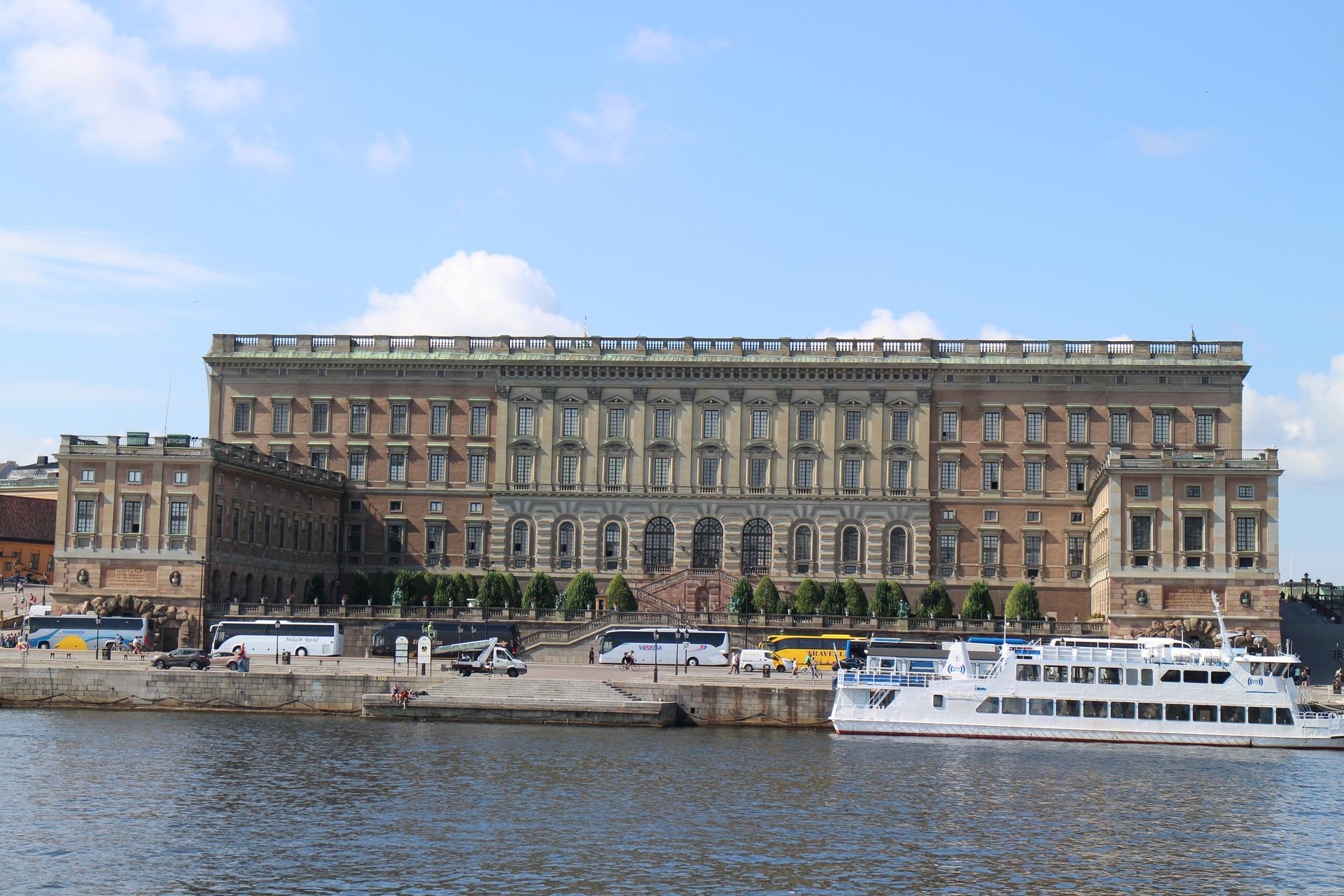
Looking beyond Falu Mine? Discover Svealand for broader travel guides, local hot-spots, and regional highlights.
Explore Svealand