Sankt Olai kyrka, Norrköping Travel Guide
Free Guide: An 18th‑century baroque parish church on medieval foundations, with a freestanding bell tower and quiet urban park setting in central Norrköping.


A brief summary of Sankt Olai kyrka
An 18th‑century baroque parish church on medieval foundations, with a freestanding bell tower and quiet urban park setting in central Norrköping.
S:t Olai kyrka is an 18th‑century baroque parish church built on medieval foundations in central Norrköping, noted for its freestanding campanile (Stadstornet), simple 1700s interior and long history of fires, rebuildings and royal ceremony. The church seats around 800 and sits in Olaiparken near Drottninggatan, offering calm, historic architecture and occasional evening activities hosted by the parish.
On-site amenities
 Restrooms
 Seating areas
 Information boards
Opening hours
- Mon12 pm–3 pm
- Tue12 pm–3 pm
- Wed12 pm–3 pm
- Thu12 pm–3 pm
- Fri12 pm–3 pm
- SatClosed
- SunClosed
Opening hours as listed on the venue’s Google Business Profile. Hours can change for services and special events, so check with the venue before you go.
- Address
- Skolgatan 12, 602 25 Norrköping
- Phone
- Website
Getting there
Bus and tram
Train then walk
Car
Discover more about Sankt Olai kyrka
Stone, fire and rebirth through the centuries
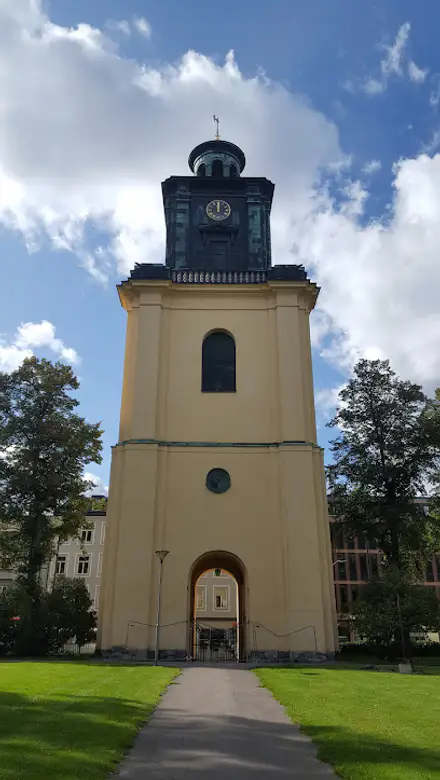
S:t Olai kyrka stands on a site occupied by a church since the Middle Ages; the present building was laid out in 1766 and inaugurated in 1767 after the older medieval fabric had become ruinous. The current form follows an 18th‑century baroque idiom with a clear, pale plastered façade relieved by darker pilaster‑like lisens and a restrained interior that reflects the practical economy of its builders. The church’s history is marked by repeated damage from major events — devastating urban fires and wartime raids — and subsequent rebuildings, a sequence that gives the place its layered character.
Architecture and notable features
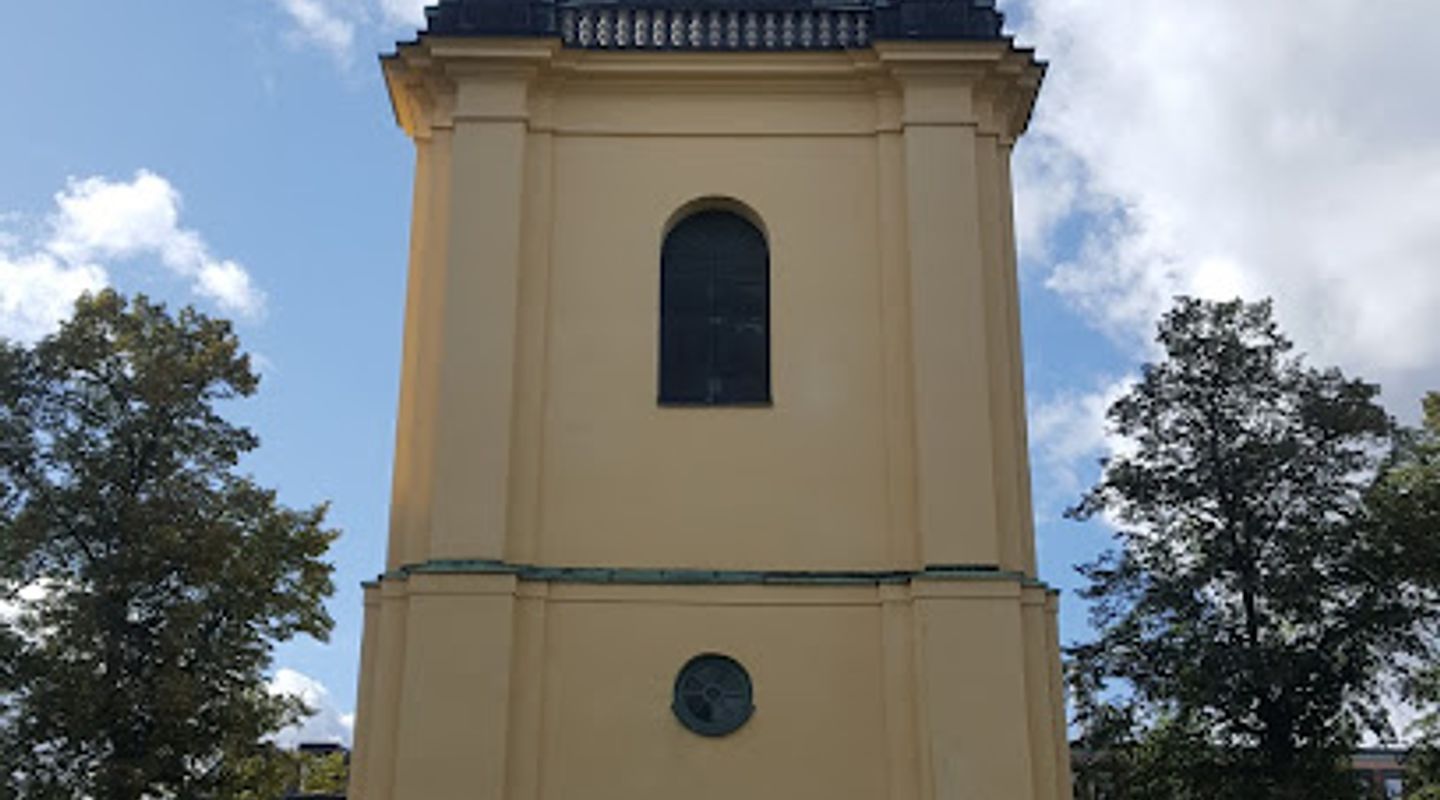
Designed after drawings by Carl Johan Cronstedt and raised by local builders, the church preserves a compact classical plan roughly matching the footprint of its medieval predecessors. A distinctive element of the ensemble is the freestanding bell tower — locally called Stadstornet — set about seventy metres from the main nave; this campanile was constructed before 1750 and reads as a separate, vertical punctuation against the city streets. Inside, broad volumes, clear sightlines and a surviving altarpiece and organ case from later refurbishments create an uncluttered 18th‑century atmosphere where light and proportion are the main decorative elements.
Ritual life and civic moments
S:t Olai is both a working parish church and a civic landmark. Over the centuries it has hosted baptisms, funerals and weddings for the city, and in 1800 it was the setting for the formal crowning of King Gustav IV Adolf and Queen Fredrika — a reminder of the church’s occasional role in larger public ritual. Today the building continues to serve an active congregation, with regular services, concerts and community events staged in the nave and in neighbouring Olaigården.
Setting and immediate surroundings
The church sits within Olaiparken close to a main shopping street, a location that blends green park space with urban edges. The park and the space between church and campanile create short, contemplative sightlines; in winter the pale walls can appear almost luminous against low Scandinavian light. Nearby parish rooms and meeting spaces give the site a steady programme of rehearsals, choir practice and seasonal activities that animate the area beyond liturgical hours.
Materials, restoration and conservation
The present exterior is a pared back 18th‑century masonry finished in light render, while historic fittings inside show successive periods of intervention — 19th‑century renovations, mid‑20th‑century restorations and a significant late‑1990s conservation project. These interventions have aimed to stabilise the fabric while preserving the church’s simple baroque character and practical layout. The freestanding tower and surviving stone portal fragments nearby are treated as part of the same heritage ensemble.
Visitor experience and senses
Entering the nave you notice the cool hush common to old masonry buildings; footsteps sound softer on worn stone thresholds and the smell of beeswax, wood and polished benches often lingers near lit candles. Light filters from tall openings to create gentle pools across the floor; on concert evenings the acoustics reward chamber music and choral voices. The site balances the lived parish life of a multiuse urban church with the presence of historic fabric — a place where daily routines and centuries of memory coexist.
Evendo Review Centre
 Google
Guest reviews
Best time to go
Quietest: Jan, Feb & Mar · before 8am or from 9pm
Busy times are Evendo estimates for a typical year, to help you plan. Actual crowds vary with events, school holidays and the weather.
Explore Sankt Olai kyrka on the map
A handpicked selection of must-see spots near Sankt Olai kyrka, mapped for you.
Get your free copy of our complete guide to Sankt Olai kyrka, delivered straight to you.
Everything on this page, from opening hours and how to get there to Eve’s tips and the best time to go, in one PDF you can read offline, print or share.
Already have an account? Sign in
Your Sankt Olai kyrka guide is ready.
We'll send it to · Not you? Sign out

Getting your guide ready…
We are putting together a fresh copy of the Sankt Olai kyrka guide. This can take up to a minute.
This can take a few moments. If your browser asks, choose Allow so the download can start. You'll find the guide in your Downloads folder.
Nothing happened? Download it again
Sorry, the guide is taking longer than usual. Please try again in a minute, or get it by email instead.
Other nearby places you may find interesting
The closest places of the same kind, if this one is not quite what you had in mind.
-
-
-
-
-


Swipe for more places
More to explore near Sankt Olai kyrka

 Best experiences near Sankt Olai kyrka
 Best hotels near Sankt Olai kyrka
 Best landmarks near Sankt Olai kyrka
 Best attractions near Sankt Olai kyrka
 Best shops near Sankt Olai kyrka
 Best restaurants near Sankt Olai kyrka
 Best bars near Sankt Olai kyrka
Do you manage this location?
Take control to get all the benefits, like improved information, better appearance, and stronger visibility across AI-powered discovery.
Explore more

Explore more of Norrköping
Discover Norrköping, Sweden's industrial gem, where history meets modernity amidst scenic waterways, vibrant culture, and lush green parks.
Explore Norrköping
Explore more of Sweden
Discover Sweden's breathtaking landscapes, vibrant cities, and rich cultural heritage. From the Northern Lights to historic castles, experience the essence of Scandinavia.
Explore Sweden