

Alvastra Monastery Travel Guide
Free Guide: Echoes of medieval piety in limestone ruins at Omberg's foot—Sweden's pioneering Cistercian abbey, free and timeless.


A brief summary of Alvastra Monastery
Echoes of medieval piety in limestone ruins at Omberg's foot—Sweden's pioneering Cistercian abbey, free and timeless.
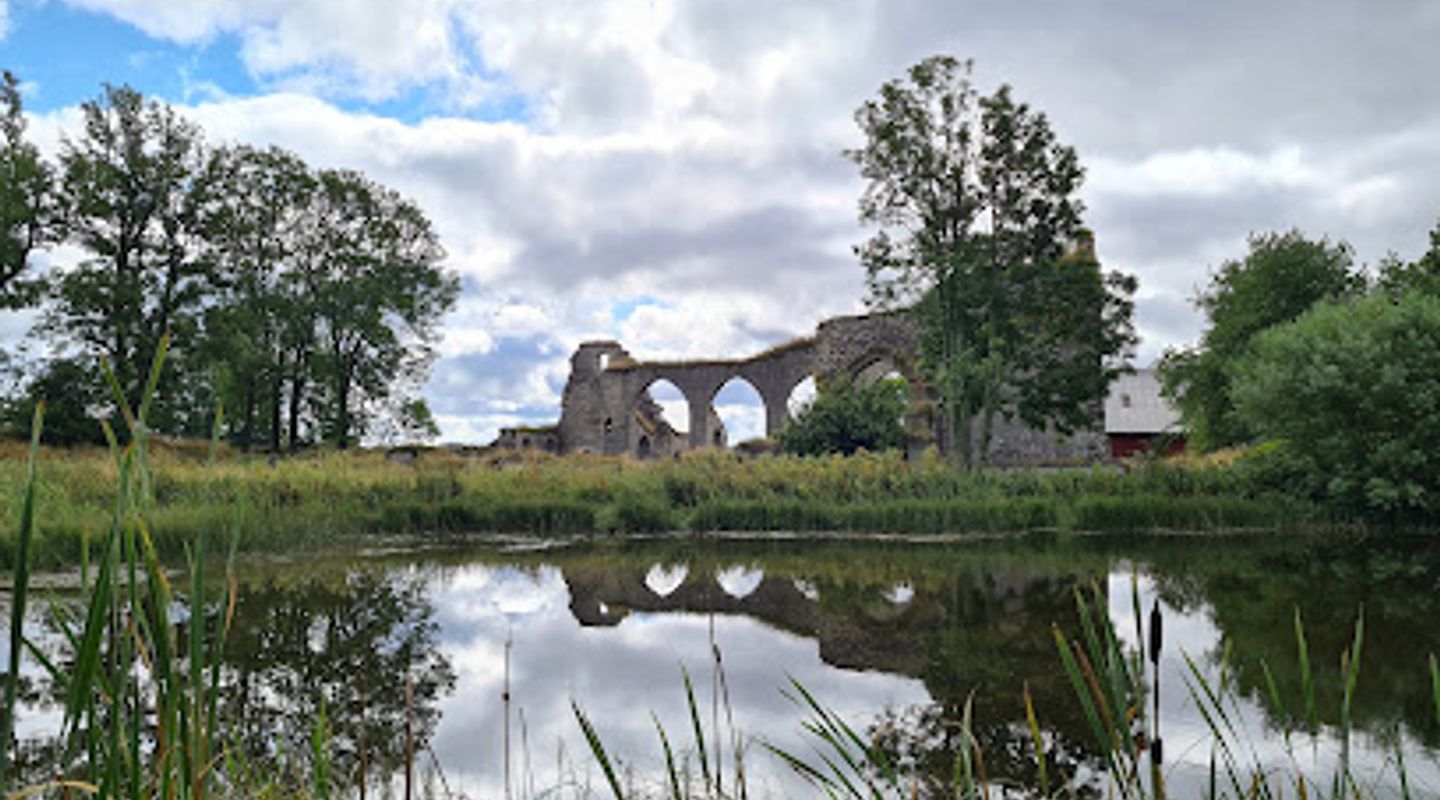
Nestled at the foot of Mount Omberg in Östergötland, the Alvastra Monastery Ruins stand as poignant remnants of Sweden's first Cistercian abbey, founded in 1143 by French monks from Clairvaux. Flourishing for nearly 400 years until the Reformation dissolved it in the 1530s, these limestone ruins reveal the church, cloister, abbot's house, and monastic quarters. Free to visit year-round, they offer a serene glimpse into medieval spiritual life, enhanced by summer pilgrim masses and proximity to nature trails.
On-site amenities
 Restrooms
 Seating areas
 Trash bins
 Information boards
Opening hours
- Every dayOpen 24 hours
Opening hours as listed on the venue’s Google Business Profile. Hours can change for services and special events, so check with the venue before you go.
- Address
- 599 93 Ödeshög
- Phone
- Website
Getting there
Car
Bus
Bicycle
Walking
Discover more about Alvastra Monastery
Foundations of a Nordic Cistercian Pioneer
In 1143, King Sverker I and Queen Ulvhild donated vast lands at the base of Mount Omberg to Cistercian monks from Clairvaux Abbey in France, establishing Alvastra as the first Cistercian monastery in the Nordic countries. These monks, seeking isolation for contemplation and labor, quarried local limestone to erect a sanctuary dedicated to simplicity and self-sufficiency. The church was consecrated in 1185, marking the heart of a thriving community that later spawned daughter houses like Varnhem Abbey.
Saint Bridget's Revelations Amid Monastic Walls
The 14th century brought profound spiritual significance when Saint Bridget of Sweden resided here, receiving visions that shaped her canonization and influenced European mysticism. Her revelations, penned during her stay, positioned Alvastra as a nexus of divine inspiration. Royal burials added gravitas: Kings Sverker I, Carl I, Sverker II, and John I, alongside queens like Richeza and Ulvhild, rested in the abbey grounds, intertwining monastic piety with Sweden's monarchy.
Daily Rhythms of Prayer and Toil
Cistercian life pulsed through structured days of prayer, manual labor, and study. Lay brothers tended expansive fields, gardens, and fisheries, while choir monks focused on liturgy in the vaulted church. The cloister encircled green spaces for reflection, with the abbot's house overseeing operations. Kitchens prepared modest meals from homegrown produce, embodying the order's ethos of ora et labora—pray and work.
Reformation's Shadow and Architectural Legacy
Prosperity endured until the 1530s Protestant Reformation under King Gustav Vasa, when the Crown seized monastic properties. Abandoned by 1527, Alvastra crumbled as stones were repurposed for Vadstena Castle and Visingsö structures. Excavations from 1921 to 1955 unearthed and stabilized the ruins, preserving Gothic arches, chapter house foundations, and grave replicas like Ulf Gudmarsson's slab, showcasing austere Cistercian design.
Omberg's Embrace and Enduring Serenity
Framed by Omberg's dramatic slopes, the ruins blend seamlessly with the landscape, inviting exploration of weathered walls overgrown with moss and wildflowers. Information boards, though weathered, guide visitors through layouts of the refectory, infirmary, and library armarium. This setting fosters quiet contemplation, echoing the monks' original quest for seclusion amid nature's grandeur.
Cultural Echoes in Stone
Alvastra's remnants whisper of Sweden's medieval transformation from Catholic devotion to Lutheran reform, highlighting shifts in architecture, economy, and society. Imported pottery and evolving burial practices from digs reveal growing secular ties, while the site's free access preserves its role as Östergötland's key cultural heritage gem.
Evendo Review Centre
 Google
Guest reviews
Best time to go
Quietest: Jan, Feb & Dec · before 8am or at 8pm
Busy times are Evendo estimates for a typical year, to help you plan. Actual crowds vary with events, school holidays and the weather.
Explore Alvastra Monastery on the map
A handpicked selection of must-see spots near Alvastra Monastery, mapped for you.
Get your free copy of our complete guide to Alvastra Monastery, delivered straight to you.
Everything on this page, from opening hours and how to get there to Eve’s tips and the best time to go, in one PDF you can read offline, print or share.
Already have an account? Sign in
Your Alvastra Monastery guide is ready.
We'll send it to · Not you? Sign out

Getting your guide ready…
We are putting together a fresh copy of the Alvastra Monastery guide. This can take up to a minute.
This can take a few moments. If your browser asks, choose Allow so the download can start. You'll find the guide in your Downloads folder.
Nothing happened? Download it again
Sorry, the guide is taking longer than usual. Please try again in a minute, or get it by email instead.
Other nearby places you may find interesting
The closest places of the same kind, if this one is not quite what you had in mind.
-
-
-
-
-


Swipe for more places
More to explore near Alvastra Monastery

 Best experiences near Alvastra Monastery
 Best hotels near Alvastra Monastery
 Best landmarks near Alvastra Monastery
 Best attractions near Alvastra Monastery
 Best shops near Alvastra Monastery
 Best restaurants near Alvastra Monastery
 Best bars near Alvastra Monastery
Do you manage this location?
Take control to get all the benefits, like improved information, better appearance, and stronger visibility across AI-powered discovery.
Explore more

Explore more of Östergötland
Discover Östergötland: A perfect blend of history, nature, and culture in southern Sweden, offering charming towns, lush landscapes, and a rich cultural heritage.
Explore Östergötland
Explore more of Sweden
Discover Sweden's breathtaking landscapes, vibrant cities, and rich cultural heritage. From the Northern Lights to historic castles, experience the essence of Scandinavia.
Explore Sweden
