Rök runestone Travel Guide
Free Guide: World's longest runic inscription unveils Viking myths, battles, and royal echoes on a 9th-century Swedish stone—history's cryptic masterpiece.


A brief summary of Rök runestone
World's longest runic inscription unveils Viking myths, battles, and royal echoes on a 9th-century Swedish stone—history's cryptic masterpiece.
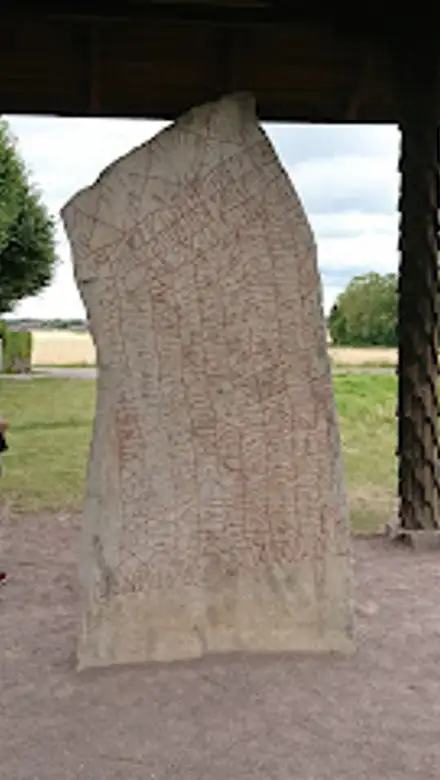
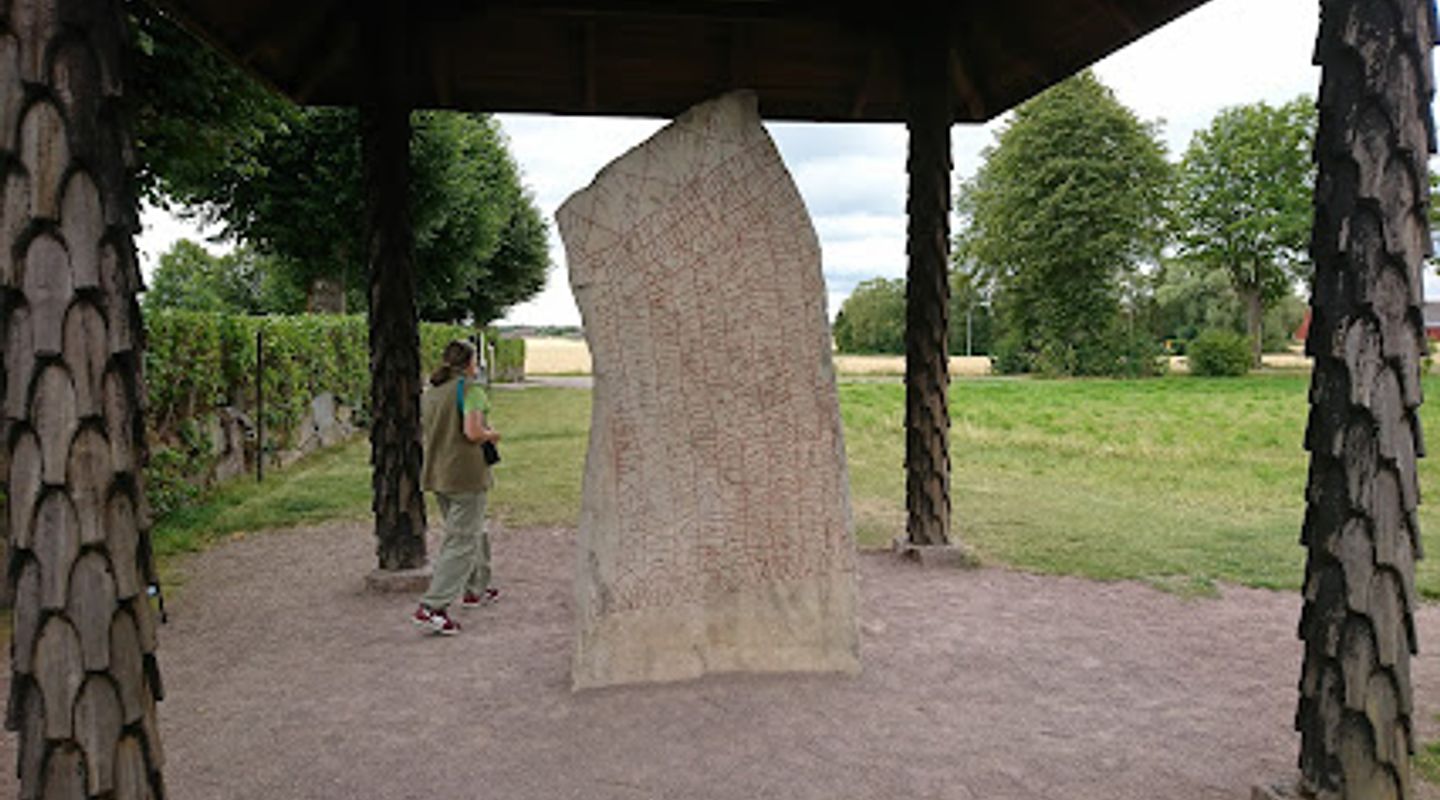
The Rök Runestone stands as one of Sweden's most renowned Viking Age monuments, bearing the world's longest known runic inscription from around 800 AD. Carved on five sides with about 760 characters, this early 9th-century masterpiece uses short-twig runes, kennings, and ciphers to weave tales of mythology, battles, and historical figures like Theodoric the Great. Discovered in the 19th century embedded in Rök church wall, it now resides under a protective shelter beside the church in Ödeshög, marking the dawn of written Swedish literature. Its cryptic text hints at lost Norse myths, a father's grief for his son, and possibly climate crises from centuries prior, captivating scholars and visitors alike.
On-site amenities
 Restrooms
 Drink options
 Seating areas
 Trash bins
 Information boards
Opening hours
- Every dayOpen 24 hours
Opening hours as listed on the venue’s Google Business Profile. Hours can change for services and special events, so check with the venue before you go.
- Address
- Alvastra Grindstugan 1, 599 93 Ödeshög
- Website
Getting there
Driving
Bus
Walking
Discover more about Rök runestone
Ancient Guardian of Runic Secrets
The Rök Runestone rises imposingly beside Rök church in Ödeshög, Östergötland, a towering slab of sandstone etched with the longest pre-Christian runic inscription known to exist. Dating to approximately 800 AD, this monument features around 760 characters inscribed on five sides, sparing only the base intended for burial underground. Crafted in short-twig runes—the runic alphabet prevalent in early medieval Sweden—the text demonstrates extraordinary virtuosity, blending poetry-like kennings, cipher runes, and deliberate displacements to challenge readers.
Discovery from Oblivion
For centuries, the stone served unwittingly as building material in the 12th-century Rök church wall, its carvings hidden from view. Rediscovered in the early 19th century during renovations, workers noted inscriptions on multiple faces and sketched them before re-embedding it. Not until 1862 was it fully extracted and placed in the churchyard, where it remains today under a modern protective roof. This rediscovery unveiled a relic that had slumbered through the Christianization of Sweden, preserving pagan echoes amid ecclesiastical stone.
Mythic Echoes and Heroic Tales
The inscription, carved by a man named Varinn, opens with a poignant memorial to his dead son, Vémóðr, who met his end too young. It spirals into fragments of Norse mythology, possibly alluding to lost sagas involving gods like Thor and dramatic battles where heroes wielded shields in sunless strife. Scholars interpret references to a 'sun extinguished at dawn' and frozen realms, potentially evoking the Fimbulwinter or extreme climate events like the 535–536 volcanic winters and 774–775 solar storm, felt 300 years earlier.
Historical Threads to Distant Empires
Uniquely, the runes name Theodoric the Great, the Ostrogothic king who ruled the western Roman Empire's remnants in the 6th century. This rare bridge between Scandinavian lore and continental history underscores the runestone's role as a cultural crossroads. Theories abound on its purpose: a chieftain's memorial, a call to vengeance, a thul's (storyteller's) archive of clan myths, or even a ritual tied to Ansgar's early Christian missions. Its encrypted style may have served magical ends, warding or invoking ancient powers.
Linguistic Marvel and Literary Dawn
As the earliest documented Swedish text, the Rök Runestone heralds the birth of Swedish literature. Its linguistic complexity—mixing alphabets, codes, and skaldic verse—showcases the carver's mastery, turning stone into a puzzle of profound depth. Readable yet elusive, it invites endless decipherment, with damaged sections adding to the enigma. The site's name derives from Old Norse 'rauk' or 'rök,' meaning a skittle-shaped stack, a tautology born of the stone naming the village around it.
Enduring Enigma Outdoors
Today, visitors approach this outdoor landmark near Lake Vättern, where the stone's weathered surface whispers Viking Age mysteries against a rural backdrop. Its placement evokes the transition from pagan runes to Christian spires, a silent testament to Sweden's layered past. The inscription's obscurity endures, fueling academic quests and quiet reverence among those who trace its runes in the Swedish light.
Evendo Review Centre
 Google
Guest reviews
Best time to go
Quietest: Jan, Feb & Dec · before 7am or from 8pm
Busy times are Evendo estimates for a typical year, to help you plan. Actual crowds vary with events, school holidays and the weather.
Explore Rök runestone on the map
A handpicked selection of must-see spots near Rök runestone, mapped for you.
Get your free copy of our complete guide to Rök runestone, delivered straight to you.
Everything on this page, from opening hours and how to get there to Eve’s tips and the best time to go, in one PDF you can read offline, print or share.
Already have an account? Sign in
Your Rök runestone guide is ready.
We'll send it to · Not you? Sign out

Getting your guide ready…
We are putting together a fresh copy of the Rök runestone guide. This can take up to a minute.
This can take a few moments. If your browser asks, choose Allow so the download can start. You'll find the guide in your Downloads folder.
Nothing happened? Download it again
Sorry, the guide is taking longer than usual. Please try again in a minute, or get it by email instead.
Other nearby places you may find interesting
The closest places of the same kind, if this one is not quite what you had in mind.
-
-
-
-
-


Swipe for more places
More to explore near Rök runestone

 Best experiences near Rök runestone
 Best hotels near Rök runestone
 Best landmarks near Rök runestone
 Best attractions near Rök runestone
 Best shops near Rök runestone
 Best restaurants near Rök runestone
 Best bars near Rök runestone
Do you manage this location?
Take control to get all the benefits, like improved information, better appearance, and stronger visibility across AI-powered discovery.
Explore more

Explore more of Svealand
Experience the essence of Sweden in Svealand: a region of historic cities, stunning archipelagos, and rich cultural heritage perfect for every traveler.
Explore Svealand
Explore more of Sweden
Discover Sweden's breathtaking landscapes, vibrant cities, and rich cultural heritage. From the Northern Lights to historic castles, experience the essence of Scandinavia.
Explore Sweden