

Stortorget, Östersund Travel Guide
Free Guide: Östersund’s compact historic square — market heart, festival stage and a 19th‑century streetscape you can savour from a café terrace.


A brief summary of Stortorget
Östersund’s compact historic square — market heart, festival stage and a 19th‑century streetscape you can savour from a café terrace.
Stortorget is Östersund’s historic central town square — a compact, enclosed plaza framed by 19th-century facades, civic buildings and cafés that has served as the city’s market heart since the late 18th century. The square hosts seasonal markets and festivals, offers easy people-watching from bench and terrace, and gives clear views toward surrounding streets and the nearby waterfront that shaped the town’s growth.
On-site amenities
 Seating areas
 Food options
 Drink options
 Information boards
 Trash bins
- Address
- Staden, Östersund
Getting there
Bus from Östersund central hub
Regional train to Östersund Central
Taxi or rideshare
Discover more about Stortorget
An urban room born from 18th-century planning
Stortorget originated from the deliberate city plan laid out as Östersund grew from a single farmstead into a regional trading town after its foundation in 1786. The square was formed by cutting into four surrounding blocks to create an open-air ‘room’ with visual entrances in every direction — an idea derived from older European planning principles intended to concentrate trade and social life in a single focal point.The physical fabric around the plaza dates mostly from the 19th century, when the arrival of rail connections and expanding commerce reshaped Östersund into the county’s administrative and market centre. The compact footprint of the square and the low to mid-rise façades around it still convey that era’s civic ambition and mercantile character.
Architectural character and street-level life
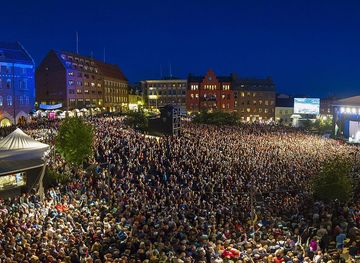
Buildings encircling Stortorget present a mix of well-preserved 19th-century townhouses, shopfronts and civic-looking façades; delicate cornices, narrow pilasters and painted window surrounds sit above ground-floor businesses and cafés. At street level the square reads as human-scale: benches, terrace seating and small planting beds make it an approachable place for a pause between errands.The square’s geometry — originally a more closed form now opened toward the lake side — still creates a contained public atmosphere. The facades and pavements form natural vantage points for watching passing processions, small concerts or festival activity when events occur.
Markets, festivals and seasonal energy
Stortorget’s primary role through history has been as a market place. It continues to host seasonal markets and civic gatherings that draw on the town’s long marketplace traditions, giving the square a calendar of momentary transformations: from rows of temporary stalls to small stages and festival infrastructure.These events animate the square with smells of street food and the tactile presence of crafts and local produce; on quieter days the space falls back to a more measured pace, used by residents for quick meetings, coffee stops and casual encounters.
Sensory atmosphere and everyday rhythms
Even when not hosting a market, Stortorget has a definite sensory identity: the clipped echo of footsteps on paving, the murmur of conversation spilling from café tables, and the sightlines across the square to adjacent streets and the nearby water. Seasonal light — sharp winter sun or long summer evenings — changes how the stone and painted façades read, making the square feel markedly different throughout the year.Wind here can be brisk, given Östersund’s northern setting; in cold months the plaza’s edges tighten as people move quickly past, while mild days encourage lingering on terraces and benches.
Nearby heritage and city context
Stortorget sits within one of Östersund’s oldest neighbourhoods and is flanked by several historically significant structures and well-preserved streetscapes that together tell the story of the city’s growth from late 18th-century foundation through 19th-century expansion. The square is a practical urban hub: a meeting place, a visible marker of civic identity and a convenient pause between nearby museums, shops and public buildings.A short stroll from the plaza reveals 1880s townhouses, a selection of public buildings and narrower lanes that preserve the scale and rhythm of Östersund’s earlier development. Those layers are legible in building proportions, material choices and the continuity of street alignment.
What to notice as you stand in the square
Take time to read the façades: shop signs, date stones and painted surfaces carry clues to past uses — trades, cafés and small businesses that have animated the square for generations. Notice how the square’s spatial enclosure frames the sky and how the pattern of openings to the surrounding streets creates visual connections rather than a single monumental focal point.Whether the plaza is filled with market stalls or quiet between events, Stortorget remains a concise expression of Östersund’s civic life: compact, historical and quietly resilient in its role as the city’s social and commercial centre.
Evendo Review Centre
 Google
Guest reviews
Best time to go
Quietest: Jan, Feb & Nov · before 7am or from 10pm
Busy times are Evendo estimates for a typical year, to help you plan. Actual crowds vary with events, school holidays and the weather.
Explore Stortorget on the map
A handpicked selection of must-see spots near Stortorget, mapped for you.
Get your free copy of our complete guide to Stortorget, delivered straight to you.
Everything on this page, from opening hours and how to get there to Eve’s tips and the best time to go, in one PDF you can read offline, print or share.
Already have an account? Sign in
Your Stortorget guide is ready.
We'll send it to · Not you? Sign out

Getting your guide ready…
We are putting together a fresh copy of the Stortorget guide. This can take up to a minute.
This can take a few moments. If your browser asks, choose Allow so the download can start. You'll find the guide in your Downloads folder.
Nothing happened? Download it again
Sorry, the guide is taking longer than usual. Please try again in a minute, or get it by email instead.
Other nearby places you may find interesting
The closest places of the same kind, if this one is not quite what you had in mind.
-
-
-
-
-


Swipe for more places
More to explore near Stortorget

 Best experiences near Stortorget
 Best hotels near Stortorget
 Best landmarks near Stortorget
 Best attractions near Stortorget
 Best shops near Stortorget
 Best restaurants near Stortorget
 Best bars near Stortorget
Do you manage this location?
Take control to get all the benefits, like improved information, better appearance, and stronger visibility across AI-powered discovery.
Explore more
Explore more of Östersund
Discover Östersund, a scenic Swedish city known for its winter sports, vibrant cultural scene, and delicious local cuisine, nestled by the beautiful Lake Storsjön.
Explore Östersund
Explore more of Sweden
Discover Sweden's breathtaking landscapes, vibrant cities, and rich cultural heritage. From the Northern Lights to historic castles, experience the essence of Scandinavia.
Explore Sweden
